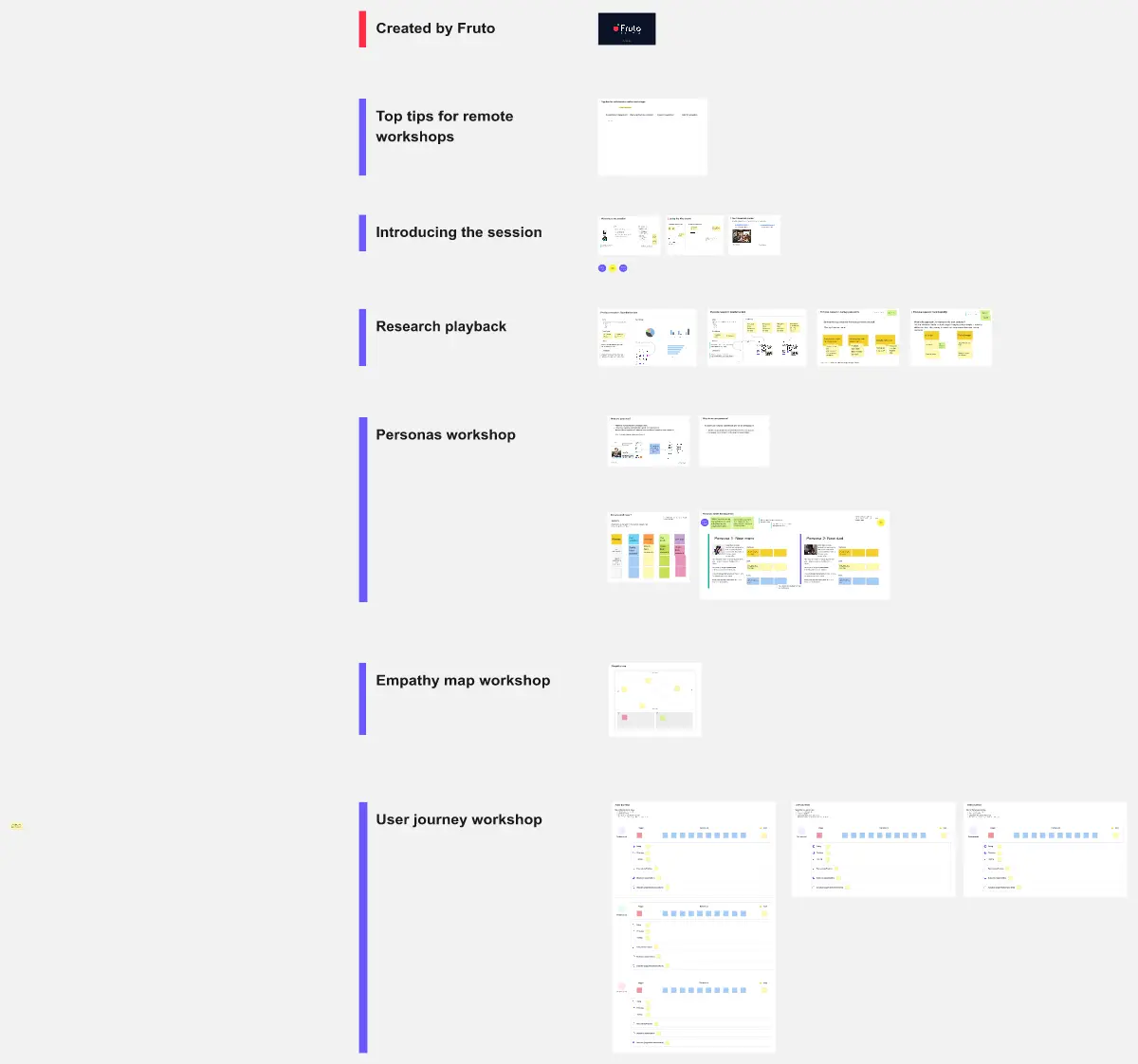
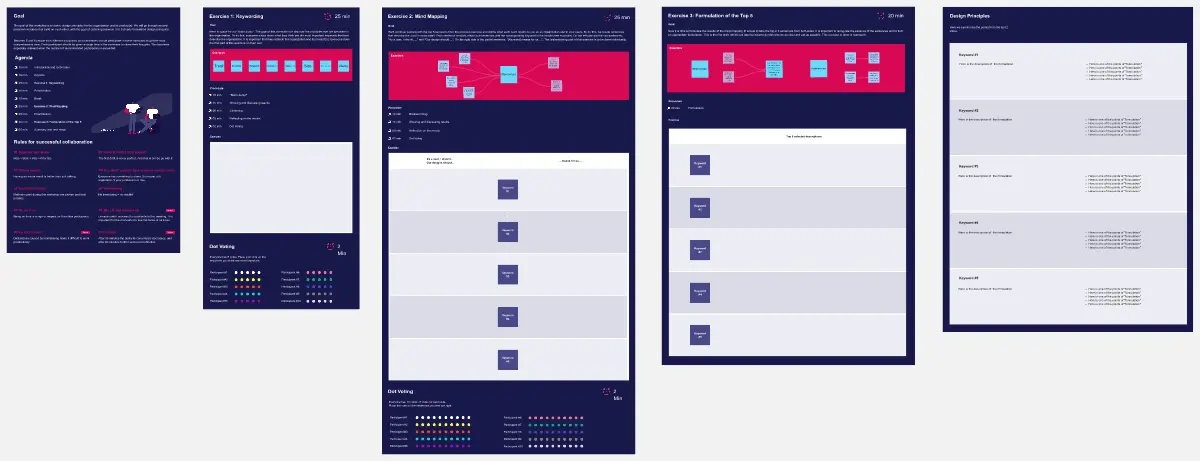
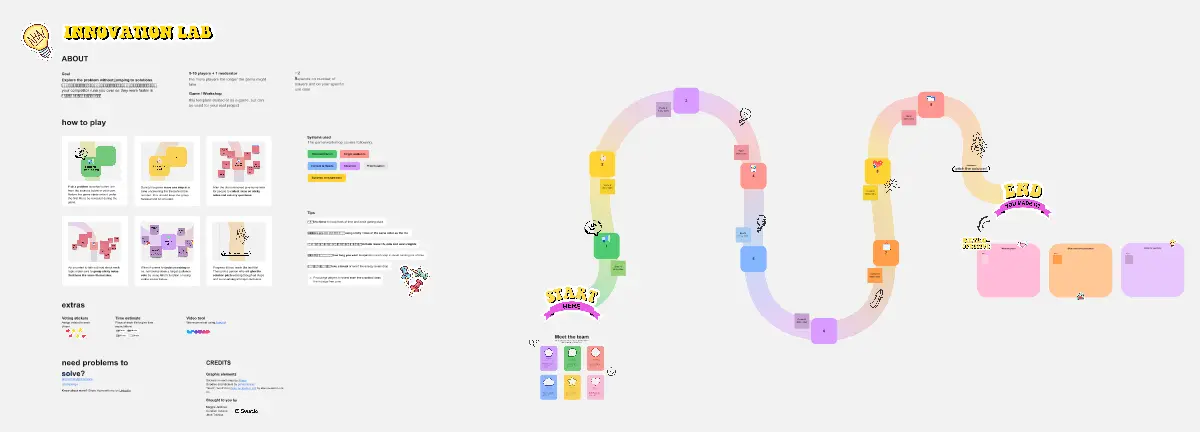
About the UX Templates Collection
A UX template is a standardized framework used to research, organize, and validate the interaction between a user and a product. Rather than jumping straight into high-fidelity mockups, these templates allow UX designers and product teams to map out user needs, friction points, and mental models.
The "UX Integrity" Audit: 3 Ways to Build User-Centric Products
A UX template is only as good as the data you put into it. Before moving to the development phase, apply these three expert "health checks" to your Miro board:
1. The "Assumption vs. Evidence" Filter
The Audit: Are your user personas based on actual interviews or "gut feelings"?
The Fix: Use your template to distinguish between Proto-Personas (assumptions) and Validated Personas (evidence-based). Use Miro’s Comments or Links feature to attach actual user interview quotes or survey data to your journey maps. If a design decision isn't backed by data, it should be marked as "To Be Tested."
2. Identifying "Friction Peaks" in User Flows
The Audit: Does your user flow have too many decision nodes or redundant steps?
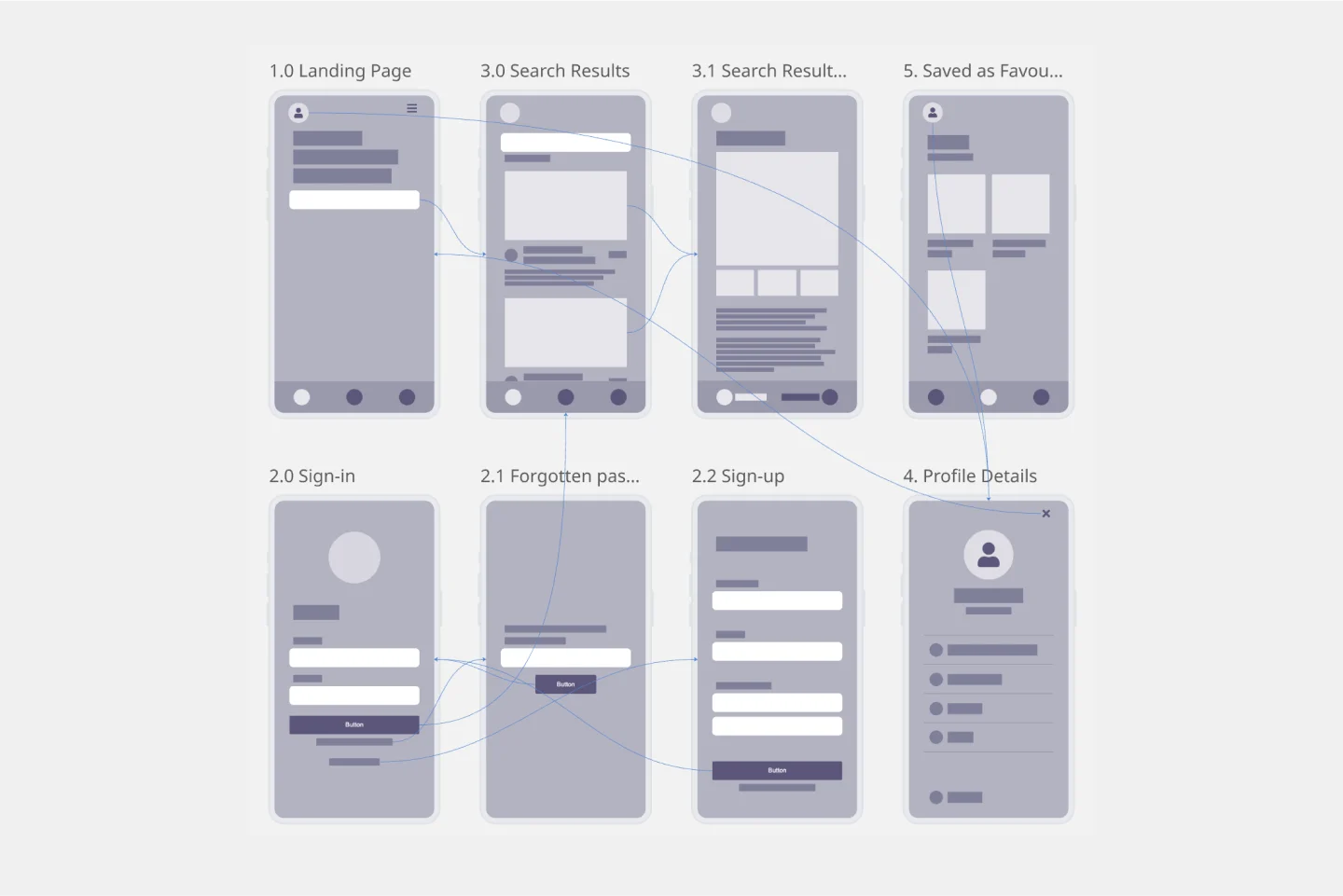
The Fix: Analyze your User Flow for "Cognitive Load." Every extra click or form field is a "Friction Peak" where users might drop off. Use red circles in Miro to highlight these high-friction areas. An authoritative UX board doesn't just show the path; it proactively identifies where the path is broken.
3. The "Accessibility First" Mindset
The Audit: Does your UX strategy account for users with different abilities or situational constraints?
The Fix: Include an "Accessibility & Inclusion" section in your strategy templates. Address color contrast, font sizes, and screen-reader compatibility early in the wireframing stage. Professional UX design isn't just "user-friendly"—it’s "all-user-friendly."
Key Components of a UX Template
A professional UX template serves as the bridge between business goals and user satisfaction. Every high-performance Miro UX board should include these five core elements:
The Problem Statement: A clear definition of the user pain point you are solving. If you can't define the problem in one sentence, your UX will be unfocused.
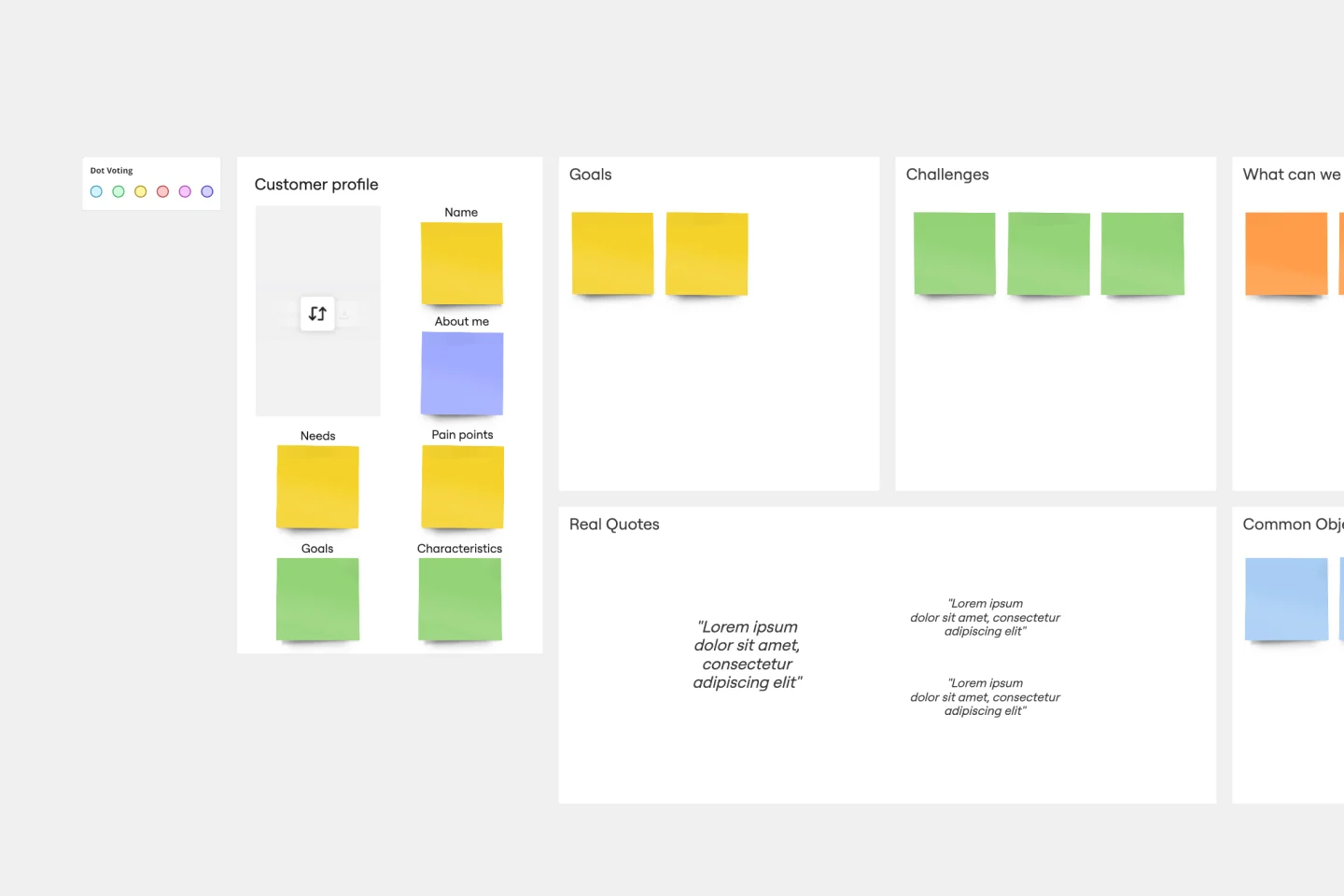
User Personas: Detailed archetypes of your users, including their technical proficiency and "Jobs to be Done" (JTBD).
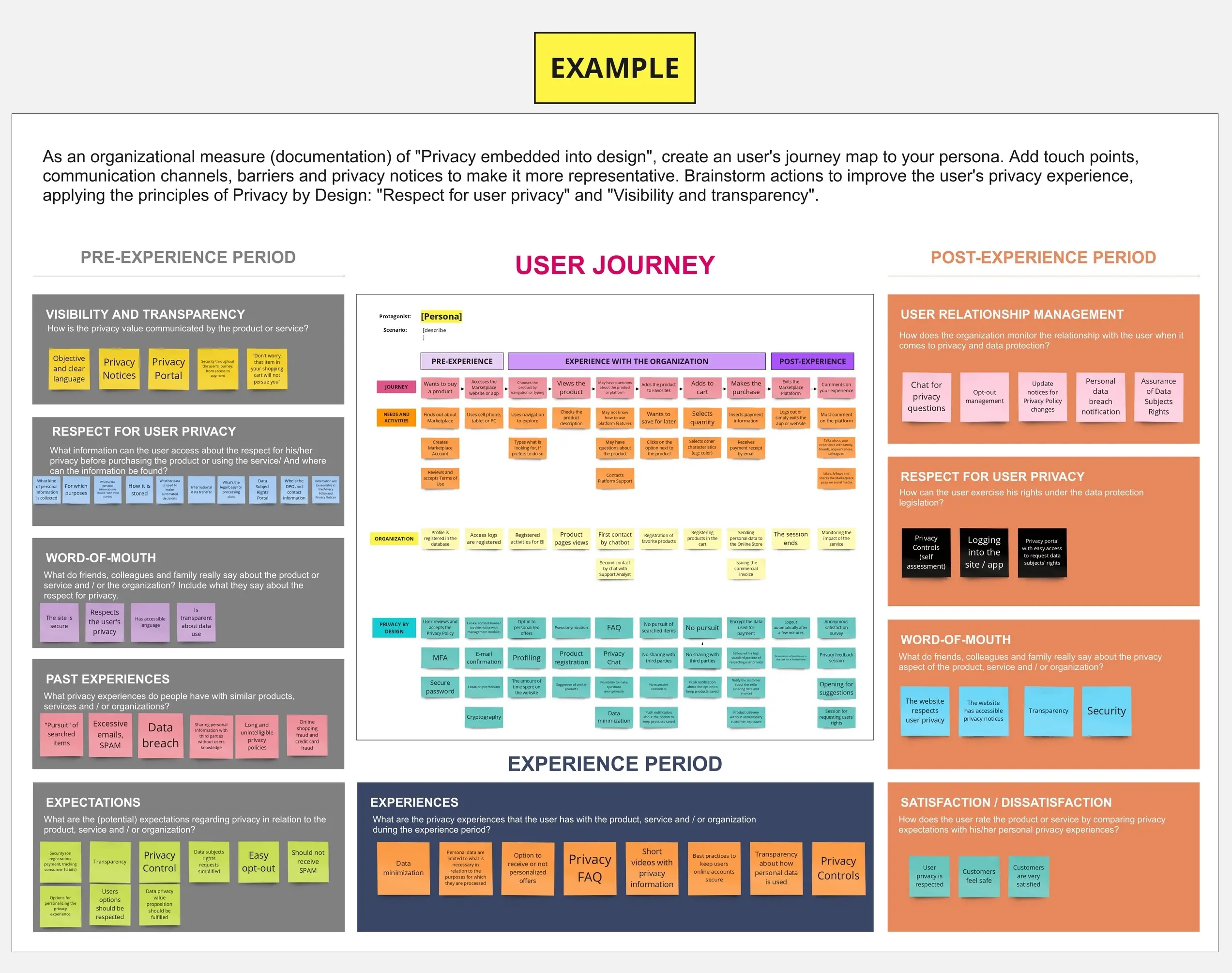
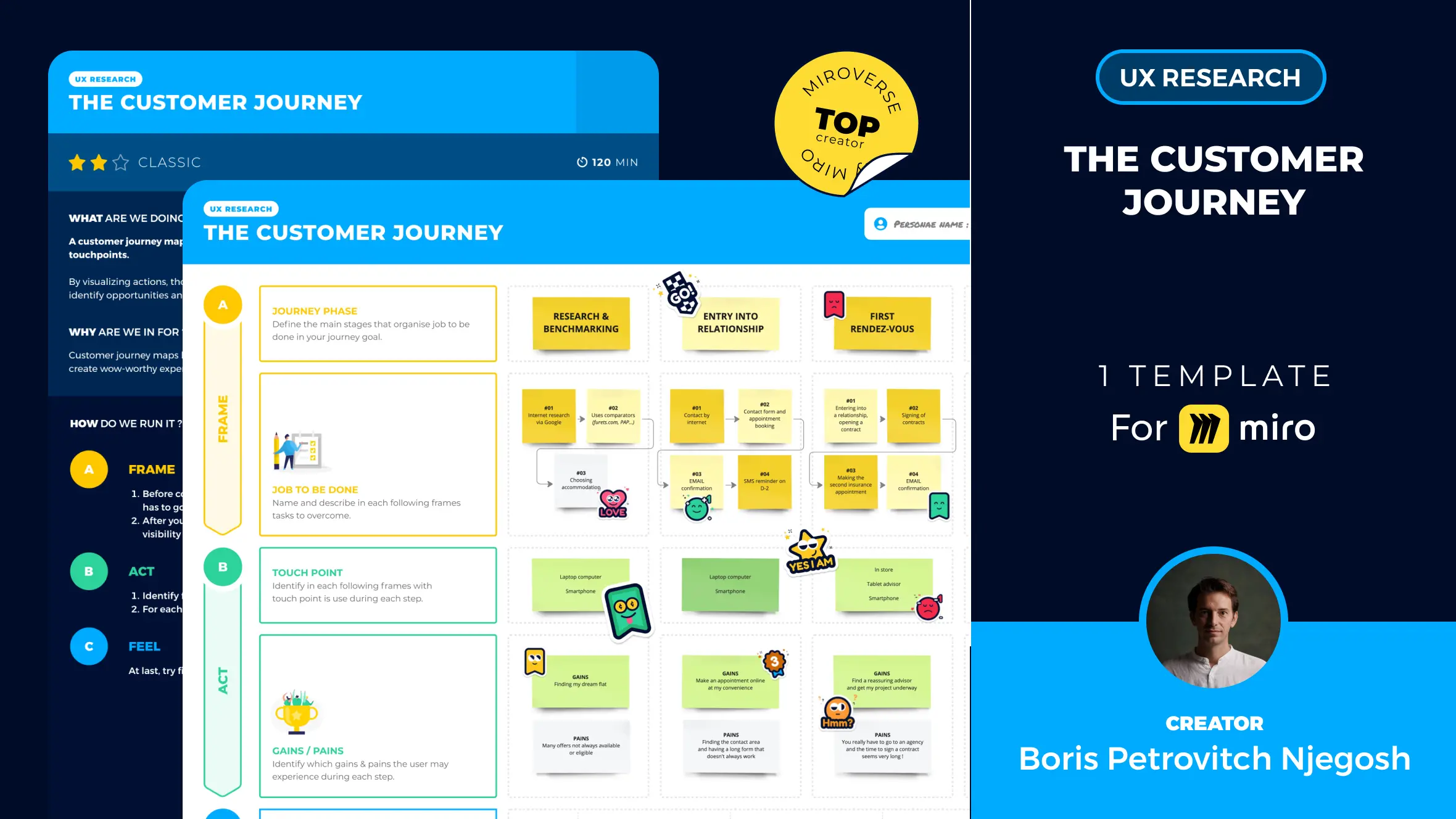
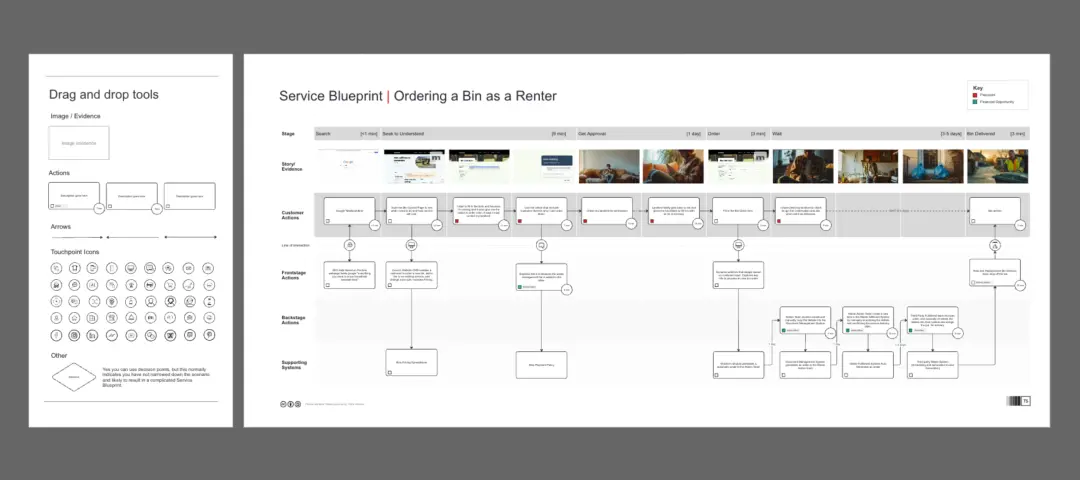
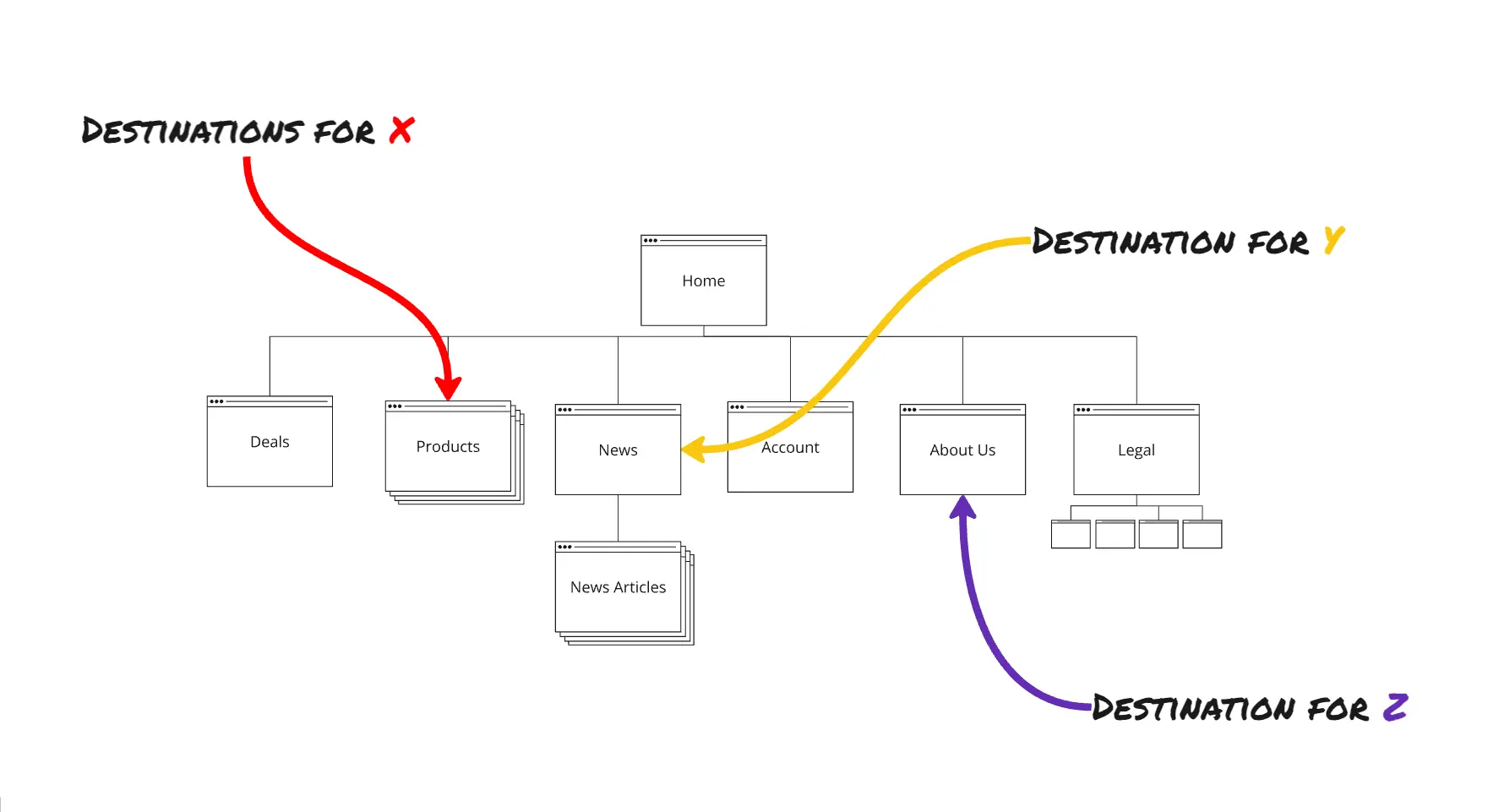
User Journey/Flow: A visual map of the steps a user takes to achieve a goal, including their emotional state at each touchpoint.
Information Hierarchy: A clear structure of what information is most important on any given screen or page.
Success Metrics (UX KPIs): Specific ways you will measure success, such as "Reduction in Task Completion Time" or "Lower Support Ticket Volume."
How to use the UX templates in Miro
Using Miro's UX templates is straightforward and can be broken down into a few simple steps:
Select a template: Browse through the UX templates collection and choose the one that best fits your project needs, such as a UX research plan template or a UX audit template.
Customize the template: Change the template to suit your specific requirements. You can add, remove, or adjust elements to better align with your project goals.
Collaborate with your team: Share the template with your team members and invite them to contribute. Use Miro's collaborative features to work together in real time.
Conduct your research or design: Follow the structured steps provided in the template to carry out your UX research or design tasks. This ensures a thorough and organized approach.
Analyze and iterate: Use the insights gained from your research or design process to make informed decisions and iterate on your work. The templates provide a clear framework for documenting and analyzing your findings.
Miro's UX templates empower teams to thrive by providing the tools needed to conduct effective research and design. By leveraging these templates, you can enhance your productivity, foster collaboration, and achieve better outcomes in your UX projects.
Explore all template categories to find the perfect tools for brainstorming, planning, collaboration, and execution designed to streamline your workflow and bring your ideas to life.

![User Research [#HowIDoItInMiro]](https://template-metadata-service-static.miro.com/images/templates/2VI5jWD0AfGTSu36U3g3xP/preview-1707826257698.webp)