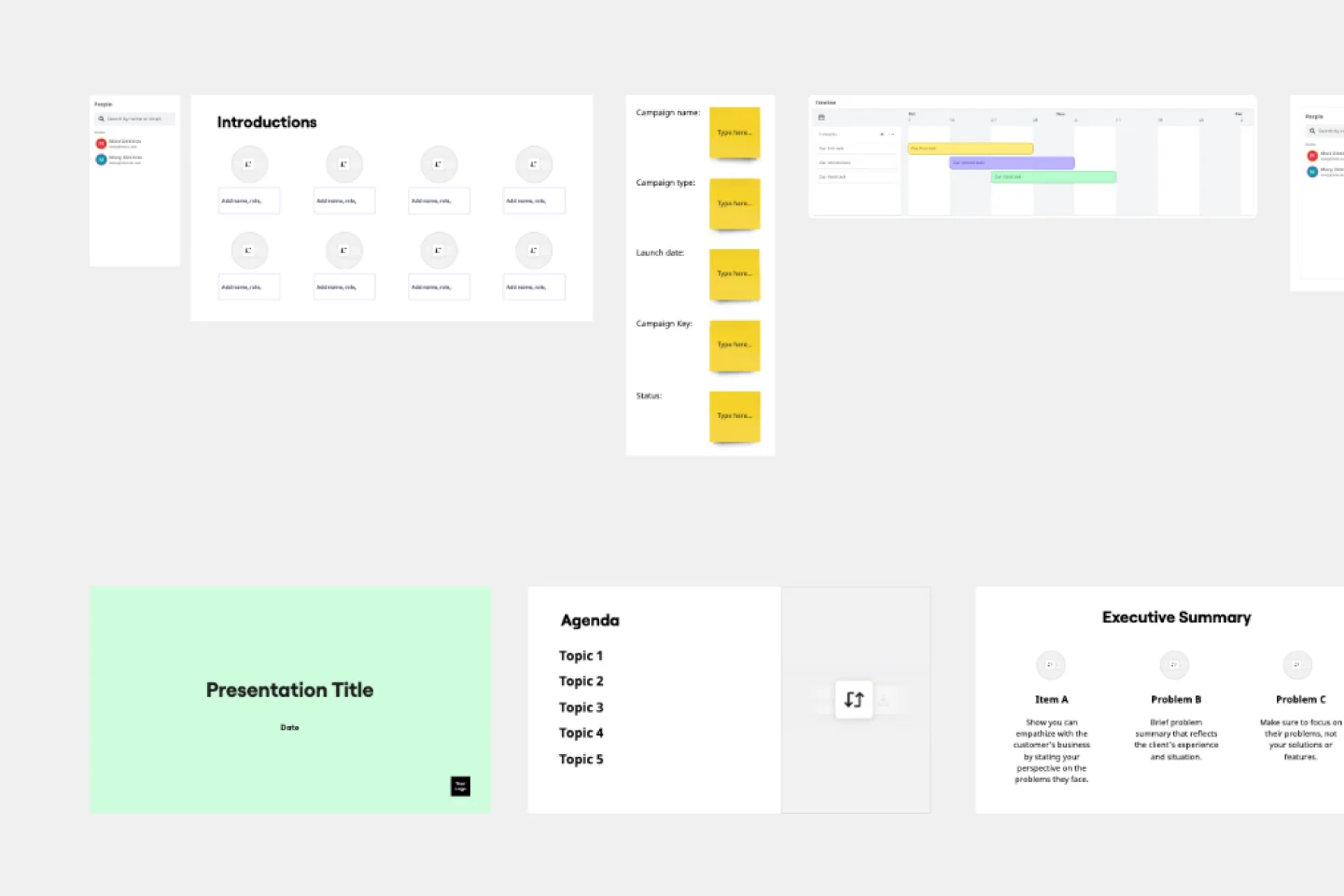
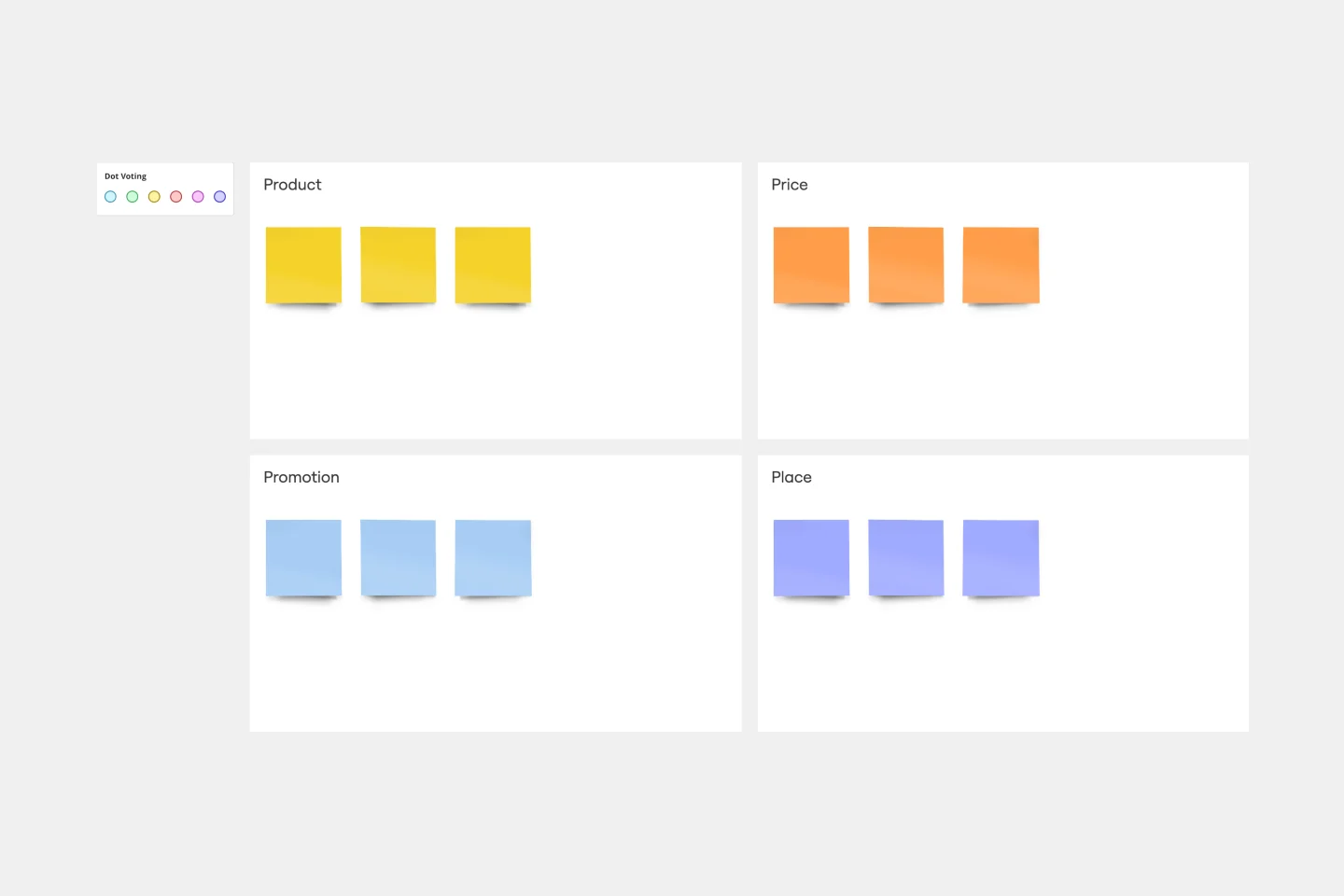
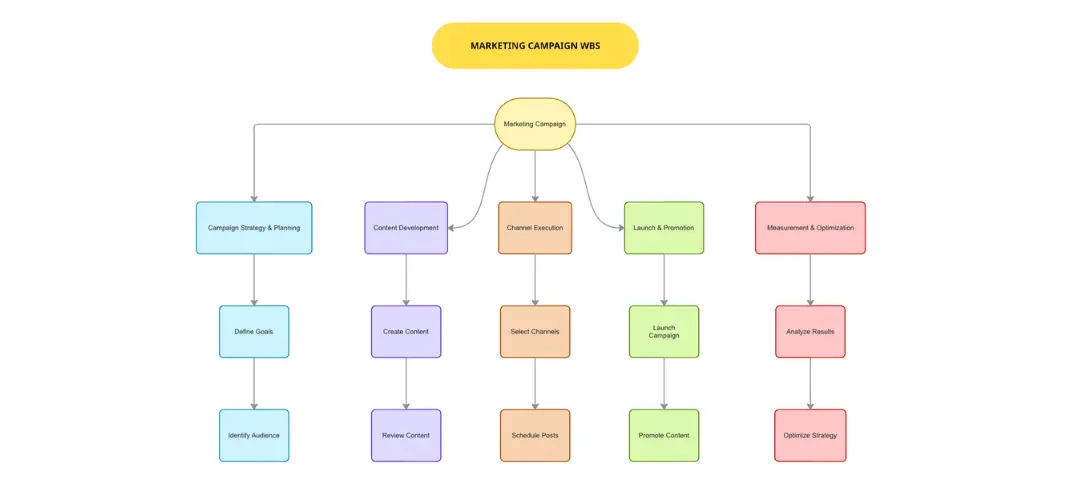
About the Marketing Plan Templates Collection
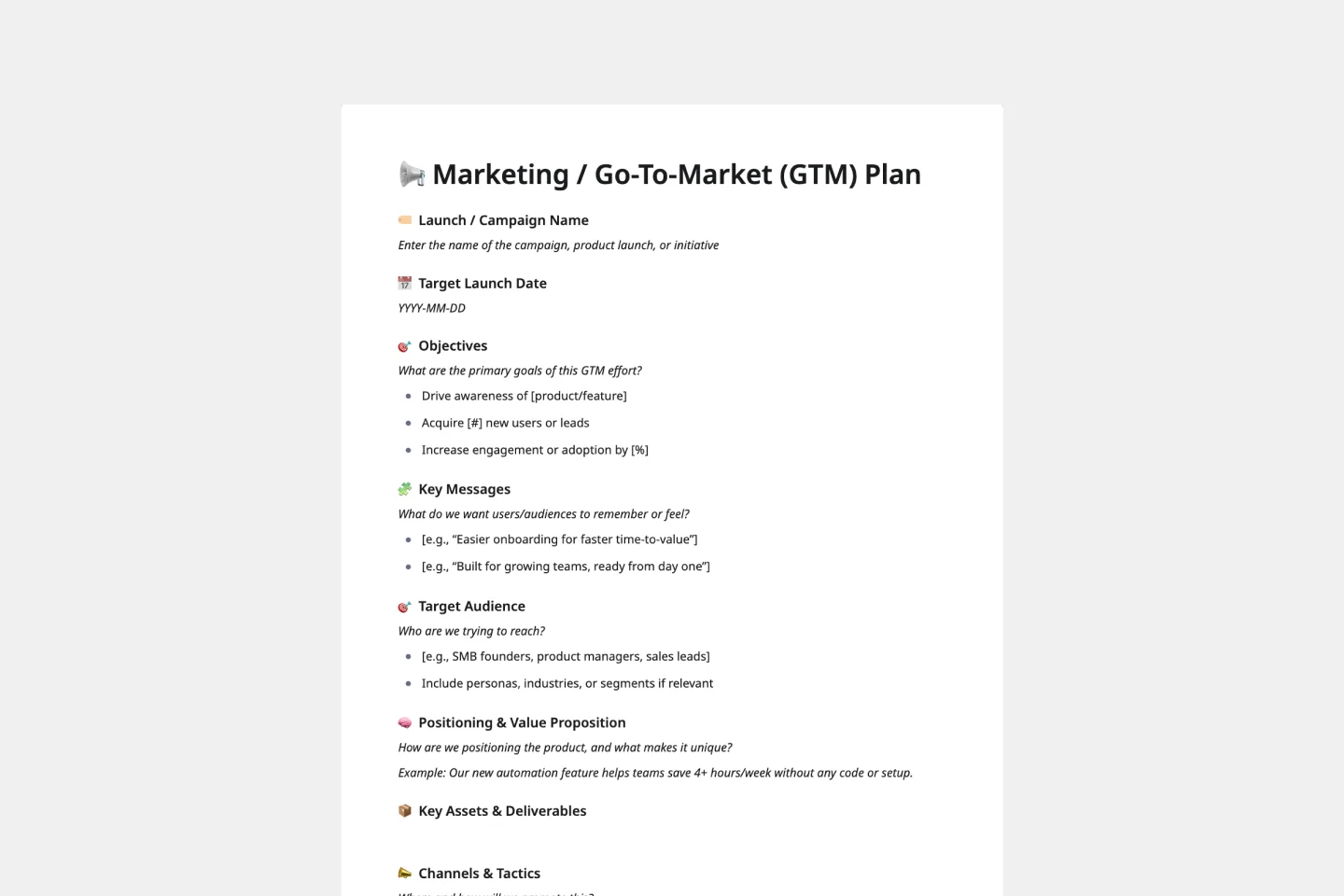
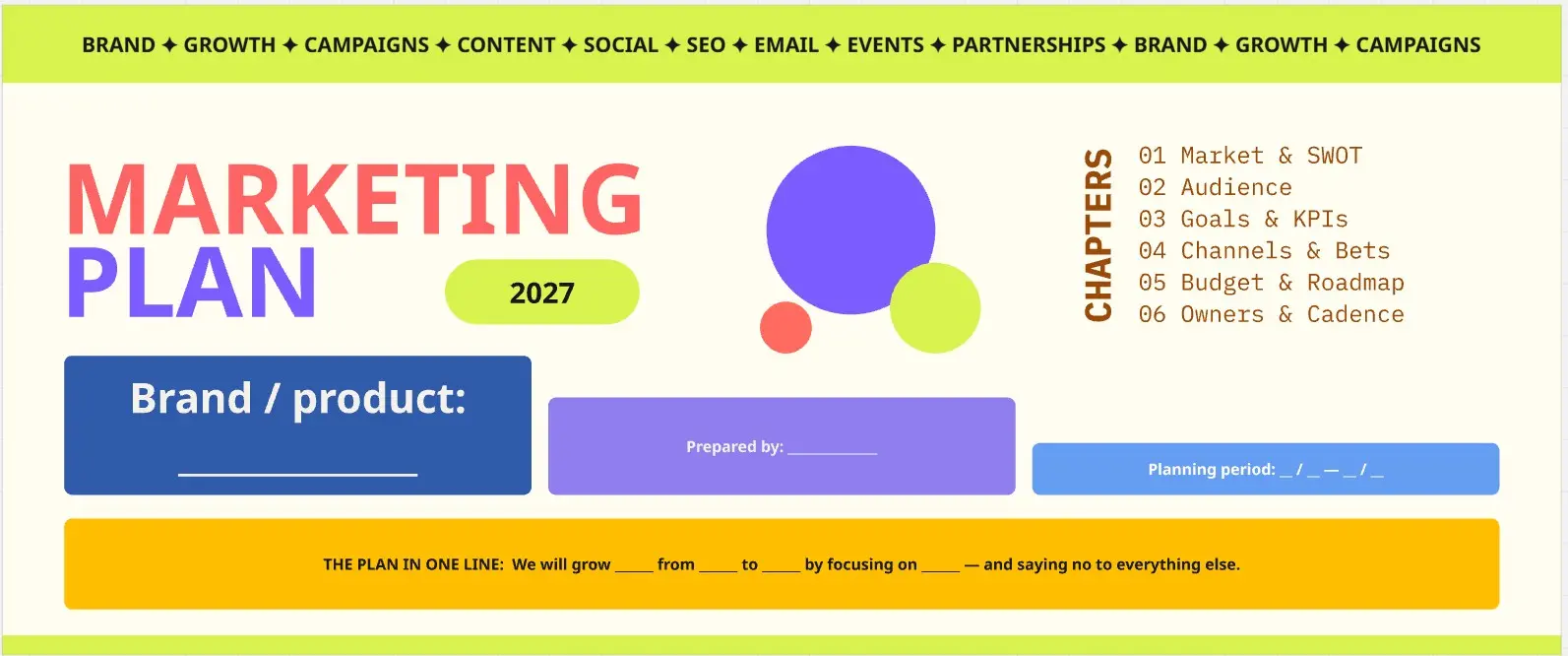
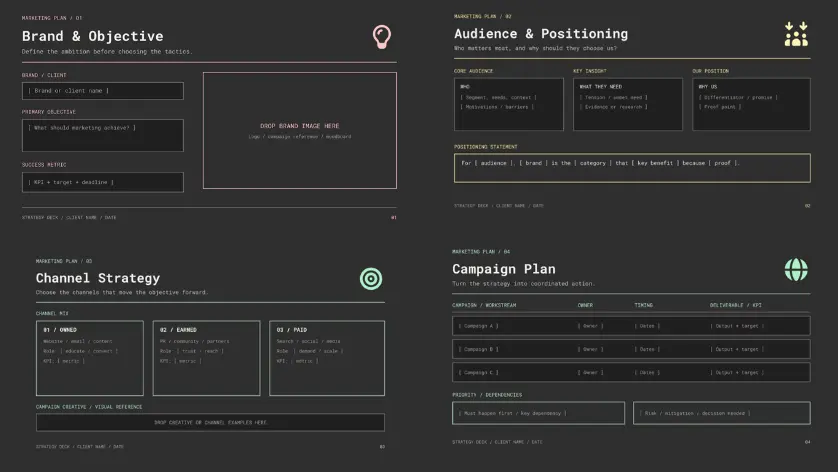
A marketing plan template is an operational roadmap that outlines how your brand will reach its target audience and convert them into customers over a specific period (usually 6–12 months). While a strategy defines your "Why" and "Who," the plan defines the "When," "Where," and "How Much." It coordinates content, social media, SEO, and paid media into a synchronized effort to hit measurable growth targets.
Key Components of a Marketing Plan Template
A professional marketing plan template acts as your department’s "SOP" (Standard Operating Procedure). Every high-performance Miro board should include these five elements:
Executive Summary & OKRs: A high-level view of the "Big Wins" you are chasing this year.
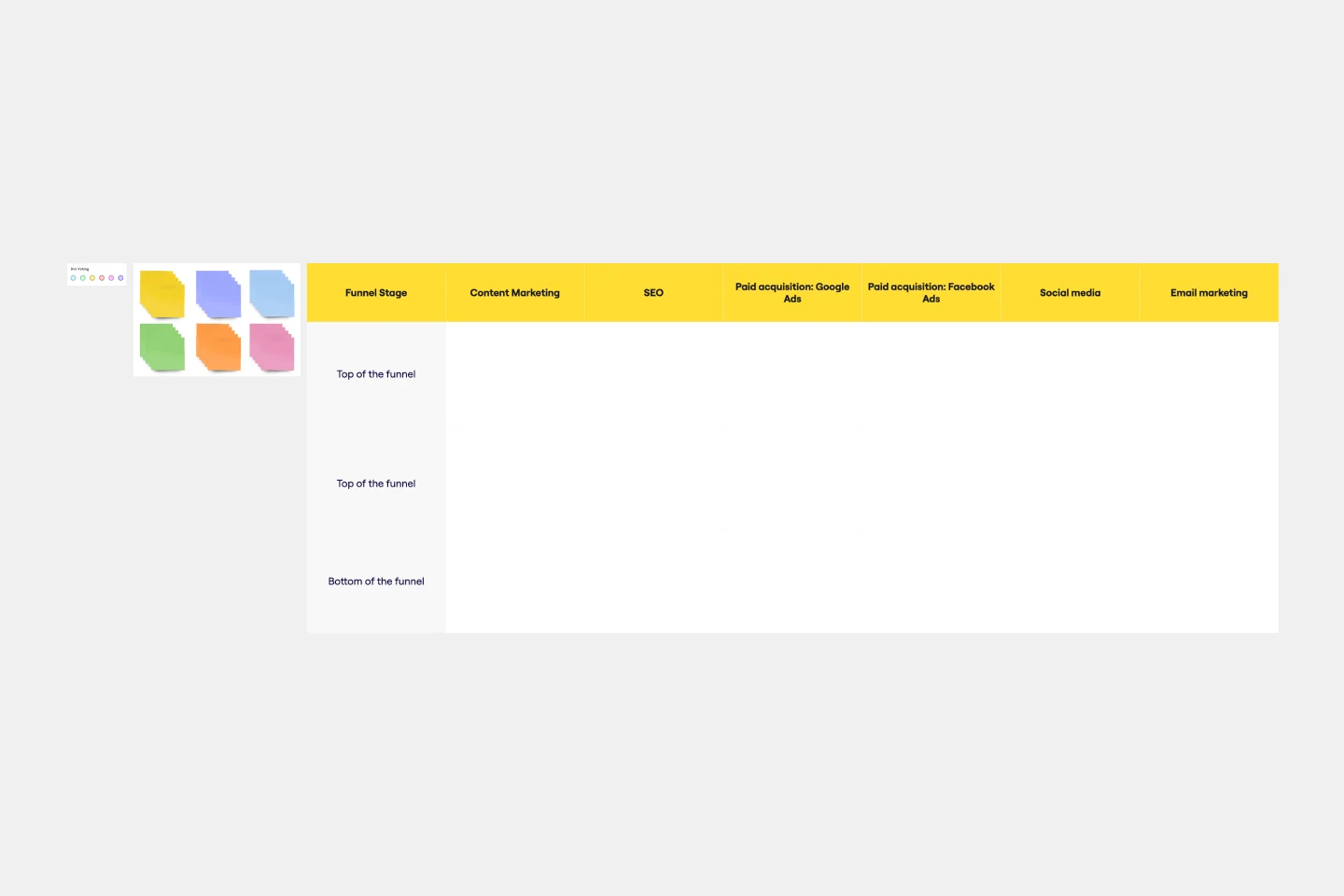
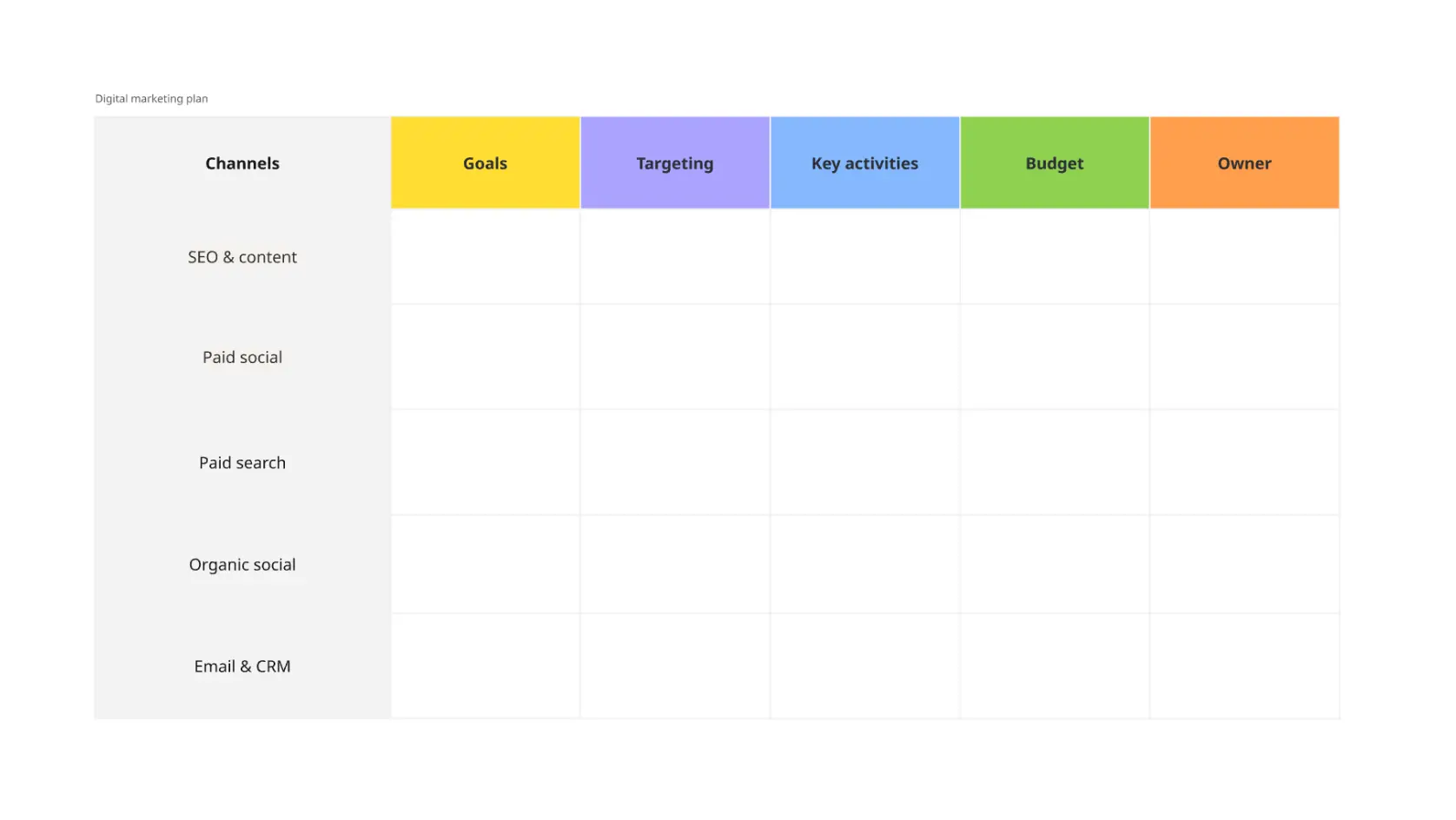
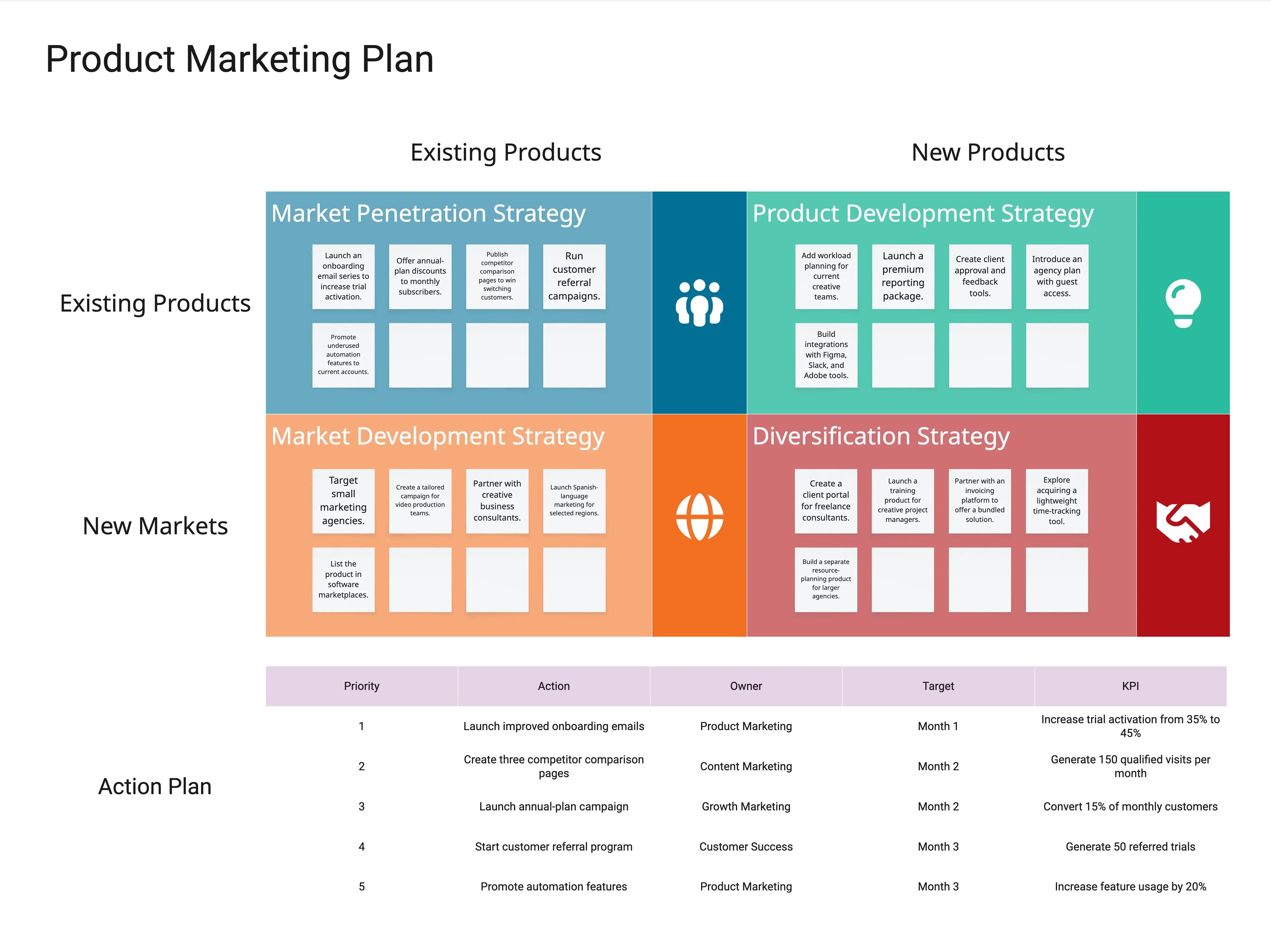
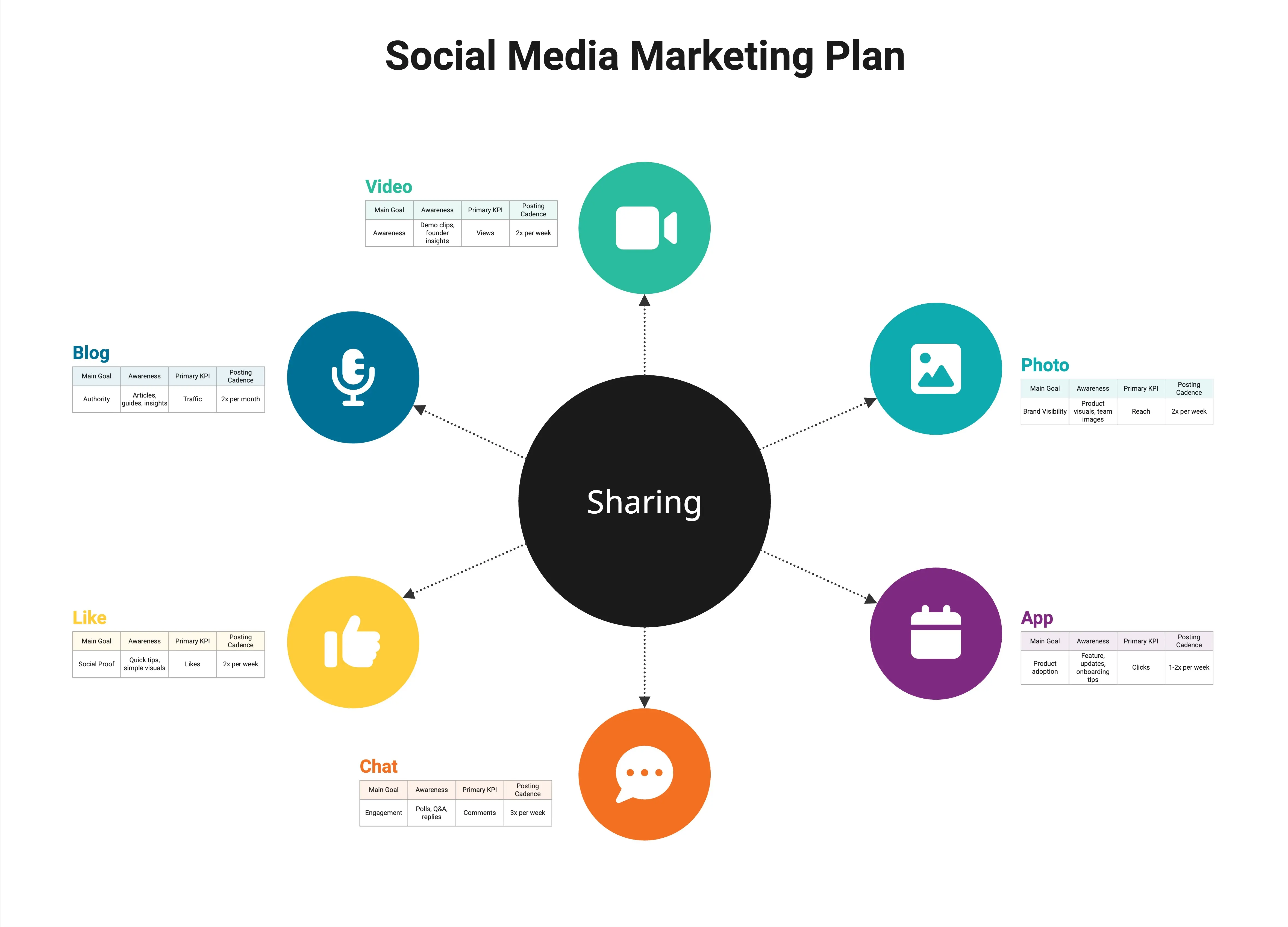
Channel Tactics Map: A breakdown of specific activities for Search, Social, Email, and PR.
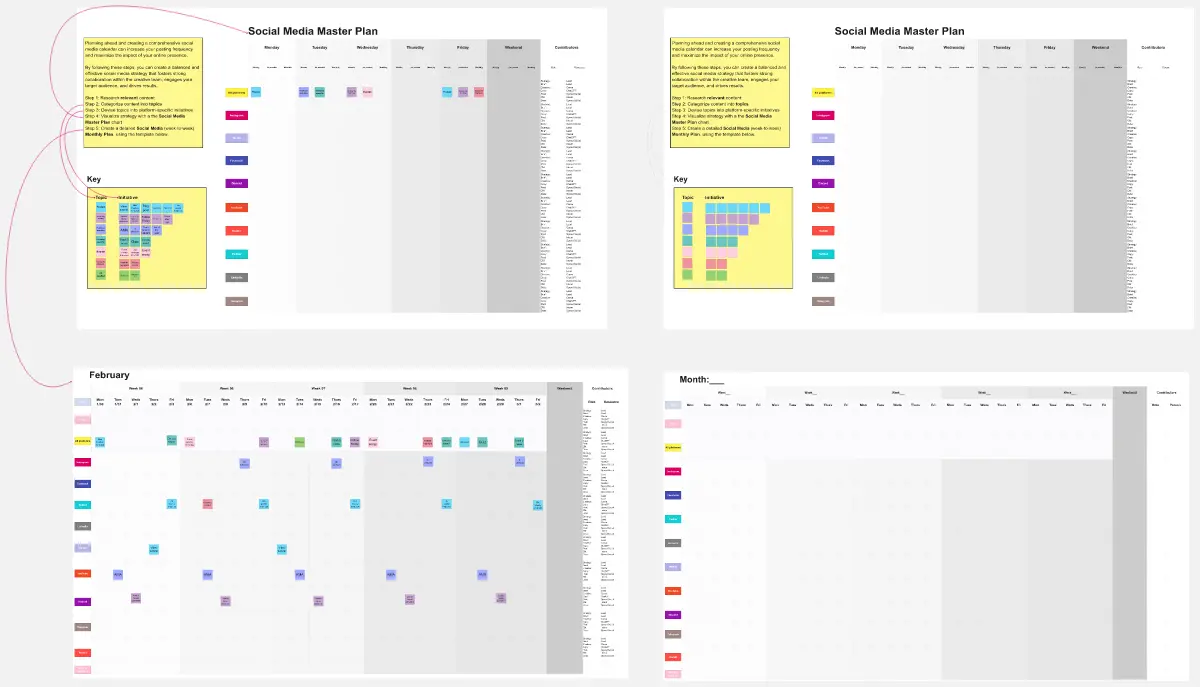
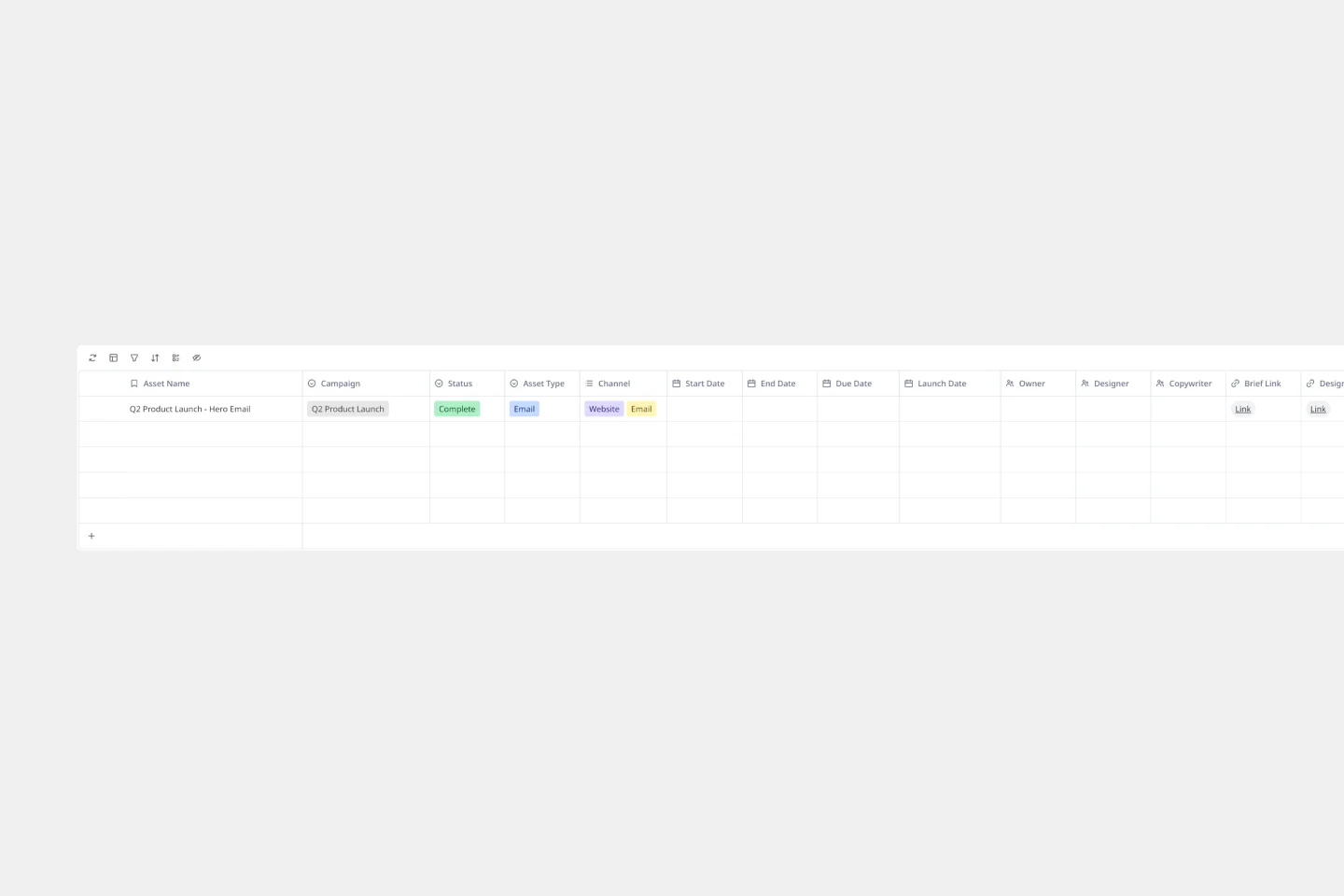
The Content Pillar Calendar: A schedule of the themes and topics that will drive your brand authority.
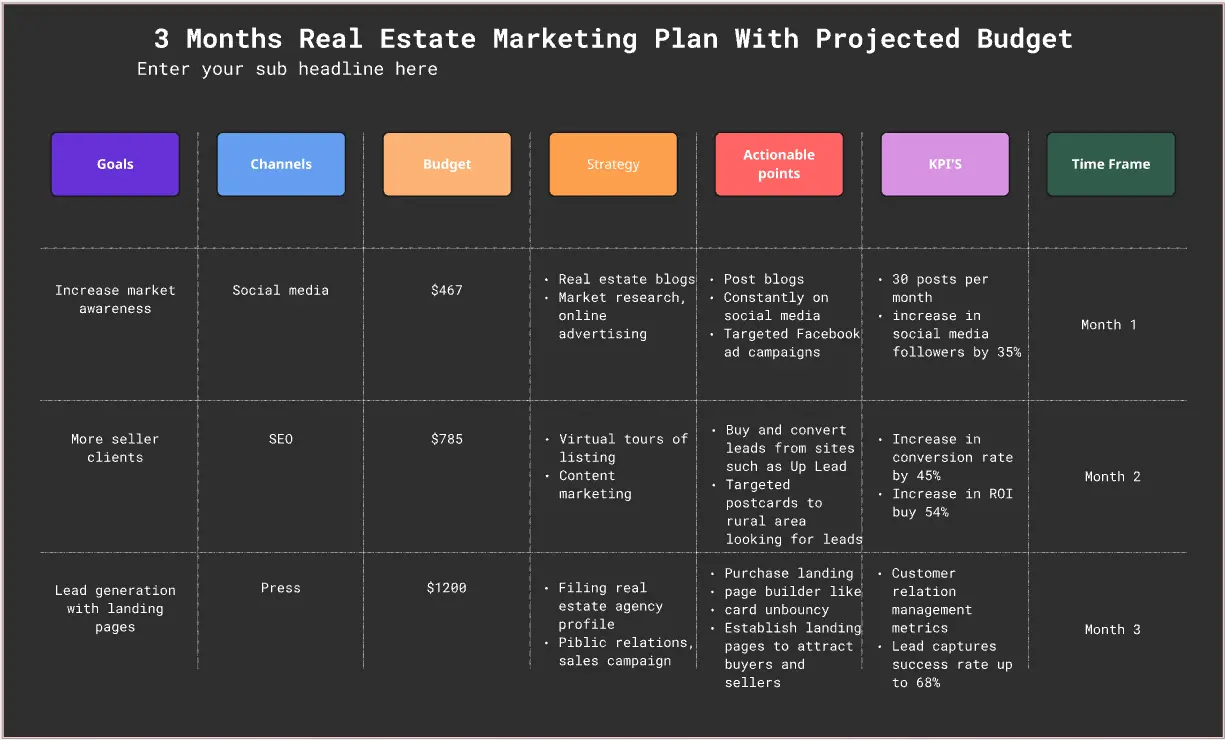
Budget & Resource Allocation: A clear view of where the money is going and who is responsible for spending it.
The Measurement Framework: A table defining exactly which tools (GA4, CRM, etc.) will track which metrics.
Marketing Plan Pro Tips: Driving Maximum ROI
The difference between a "busy" marketing team and a "profitable" one is how they structure their execution. Apply these three "Pro Tips" to your Miro board:
1. Build an "Omnichannel" Ecosystem
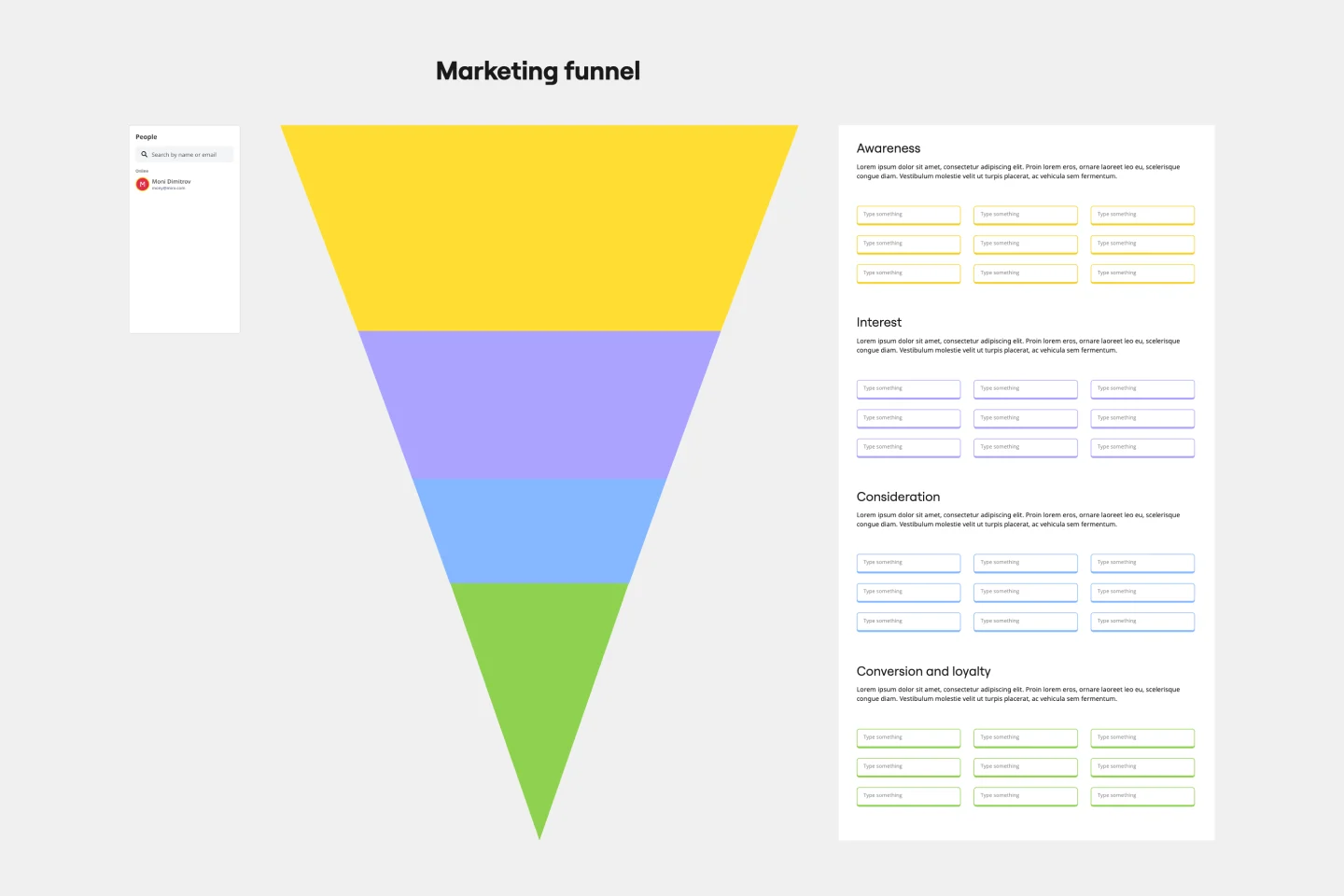
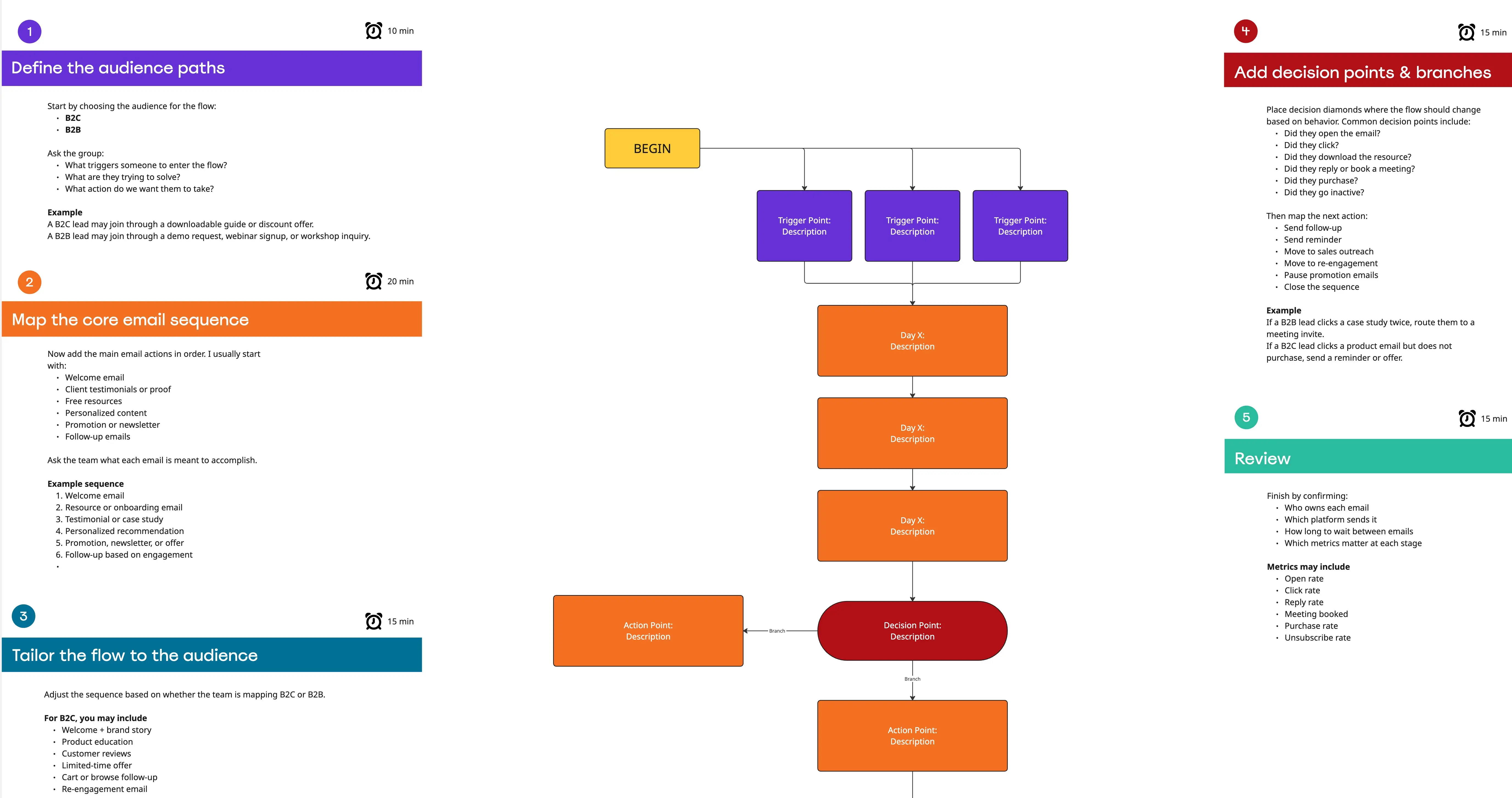
Pro Tip: Stop planning in "Silos" (Social vs. Email vs. Web). Modern customers need 7–10 touchpoints before buying. Use your template to map Cross-Channel Journeys. If you post a video on LinkedIn, your template should trigger a related email blast and a retargeting ad. Visualizing these connections in Miro ensures your brand message is reinforced, not fragmented.
2. The "70/20/10" Budget Allocation
Pro Tip: Don't gamble your entire budget on unproven trends. Structure your plan's budget section using this proven ratio:
70% (The Core): Invest in "Proven Winners" that consistently drive ROI.
20% (The Pivot): Invest in "Emerging Channels" that are showing promise.
10% (The Moonshot): Invest in "High-Risk/High-Reward" experiments (e.g., a new AI tool or experimental platform). This ensures steady growth while keeping your brand innovative.
3. Track "Leading" vs. "Lagging" Indicators
Pro Tip: Don't just wait for "Revenue" (Lagging) to measure success. High-authority plans include Leading Indicators—metrics that predict future success, such as "Email Sign-up Rate" or "Website Session Duration." By tracking these on your Miro dashboard, you can pivot your tactics mid-month if the "Leading" data looks weak, rather than waiting for a bad end-of-quarter report.
Common Pitfalls in Marketing Planning
The "Set-and-Forget" Plan: Building a beautiful Miro board in January and never looking at it again.
Ignoring the "Customer Retention": Focusing 100% on new leads and 0% on keeping existing ones.
The Fix: Add a dedicated "Retention & Referral" lane to your marketing plan to increase customer lifetime value (LTV).
How to use the marketing plan templates in Miro
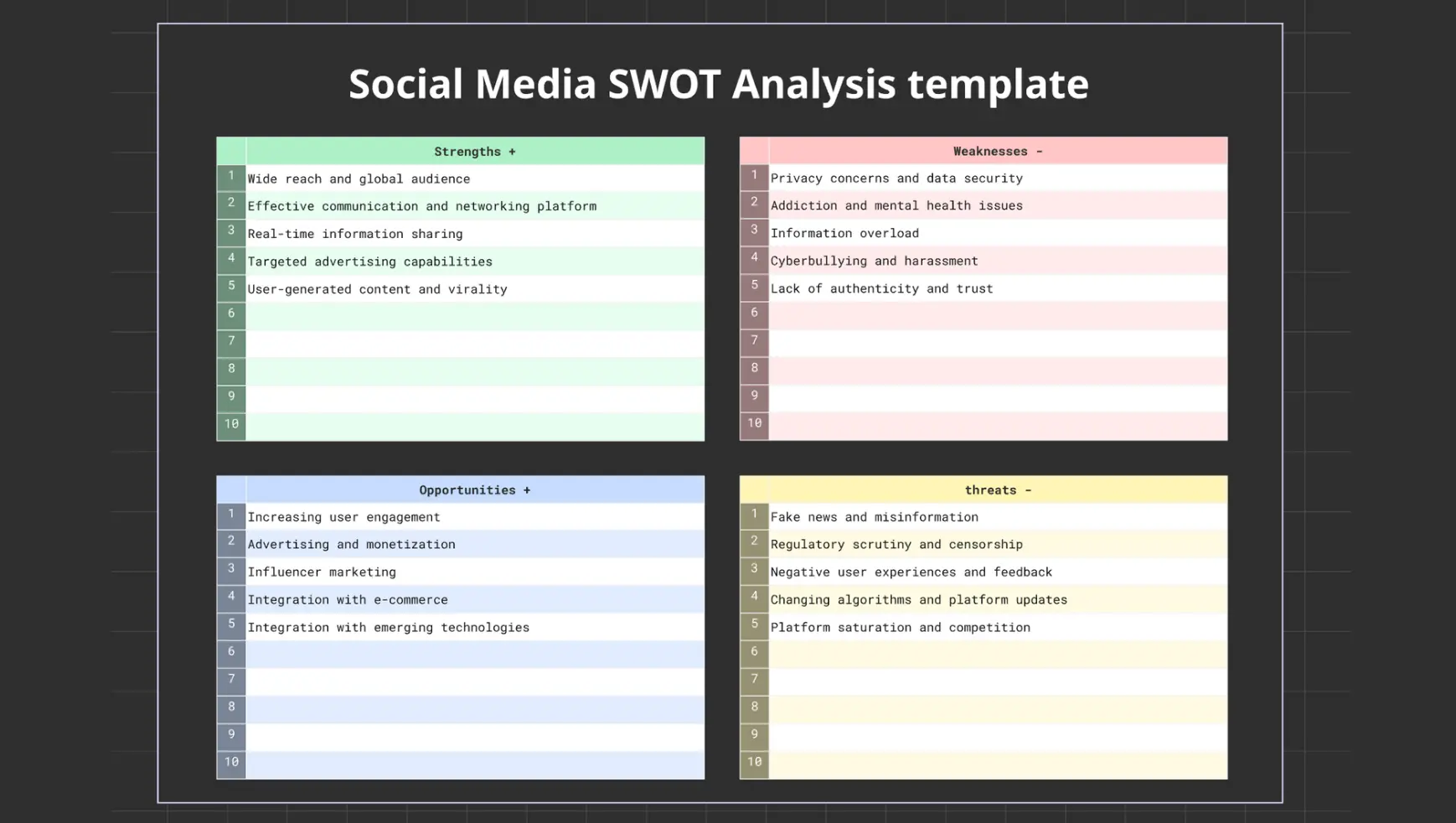
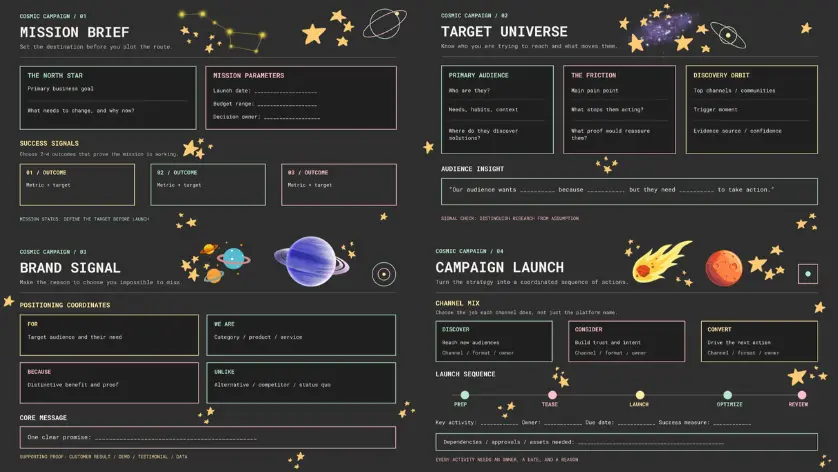
Select a template: Browse through Miro's collection of marketing plan templates and choose one that fits your needs. You can find templates for various types of marketing plans, including social media marketing plans, content marketing plans, and digital marketing plans.
Customize the template: Once you've selected a template, customize it to match your specific marketing goals and strategies. Add your brand elements, target audience details, and specific tactics you plan to use.
Collaborate with your team: Invite team members to collaborate on the template. Use Miro's real-time editing features to work together, share ideas, and make updates. This ensures that everyone is aligned and can contribute to the plan.
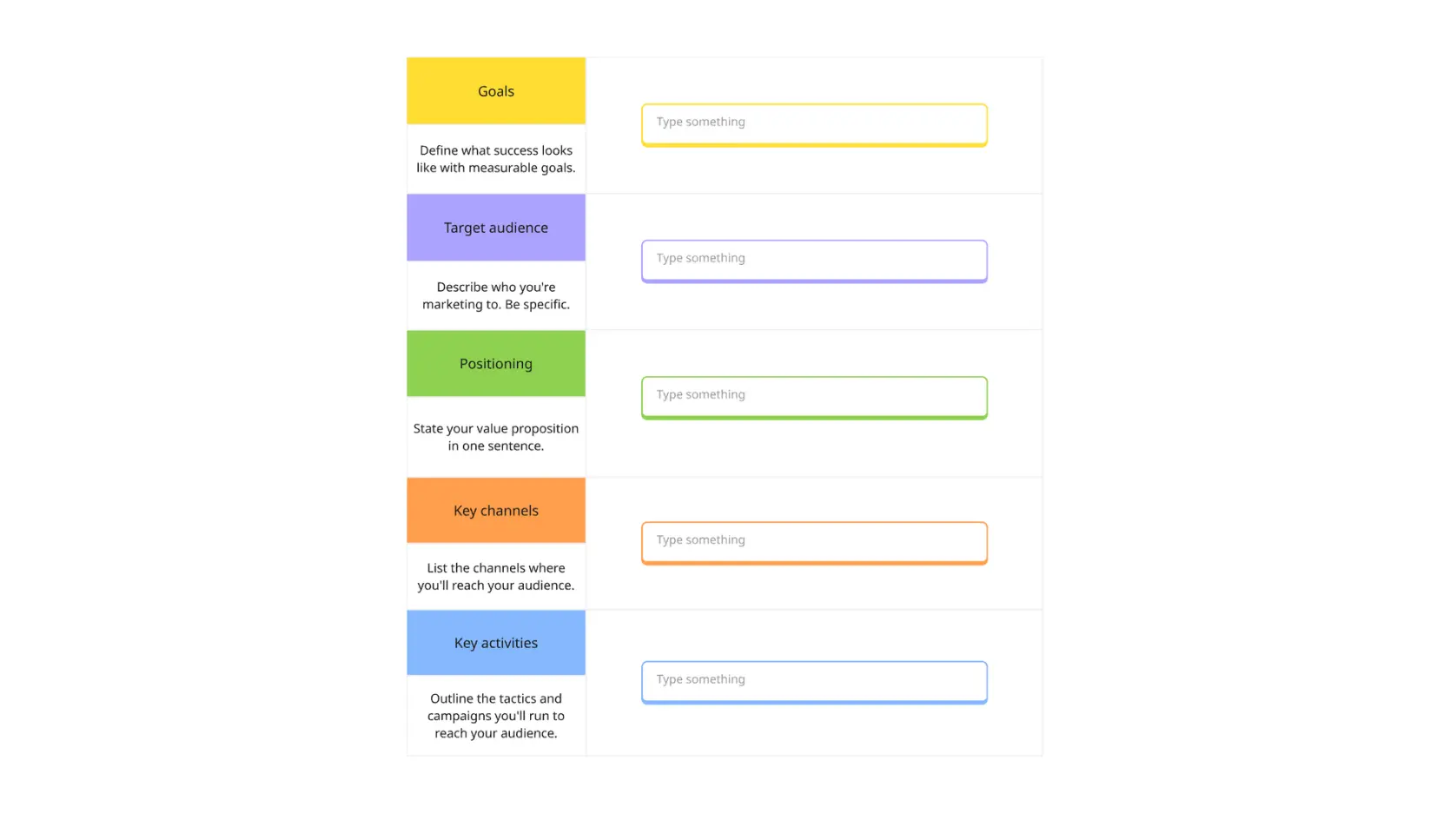
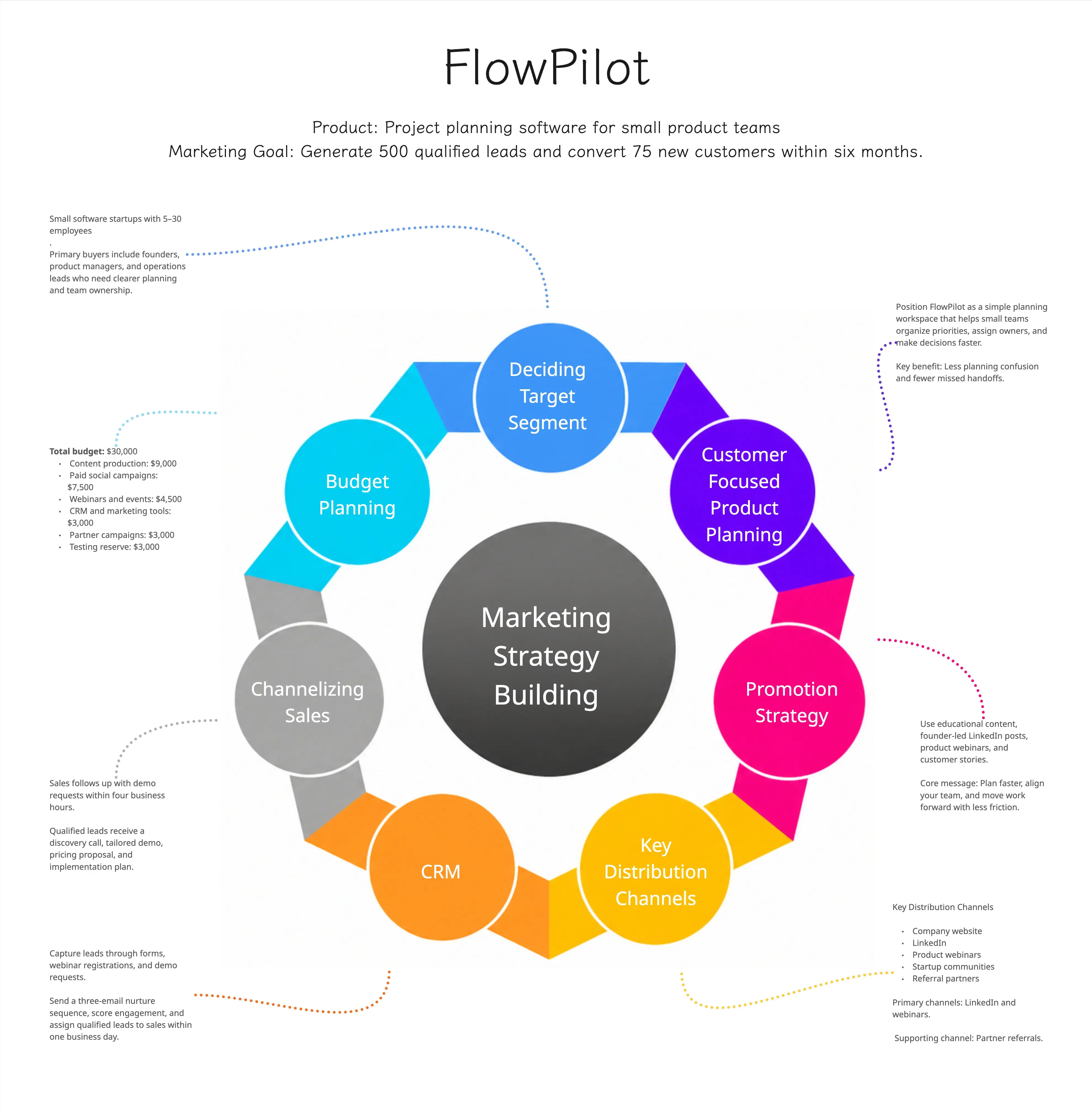
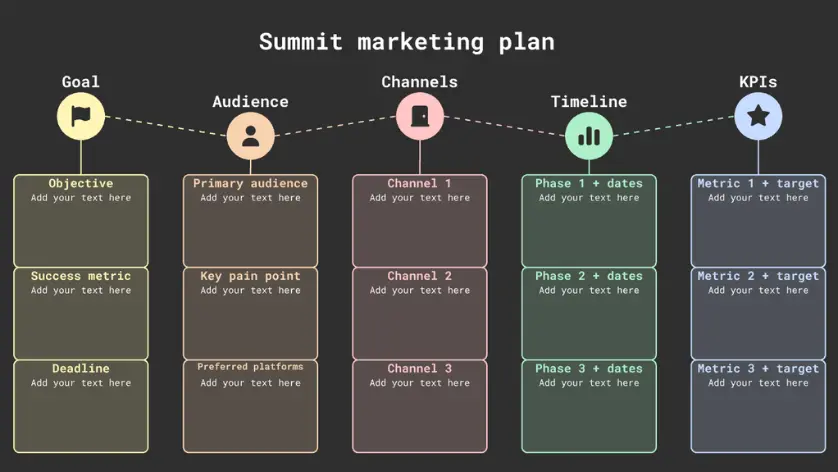
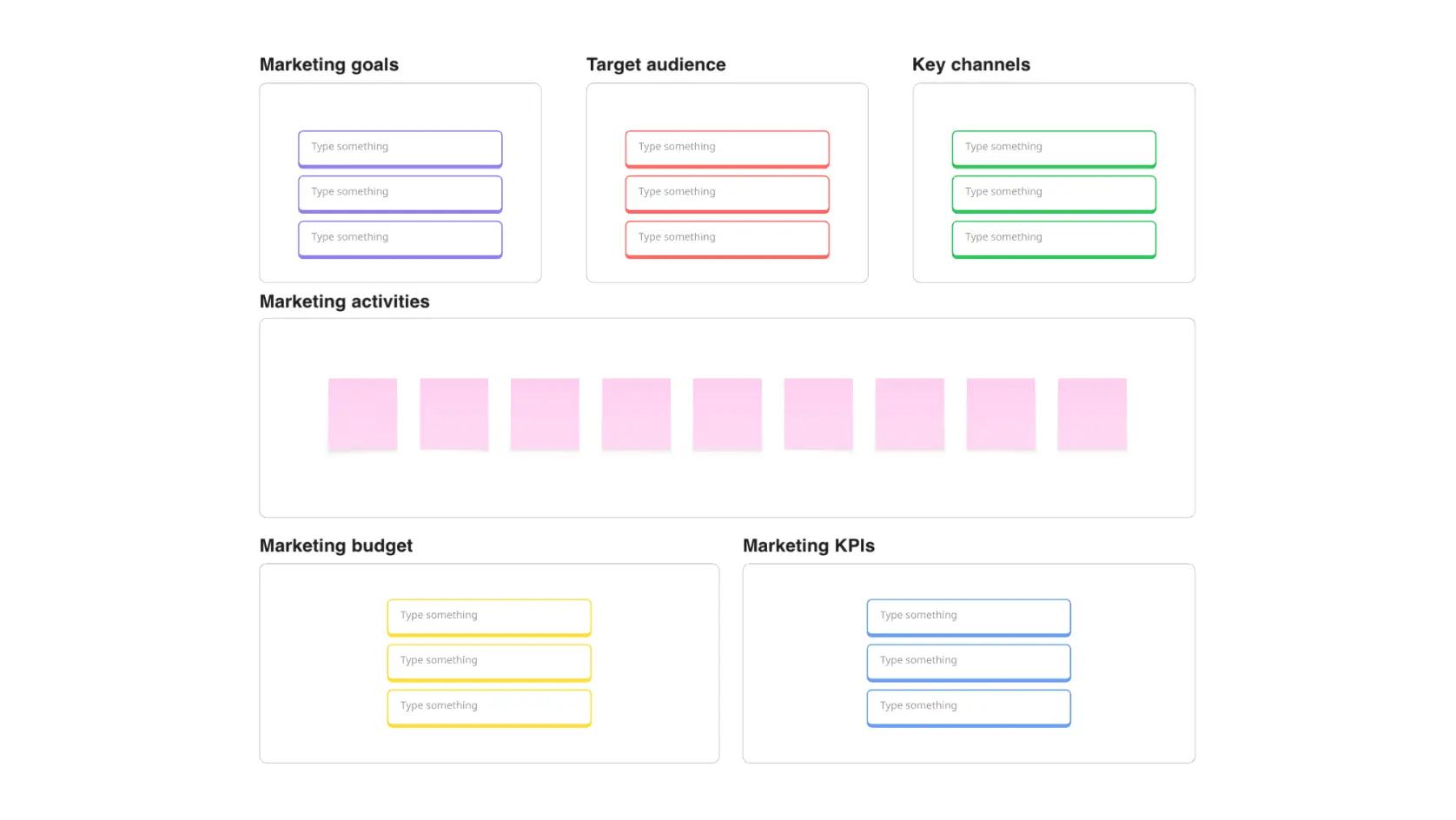
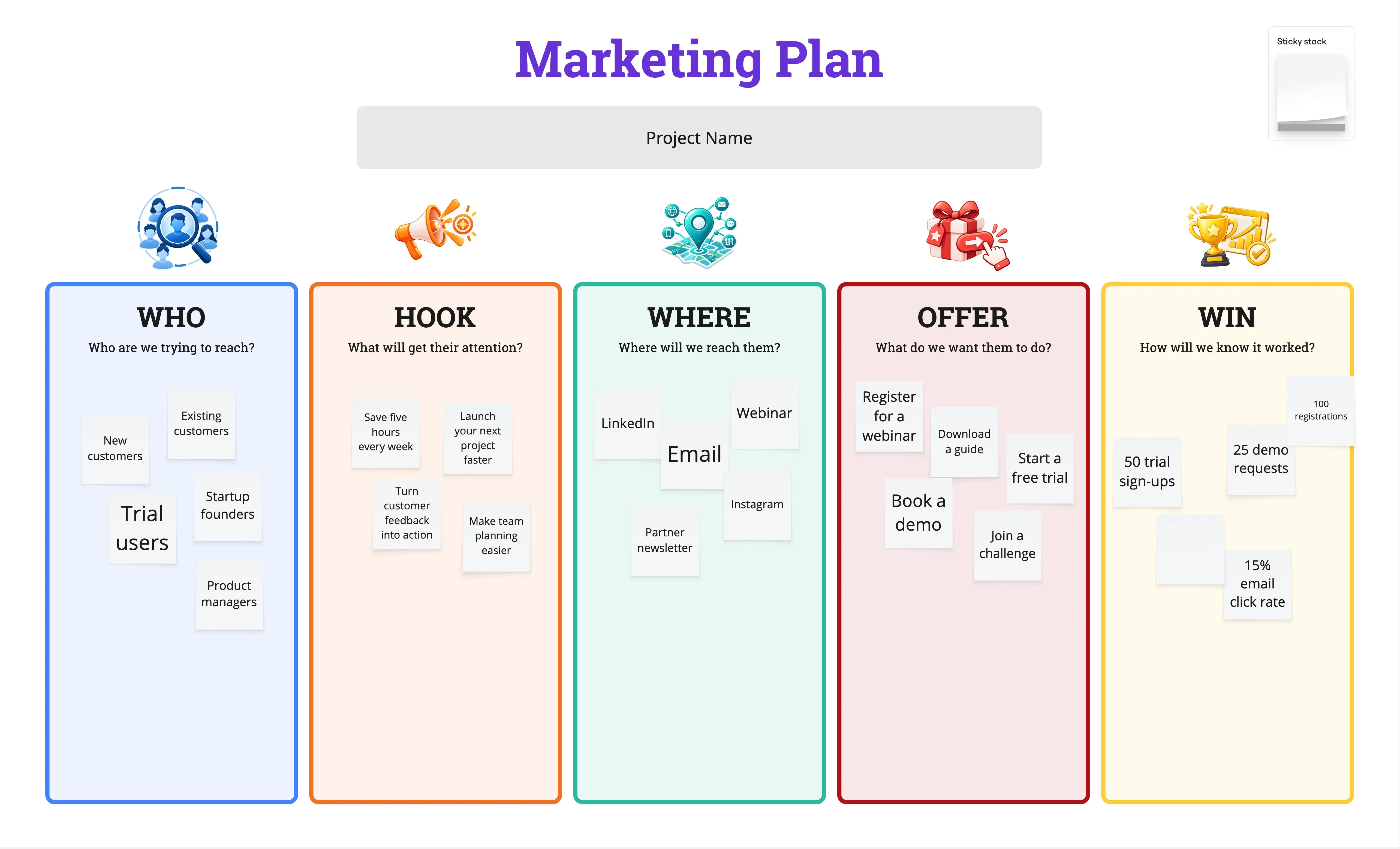
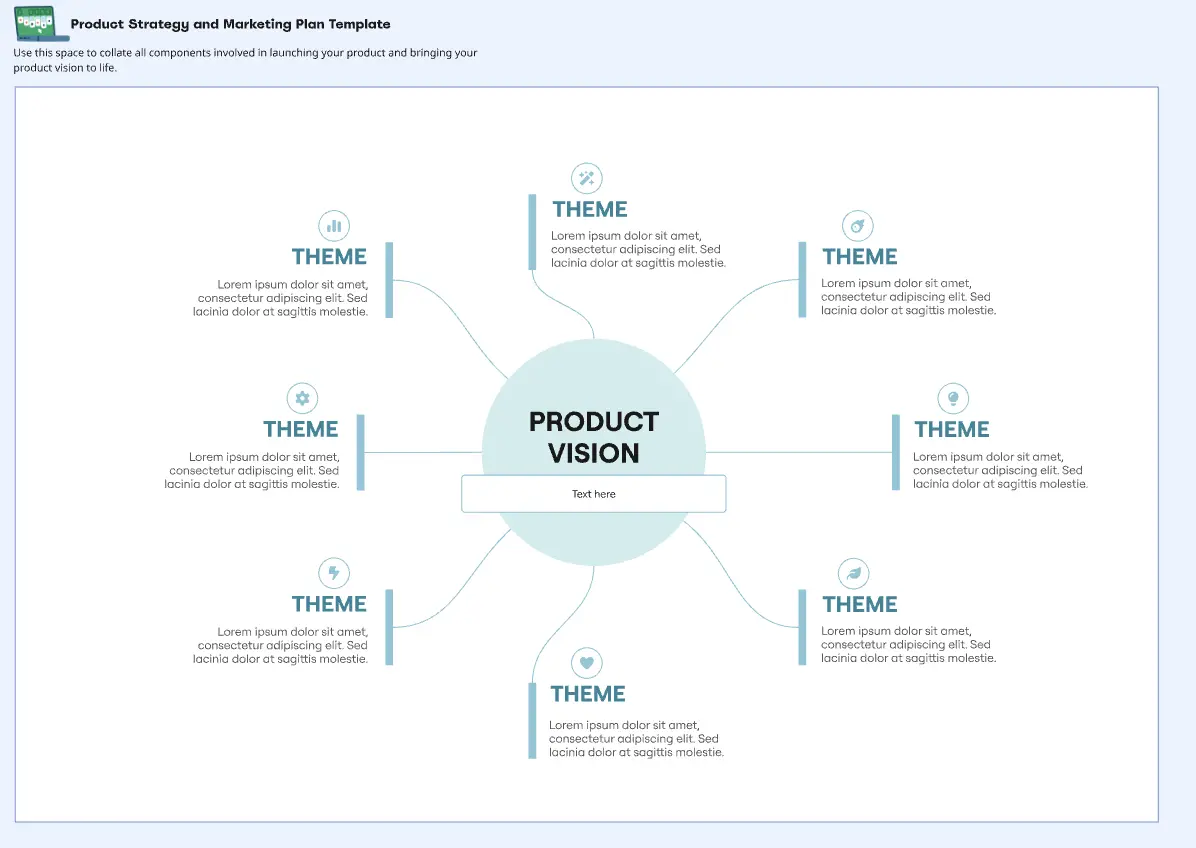
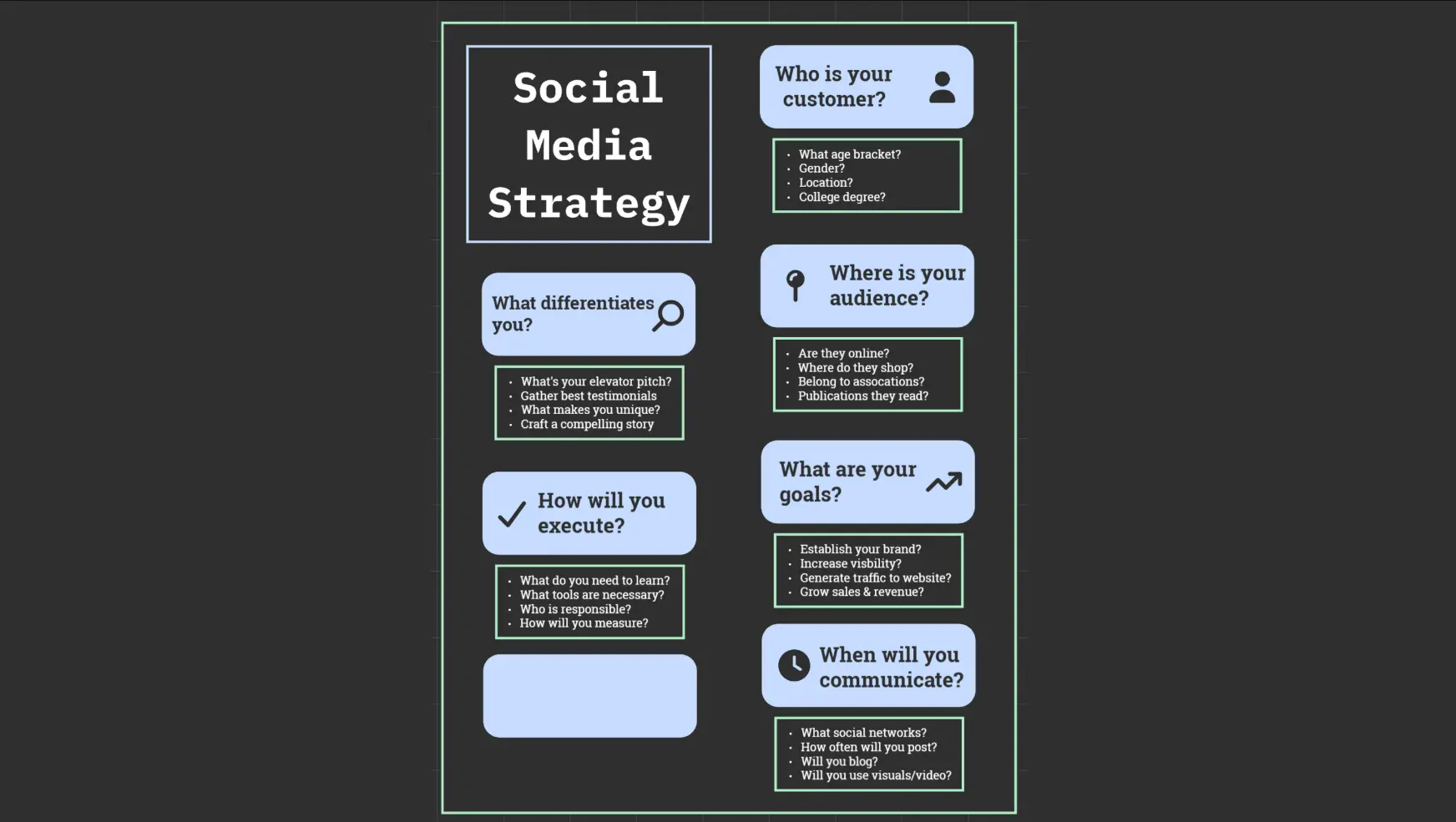
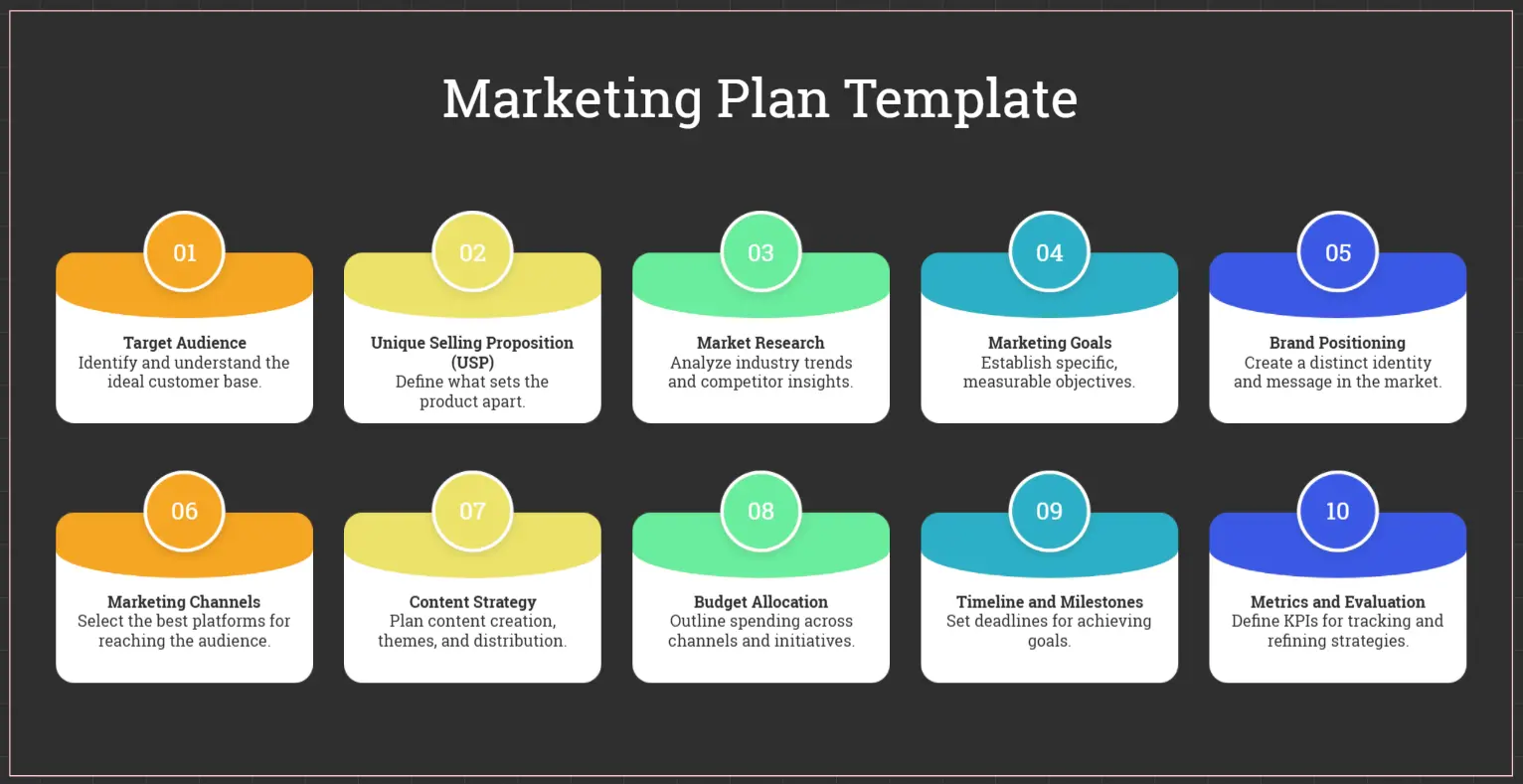
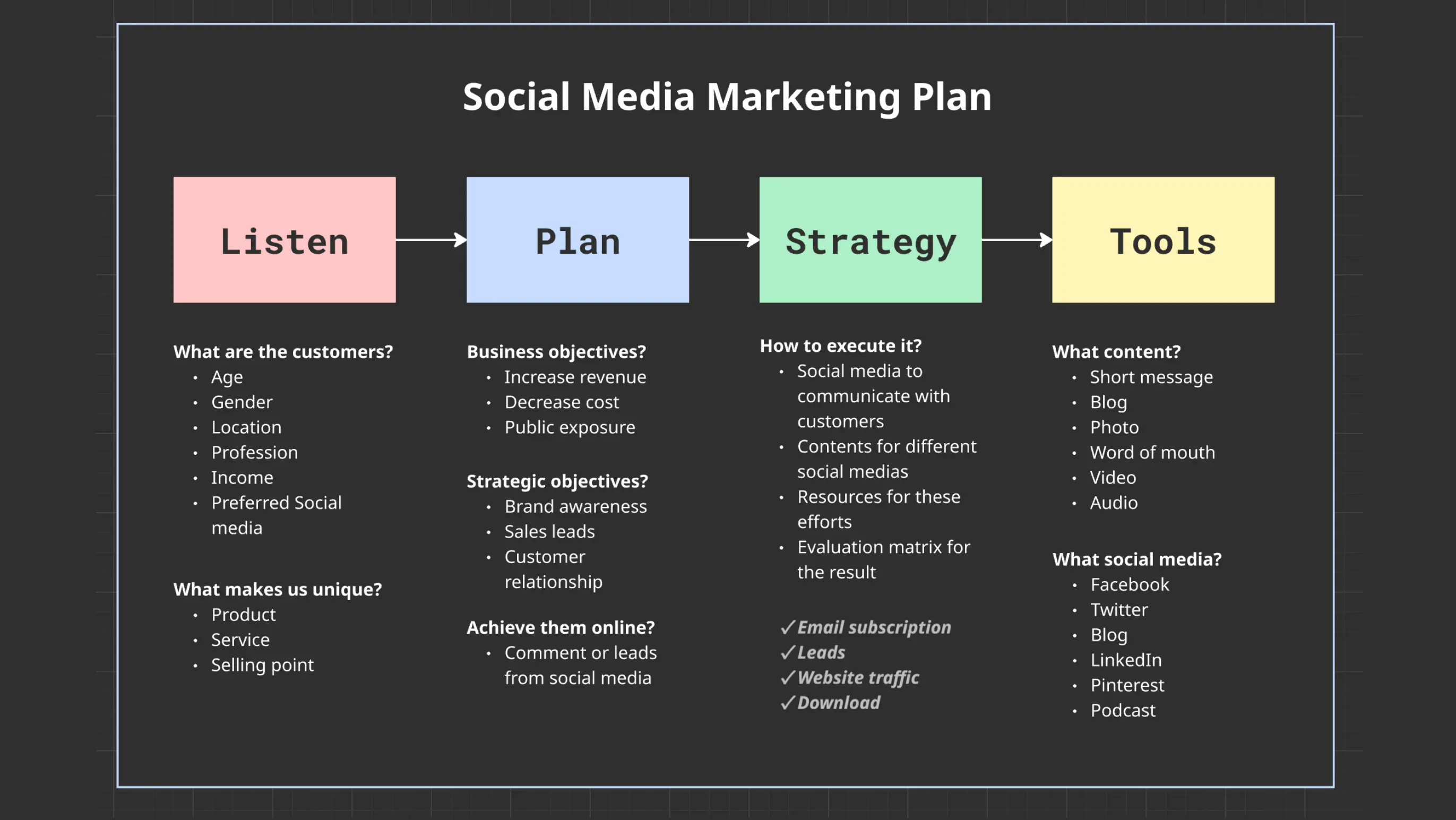
Outline your strategy: Use the template to outline your marketing strategy, including your goals, target audience, key messages, and channels. Be sure to include detailed plans for each marketing activity, such as content creation, social media campaigns, and paid advertising.
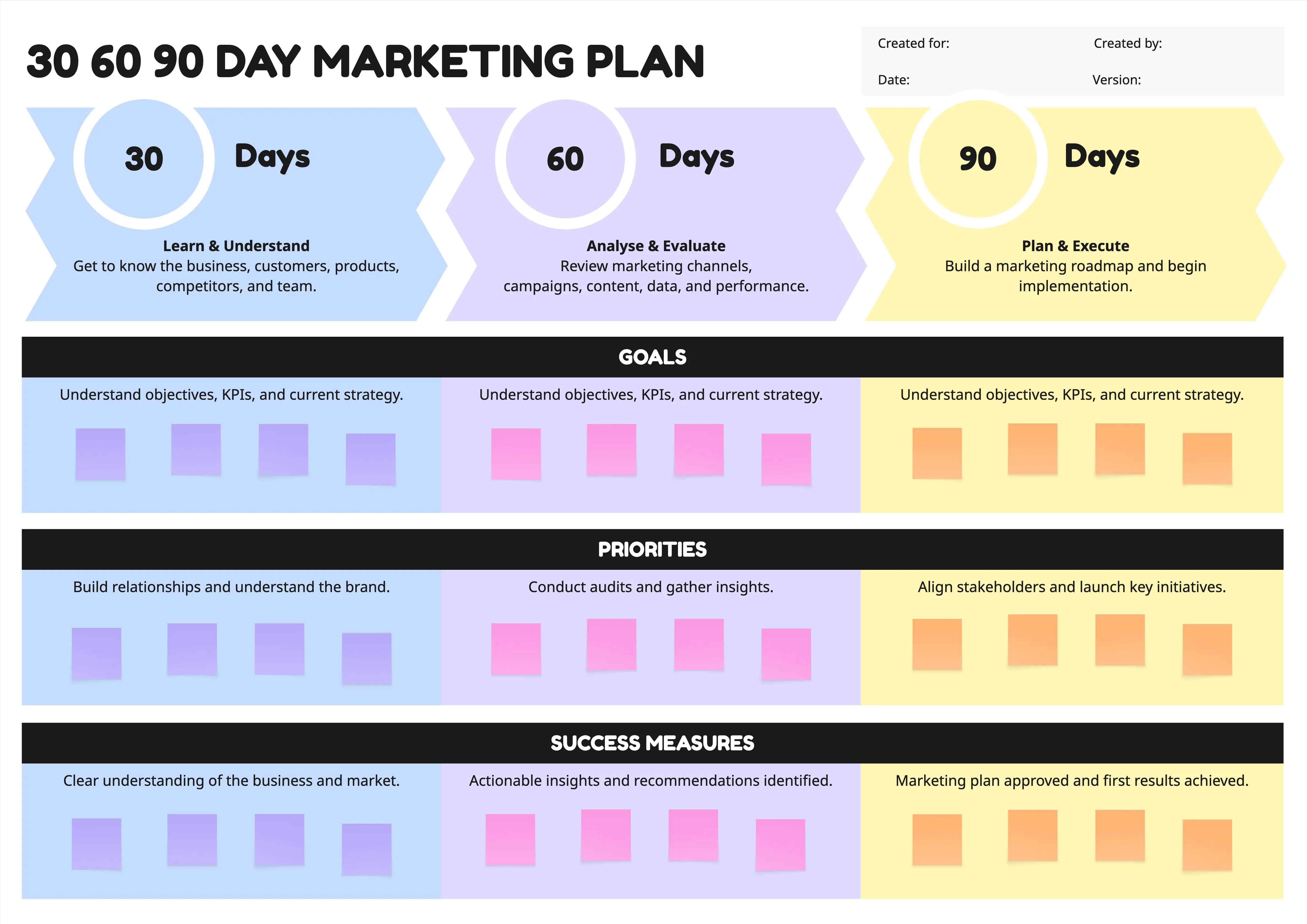
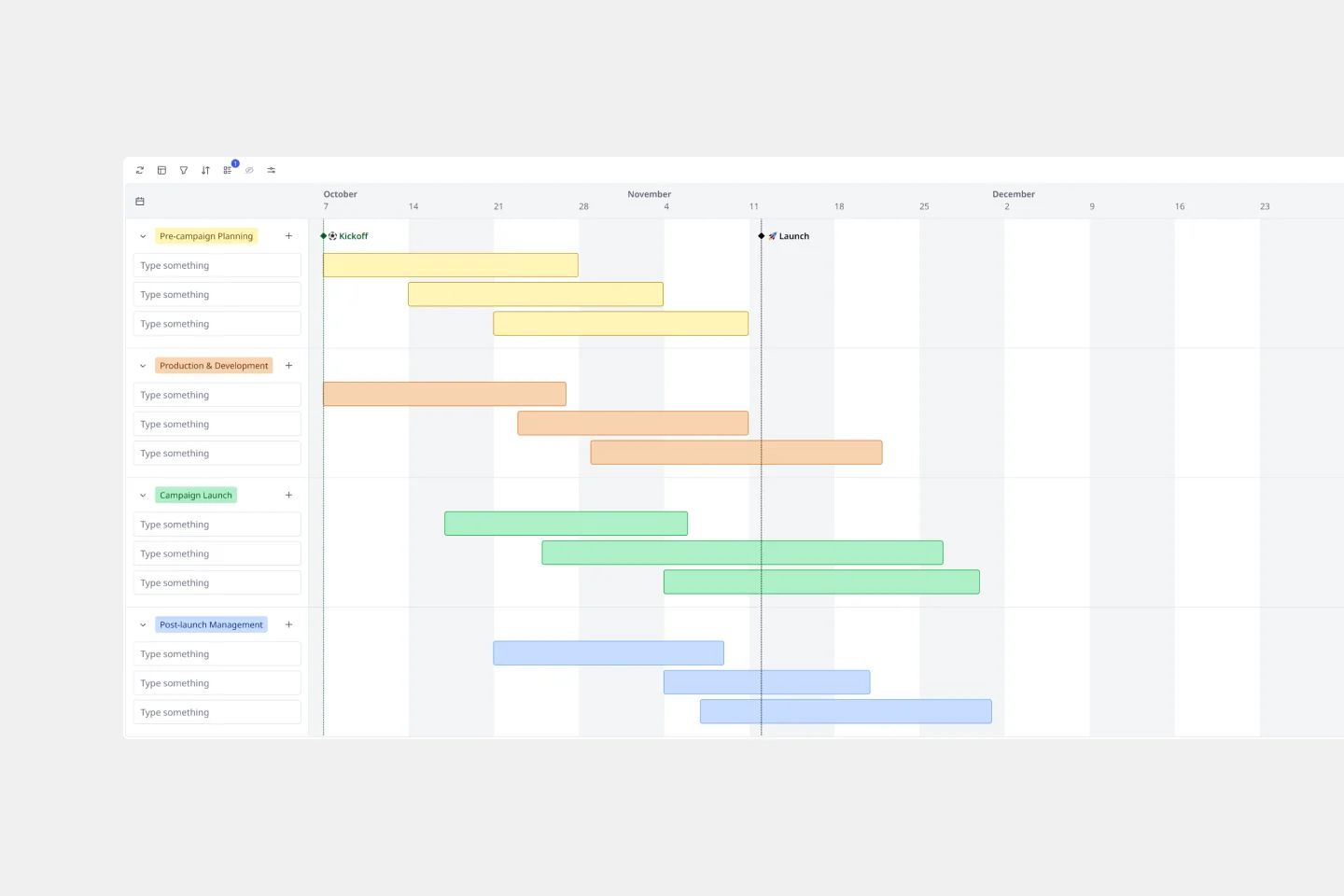
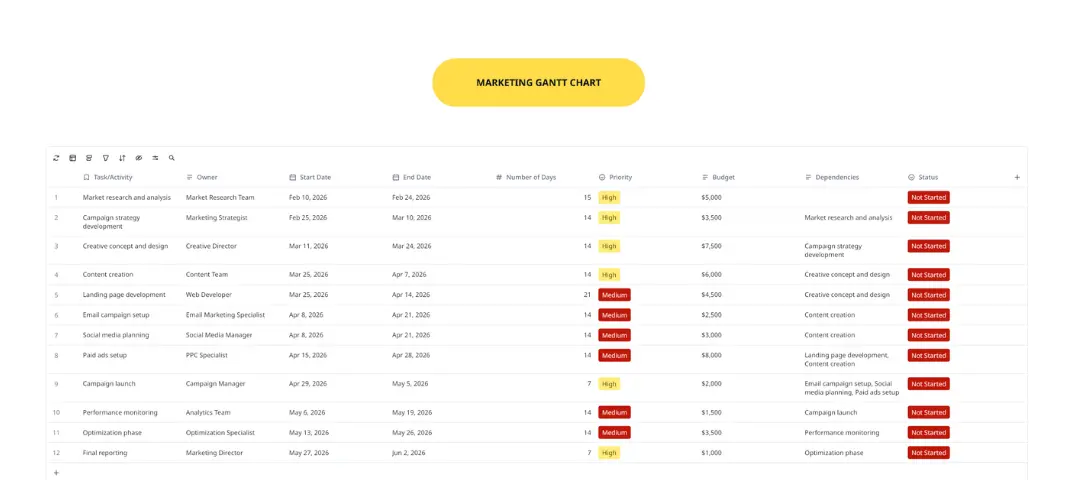
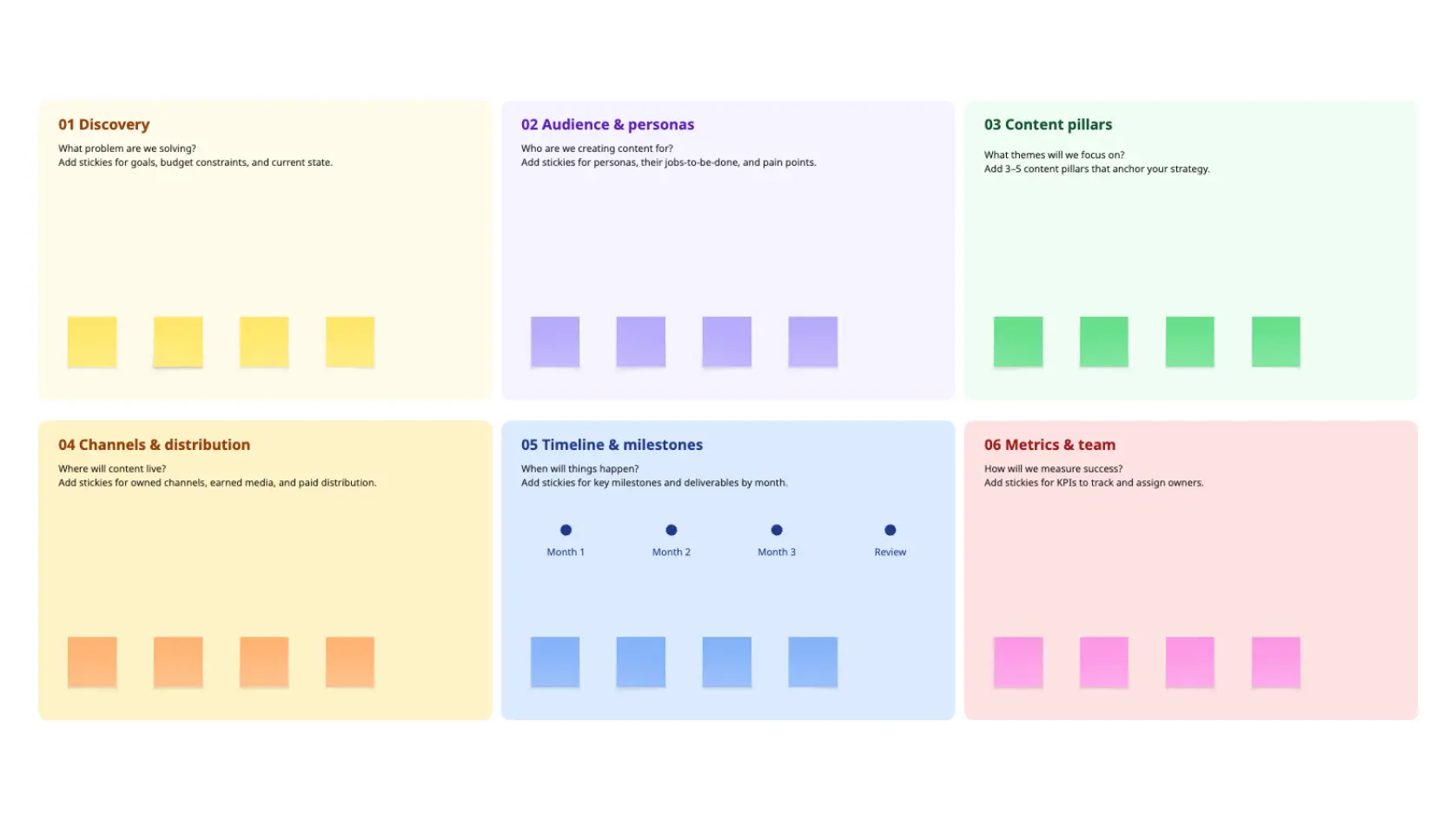
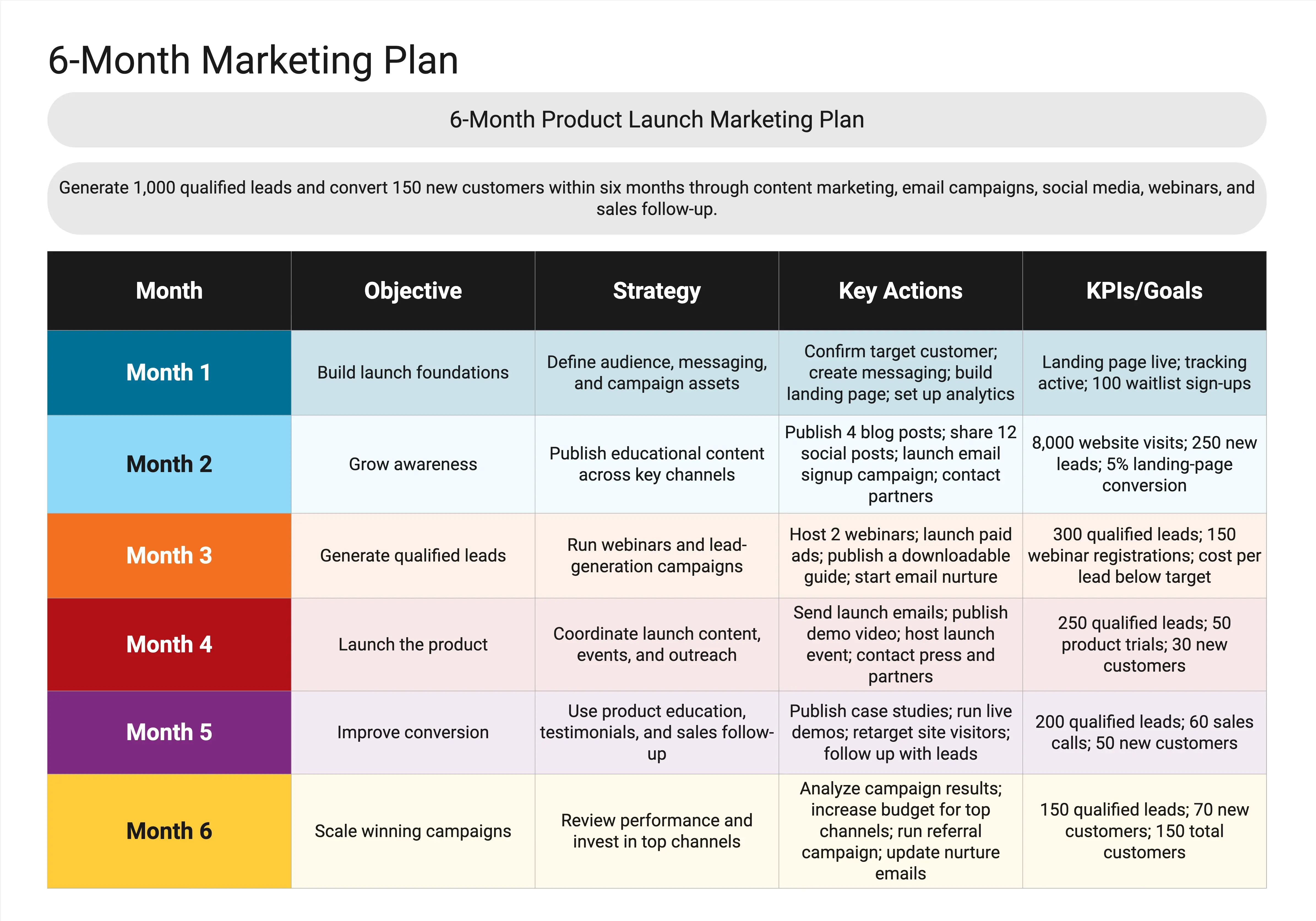
Set timelines and milestones: Define clear timelines and milestones for each phase of your marketing plan. This helps keep your team on track and ensures that you meet your deadlines.
Review and adjust: Regularly review your marketing plan and make adjustments as needed. Use Miro's visual tools to track progress, analyze results, and refine your strategies.
Execute and monitor: Once your plan is finalized, execute your marketing activities and monitor their performance. Use Miro to keep track of your campaigns, measure success, and make data-driven decisions.