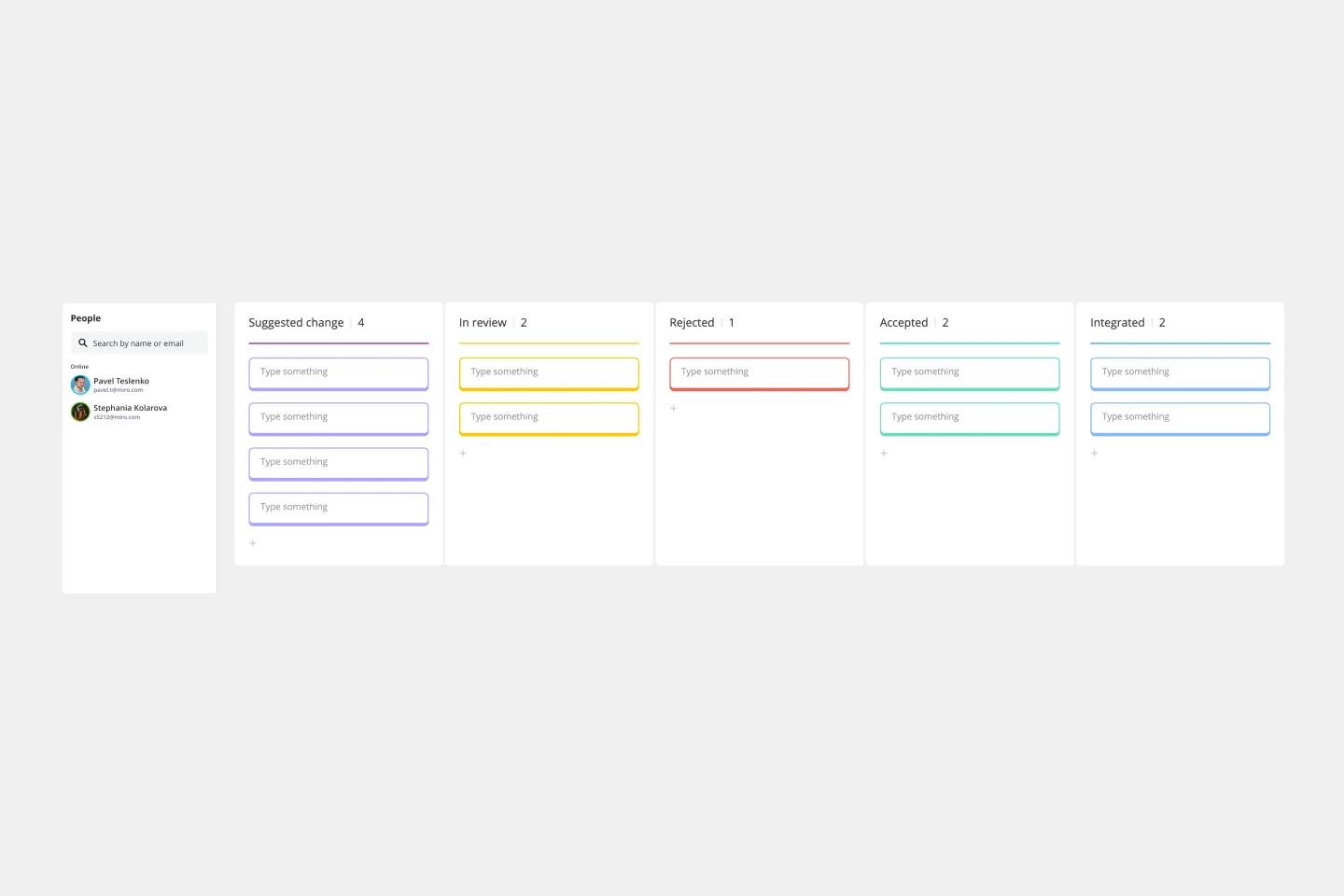
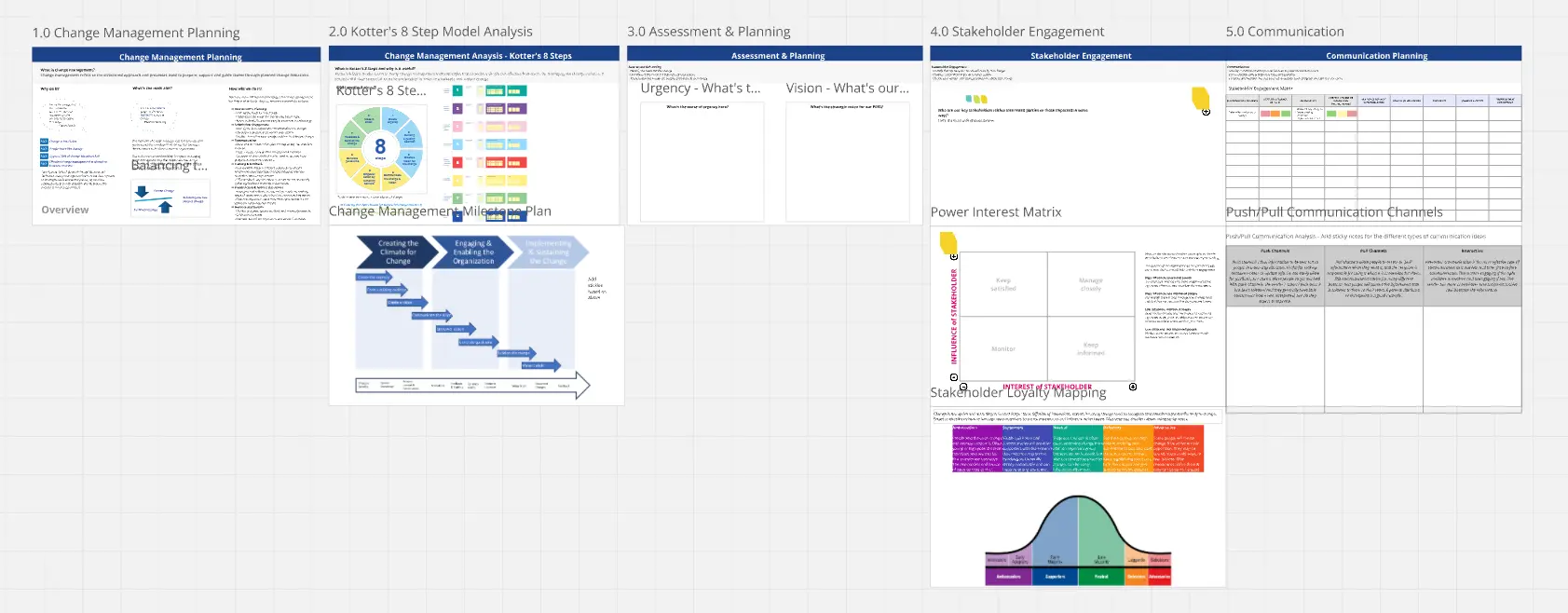
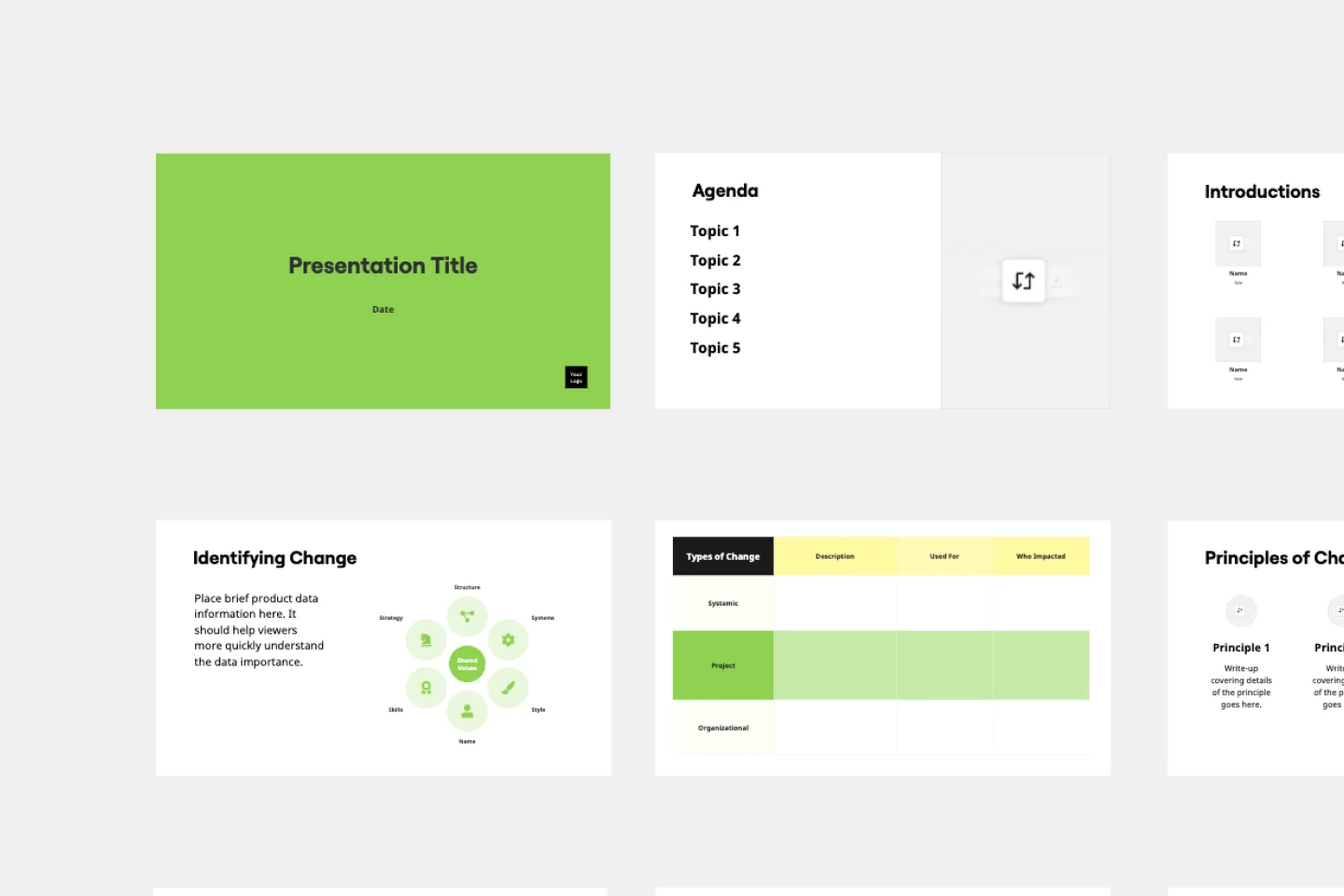
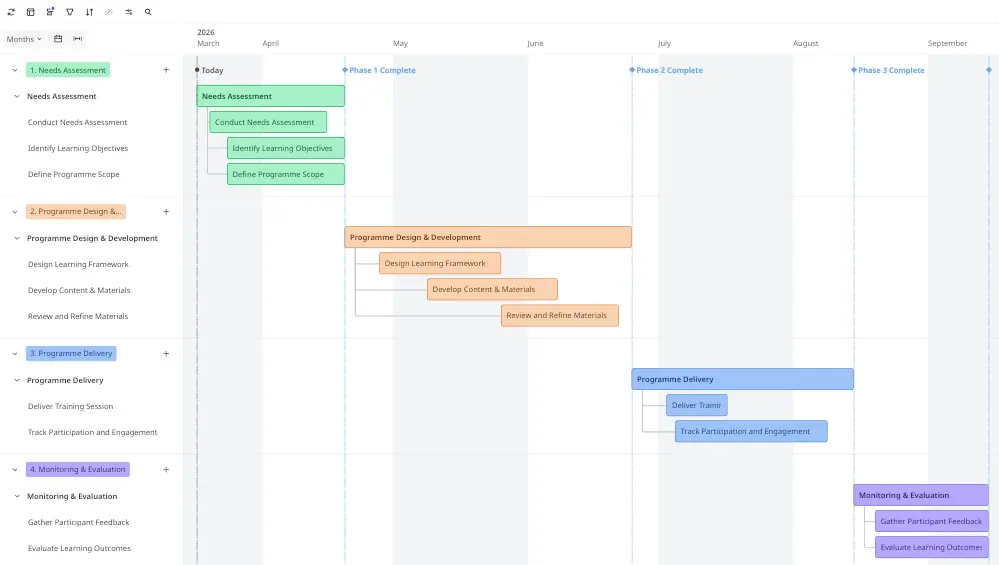
About the Change Management Templates Collection
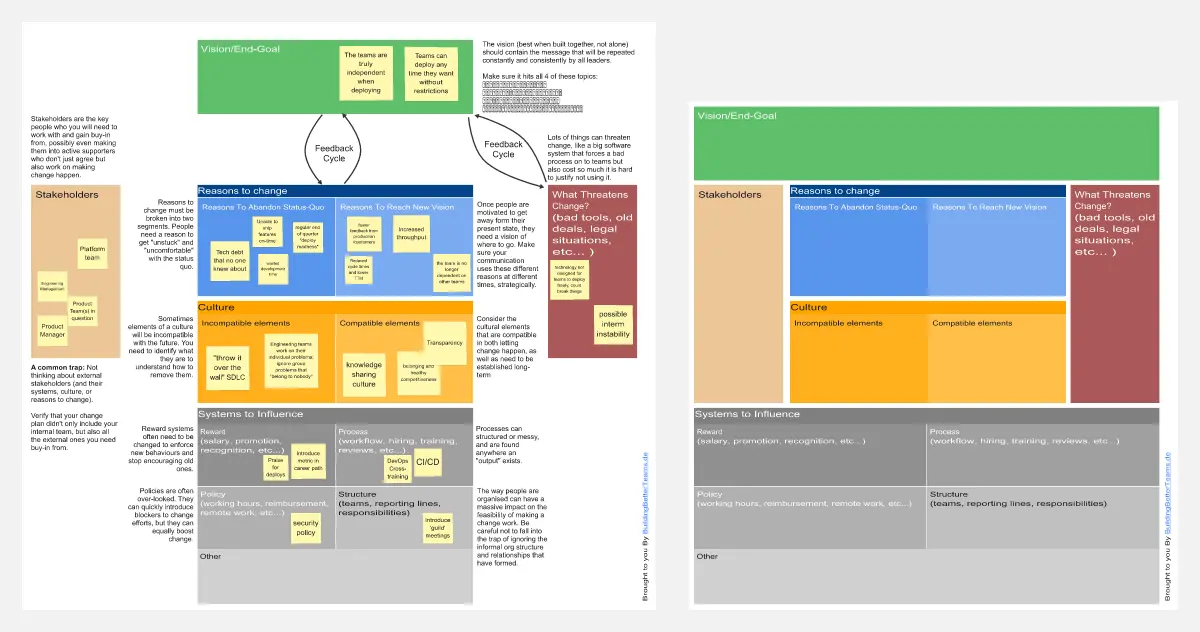
A change management template is a structured roadmap used to transition individuals, teams, and organizations from a current state to a desired future state. Unlike a standard project plan that tracks tasks, these templates track people. By defining communication strategies, training needs, and feedback loops, they minimize the "productivity dip" that occurs when systems or cultures shift.
Key Components of a Change Management Template
A professional change management template acts as a "Social Contract." Every high-performance Miro board should include these five elements:
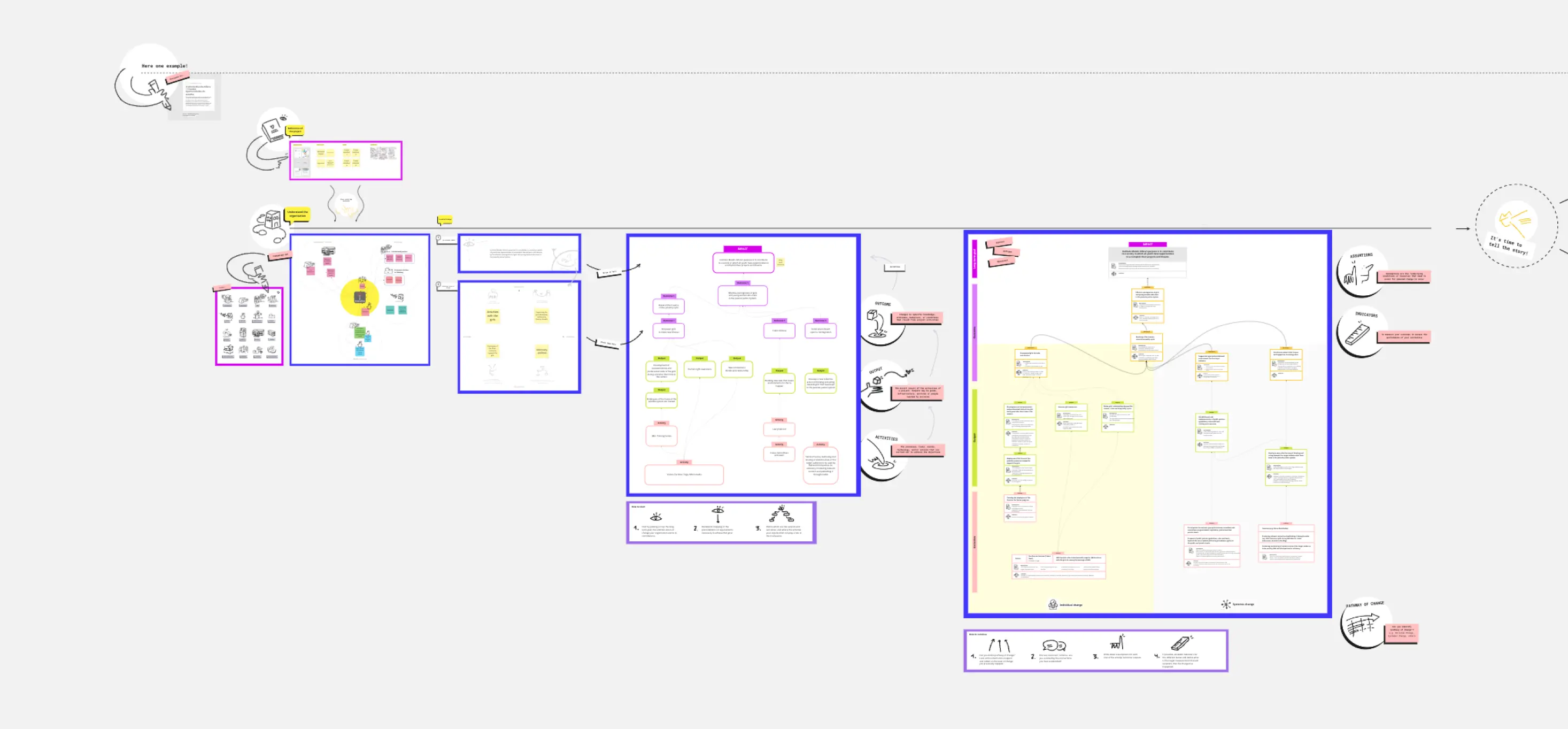
Impact Assessment: A grid identifying exactly who is affected and how their daily workflow will change.
Communication Matrix: A schedule of who says what, to whom, through which channel, and how often.
Training Plan: A curriculum mapping out the skills needed to operate in the future state.
Resistance Log: A proactive list of potential objections and the prepared "Counter-Arguments" or solutions.
Success Metrics (KPIs): Data points like "System Login Rates," "Support Ticket Volume," or "Employee Sentiment Scores."
Which Change Template Do You Need?
Select the Miro template that matches your organizational scale and culture:
The ADKAR Dashboard (Individual-First):
Best For: Managing personal transitions and coaching.
The Goal: To track progress through five stages: Awareness, Desire, Knowledge, Ability, and Reinforcement.
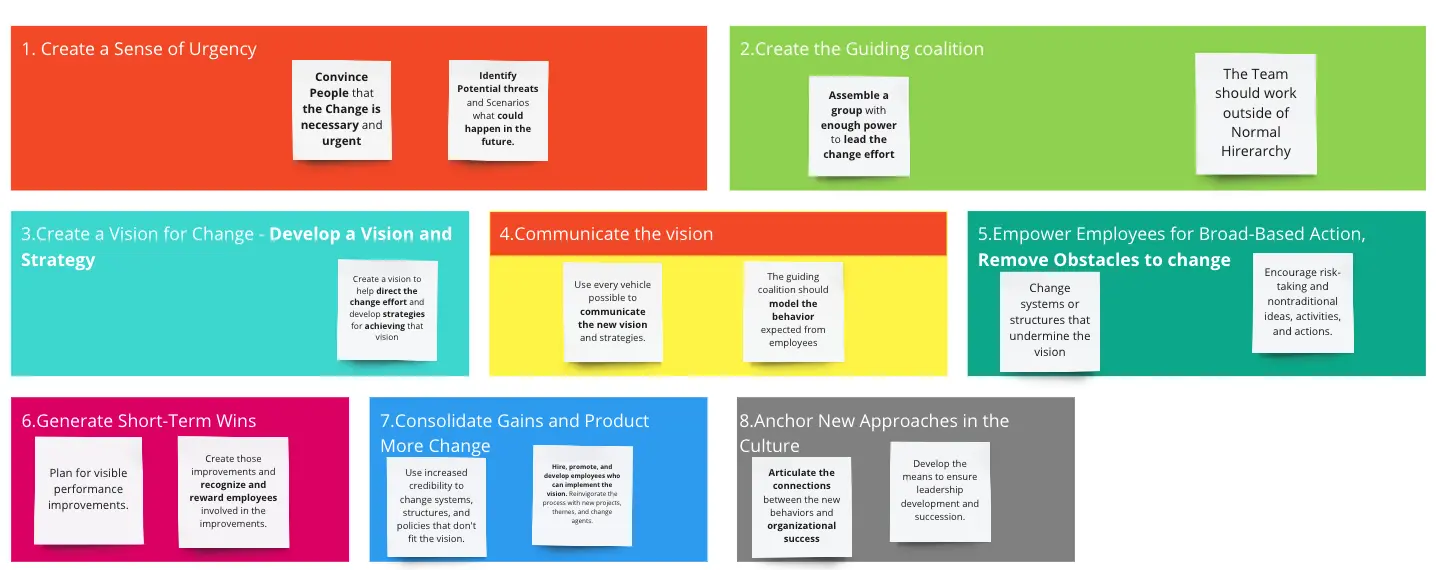
The Kotter 8-Step Roadmap (Enterprise-First):
The Lewin Force Field Analysis:
Best For: Decision-making and identifying roadblocks.
The Goal: To visualize the "Driving Forces" (pushing for change) vs. the "Restraining Forces" (preventing change) so you can weaken the resistance.
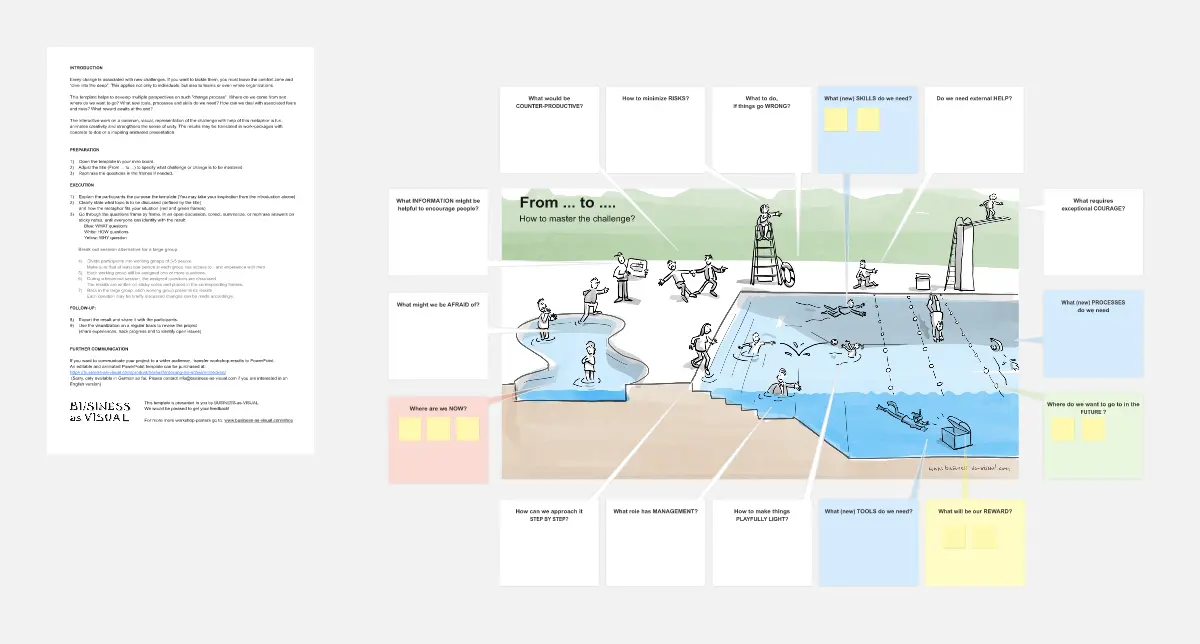
The Bridges Transition Model:
Best For: Emotional management during difficult shifts (like layoffs).
The Goal: To guide teams through the three psychological stages: Ending, The Neutral Zone, and The New Beginning.
How to use change management templates in Miro
Using Miro’s change management templates is straightforward. Follow these steps to get started:
Select a template: Browse our collection and choose a free change management template that fits your needs.
Customize the template: Tailor the template to your specific project by adding relevant details, such as timelines, responsibilities, and key milestones.
Collaborate with your team: Share the template with your team and collaborate in real time. Use Miro’s commenting and tagging features to gather feedback and make necessary adjustments.
Implement the plan: Once the plan is finalized, use the template to guide the implementation process. Track progress and make updates as needed.
Review and adjust: After the change has been implemented, review the outcomes and adjust the plan for future changes.
When to use change management templates
Change management templates are essential tools for guiding organizations through various transitions. They provide a structured approach to managing change, ensuring that all critical aspects are addressed. Here are some scenarios where these templates are particularly useful:
Organizational restructuring: When your company is undergoing significant structural changes, such as mergers, acquisitions, or departmental shifts, change management templates help in planning and communicating these changes effectively.
Technology implementation: Introducing new software or systems that require user adaptation can be challenging. Templates assist in outlining the steps needed for a smooth transition, including training and support.
Process improvements: Streamlining or modifying existing processes to enhance efficiency can benefit from a structured approach. Templates help document the changes, assess risks, and ensure all stakeholders are informed.
Policy changes: When new policies are introduced, templates can help in communicating the changes, training employees, and monitoring compliance.
By using Miro’s change management templates, teams can navigate changes more effectively, ensuring a smoother transition and better outcomes.