About the Team Working Agreement Templates Collection
A Team Working Agreement (TWA) template is a co-created visual workspace designed to establish shared norms, behaviors, and operational expectations for an Agile or collaborative team. Serving as the team’s "Social Contract," this template aligns members on how they will communicate, collaborate, and handle conflict before the work even begins. By utilizing a standardized Miro template, teams can transparently map out their operational boundaries, transform unwritten expectations into explicit commitments, and cultivate a foundation of psychological safety.
Key Components of a Working Agreement Template
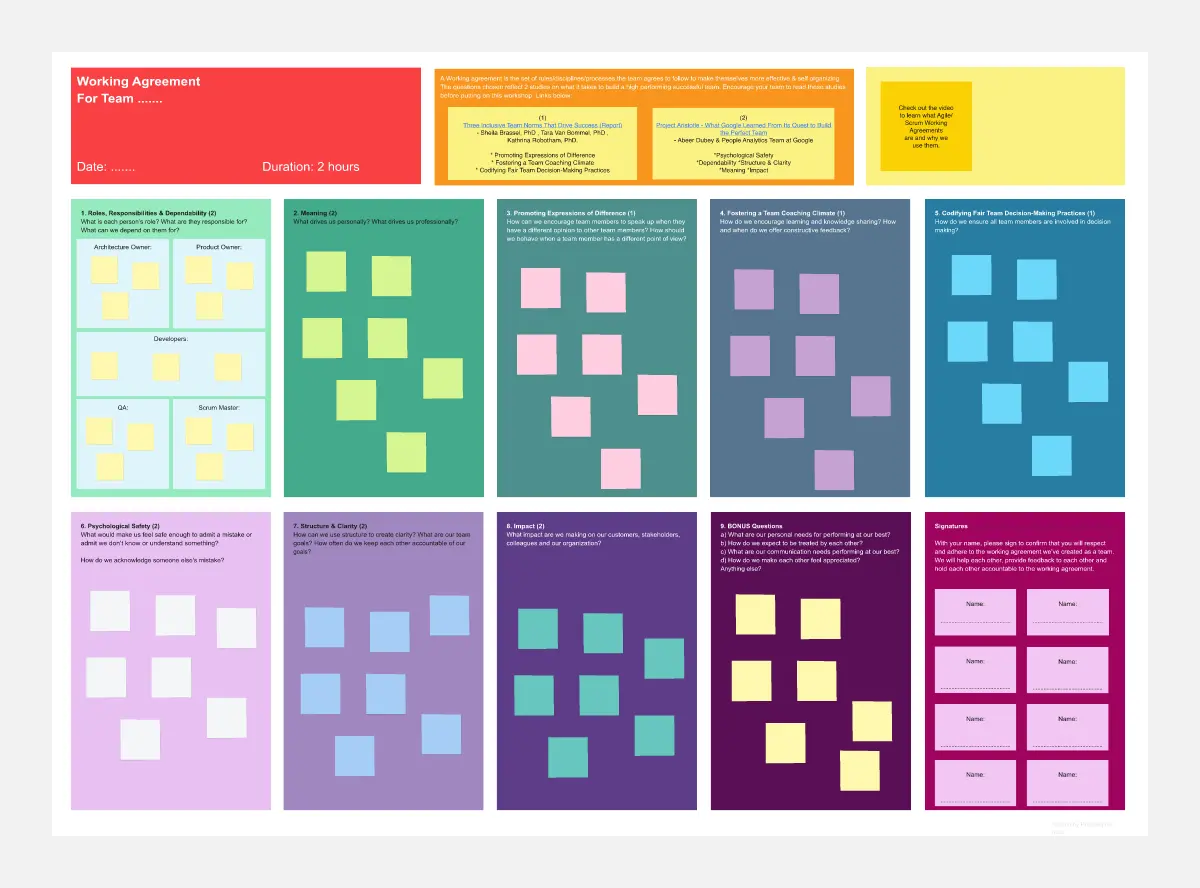
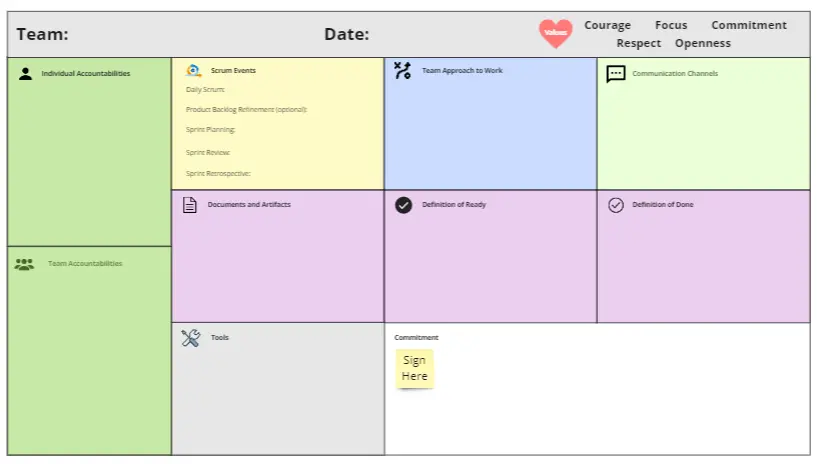
A robust Working Agreement template goes beyond simple ground rules; it maps out the team's entire operational ecosystem. Every high-performance Miro TWA board should include these five core elements:
Core Values & Philosophy: A dedicated section to capture what the team stands for (e.g., transparency, psychological safety, extreme ownership) to anchor all subsequent rules.
Communication Matrix: Distinct zones mapping out which channels to use for what (e.g., Slack for quick updates, Email for formal updates, Miro for brainstorming) alongside expected response times.
Meeting Boundaries (Ritual Rules): Clear guidelines for team ceremonies, defining expectations around camera usage, punctuality, active participation, and timeboxing.
Definition of Done (DoD) & Ready (DoR): Visual check-lists defining exactly when an item is mature enough to be pulled into a sprint, and precisely what criteria it must meet to be considered fully complete.
The Conflict Resolution Protocol: An agreed-upon mechanism for navigating disagreements or handling missed commitments without breaking trust.
How to Use Team Working Agreement Templates in Miro
1. Select and Initialize the Template
Choose a Team Working Agreement template from Miro’s library during a team kickoff, project launch, or sprint zero. Ensure the board is shared with edit access for all team members.
2. Silent Brainstorming (The Discovery Phase)
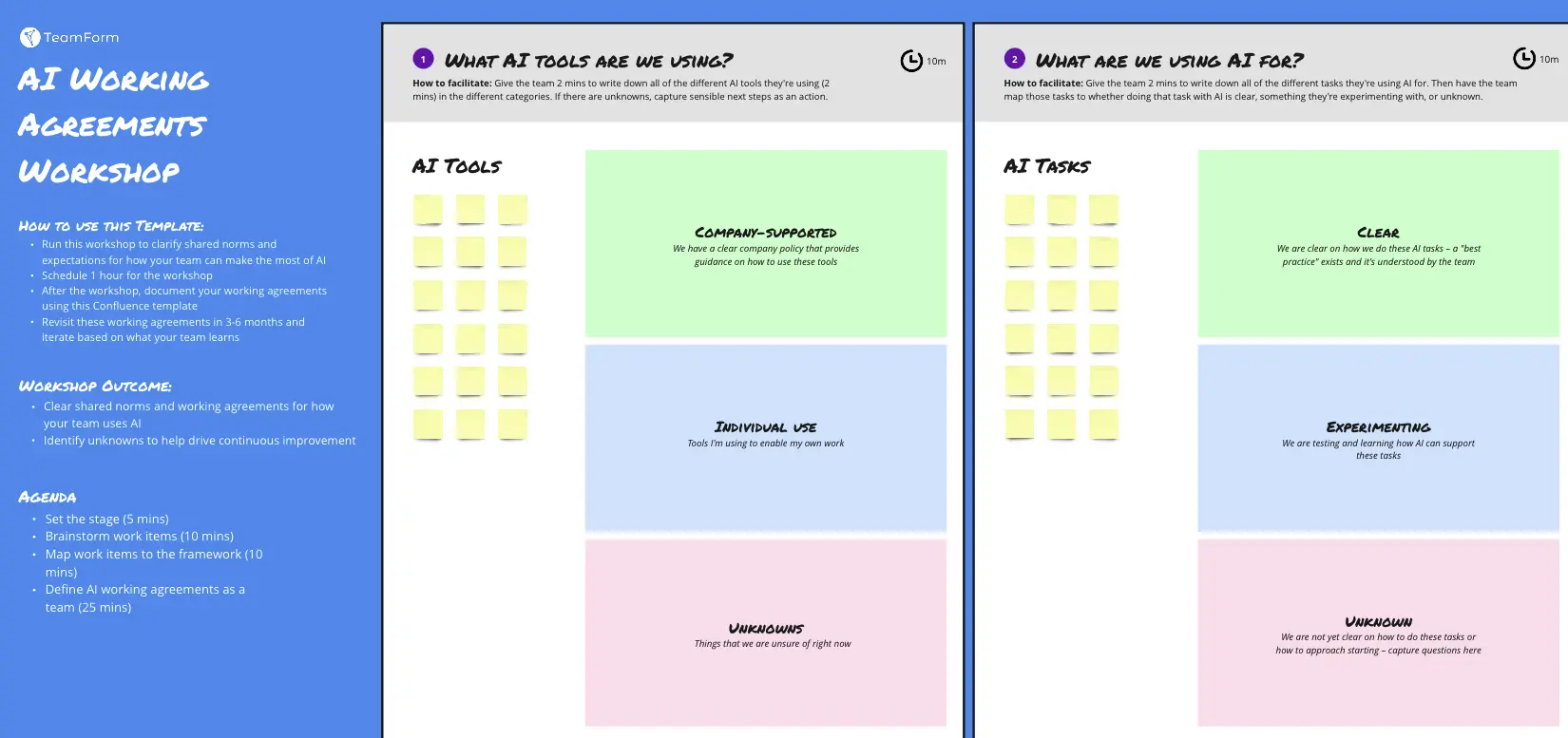
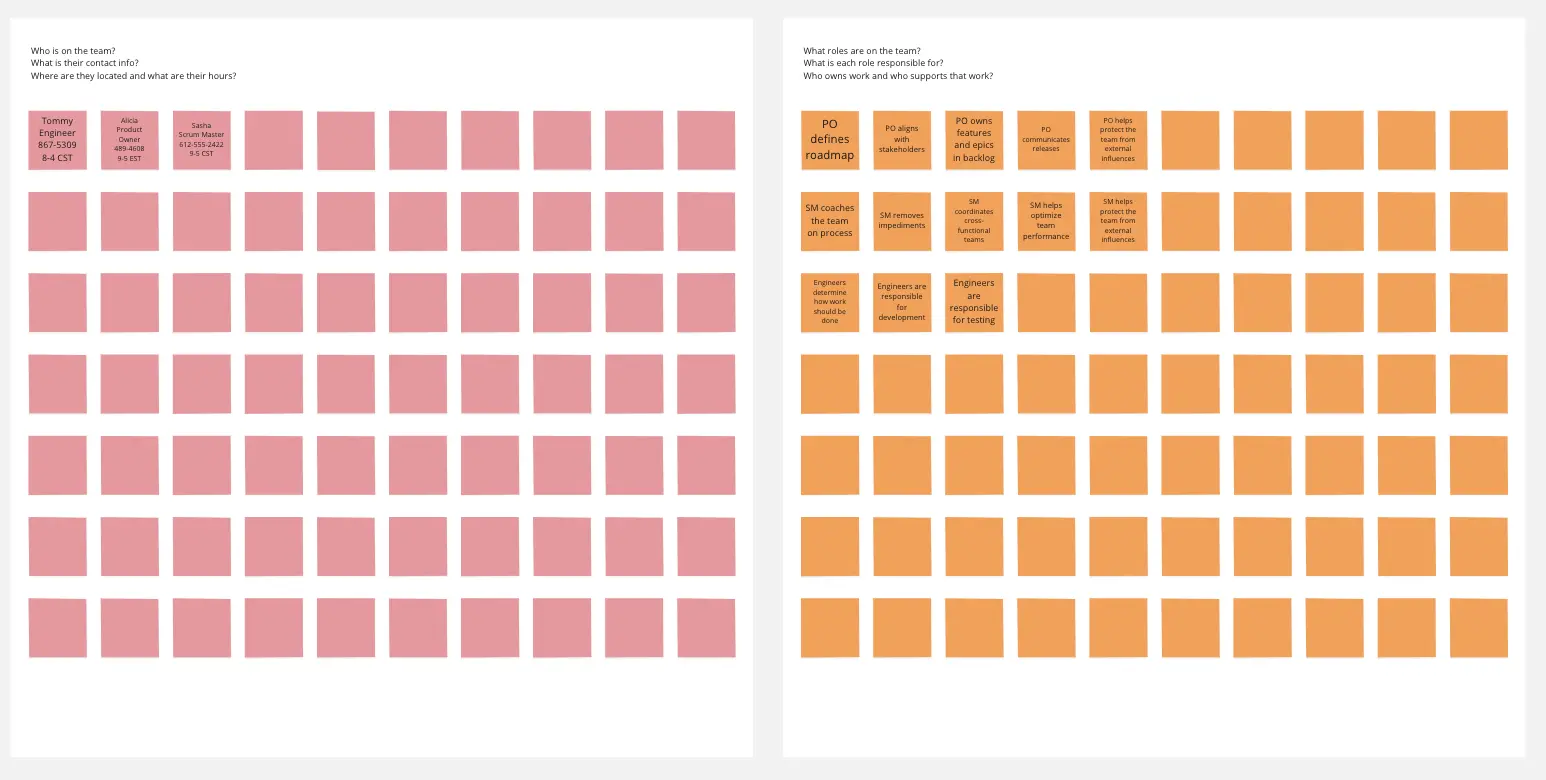
Give the team 10 minutes to quietly use digital sticky notes to write down their ideal working conditions, communication preferences, and past frustrations across the various sections of the board.
3. Cluster and Consolidate
Group similar sticky notes together using Miro’s drag-and-drop or tagging features. Discuss the clusters as a group to identify common themes and eliminate redundancies.
4. Debate, Refine, and Vote
Review each section together. Use Miro’s built-in timer to keep discussions moving efficiently. For any controversial norms, use the Fist of Five voting method to adjust the wording until the entire team genuinely commits to the rule.
5. Finalize and Publish
Condense the finalized notes into clear, actionable bullet points. Lock the background elements of the Miro board so they cannot be accidentally moved, and pin the link to the team's primary documentation hub or Slack channel for quick reference.
6. Review and Evolve
A working agreement is a living document, not a rigid checklist. Revisit the Miro board during Sprint Retrospectives every few weeks. Ask the team: "Are these rules still serving us, or do we need to adapt them?" Update the board to reflect the team's evolving maturity.

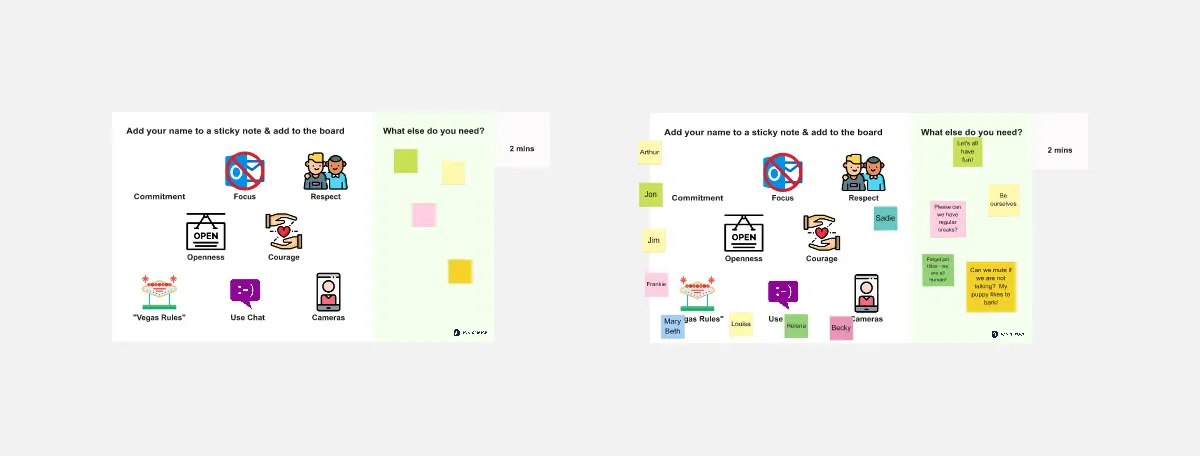



![Team Agreement [Sub-Canvas]](https://template-metadata-service-static.miro.com/images/templates/1yX3klpXrAAhPeViWwxW3W/preview-1725020078227.webp)