559likes
1.4Kuses
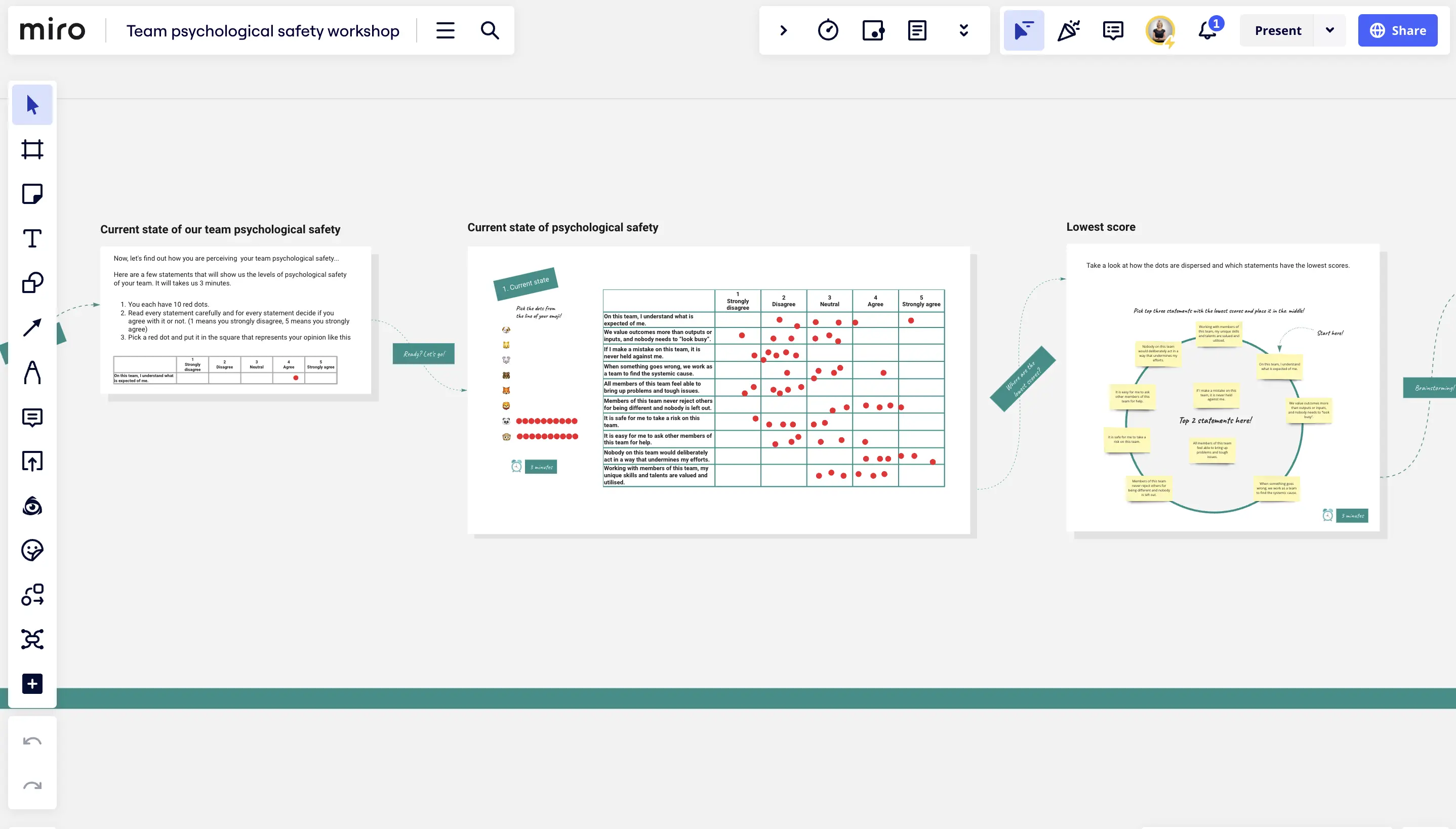
Explore Psychological Safety templates and examples from Miro. Free editable templates ready to use for teams, online and collaborative.
8 templates
A Psychological Safety Check template is an essential diagnostic visual workspace designed for Scrum Masters, agile coaches, and team leaders to measure the team's level of interpersonal trust and vulnerability. In a psychologically safe environment, team members feel comfortable taking risks, asking questions, flagging mistakes, and challenging assumptions without fear of negative consequences or humiliation. By utilizing a standardized Miro template, teams can anonymously quantify their current level of comfort, surface underlying team friction, and establish concrete behavioral guardrails to create a safe space for open collaboration.
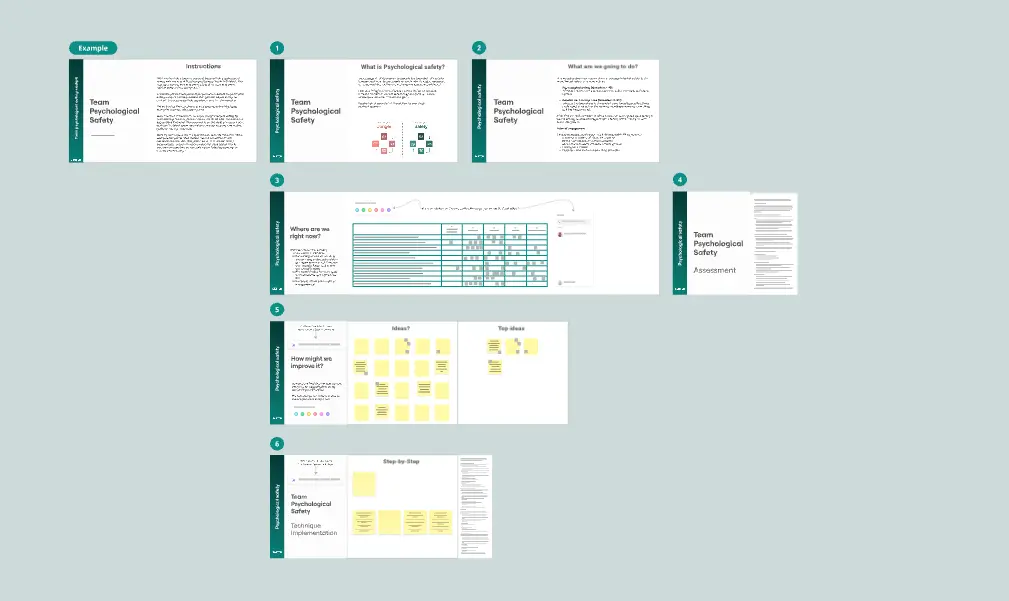
To protect individuals and ensure completely honest feedback, a psychological safety board requires thoughtful, protective structural design. Every actionable Miro safety check template should include these five core elements:
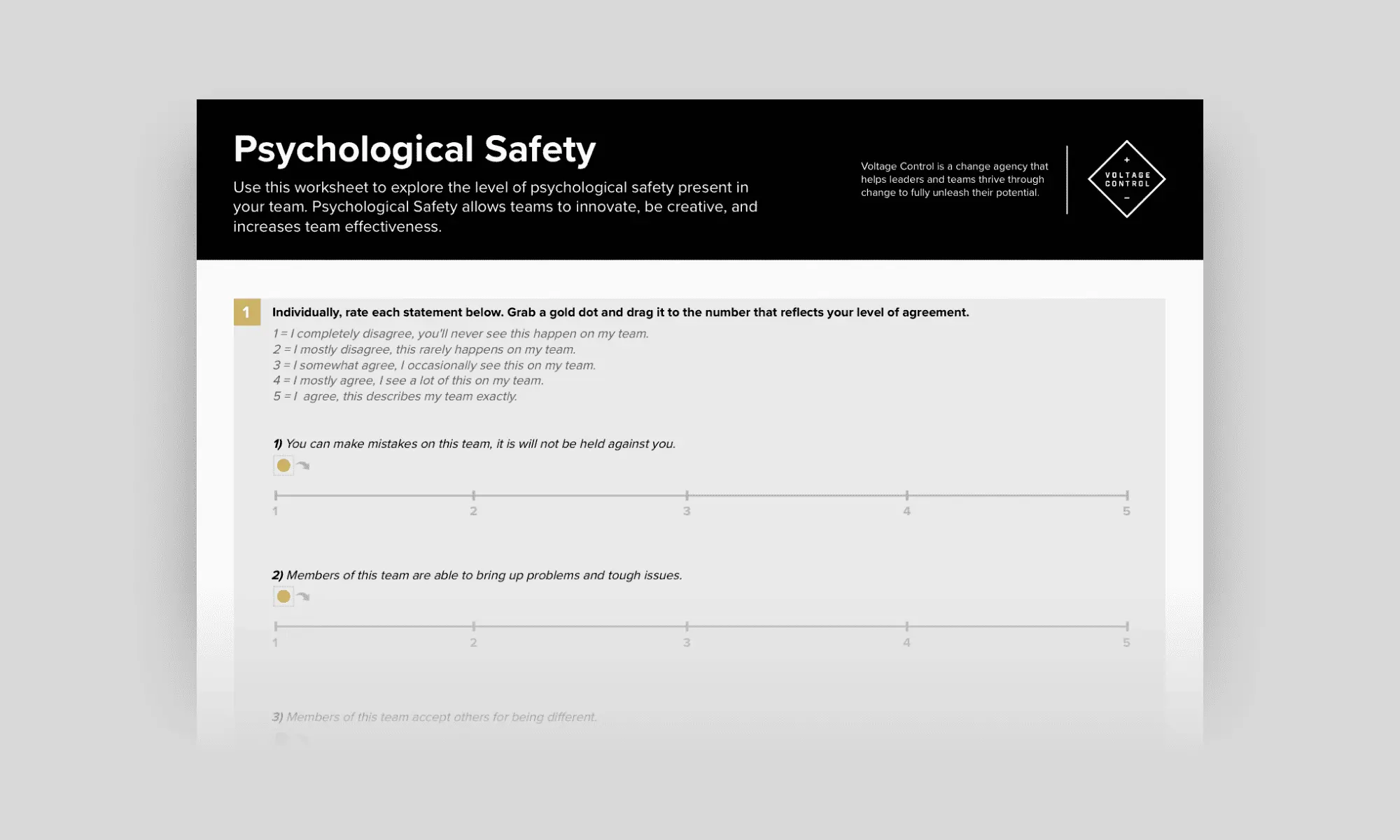
The Anonymous Voting Vault: A dedicated, hidden, or highly protected zone where team members can cast blind assessment scores away from the immediate sight of peers or managers.
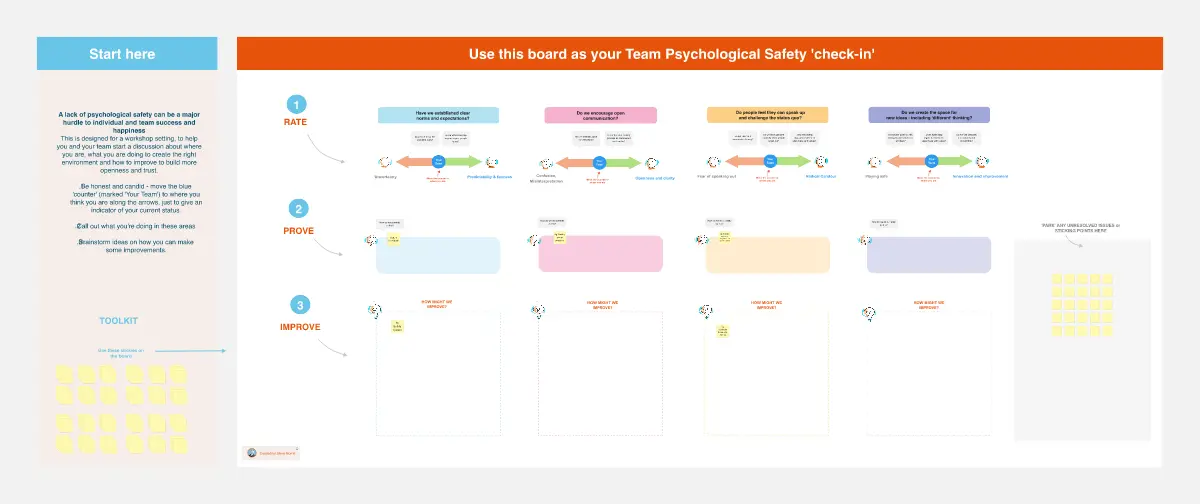
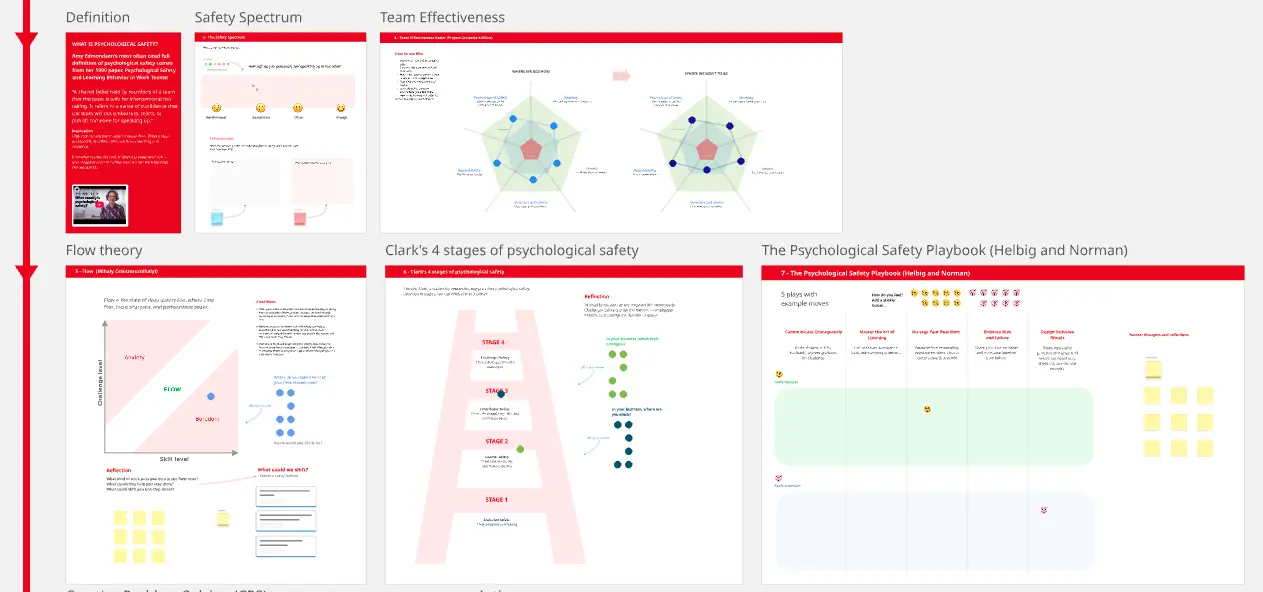
The Four Dimensions Radar: A visualization grid mapped across the four fundamental pillars of psychological safety: inclusion safety, learner safety, contributor safety, and challenger safety.
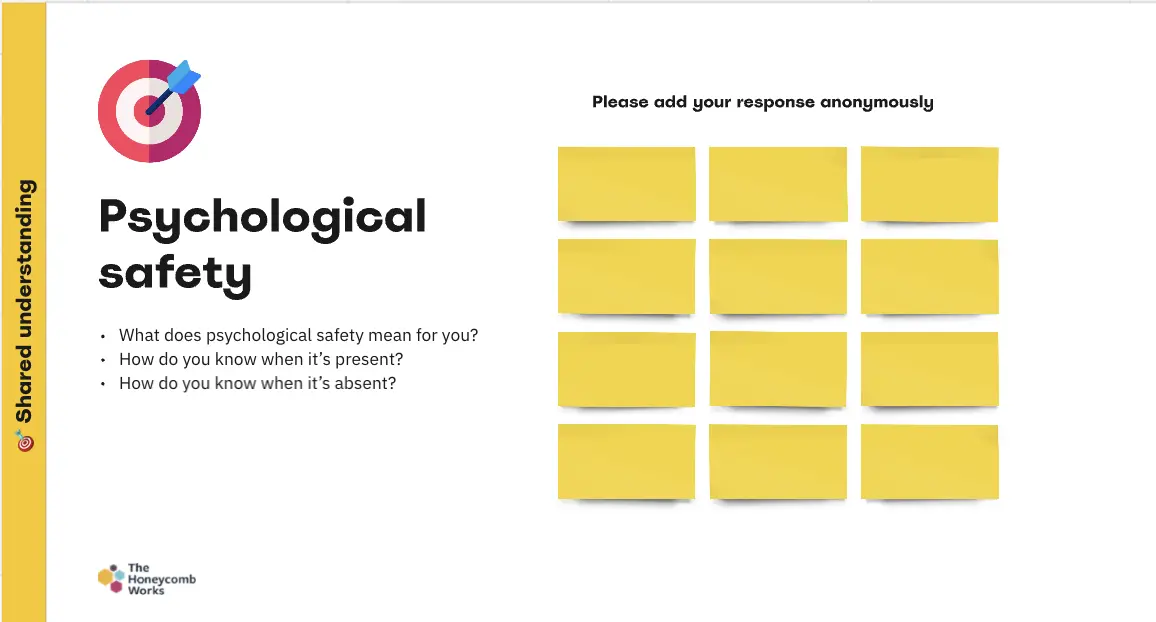
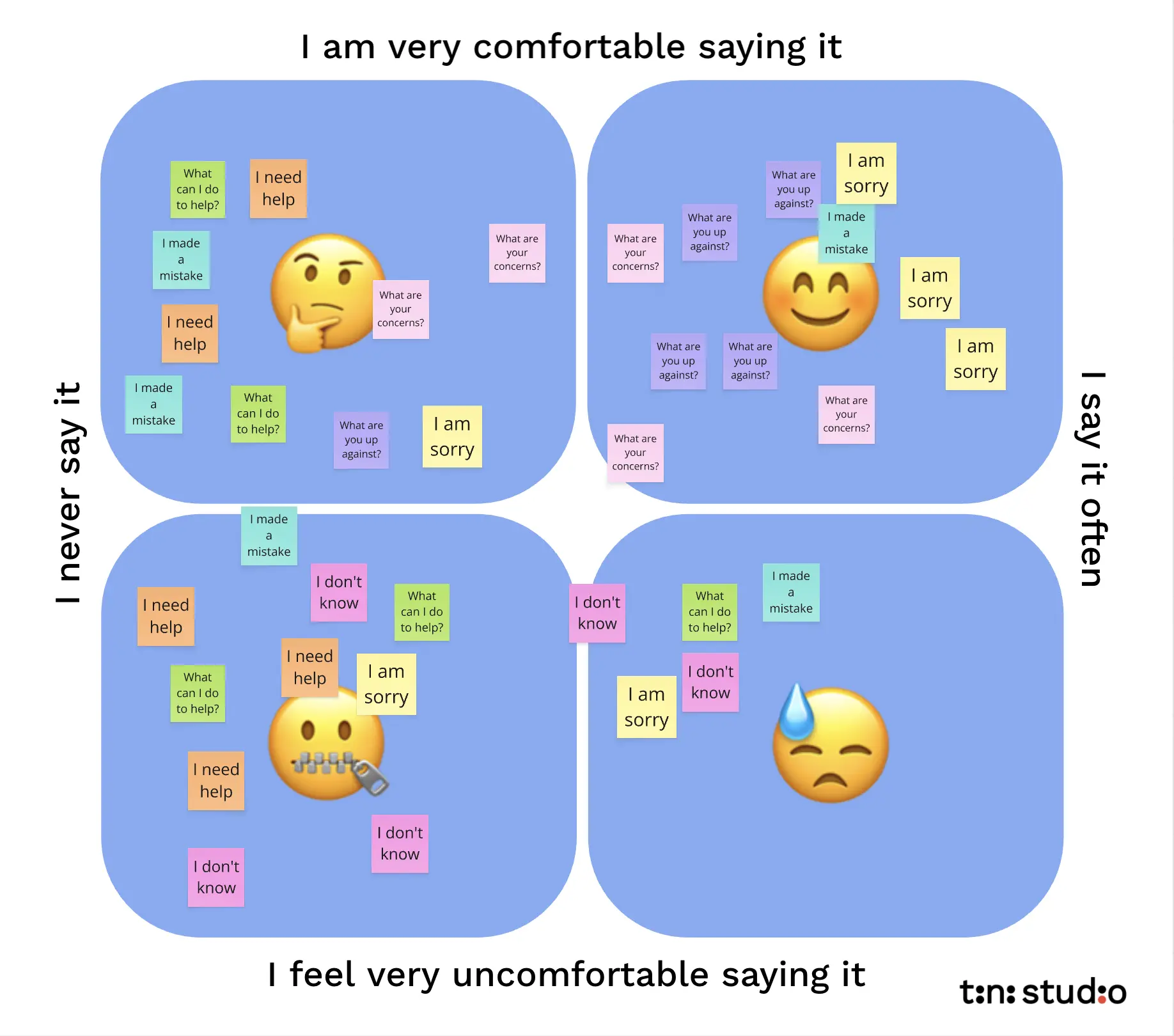
The "Unspoken Fears" Box: A safe, judgment-free holding zone for team members to drop sticky notes detailing hidden anxieties, unspoken elephants in the room, or historical team baggage.
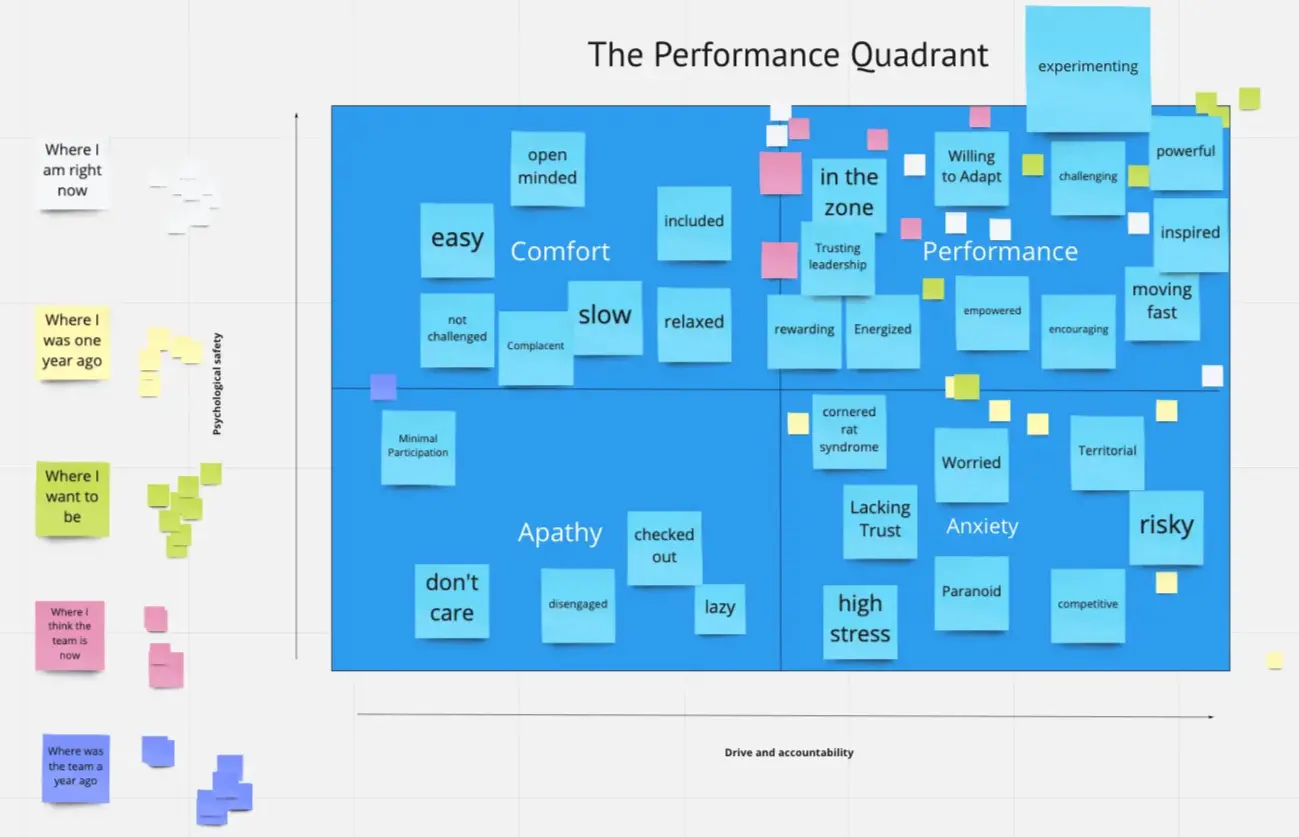
The Comfort Zone Bullseye: A concentric circular target graphic where participants place a dot to visually map their current emotional and professional state (Comfort $\rightarrow$ Growth $\rightarrow$ Panic).
The Safe Haven Agreement Ledger: A forward-facing workspace to capture immediate, actionable behavioral commitments that the team will adopt to protect vulnerable communication channels.
The 4 Stages of Psychological Safety Model Developed by Dr. Timothy Clark, this framework helps teams determine their current stage of cultural maturity on the Miro canvas, tracking how well they support individual growth:
Stage 1: Inclusion Safety:Do I feel accepted and valued as a human being here? (The foundation of belonging).
Stage 2: Learner Safety:Am I safe to ask questions, experiment, give feedback, and make mistakes without being punished?
Stage 3: Contributor Safety:Can I use my unique skills to make a meaningful difference without being micro-managed?
Stage 4: Challenger Safety:Do I feel safe to challenge the status quo or point out leadership flaws when I see a risk? (The peak of trust).
The Conversational Turn-Taking Audit A rapid, behavioral reflection framework used to evaluate team dynamics during recent alignment ceremonies. Teams map their conversational flow onto a simple axis:
The Monologue Dominator: One or two dominant voices control over 80% of the airtime.
The Silenced Majority: Team members remain on mute, cameras off, contributing only when directly called upon.
The Equality Index: Airtime is distributed roughly equally across the entire group, signaling highly balanced team safety.
1. Ensure Complete Anonymity First Before inviting anyone to the board, turn off Miro's collaborator cursors and disable author names on sticky notes. If the team suspects their handwriting, color choice, or user profile can be tracked, they will default to corporate compliance answers, destroying the utility of the assessment.
2. Run a Low-Stakes Icebreaker Target Direct the team to the Comfort Zone Bullseye. Have everyone grab an identical digital dot and drop it onto the circular target simultaneously to indicate where they feel they are sitting today. If multiple dots land in the outer "Panic" zone, pause the standard agenda to address the immediate stress.
3. Run the Anonymous 7-Question Audit Instruct team members to navigate to the voting vault. Use Miro’s built-in private voting feature or have everyone copy-paste identical numeric squares onto the 1-to-5 scoring scales for the Edmondson questions. Once voting closes, reveal the aggregated results to see your team's safety baseline.
4. Surface the Elephants in the Room Set a Miro countdown timer for 5 minutes. Ask the team to use identical gray sticky notes to fill out the Unspoken Fears box. Instruct them to write out any frustrations, worries about project targets, or communication bottlenecks they have kept bottled up.
5. Cluster, Categorize, and Validate As a facilitator, group the anonymous fear notes into thematic clusters. Read them aloud neutrally without guessing who wrote them. Validate the team's feedback directly: "Thank you to whoever wrote this. This is a real constraint, and it makes total sense that you feel this pressure."
6. Co-Create the Team Protective Protocol Pivot the group toward actionable solutions. Brainstorm 2 or 3 micro-agreements to immediately protect vulnerable communication (e.g., "We will use the 'No Stupid Questions' emoji in Slack," or "We will start every post-mortem by analyzing the process, not the person").
7. Lock the Commitments and Monitor Regularly Write the finalized commitments onto the Safe Haven Agreement Ledger. Lock the frame and pin the link to your team's workspace repository. Reopen this Miro board once a month or at the start of high-stakes planning sessions to track your cultural safety curve over time.