Prioritization templates
With Miro's prioritization templates collection, decide on the problem you and your team are trying to solve, agree on a process, and then put it into action in a collaborative way. Use one of the many prioritization frameworks and move projects forward.
84 templates
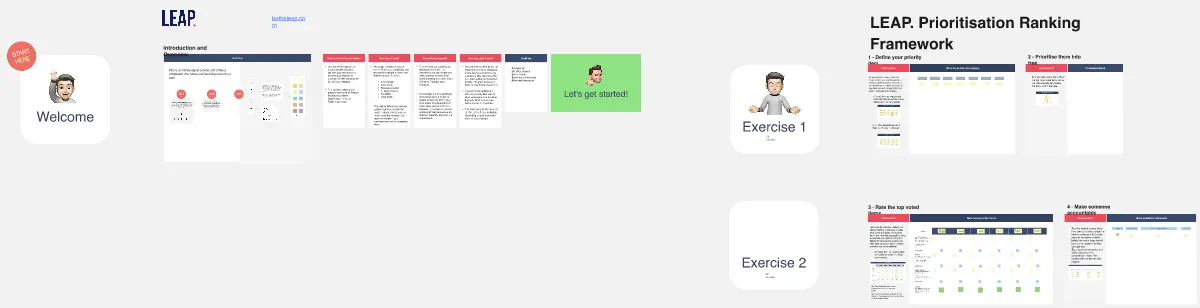
Prioritisation Framework
2x2 Prioritization Matrix Template

2x2 Prioritization Matrix Template
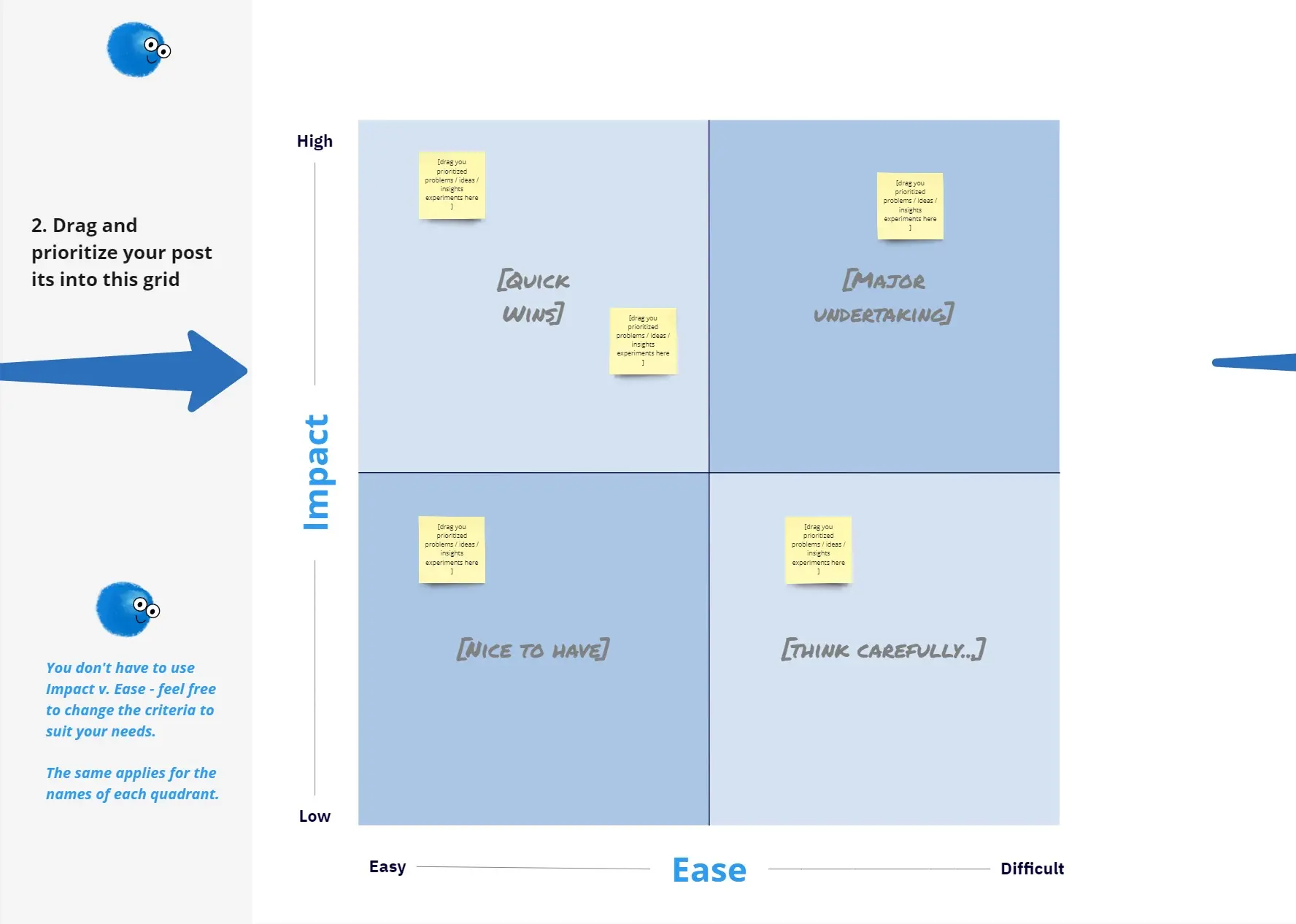
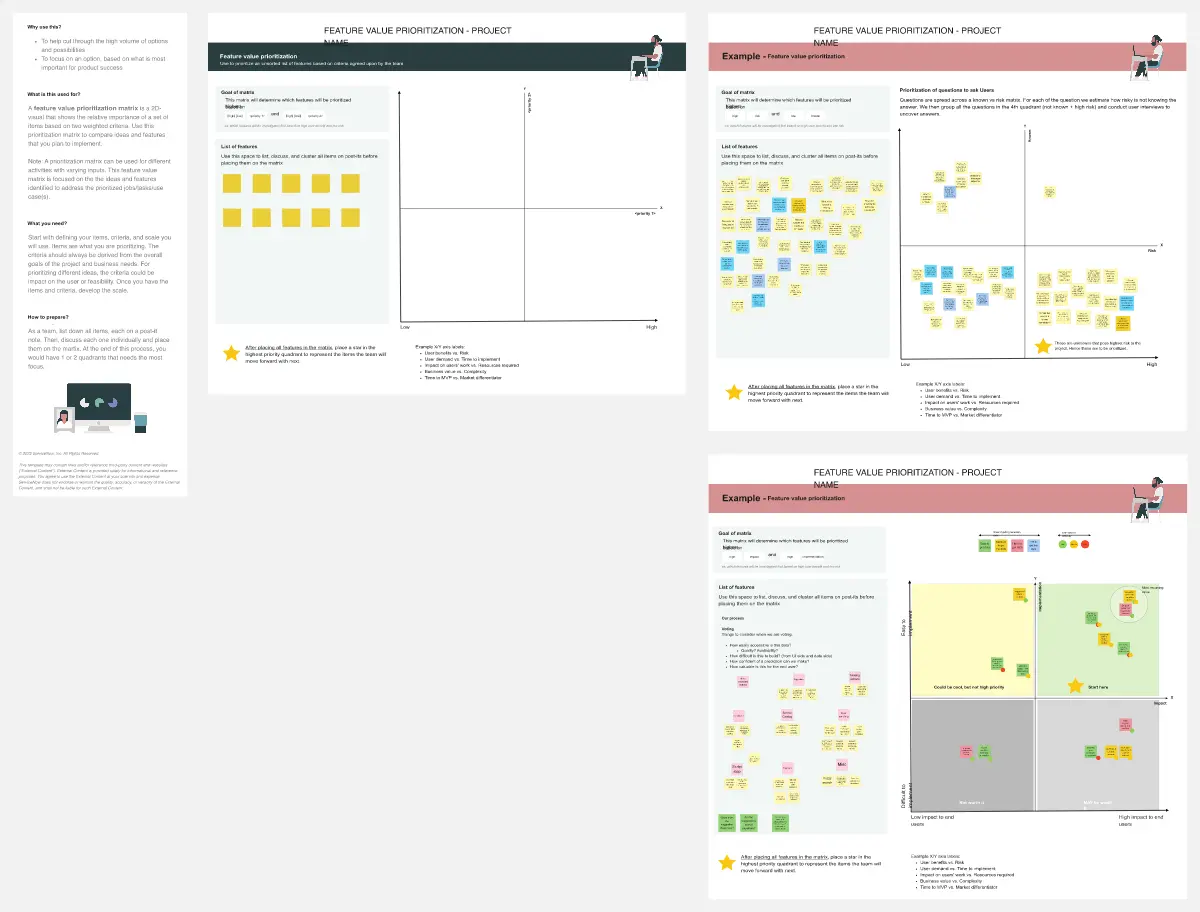
Ready to set boundaries, prioritize your to-dos, and determine just what features, fixes, and upgrades to tackle next? The 2x2 prioritization matrix is a great place to start. Based on the lean prioritization approach, this template empowers teams with a quick, efficient way to know what's realistic to accomplish and what’s crucial to separate for success (versus what’s simply nice to have). And guess what—making your own 2x2 prioritization matrix is easy.
Pandora's Prioritization Process (PPP)
Kano Model Template
Kano Model Template
When it comes down to it, a product’s success is determined by the features it offers and the satisfaction it gives to customers. So which features matter most? The Kano model will help you decide. It’s a simple, powerful method for helping you prioritize all your features — by comparing how much satisfaction a feature will deliver to what it will cost to implement. This template lets you easily create a standard Kano model, with two axes (satisfaction and functionality) creating a quadrant with four values: attractive, performance, indifferent, and must-be.
Jobs to be Done template
It’s all about a job done right — customers “hire” a product or service to do a “job,” and if it's not done right, the customer will find someone to do it better. Built on that simple premise, the Jobs To Be Done (JTBD) framework helps entrepreneurs, start-ups, and business managers define who their customer is and see unmet needs in the market. A standard job story lets you see things from your customers’ perspective by telling their story with a “When I…I Want To…So That I …” story structure.
Action Priority Matrix Template

Action Priority Matrix Template
You and your teammates probably have more ideas than resources, which can make it difficult to prioritize tasks. Use an Action Priority Matrix to help choose the order in which you will work on your tasks, allowing you to save time and money and avoid getting bogged down in unnecessary work. An Action Priority Matrix is a simple diagram that allows you to score tasks based on their impact and the effort needed to complete them. You use your scores to plot each task in one of four quadrants: quick wins, major projects, fill-ins, and thankless tasks.
Target Audience Template

Target Audience Template
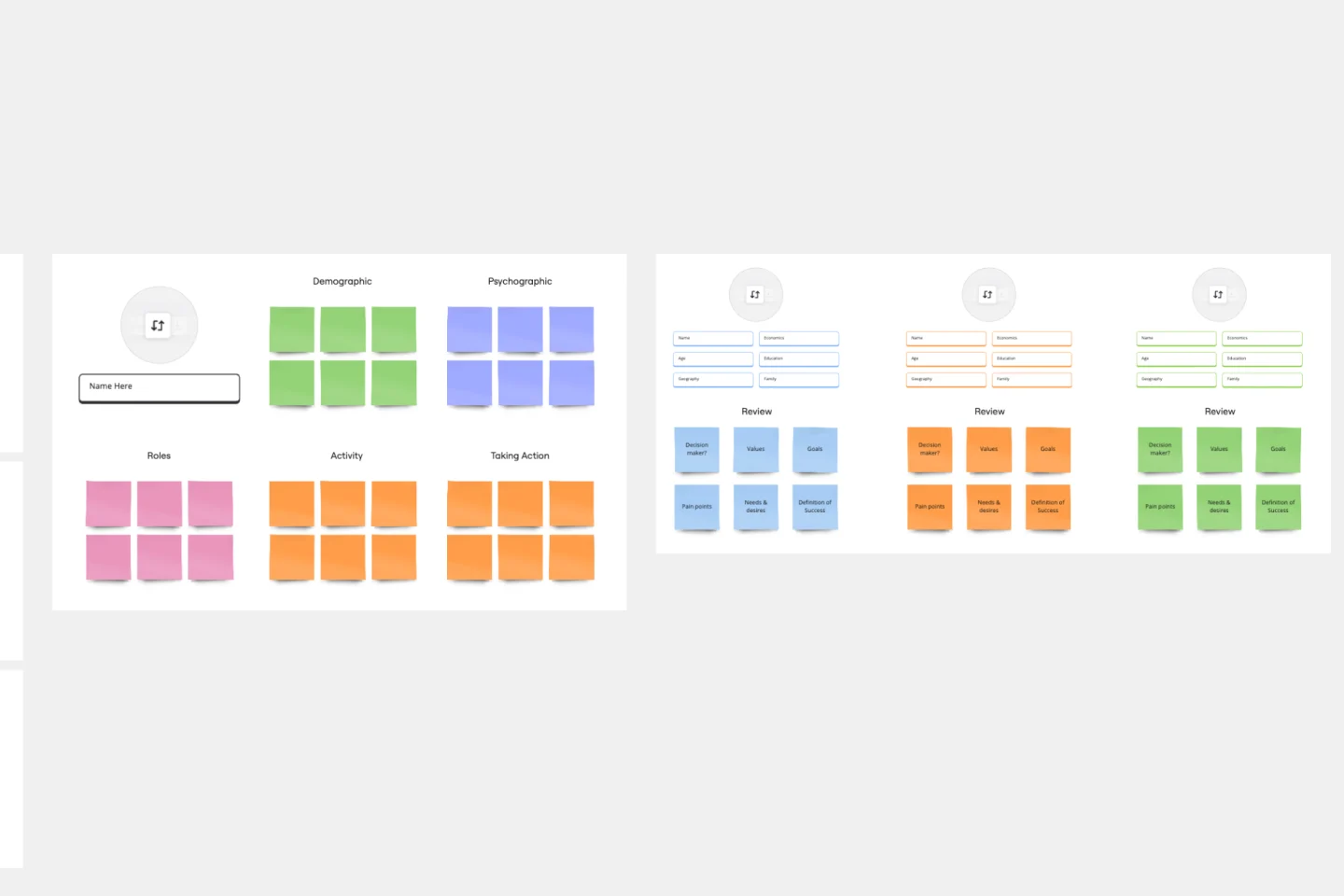
Understanding your target audience is vital to business success. How can you market yourself effectively if you don’t know who you’re targeting? Using the Target Audience template, you can review valuable data about who your customers are and what they want from your product or service.
RICE Prioritization Template

RICE Prioritization Template
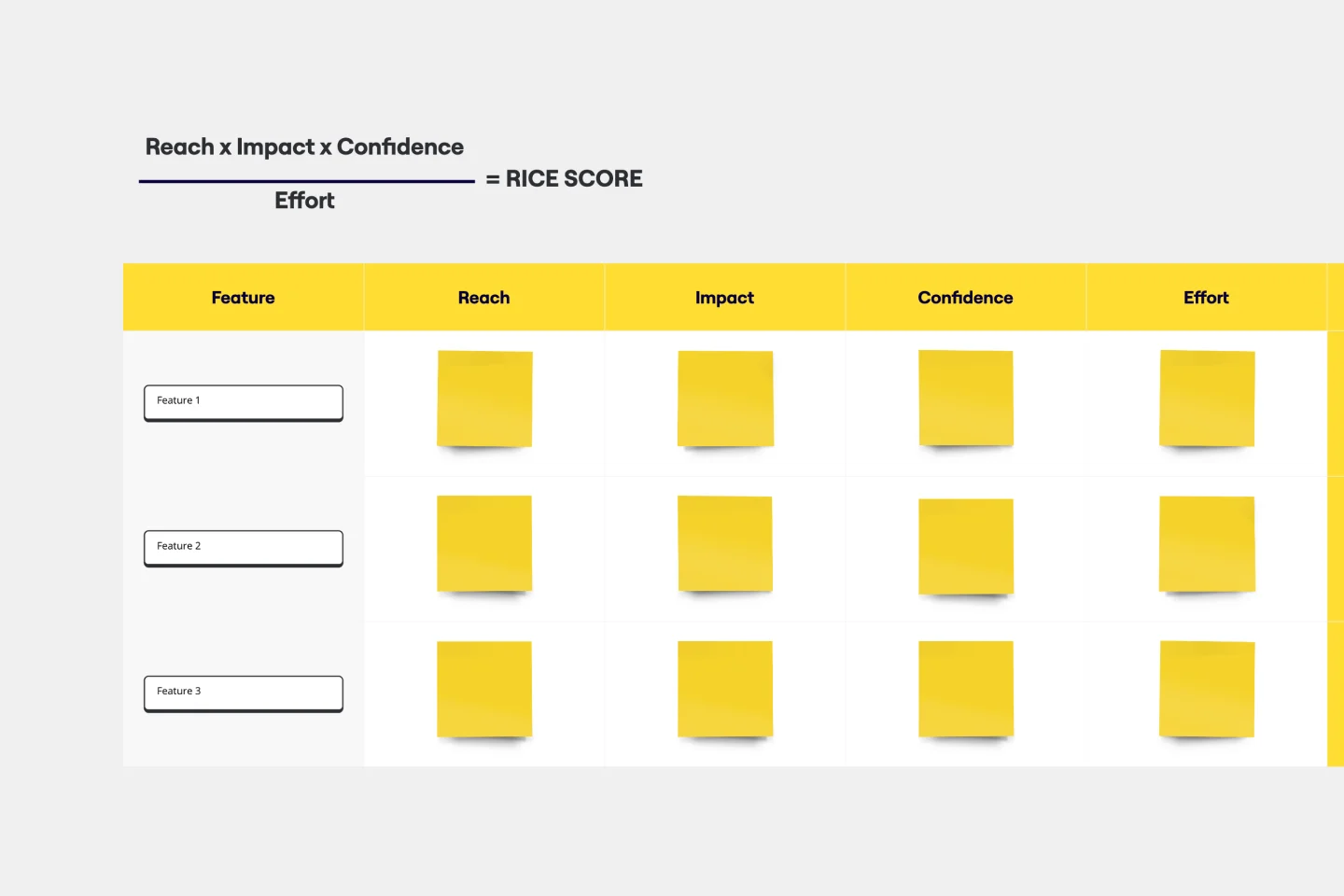
Teams use the RICE framework to prioritize the best course of action for their business. Using the model, you assign a RICE score to different ideas and tasks. This score tells you whether that item is something to prioritize. As a result, you make better-informed decisions about growing your business.
How Now Wow Matrix Template

How Now Wow Matrix Template
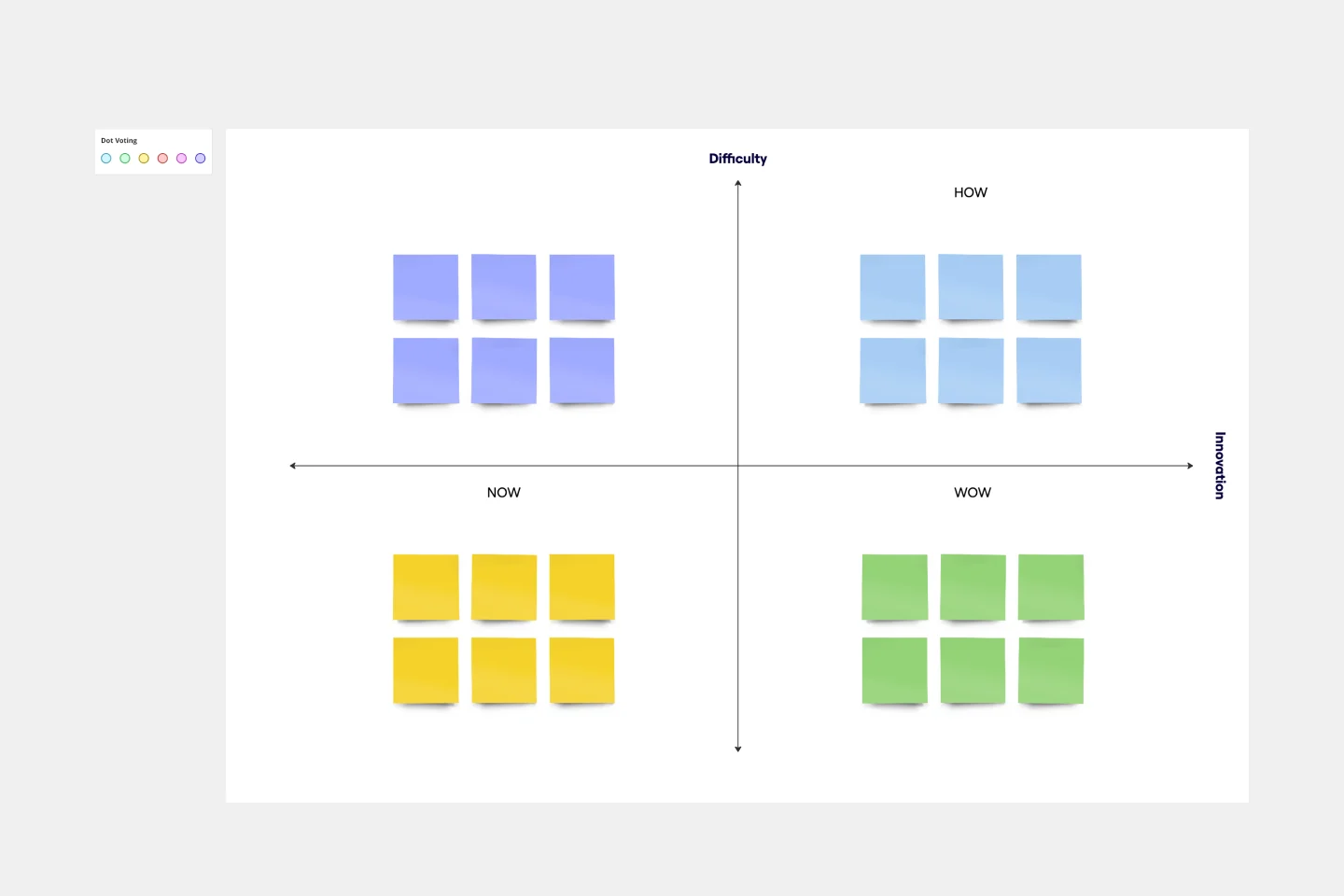
There are no bad ideas in a brainstorm — but some are more original and easier to implement. The How Now Wow matrix is a tool that helps you identify and organize those great ideas, as well as reinvigorates your team to think creatively and take risks (a taller order as you scale). Grab this template to create your own matrix, then rank the ideas you generated in a brainstorm as “How” (difficult to implement), “Now” (easy to implement), or “Wow” (both original and easy to implement).
Magic Prioritization
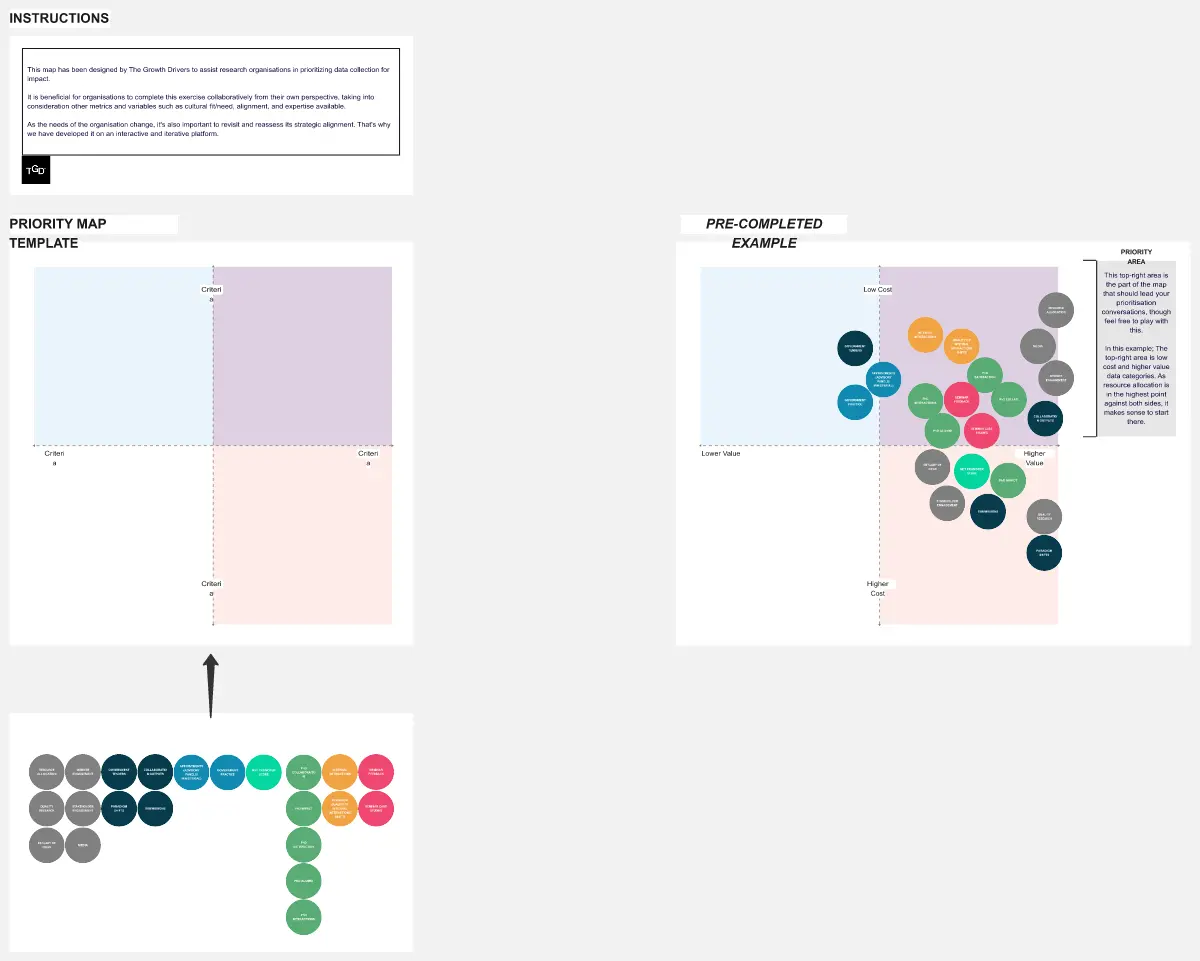
Data Management Plan: Priority Map
Bull's Eye Diagram Template

Bull's Eye Diagram Template
When you’re a growing organization, every decision can feel like it has make-or-break consequences—which can lead to decision paralysis, an inability to prioritize, inefficient meetings, and even low morale. If that sounds like you, put a Bull’s Eye Diagram to work. True to its name, a Bull’s Eye Diagram uses a model of concentric circles to help companies establish priorities, make critical decisions, or discuss how to remove or overcome obstacles.
Strategic Group Mapping Template

Strategic Group Mapping Template
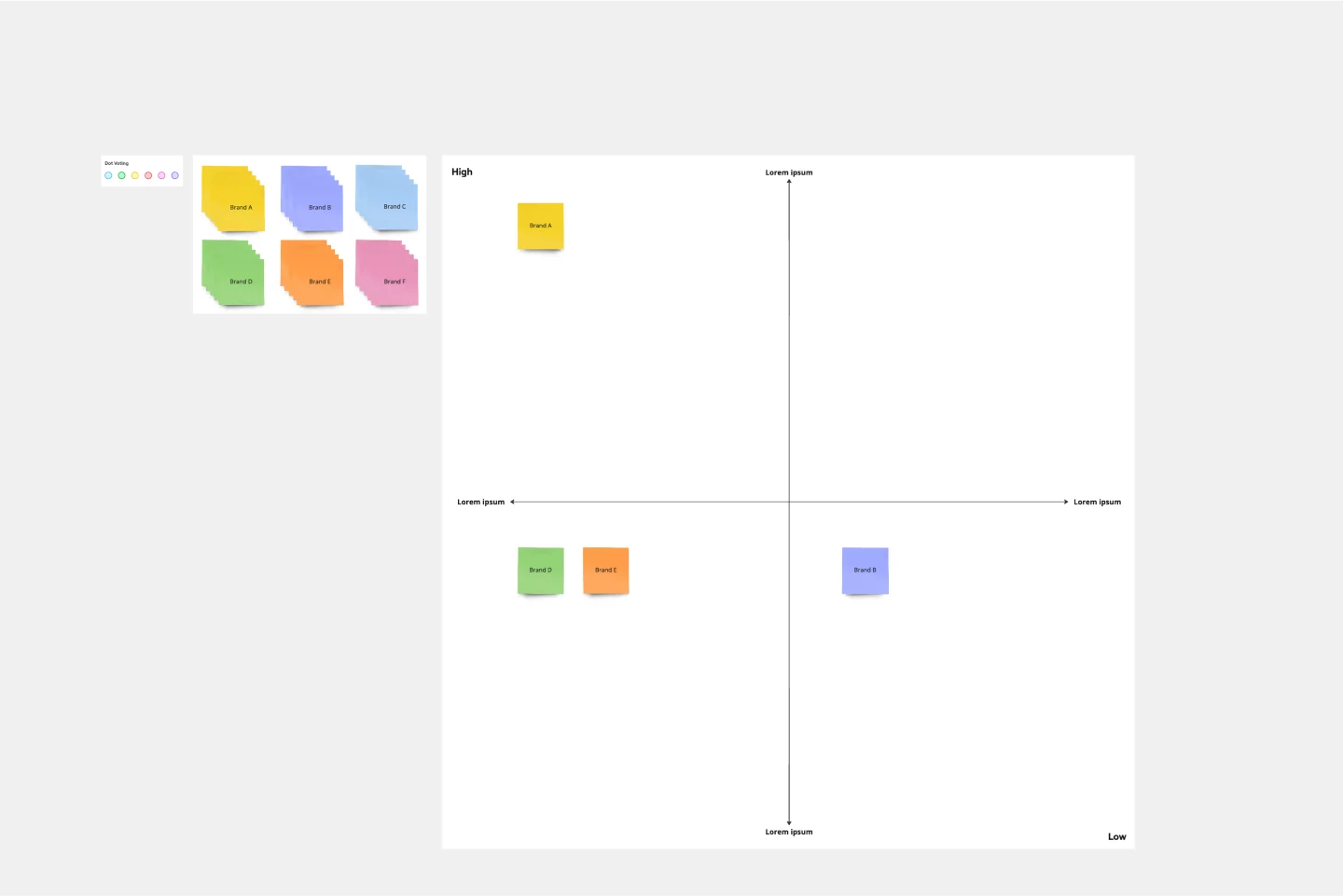
The Strategic Group Mapping Template is a cutting-edge visual tool designed to translate the competitive landscape of their industry. By allowing users to plot entities based on distinct criteria, this template provides an at-a-glance view of market dynamics. One standout benefit of using this tool is its ability to identify clusters of competitors and market gaps, paving the way for businesses to strategically position themselves for optimal success.
FMEA Analysis Template

FMEA Analysis Template
When you’re building a business or running a team, risk comes with the territory. You can’t eliminate it. But you CAN identify it and mitigate it, to up your odds of success. Failure Modes and Effects Analysis (FMEA) is a powerful tool designed to help you manage risk and potential problems by spotting them within a process, product, or system. And you’ll spot them earlier in your process—to let you sidestep costly changes that arise late in the game or, worse, after they’ve impacted your customers and their experience.
Conversion Funnel Backlog Template

Conversion Funnel Backlog Template
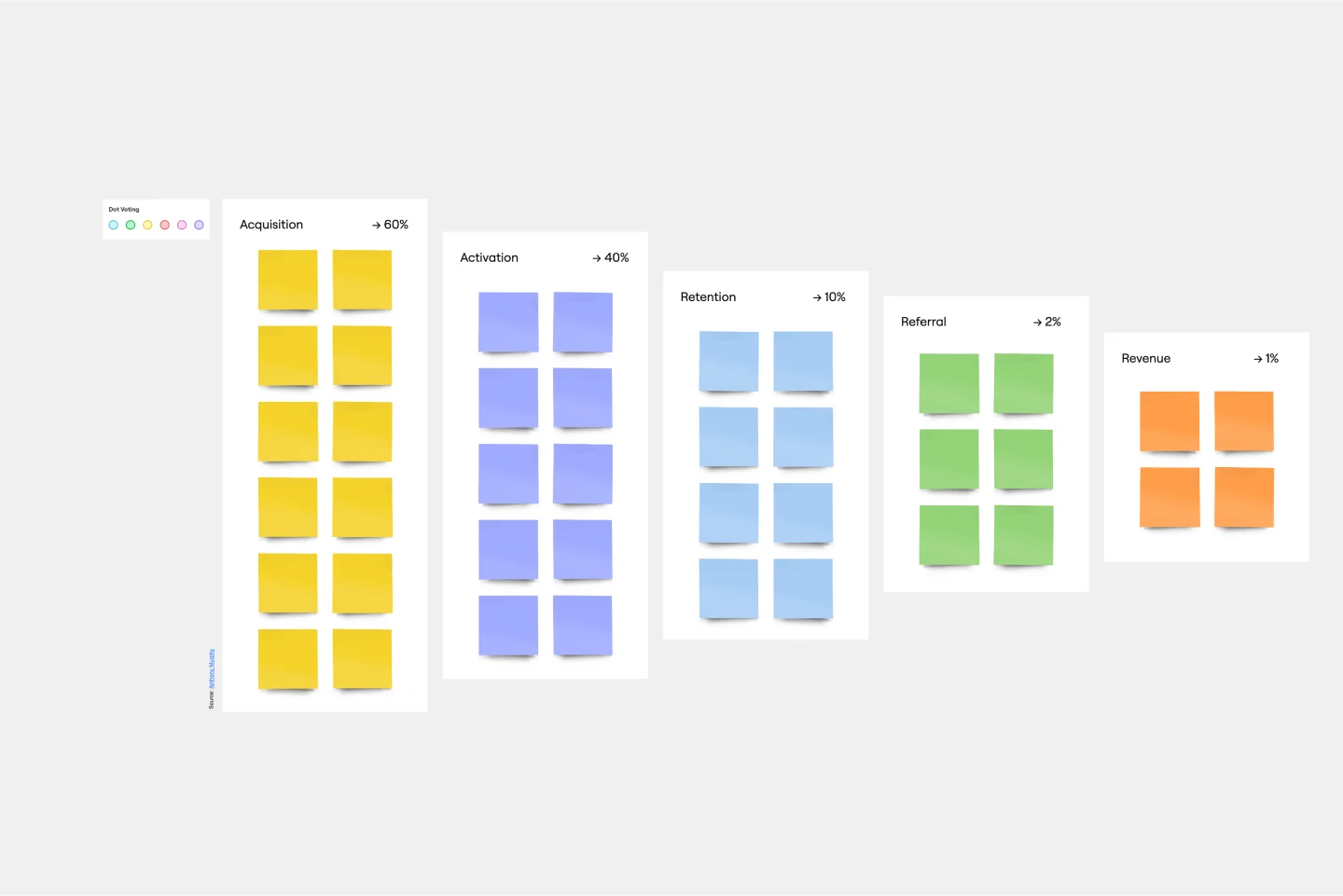
If you’re working on a product that has clear conversions, then it can help to structure your backlog around the conversion funnel to make sure you’re reaching your audience. Creating a conversion funnel backlog brings together information around potential pain-points in your funnel and opportunities for growth. Once you’ve identified that information, it becomes easier to prioritize. You and your team can use the conversion funnel backlog to focus on conversion, retention, and referral, or to tweak your workflow in more mature products.
STAR Technique Template

STAR Technique Template
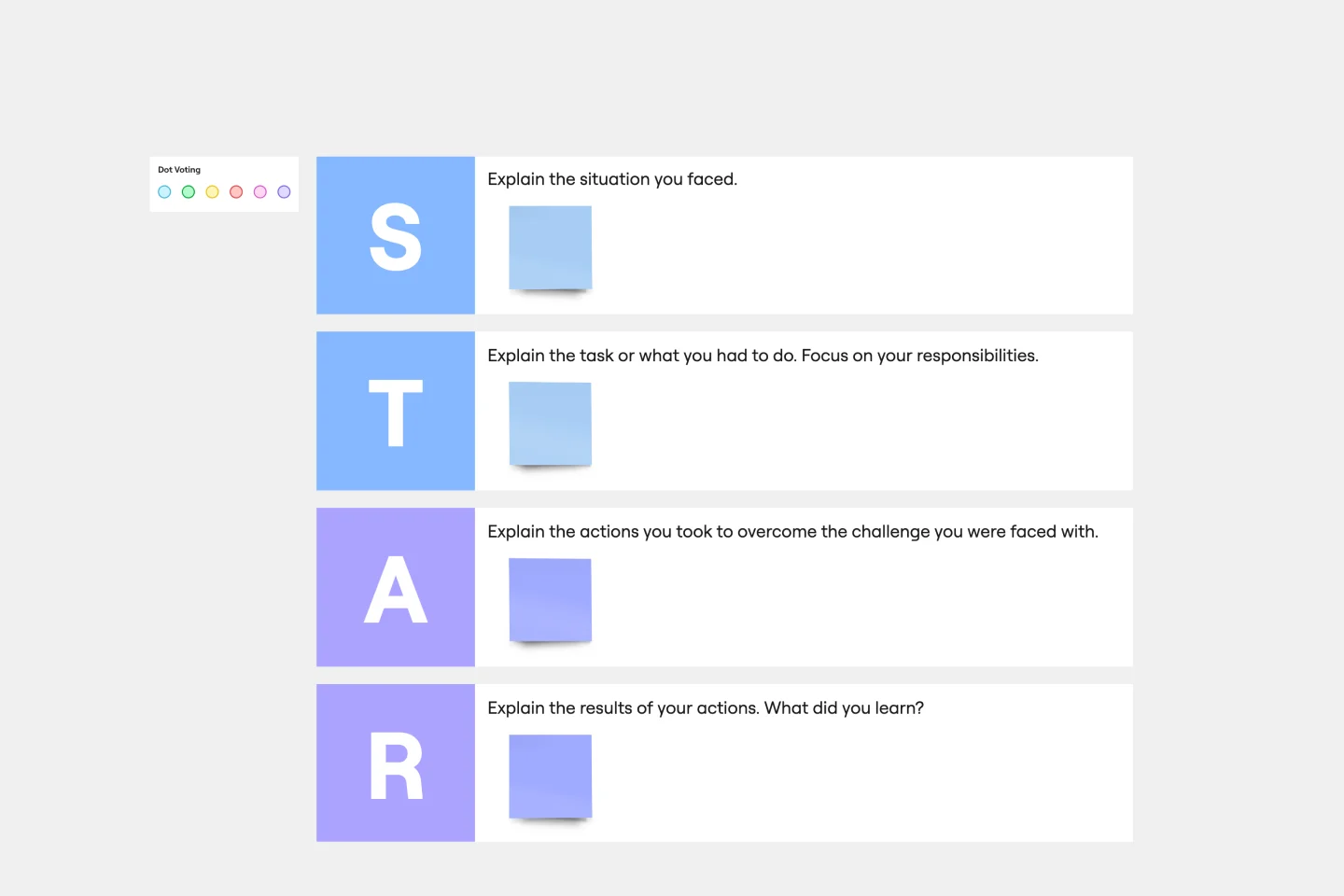
Find out how to use the STAR interview method to identify the best candidate for the role. Interviewees can also use the STAR technique to prepare detailed and thorough responses during the interview.
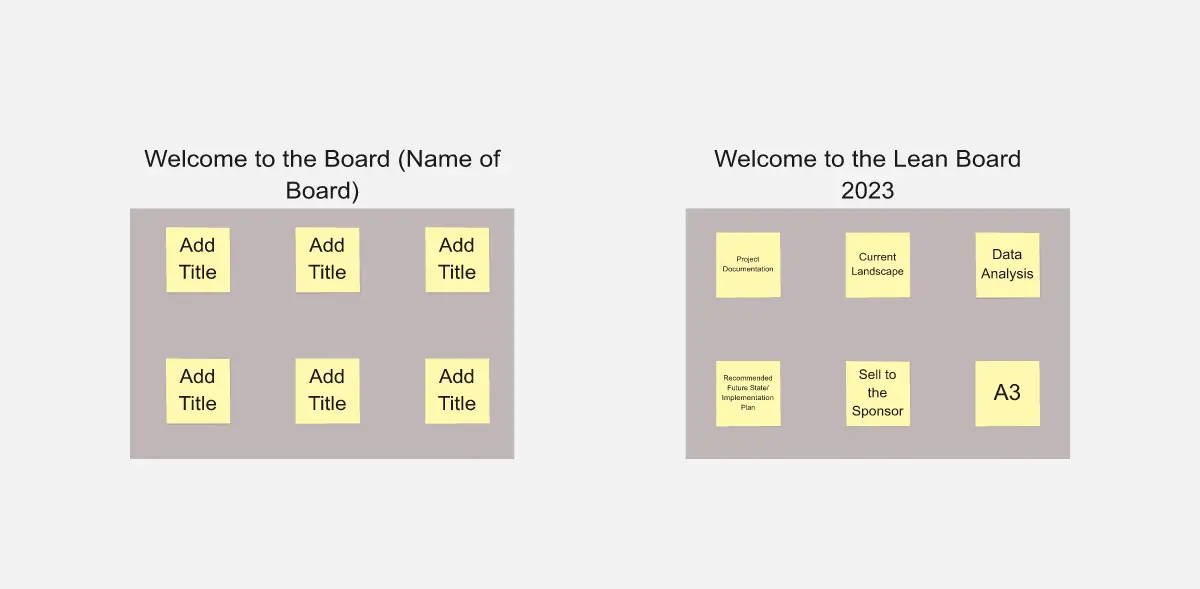
Board Contents
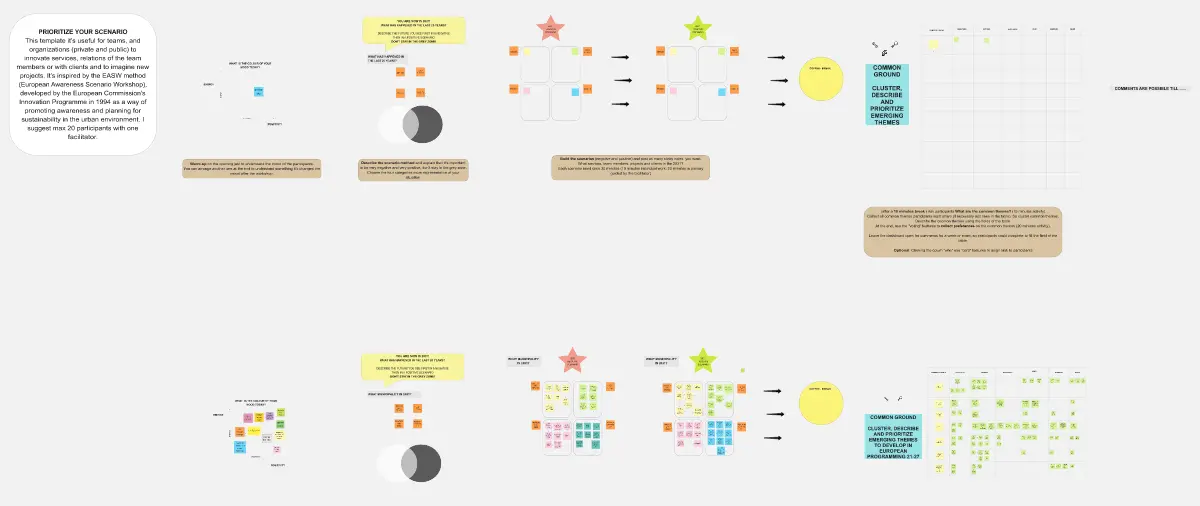
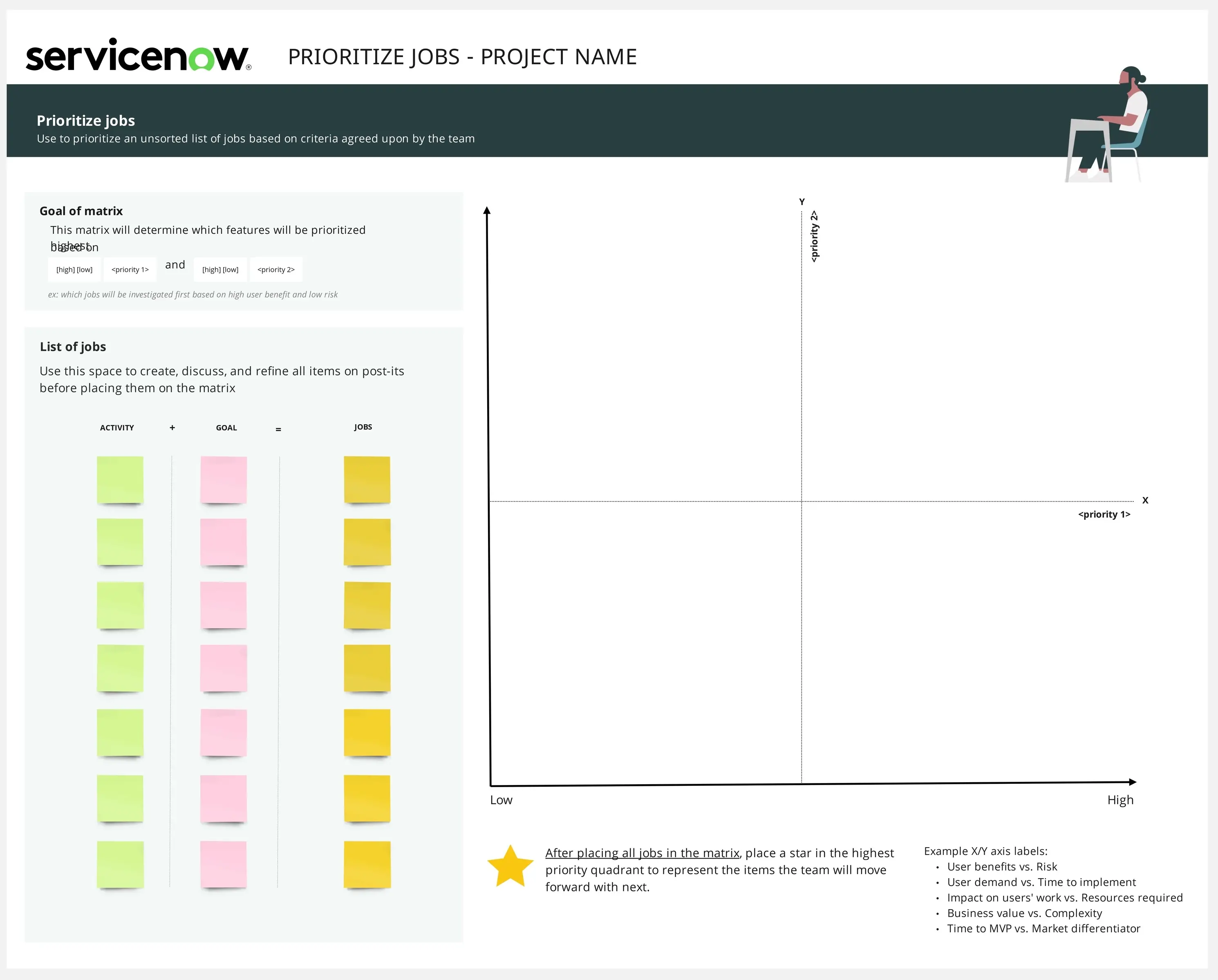
Prioritize Jobs
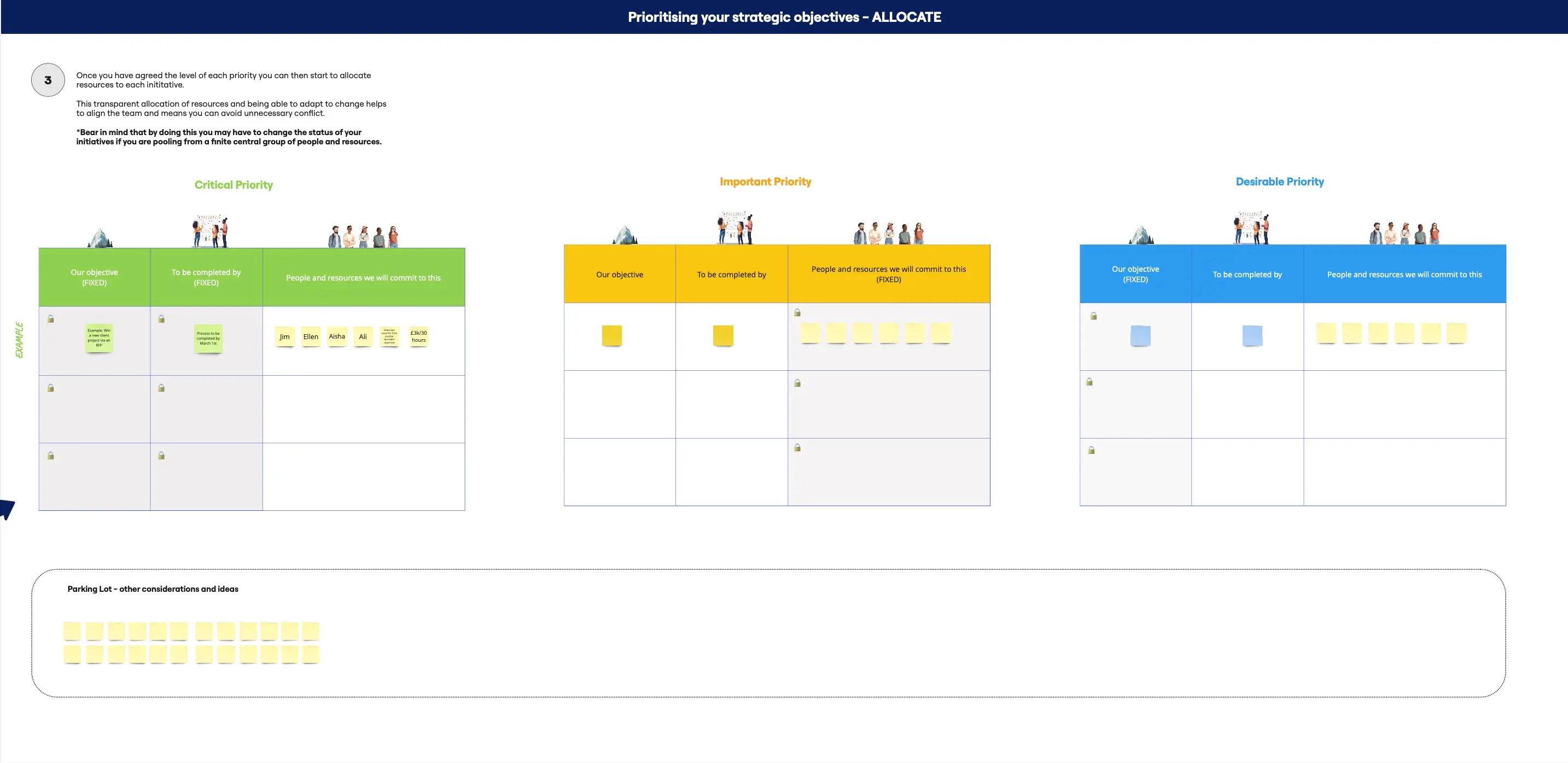
Prioritising Services
Prioritisation Board
PRD Template

PRD Template
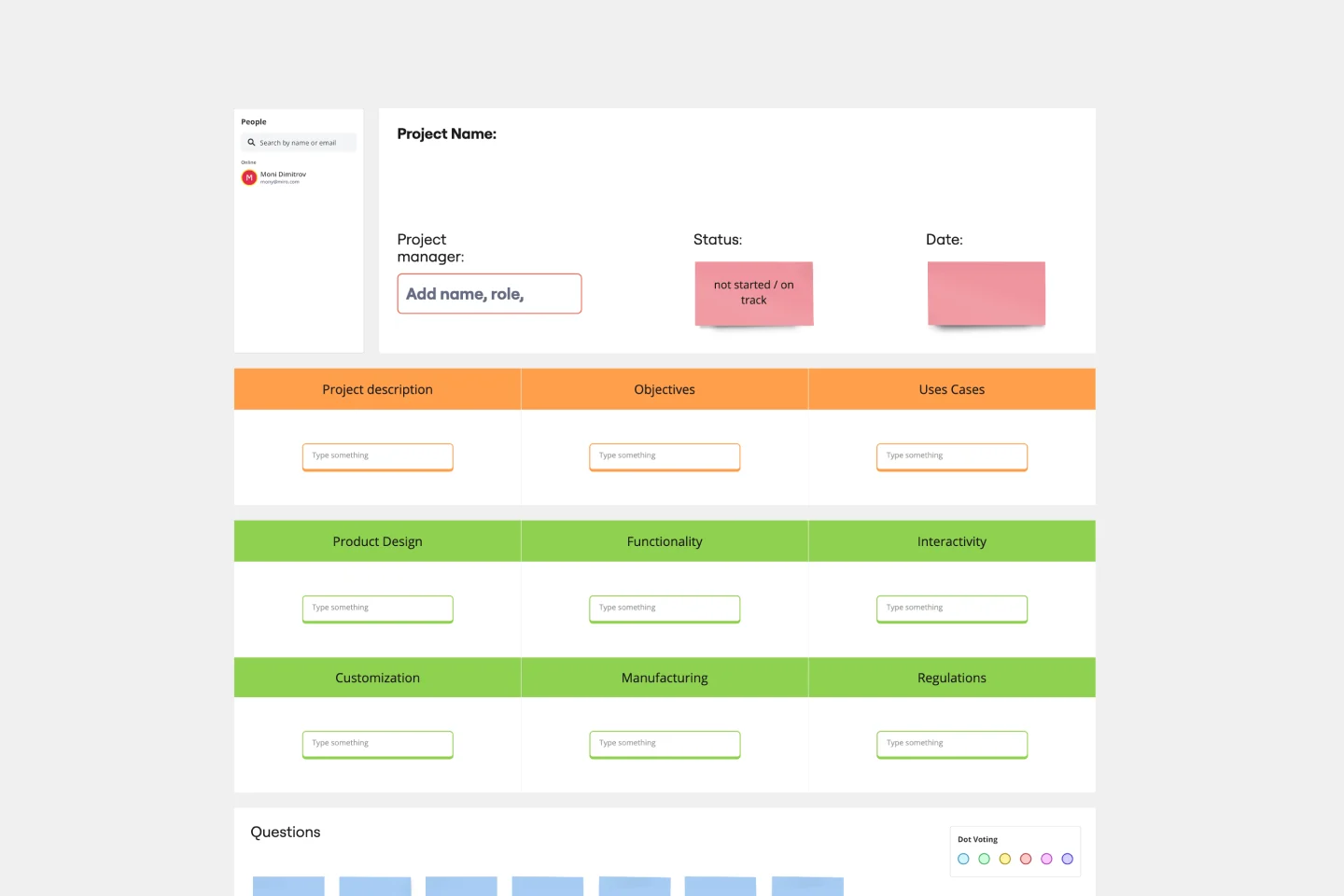
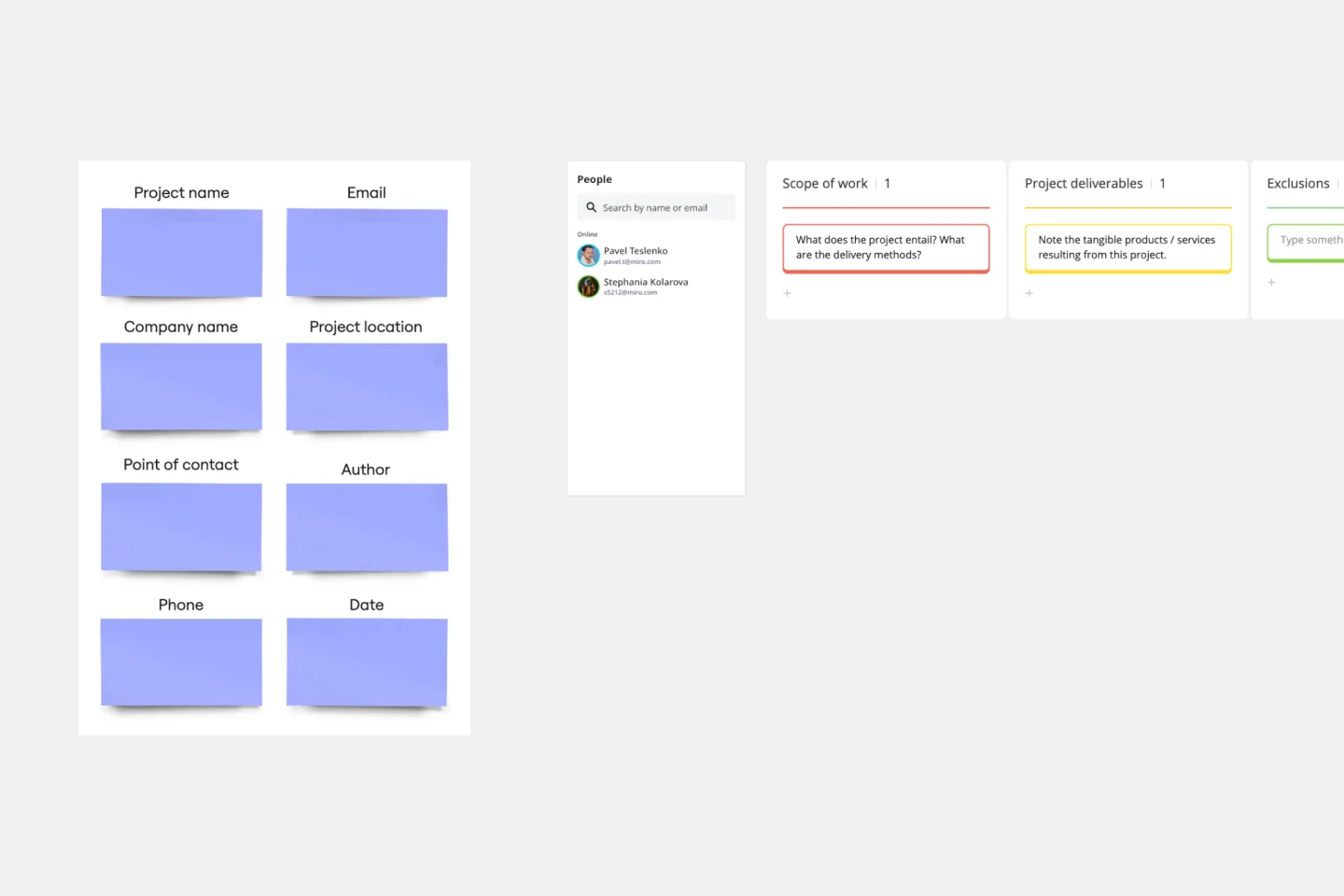
The PRD Template by Miro is a blueprint designed to streamline the product development process. Acting as a central hub for all essential details, this template ensures team alignment by laying out clear project objectives, use cases, and design specifics. The primary benefit? Seamless communication and clarity, reducing the likelihood of missteps and fostering a smooth transition from idea conception to product launch.
Strategy Presentation Template

Strategy Presentation Template
Presenting your strategies is the best way to allow people to understand what the business will be focusing on in the future. Use this Strategy Presentation Template to communicate your strategic thinking and encourage collaboration.
Outcome Mapping Template
Use Miro’s outcome mapping template to improve your operational efficiency. Outcome mapping will help you visualize all the possible strategic outcomes for your upcoming project, allowing you to see into the black box to identify any potential challenges along the way.
PI Planning Template

PI Planning Template
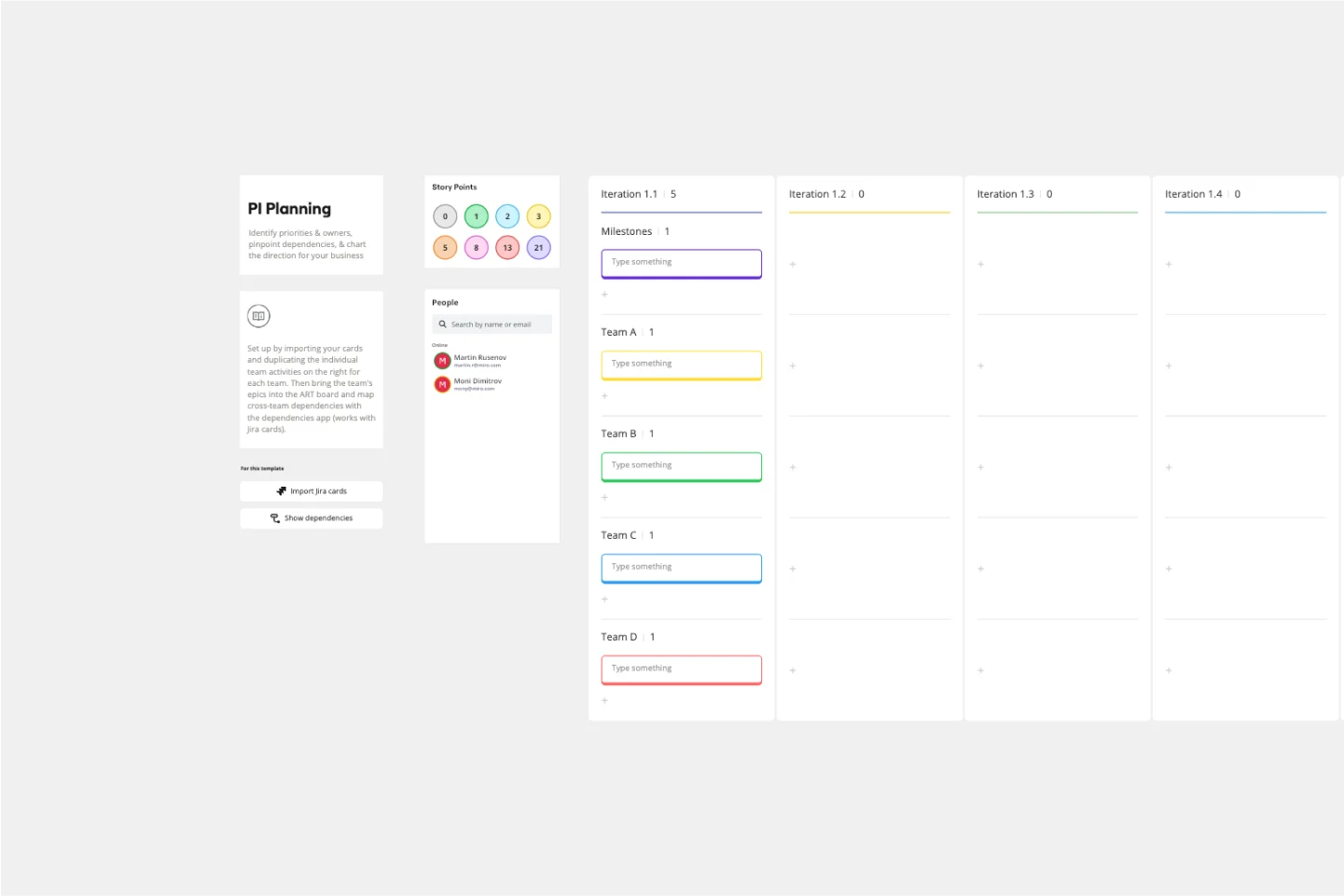
PI planning stands for “program increment planning.” Part of a Scaled Agile Framework (SAFe), PI Planning helps teams strategize toward a shared vision. In a typical PI planning session, teams get together to review a program backlog, align cross-functionally, and decide on the next steps. Many teams carry out a PI planning event every 8 to 12 weeks, but you can customize your planning schedule to fit your needs. Use PI planning to break down features, identify risks, find dependencies, and decide which stories you’re going to develop.
Decision Matrix Template

Decision Matrix Template
The Decision Matrix Template is an intuitive visual tool for structuring and evaluating multiple choices against distinct criteria. Presenting options in a comparative layout helps distill complex decisions into a digestible format.
Fibonacci Scale Template

Fibonacci Scale Template
When you manage a team, you often have to estimate how much time and effort tasks will take to complete. Try what often works for Agile teams all over the world: Turn to the Fibonacci Scale for guidance. Based on the Fibonacci sequence, where each number is the summation of the two previous numbers (0, 1, 2, 3, 5, 8, 13, 21, etc.), this template can help you build timelines like a champ—by helping make sure that work is distributed evenly and that everyone is accurate when estimating the work and time involved in a project.
3x3 Prioritization Method Template

3x3 Prioritization Method Template
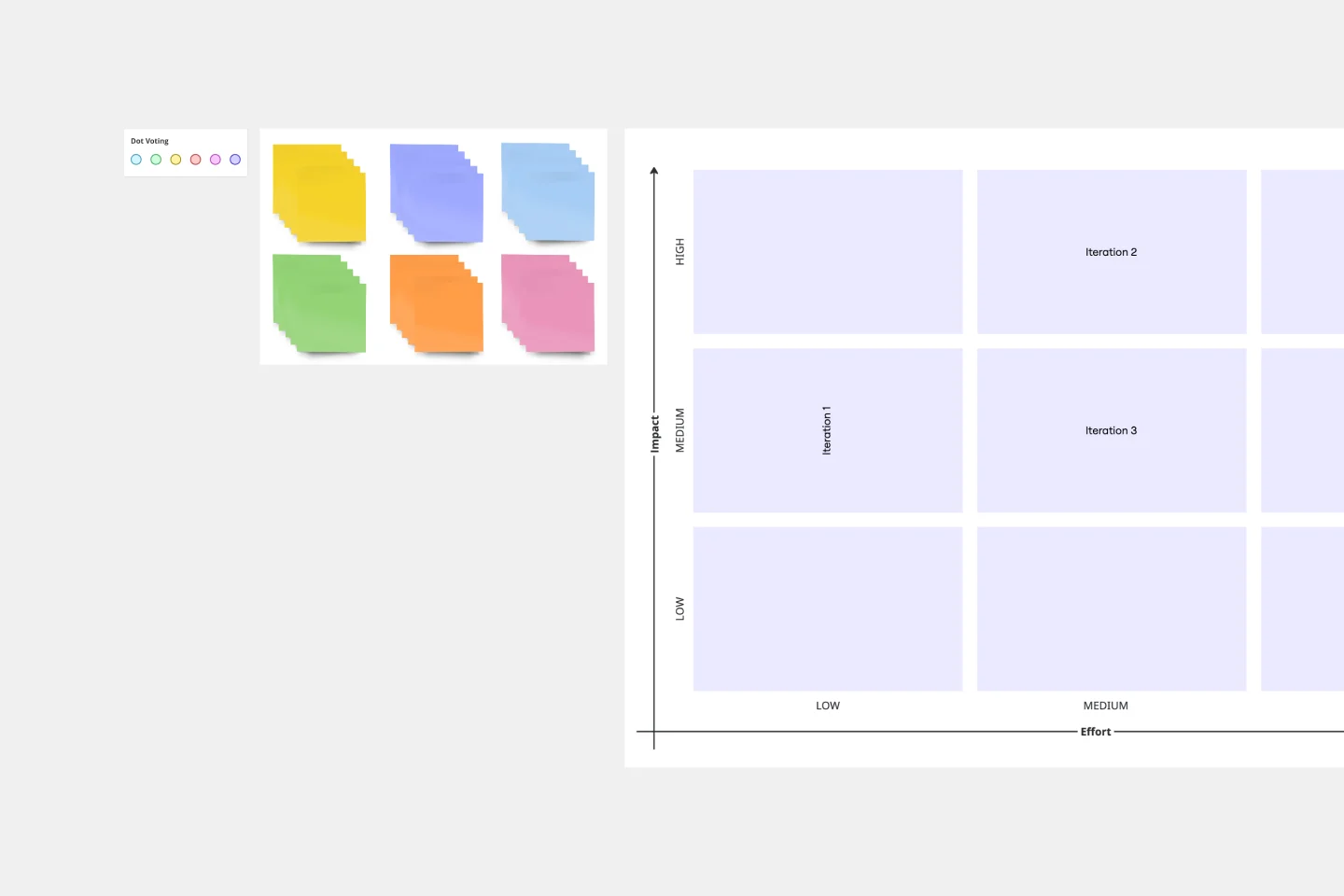
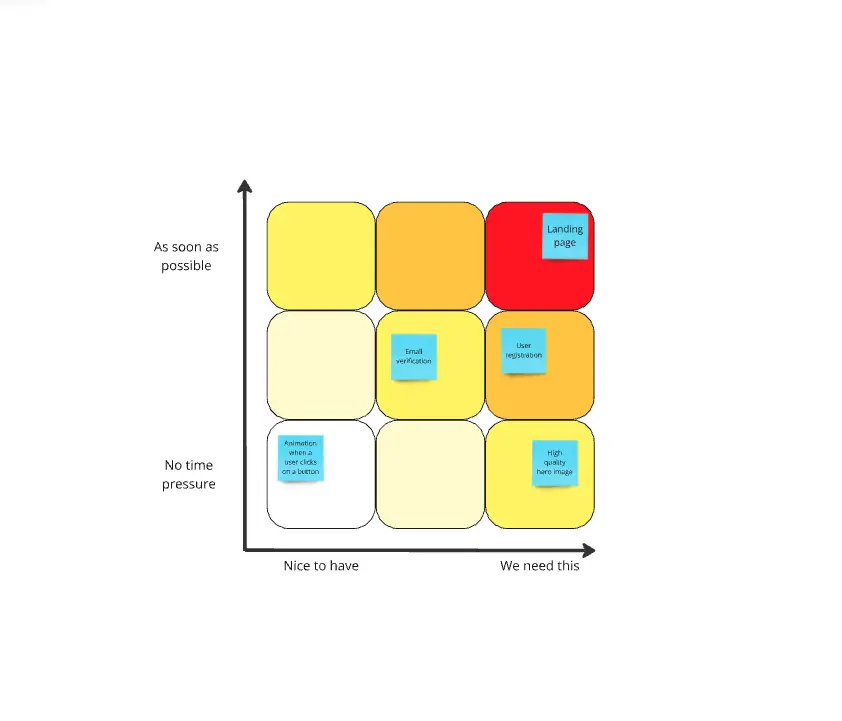
It’s all about assessing a task or idea, and quickly deciding the effort it will take and the potential impact it will have—ranked low, medium, or high. That’s what the 3x3 prioritization method does: Help teams prioritize and identify quick wins, big projects, filler tasks, or time-wasters. With nine bucket areas, it offers slightly greater detail than the 2x2 Prioritization Matrix (or Lean Prioritization Method). It’s easy to make your own 3x3 prioritization matrix—then use it to determine what activities or ideas to focus on with your valuable resources.
Idea Funnel Backlog

Idea Funnel Backlog
An Idea Funnel Backlog enables you to visualize your backlog and restrict the number of backlogged items at the top. In doing sos, you can prioritize items on your list without having to engage in unnecessary meetings or create too much operational overhead. To use the Idea Funnel Backlog, break up the funnel into different phases or treat it like a roadmap. Use the Idea Funnel Backlog as a hybrid model that combines your roadmap and backlog into one easily digestible format.
Kyrian Product Prioritization
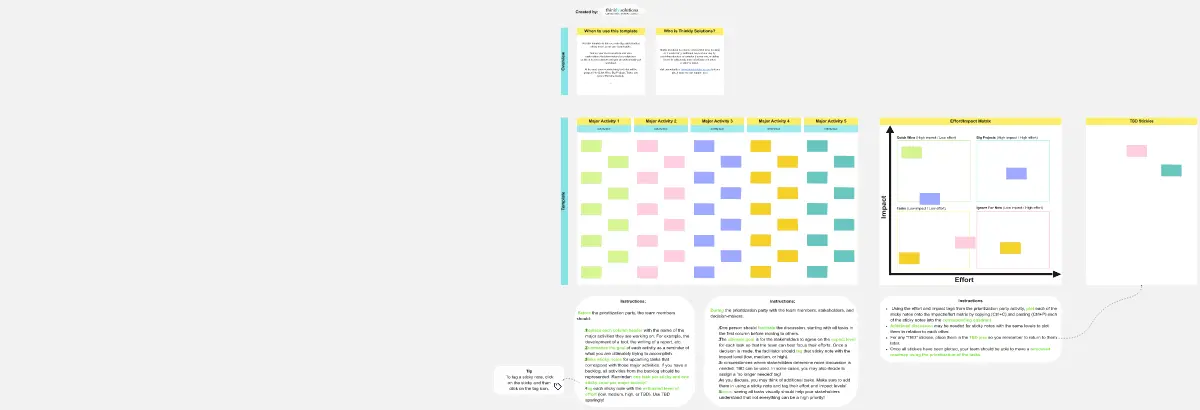
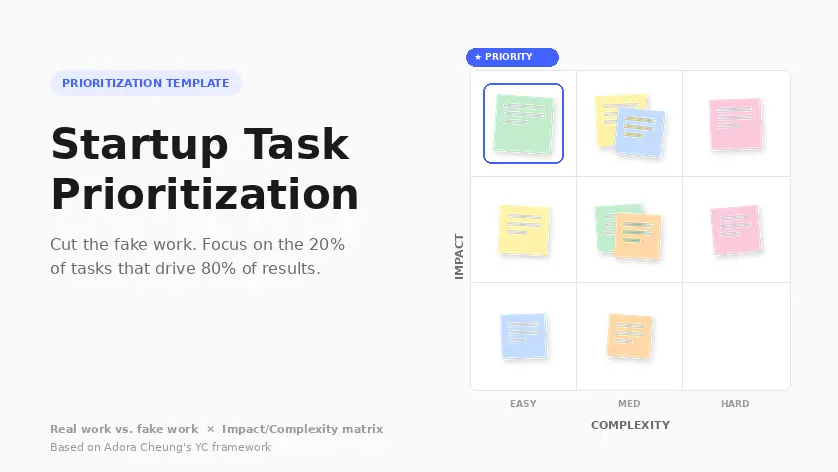
Prioritization Template
Tier List Template

Tier List Template
A Tier List Template is a ranking tool that allows teams to organize different items into specific categories, or "tiers," based on their significance, quality, or performance. This template is a visual tool that aids in making decisions and prioritizing tasks. Use it to power your brainstorming, strategic meetings, and planning.
Banana Idea Prioritization
RICE Prioritization Template

RICE Prioritization Template
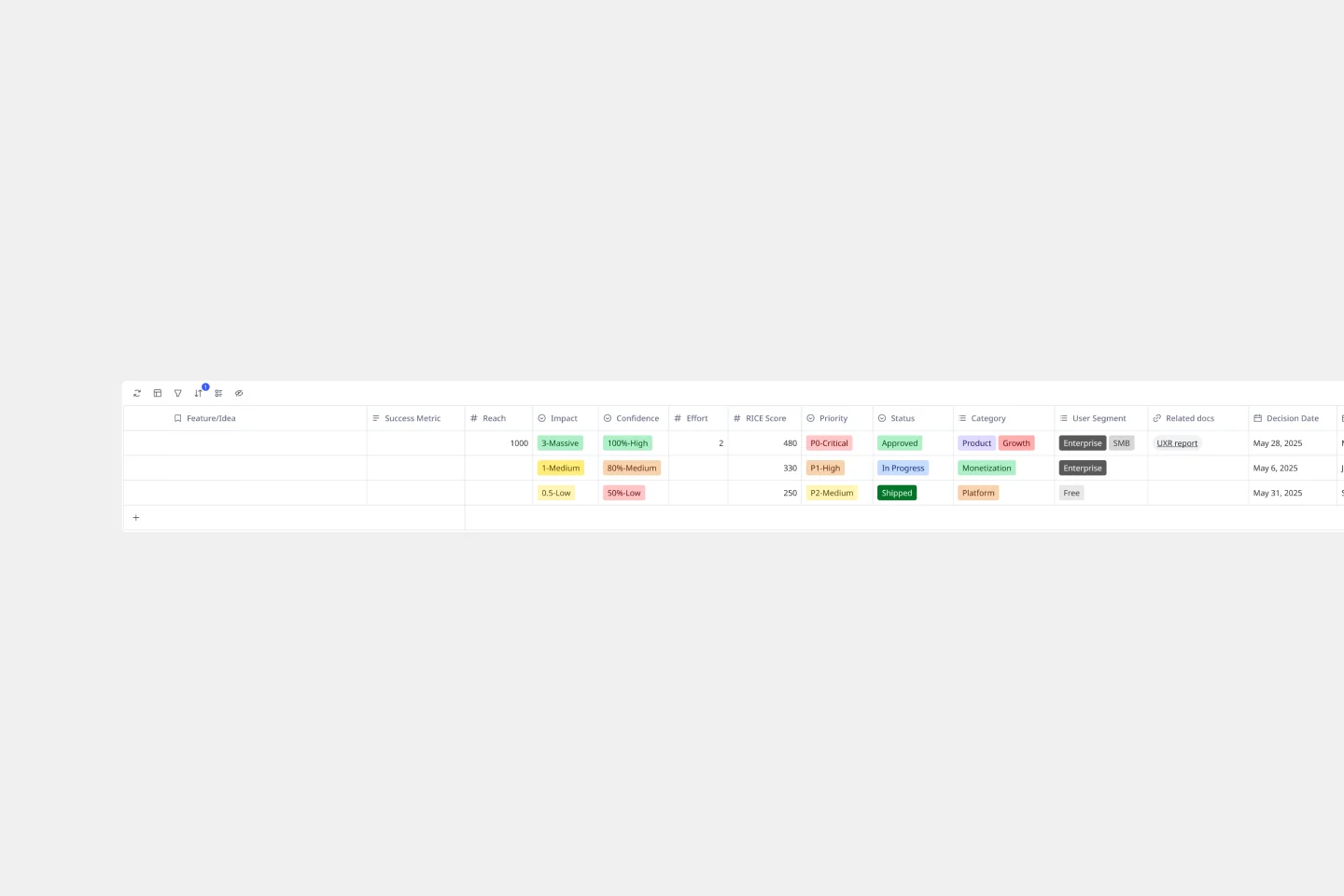
Juggling competing priorities while trying to maximize impact? The RICE prioritization framework helps product teams, marketers, and project managers make objective decisions about what to build, launch, or tackle next. Our ready-to-use template combines RICE scoring with Miro's Tables feature, so you can evaluate ideas, gather context, and align stakeholders—all in one visual workspace that keeps everyone on the same page.
Innovation Matrix Template

Innovation Matrix Template
Visualize the best way to grow your business with this Innovation Matrix template. It’ll show you how to streamline your innovation, make the right decisions about which areas of your business to innovate, and manage the entire process. So if you want to figure out the best way to innovate in your business, an innovation matrix can help.
SAFe Roam Board
SAFe Roam Board
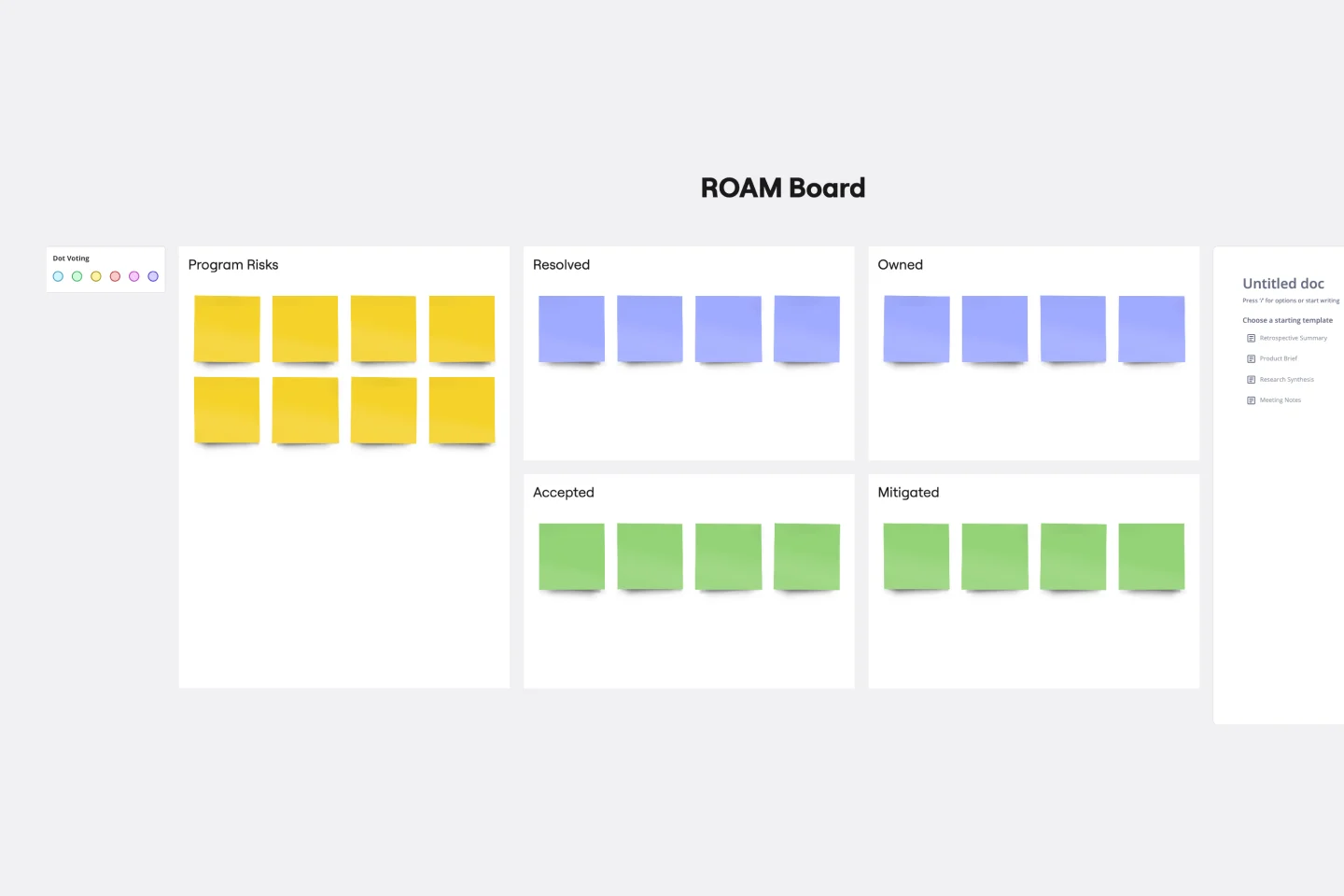
A SAFe ROAM Board is a framework for making risks visible. It gives you and your team a shared space to notice and highlight risks, so they don’t get ignored. The ROAM Board helps everyone consider the likelihood and impact of risks, and decide which risks are low priority versus high priority. The underlying principles of SAFe (Scaled Agile Framework) are: drive cost-effective solutions, apply systems thinking, assume that things will change, build incrementally, base milestones on evaluating working systems, and visualize and limit works in progress.
Pickle Jar (Priority Jar)

Explore more
About the Prioritization Templates Collection
In project management, making informed decisions about what tasks to tackle first can be a game-changer. Miro's prioritization templates collection is designed to help teams streamline their decision-making processes, ensuring that the most critical tasks are addressed promptly. This collection includes various prioritization frameworks, such as the prioritization matrix template and the project prioritization matrix template, which are essential tools for any team looking to optimize their workflow.
Why you'll love our prioritization frameworks
Prioritization frameworks are invaluable for teams aiming to enhance productivity and focus on what truly matters. Here are some key benefits of using Miro's prioritization framework templates:
Clarity and focus: These templates help teams clearly define and visualize their priorities, ensuring everyone is on the same page.
Improved decision-making: By using a structured approach, teams can make more informed decisions about which tasks to prioritize.
Enhanced collaboration: The visual nature of these templates fosters better communication and collaboration among team members.
Time efficiency: Streamlining the prioritization process saves time, allowing teams to focus on execution rather than deliberation.
Flexibility: Miro's templates are customizable, making them suitable for various projects and team needs.
How to use the prioritization templates in Miro
Using Miro's prioritization templates is straightforward and can significantly improve your team's workflow. Here's a step-by-step guide:
Select a template: Choose a prioritization framework template that best suits your project needs. Miro offers a range of options, including the prioritization matrix template and the project prioritization matrix template.
Define criteria: Establish the criteria for prioritization. This could include factors such as urgency, impact, effort, and resources required.
List tasks: Compile a comprehensive list of tasks or projects that need prioritization. Ensure that all relevant tasks are included to get a complete overview.
Evaluate tasks: Assess each task against the defined criteria. This step involves scoring or ranking tasks based on their importance and urgency.
Visualize priorities: Use the template to plot tasks on a matrix or chart. This visual representation helps in quickly identifying high-priority tasks.
Review and adjust: Review and adjust the prioritization regularly to ensure it remains aligned with project goals and any changes in circumstances. Adjust priorities as needed.
Execute: Once you have a clear understanding of your priorities, begin executing the tasks in order of importance. This ensures that the most critical tasks are addressed first, leading to more efficient project completion.
Monitor progress: Regularly track the progress of your tasks using the prioritization framework template. This helps in identifying any bottlenecks and making necessary adjustments to stay on track.
Communicate: Keep your team informed about the prioritization and any changes that occur. Effective communication ensures that everyone is aligned and working towards the same goals.
Review and reflect: After completing the tasks, review the outcomes and reflect on the process. This helps in understanding what worked well and what can be improved for future projects.

How Miro's prioritization templates help teams thrive
Miro's prioritization templates are more than just tools; they are enablers of success. By providing a structured approach to prioritization, these templates help teams to:
Achieve goals faster: By focusing on the most important tasks, teams can achieve their goals more quickly and efficiently.
Enhance team morale: Clear priorities reduce confusion and stress, leading to a more motivated and cohesive team.
Drive innovation: With less time spent on deliberation, teams can dedicate more time to creative and innovative tasks.
Adapt to changes: The flexibility of Miro's templates allows teams to easily adapt to changes in project scope or priorities.
Miro's prioritization templates are essential for any team looking to optimize their workflow and achieve their goals efficiently. By using these templates, teams can ensure that they are always working on the most important tasks, leading to better outcomes and a more productive work environment.