DR Readiness Logic Model
Brief
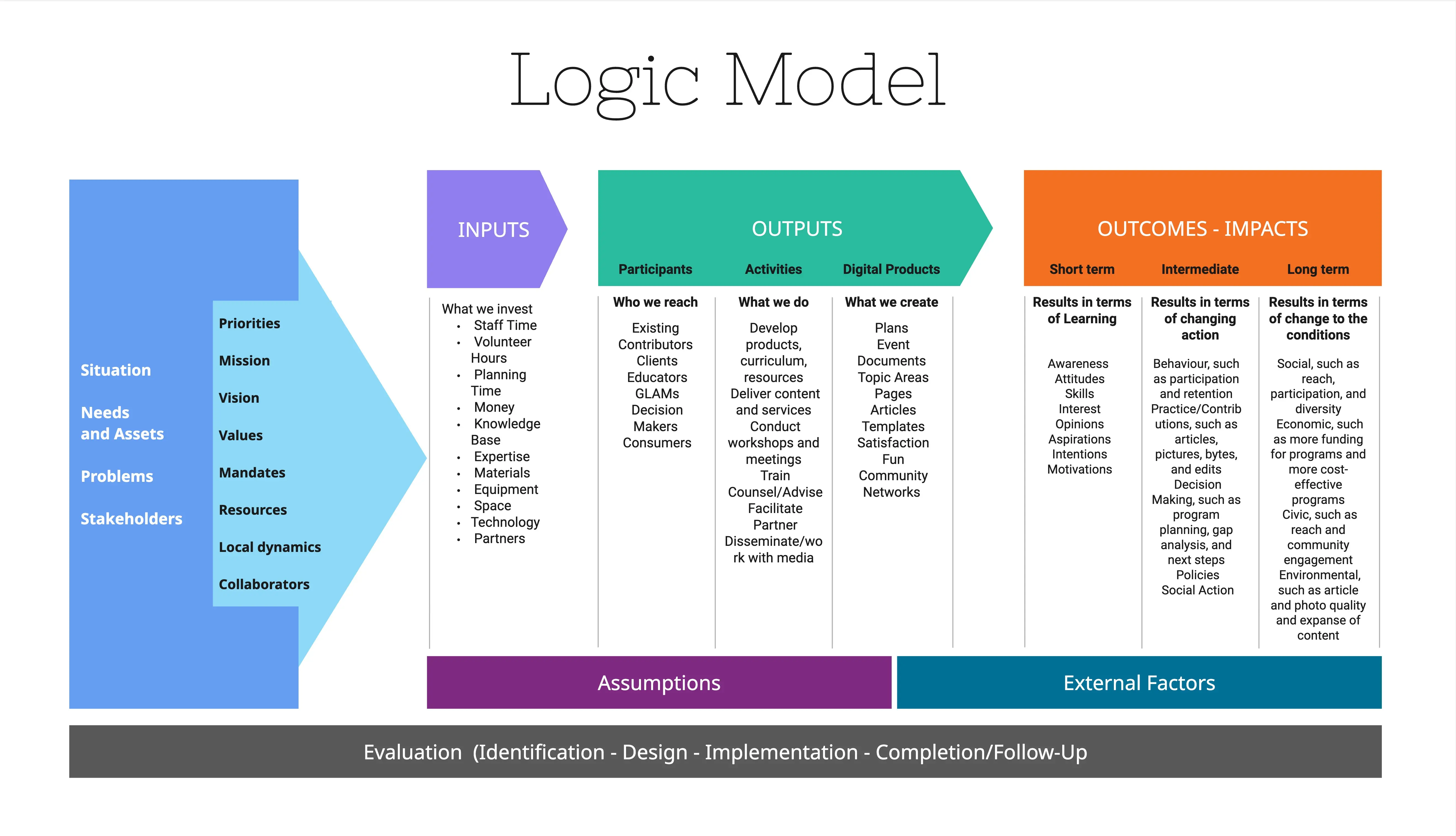
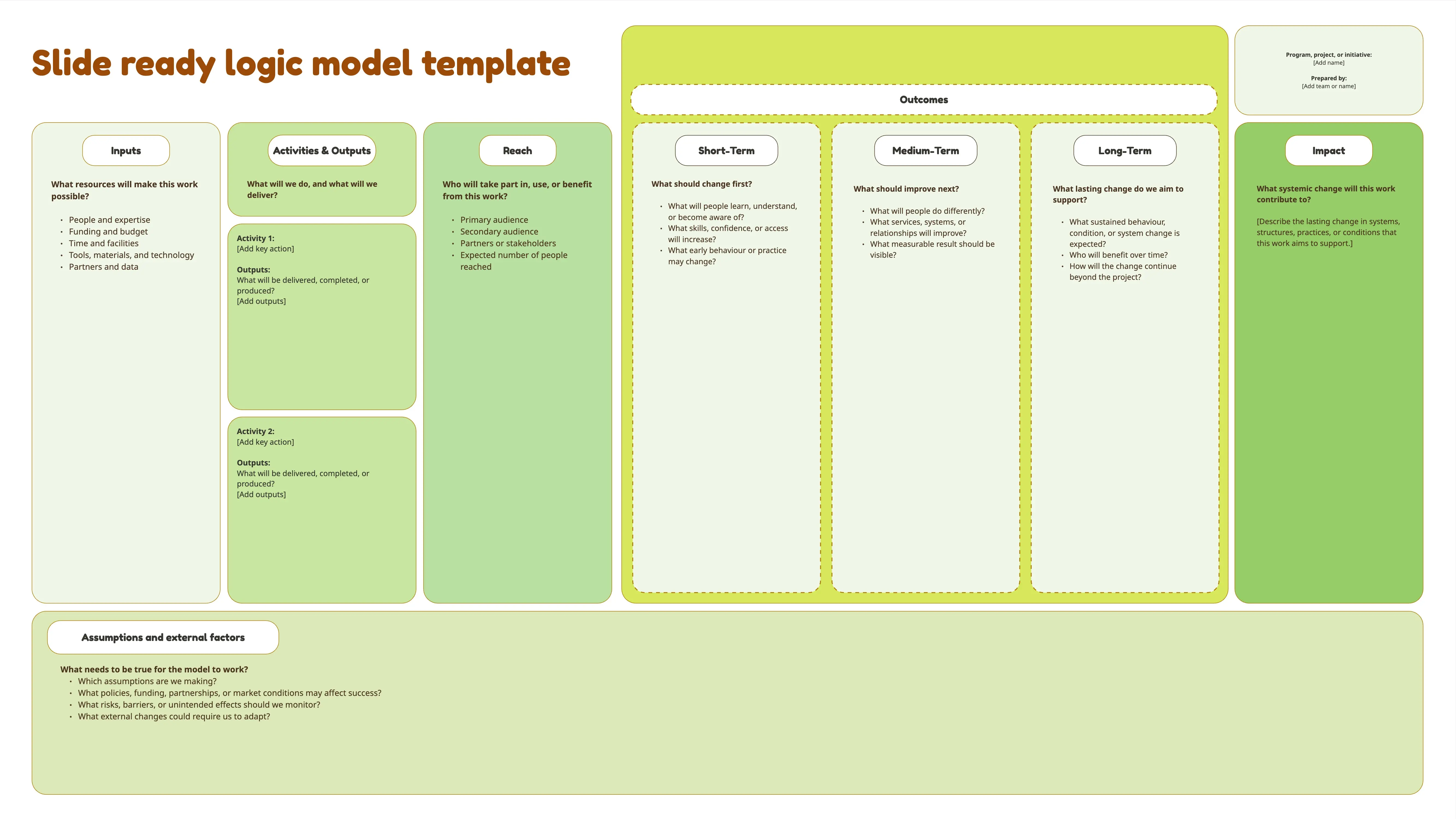
The DR Readiness Logic Model is a strategic planning and communication framework that maps the complete cause-and-effect chain of a Disaster Recovery program. It traces the path from Inputs (resources and investments) → Activities (the work you do) → Outputs (deliverables produced) → Outcomes (organizational changes over 1–3 years) → Impact (long-term resilience and business continuity).
This template addresses a critical challenge: a major outage, cyber attack, or natural disaster could halt mission-critical services. Tier-1 systems must recover within hours—not days—with zero tolerance for data loss. The model includes a KPIs panel with measurable targets (RTO ≤ 4 hours, RPO ≤ 15 minutes, drill success rate ≥ 95%, and 100% Tier-1 DR coverage), an Assumptions section to document program dependencies, and an External Factors section to acknowledge forces outside your control.
Who Can Use It
This template is designed for:
IT leaders and infrastructure teams who execute DR initiatives
DR and Business Continuity managers who plan and coordinate recovery programs
Security and risk officers who assess and mitigate disaster risk
Compliance and audit teams who verify DR readiness and regulatory compliance
CIOs, CTOs, and executives who sponsor, fund, and govern DR strategy
Business continuity planners who integrate DR into enterprise resilience
Auditors and board members who need a clear visual of program logic, accountability, and ROI
How to Use It
Start with the Challenge statement — Confirm it accurately reflects your organization's disaster risk context and tolerance for downtime and data loss.
Fill in the INPUTS column — Document your actual DR budget, team composition, secondary site or cloud capacity, backup and replication tools, BIA reports, asset inventory, vendor SLAs, and governance policies.
Map your ACTIVITIES — List the specific work your team performs: business impact analysis, DR plan and runbook development, replication deployment, scheduled drills (tabletop, failover, full-scale), staff training, and quarterly plan reviews.
Define OUTPUTS — Identify the concrete deliverables each activity produces: approved DR plans, 100% coverage of Tier-1 systems, completed drill reports, trained and certified staff, documented RTO/RPO per application.
Set OUTCOMES — Describe the behavioral and operational changes expected within 1–3 years: RTO/RPO targets consistently met, staff respond confidently during incidents, fewer recovery failures, DR embedded in change management, business trust in IT continuity, and compliance requirements satisfied.
Articulate the long-term IMPACT — Capture the resilient state you are working toward: critical services survive any disaster, business continuity assured, reputation protected, and a sustained culture of preparedness.
Update the KPIs panel — Replace placeholder targets with your organization's specific RTO, RPO, drill frequency, and coverage goals.
Review Assumptions and External Factors — Adjust these sections to reflect your environment, dependencies, and risks beyond your control.
Use the completed model — Present it in governance reviews, budget proposals, stakeholder briefings, and DR program communications to clearly demonstrate program logic, value, and accountability.
Cheers!
Khawaja Rizwan