Show how your work leads to meaningful change
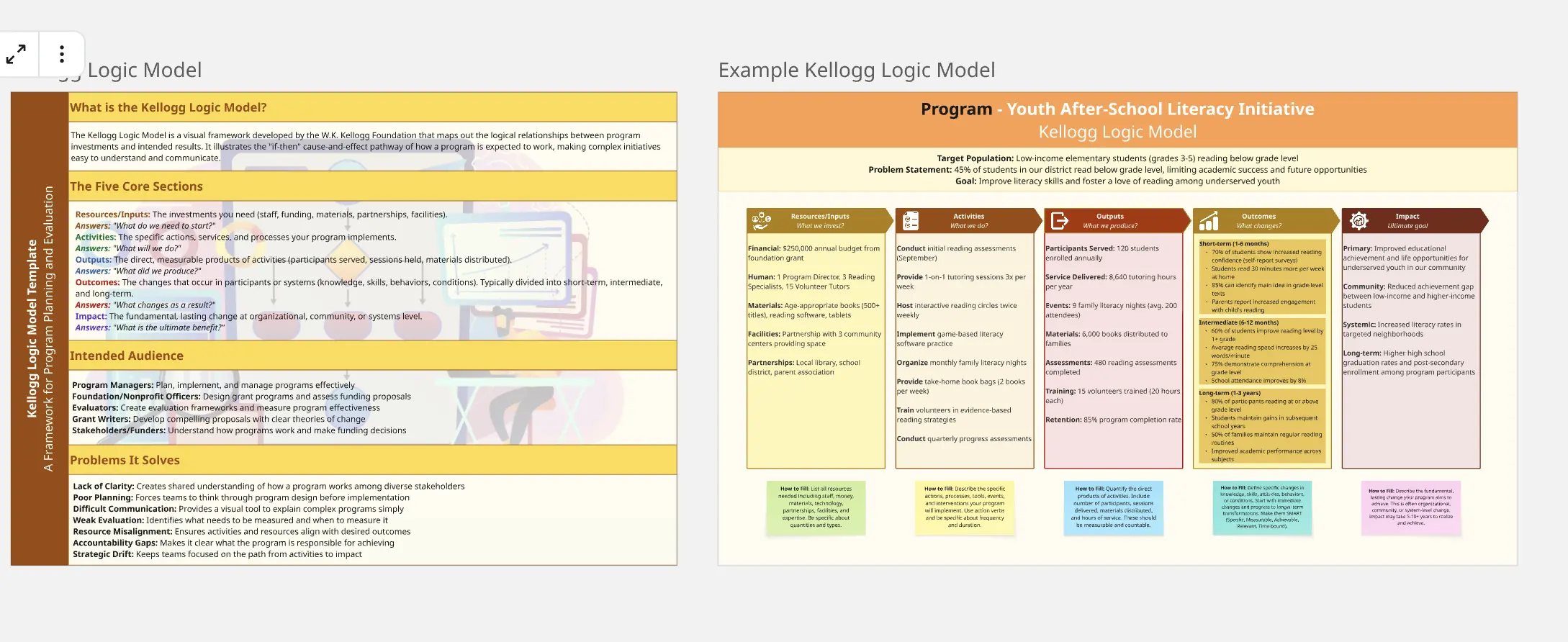
A clean and green, presentation-ready logic model for mapping how a program, project, or initiative is expected to create change. Use it to connect the resources you invest, the activities you deliver, the people you reach, and the outcomes and systemic impact you aim to support.
What’s included
This template guides you through the full logic-model pathway:
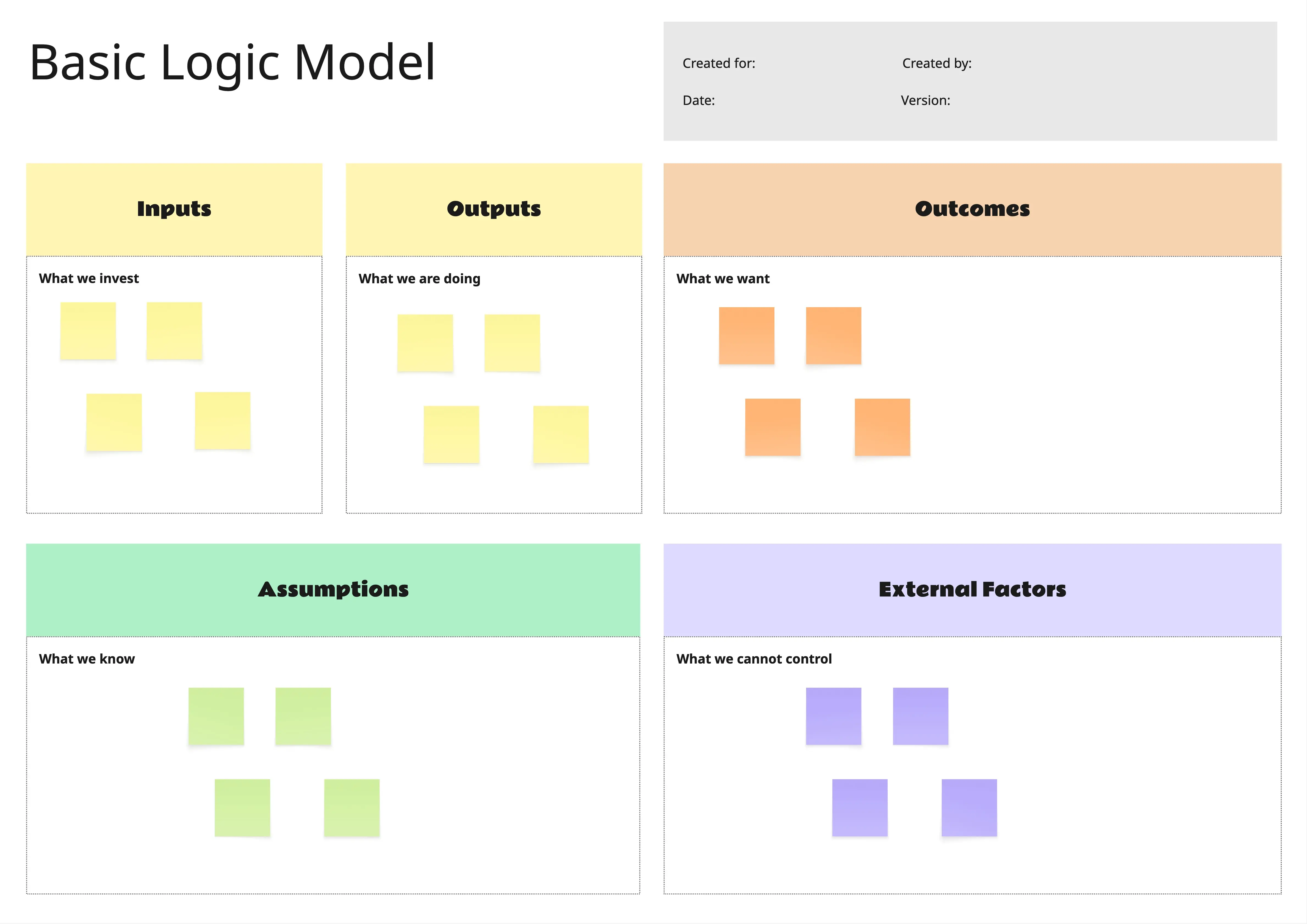
Inputs — the people, budget, tools, partnerships, and resources needed.
Activities and outputs — what you will do and what you will deliver.
Reach — the people, groups, or stakeholders who will participate or benefit.
Short-, medium-, and long-term outcomes — the changes you expect to see over time.
Impact — the lasting systemic change your work contributes to.
Assumptions and external factors — the conditions, risks, and influences that may affect success.
How to use it
Start by naming the program, project, or initiative and agreeing the problem or opportunity it responds to. Work from left to right: identify the resources you need, the actions you will take, and who you intend to reach. Then describe the changes you expect to see in the short, medium, and long term.
Finish by defining the systemic impact your work aims to contribute to, and capture the assumptions and external factors that could affect the pathway. Keep each entry concise enough to explain clearly in a meeting or presentation.
Suggested 60-minute workshop
10 min — Define the focus: Agree the initiative, intended audience, and problem or opportunity being addressed.
10 min — Map inputs and activities: Identify the key resources, actions, and planned outputs.
10 min — Define reach: Clarify who will participate, benefit, or influence the work.
15 min — Map outcomes: Work backwards from the long-term change, then identify the medium- and short-term changes needed to support it.
10 min — Test assumptions: Discuss what needs to be true, which risks matter most, and which external factors may affect success.
5 min — Agree next steps: Identify missing evidence, indicators to track, owners, and the next review date.
Who it’s for
Ideal for nonprofit and community organisations, public-sector teams, social-impact initiatives, funders, programme managers, consultants, researchers, and cross-functional teams. Use it for project design, grant applications, strategy development, stakeholder alignment, evaluation planning, or a slide-ready overview of how your work creates change.