Retrospective templates
Optimize workflows and collect valuable feedback with Miro's retrospective templates collection. Reduce the time needed to synthesize and distribute findings after a retro and move straight into executing new strategies.
1217 templates
- 207 likes2.3K uses
- 297 likes2.3K uses

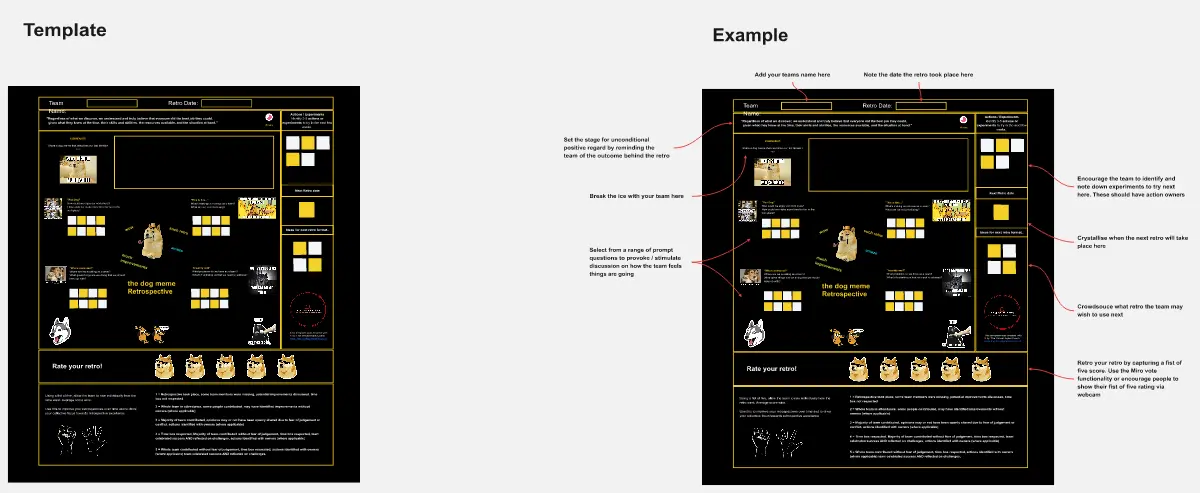
Dog Meme Retro
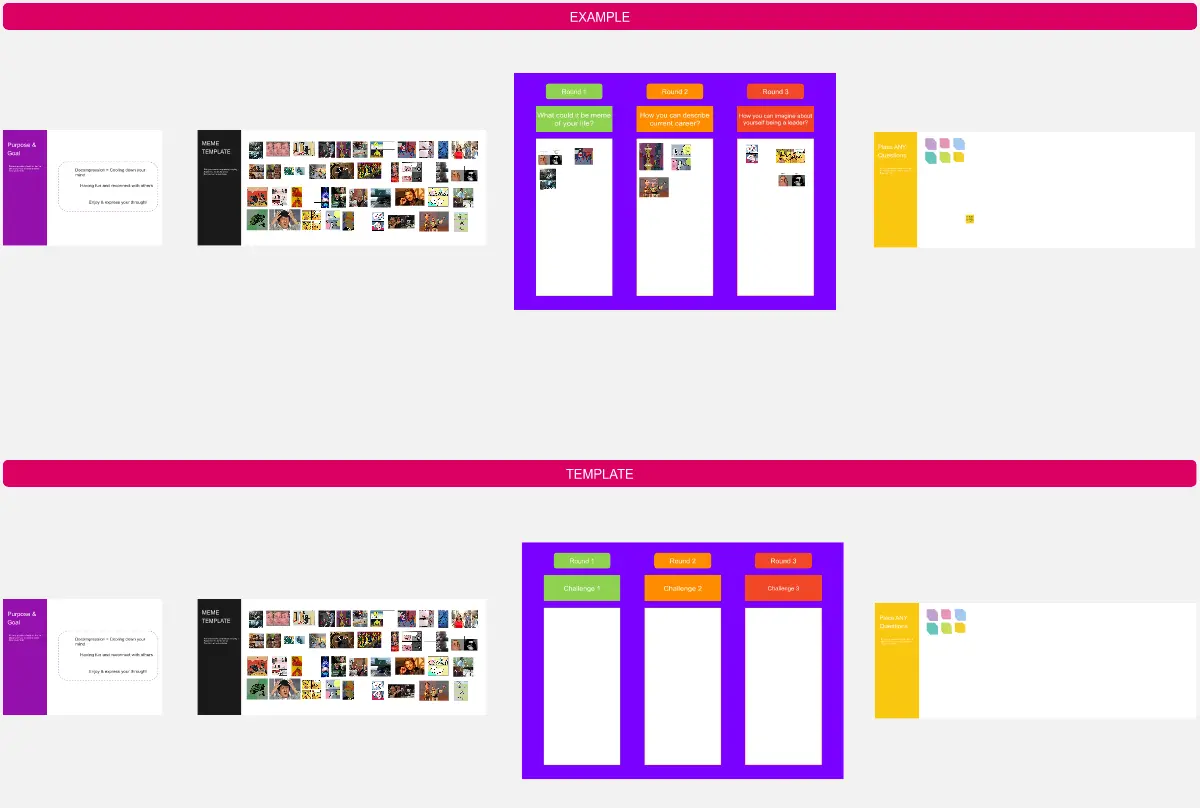
The Dog Meme Retro template offers a fun and lighthearted approach to retrospectives, incorporating dog memes to add humor and engagement to the session. It provides elements for reflecting on past experiences, sharing insights, and generating laughter. This template enables teams to relax, bond, and reflect on their work in a playful atmosphere. By promoting laughter and camaraderie, the Dog Meme Retro empowers teams to strengthen relationships, boost morale, and drive continuous improvement effectively.
- 97 likes2.2K uses
- 155 likes2.2K uses
- 122 likes2.2K uses

Retrospective
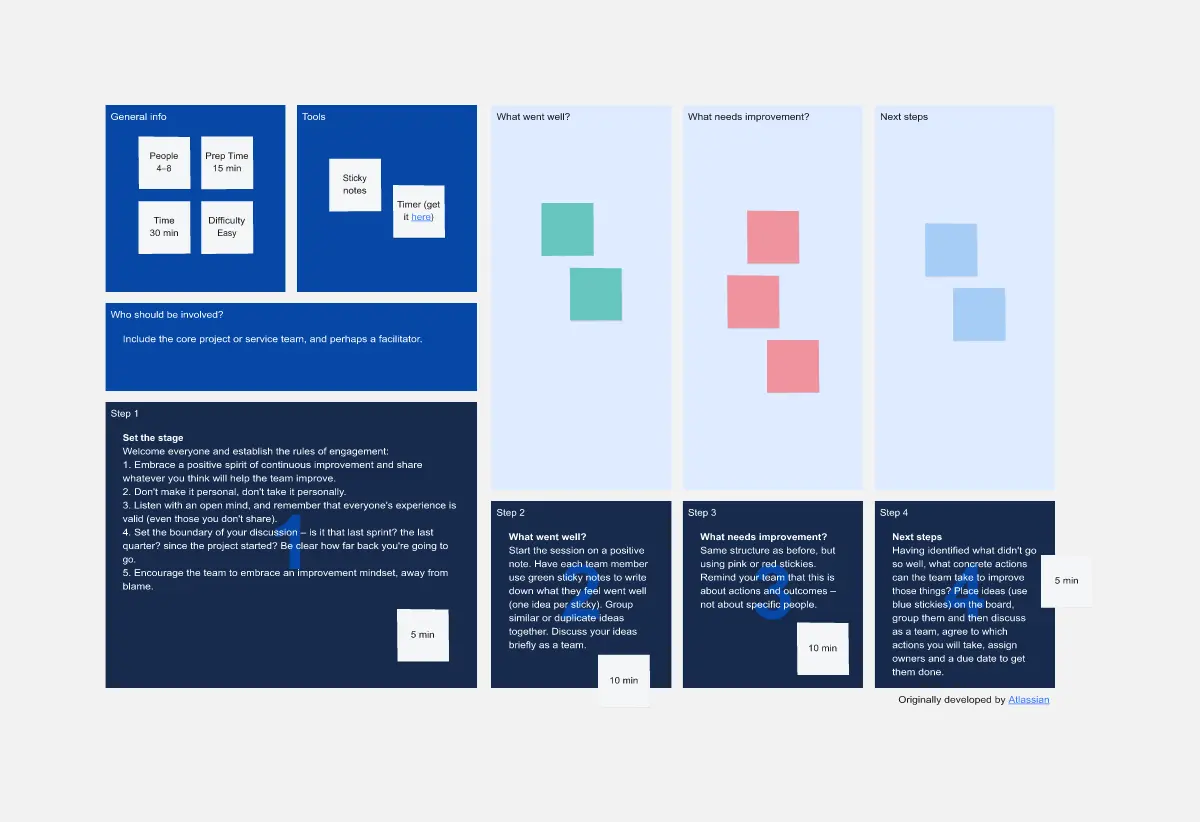
The Atlassian Retrospective template offers a structured framework for teams to reflect on past iterations and improve their processes. It provides elements for identifying what went well, what could be improved, and action items for the future. This template enables teams to conduct retrospectives effectively within the Atlassian ecosystem, fostering collaboration and continuous improvement. By promoting reflection and accountability, the Atlassian Retrospective empowers teams to optimize their workflows and enhance productivity effectively.
- 339 likes2.1K uses

Project Retrospective
The Project Retrospective template offers a structured approach for teams to review project performance and identify areas for enhancement. It provides elements for reflecting on project goals, milestones, successes, and challenges. This template enables teams to evaluate project outcomes, learn from experiences, and implement process improvements. By promoting reflection and accountability, the Project Retrospective empowers teams to optimize project delivery and drive continuous improvement effectively.
- 385 likes2.1K uses
- 291 likes2.1K uses
- 230 likes2K uses

Campsite Retrospective
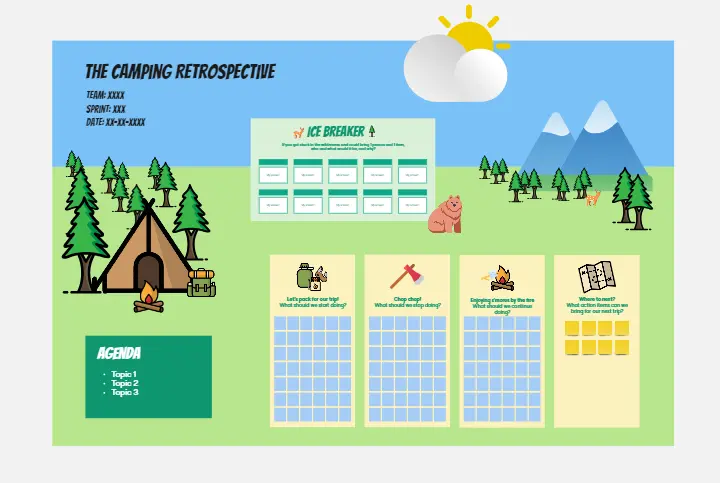
The Campsite Retrospective template offers a metaphorical and outdoor-themed approach to retrospectives, likening the team's journey to a camping trip. It provides elements for reflecting on past experiences (campfire stories), identifying challenges (obstacles in the trail), and setting goals for the future (path forward). This template fosters a sense of camaraderie, adventure, and shared purpose, encouraging team members to explore their journey and overcome obstacles together. By leveraging the metaphor of camping, the Campsite Retrospective empowers teams to build resilience, strengthen bonds, and navigate towards success effectively.
- 116 likes2K uses
- 256 likes2K uses

Meme Battle - Retrospective and Icebreaker
The Meme Battle - Retrospective and Icebreaker template offers a creative and engaging approach to retrospectives, combining humor with reflection. It provides elements for sharing memes, discussing past experiences, and identifying areas for improvement. This template enables teams to break the ice, build rapport, and foster a positive atmosphere for reflection. By promoting humor and camaraderie, the Meme Battle - Retrospective and Icebreaker empowers teams to bond, drive continuous improvement, and enhance team dynamics effectively.
- 224 likes2K uses

Project Retrospective
The Project Retrospective template offers a structured framework for teams to evaluate project performance and learn from their experiences. It provides elements for reflecting on project goals, deliverables, challenges, and successes. This template enables teams to identify areas for improvement, refine processes, and celebrate achievements. By promoting reflection and learning, the Project Retrospective empowers teams to optimize project outcomes, enhance collaboration, and drive future success effectively.
- 192 likes1.9K uses

Retrospective - Emoji
The Retrospective - Emoji template offers a fun and expressive approach to retrospectives, using emojis to convey feedback and emotions. It provides elements for reflecting on past experiences, sharing feelings, and brainstorming improvements. This template enables teams to express themselves creatively and engage in meaningful discussions. By promoting emotional intelligence and inclusivity, the Retrospective - Emoji empowers teams to build empathy, strengthen relationships, and drive continuous improvement effectively.
- 236 likes1.9K uses

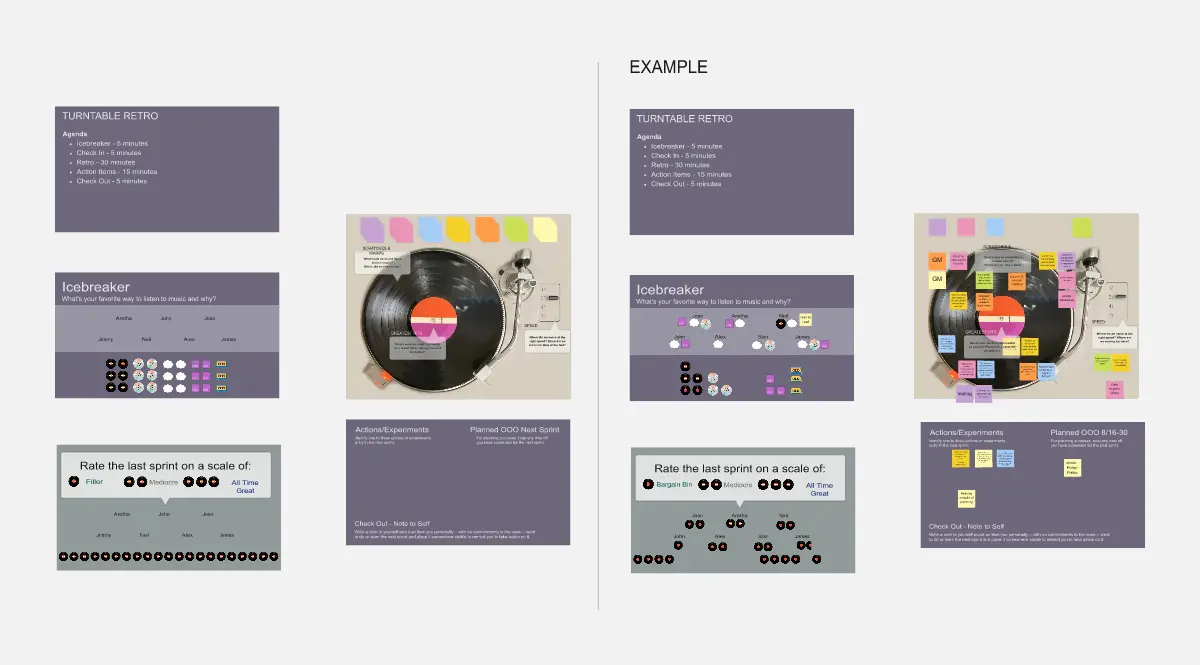
Turntable Retrospective
The Turntable Retrospective template offers a musical and interactive approach to retrospectives, using the metaphor of a DJ mixing tracks to facilitate reflection. It provides elements for reflecting on past experiences, mixing positives and negatives, and setting a rhythm for improvement. This template enables teams to engage in dynamic and collaborative discussions, fostering creativity and innovation. By promoting a metaphorical and interactive experience, the Turntable Retrospective empowers teams to amplify their strengths, remix challenges, and set the beat for future success effectively.
- 250 likes1.8K uses

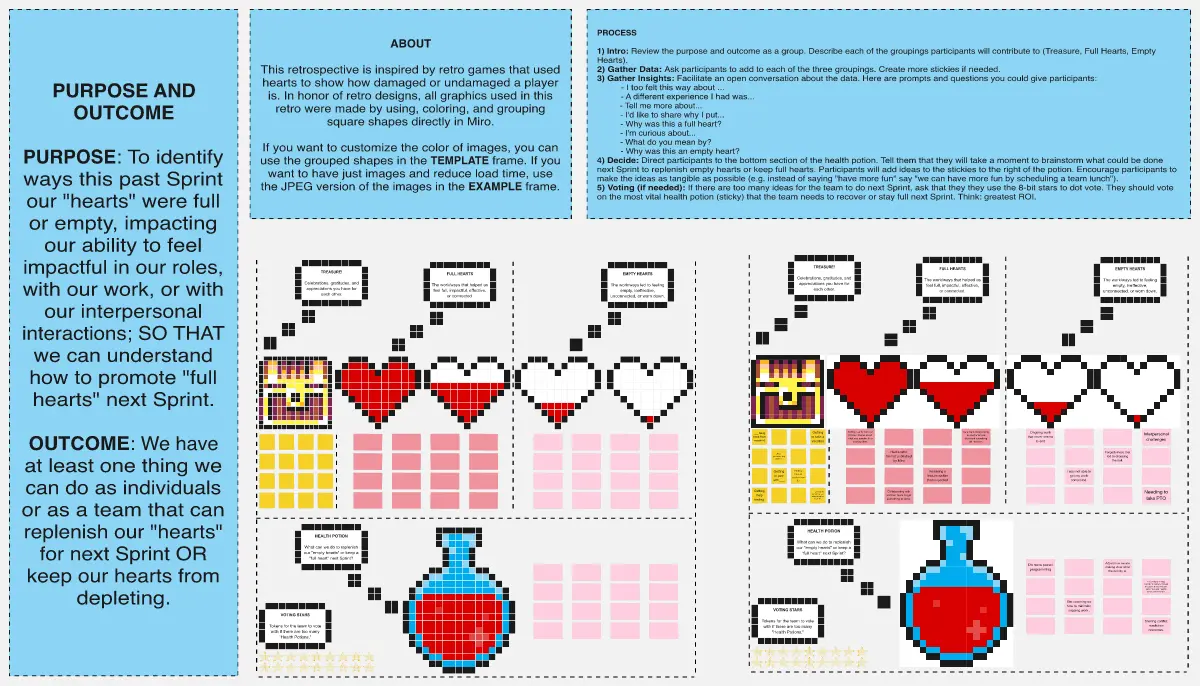
8 Bit Hearts - A Retrospective
The 8 Bit Hearts - A Retrospective template offers a nostalgic and creative approach to retrospectives, using retro gaming elements to engage team members. It provides elements for reflecting on past experiences, celebrating achievements, and identifying areas for improvement. This template enables teams to foster a fun and collaborative atmosphere, promoting open communication and creative thinking. By combining nostalgia with reflection, the 8 Bit Hearts - A Retrospective empowers teams to build stronger bonds, boost morale, and drive continuous improvement effectively.
- 253 likes1.8K uses
- 224 likes1.8K uses
- 116 likes1.8K uses

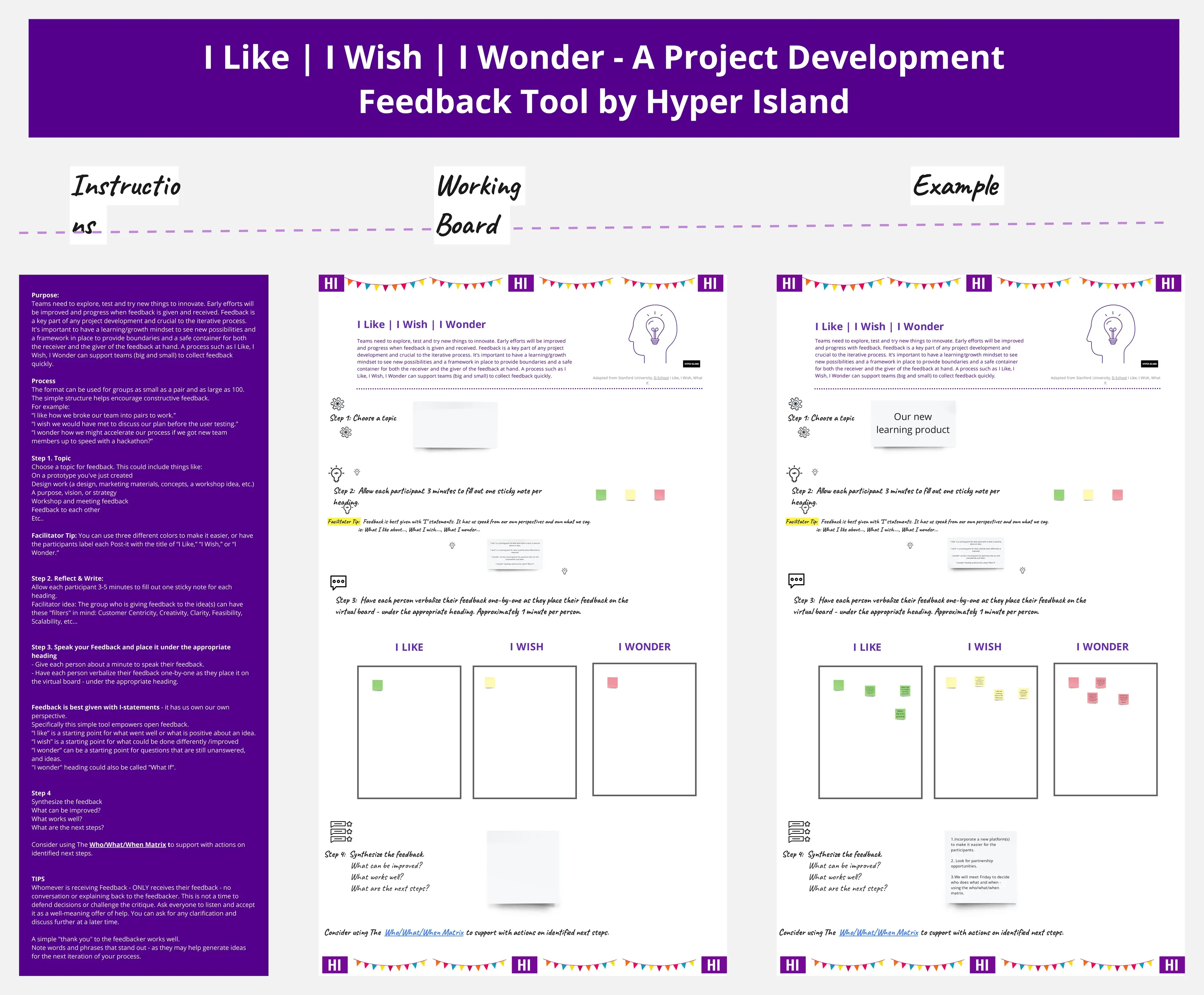
I Like | I Wish | I Wonder
Feedback is a key part of any project development and crucial to the iterative process.
- 205 likes1.8K uses
- 163 likes1.8K uses

WRAP Retrospective
The WRAP Retrospective template offers a structured framework for teams to reflect on their Work, Relationships, Achievements, and Processes. It provides elements for evaluating each aspect, identifying strengths, and areas for improvement. This template enables teams to conduct retrospectives systematically, fostering open communication and continuous learning. By promoting a comprehensive approach, the WRAP Retrospective empowers teams to enhance teamwork, boost morale, and drive performance effectively.
- 155 likes1.7K uses

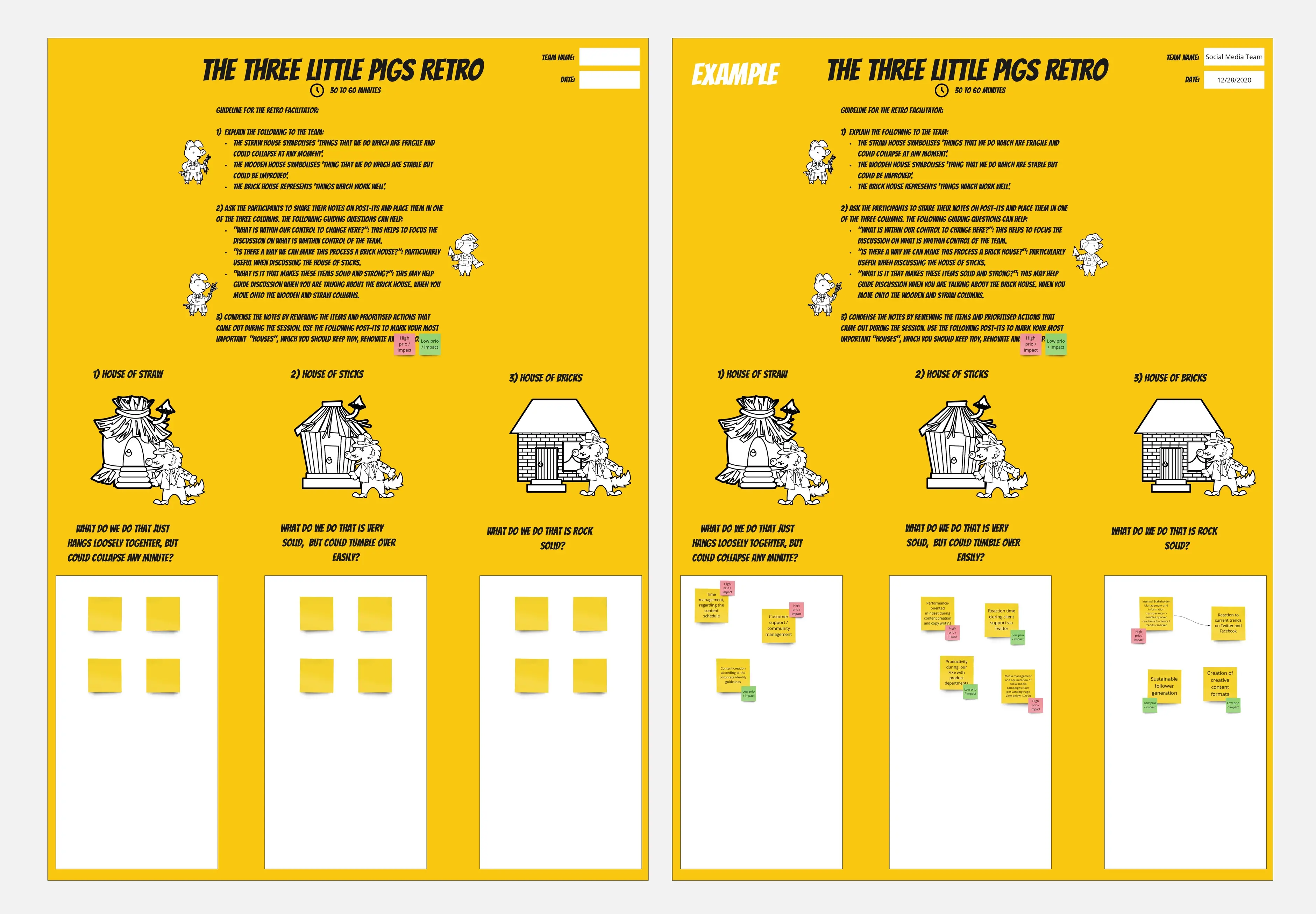
The Three Little Pigs Retro
The Three Little Pigs Retro template offers a whimsical and metaphorical approach to retrospectives, using the classic fairy tale to reflect on team experiences. It provides elements for exploring past iterations, identifying challenges (wolves), and building stronger foundations (bricks). This template enables teams to engage in playful yet insightful discussions, fostering creativity and collaboration. By promoting metaphorical thinking and storytelling, the Three Little Pigs Retro empowers teams to address challenges, reinforce resilience, and construct a path towards success effectively.
- 191 likes1.7K uses
- 201 likes1.7K uses

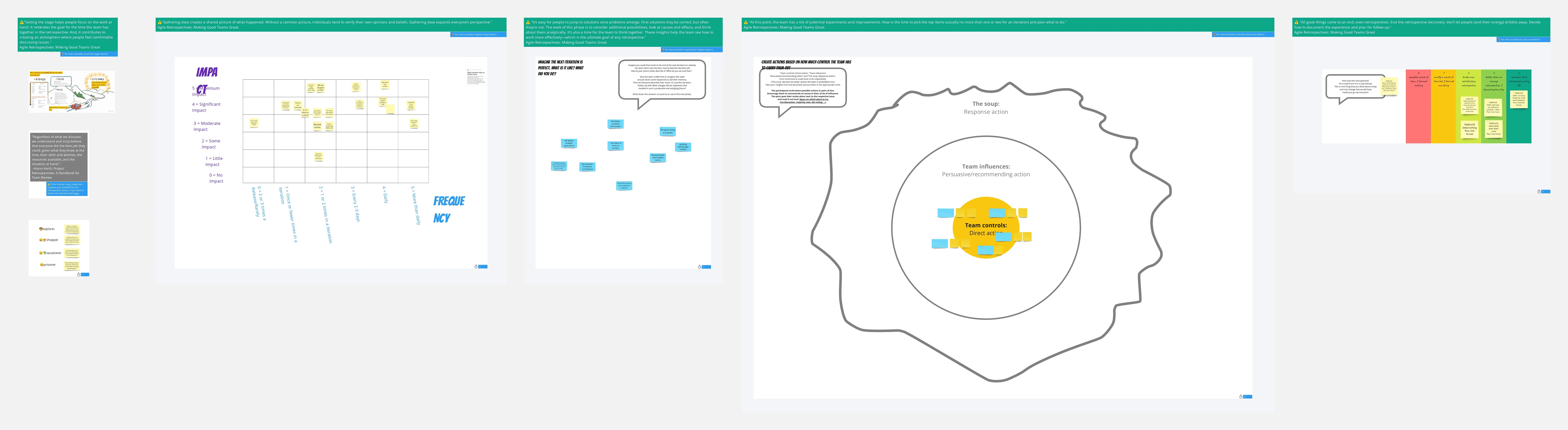
Agile Retrospective
The Agile Retrospective template offers a dynamic and adaptive framework for teams practicing agile methodologies. It provides elements for reflecting on sprint performance, identifying bottlenecks, and planning improvements. This template enables teams to adapt and refine their processes continuously, fostering a culture of learning and innovation. By promoting agility and adaptability, the Agile Retrospective empowers teams to optimize their workflows, drive continuous improvement, and deliver value to their stakeholders effectively.
- 229 likes1.7K uses
- 142 likes1.7K uses
- 192 likes1.7K uses
- 340 likes1.7K uses

End of the Year Team Retro
The End of the Year Team Retro template offers a structured approach for teams to reflect on their achievements and challenges throughout the year. It provides elements for celebrating successes, acknowledging setbacks, and setting goals for the upcoming year. This template enables teams to foster a sense of closure and renewal, promoting a positive outlook and alignment towards common objectives. By facilitating reflection and goal-setting, the End of the Year Team Retro empowers teams to strengthen their cohesion, enhance performance, and approach the new year with enthusiasm and focus effectively.
- 119 likes1.6K uses

Easter Egg Retrospective
The Easter Egg Retrospective template offers a themed approach to retrospectives, incorporating elements of the Easter holiday. It provides elements for reflecting on past iterations, hunting for hidden insights, and brainstorming improvements. This template enables teams to have fun while addressing serious topics, fostering creativity and collaboration. By promoting a playful yet productive atmosphere, the Easter Egg Retrospective empowers teams to uncover hidden gems, drive improvement, and strengthen team cohesion effectively.
- 101 likes1.6K uses
- 175 likes1.6K uses
- 205 likes1.6K uses
- 135 likes1.5K uses

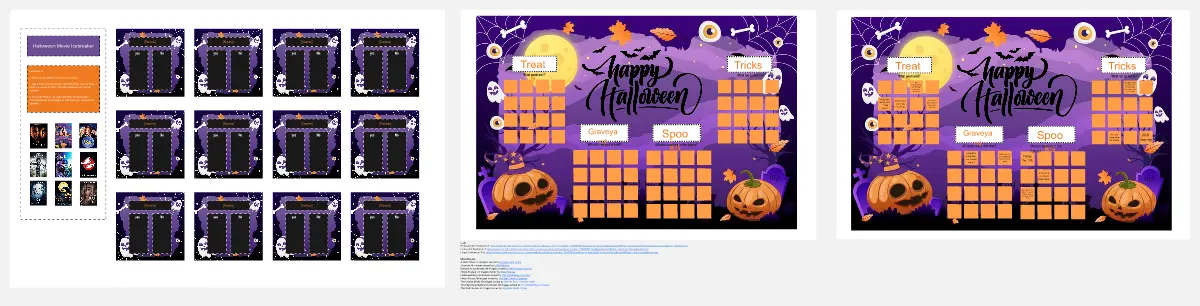
A Halloween Retro
The Retrospective Halloween template offers a themed approach to retrospectives, perfect for the spooky season. It provides elements for reflecting on past iterations, identifying scary issues, and brainstorming solutions. This template enables teams to have fun while addressing serious topics, fostering creativity and collaboration. By promoting a playful yet productive atmosphere, the Retrospective Halloween empowers teams to tackle challenges, drive improvement, and strengthen team cohesion effectively.
- 119 likes1.5K uses

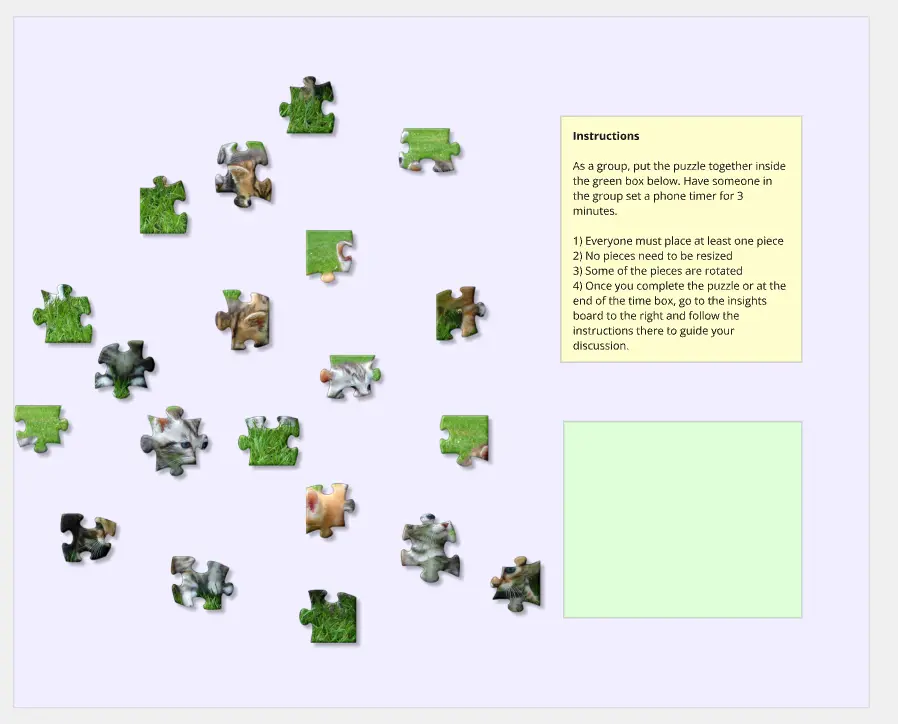
"The Big Picture" Puzzle Icebreaker
Learn how to better collaborate and communicate with this fun and unique Icebreaker Puzzle Template.
- 216 likes1.5K uses

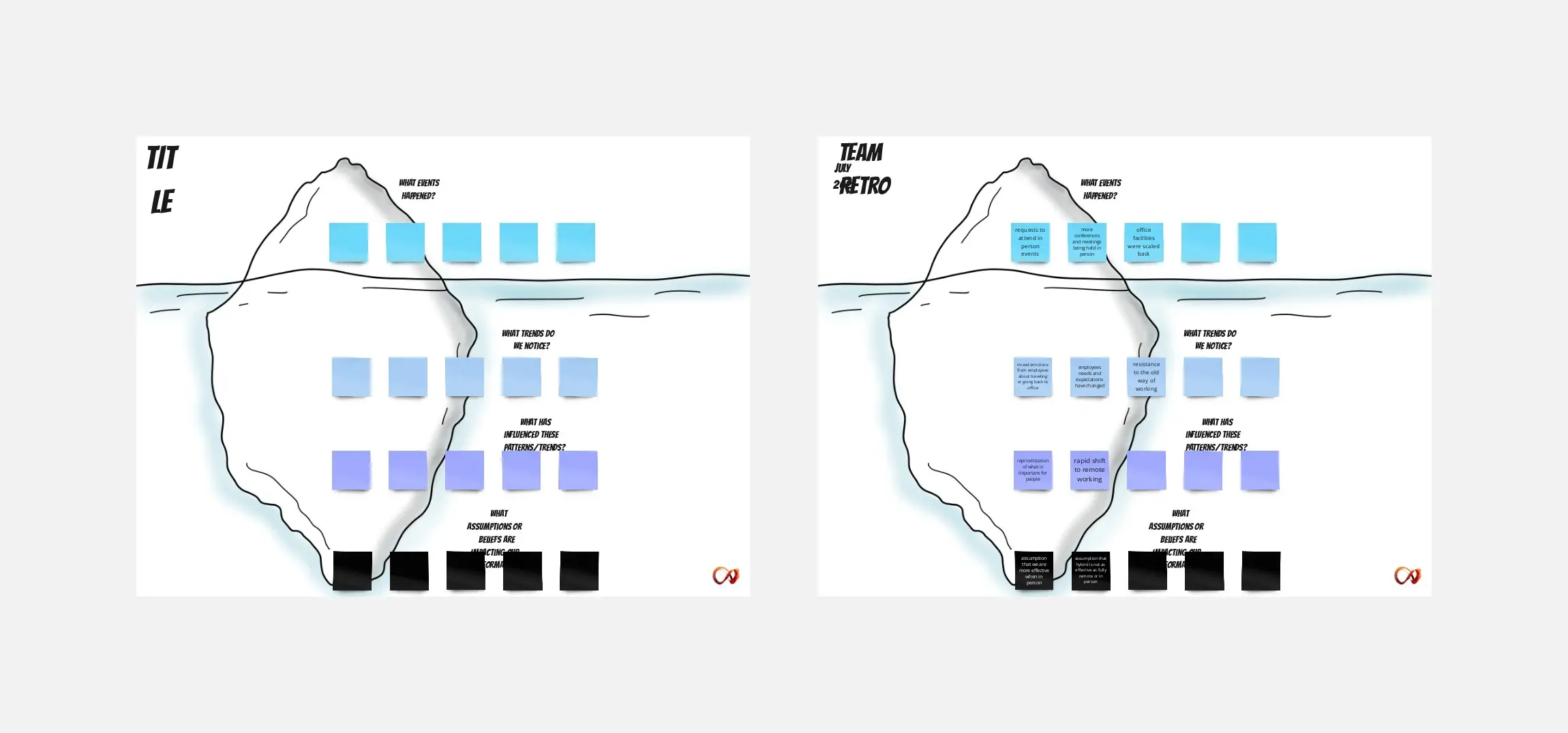
Iceberg Reflection
The Iceberg Reflection template is a visual tool for facilitating reflective exercises within Agile teams. It prompts participants to explore both visible and underlying aspects of challenges or successes, akin to an iceberg where only a portion is visible above the waterline. This template encourages deeper reflection and insights, fostering a culture of continuous improvement and learning. By addressing root causes and hidden factors, teams can better understand and overcome obstacles, driving growth and resilience.
- 120 likes1.5K uses

Retrospective Method - Amazon Review
The Retrospective Method - Amazon Review template offers a unique and engaging approach to retrospectives, framing the session as a product review on an e-commerce platform. It provides elements for rating past iterations, writing reviews, and suggesting improvements. This template enables teams to think critically, provide constructive feedback, and drive continuous improvement. By promoting a novel and interactive experience, the Retrospective Method - Amazon Review empowers teams to enhance collaboration, identify areas for growth, and optimize their processes effectively.
- 121 likes1.5K uses

Soccer Retrospective
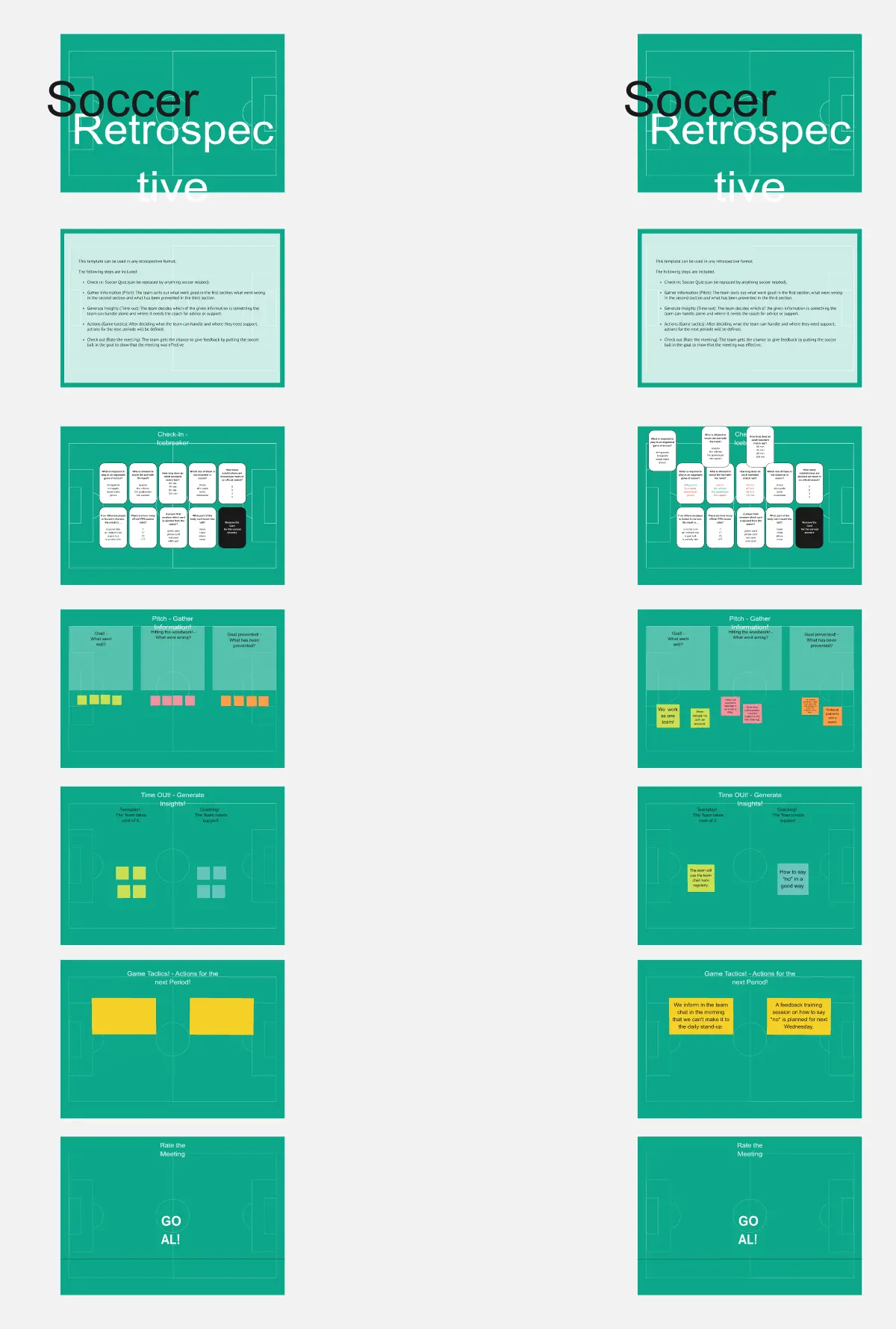
The Soccer Retrospective template offers a sports-themed approach to retrospectives, using the game of soccer as a metaphor for teamwork and strategy. It provides elements for reflecting on past performances, analyzing strengths and weaknesses, and setting goals for improvement. This template fosters a competitive yet collaborative spirit, encouraging team members to work together towards common objectives. By leveraging the metaphor of soccer, the Soccer Retrospective empowers teams to refine their tactics, enhance communication, and achieve their goals effectively.

Explore more
About the Retrospective Templates Collection
Miro's retrospective templates collection helps teams reflect on their past work, identify areas for improvement, and celebrate successes. These templates are essential tools for agile teams, providing structured formats for conducting retrospectives. Whether you're looking for a simple sprint retrospective template or more detailed retrospective examples, Miro has various options to suit your needs. Our collection includes templates for different types of retrospectives, ensuring that you can find the right one for your team's specific requirements.
Why you'll love our retrospective examples
Using Miro's retrospective templates offers numerous benefits that can significantly enhance your team's performance and collaboration. Here are some key advantages:
Structured reflection: Our agile retrospective templates clearly structure your meetings, ensuring that all important aspects are covered. This helps teams systematically review their work and identify areas for improvement.
Customizability: Each template is fully customizable, allowing you to tailor it to your team's specific needs and workflows. This flexibility ensures that the retrospective process is relevant and effective for your team.
Facilitates open communication: The templates are designed to foster open and honest communication among team members. By providing prompts and sections for feedback, they help create a safe space for discussing successes and challenges.
Actionable insights: The retrospective examples include sections for identifying actionable items. This ensures that the insights gained during the retrospective are translated into concrete actions that can drive continuous improvement.
Time efficiency: Using a pre-designed template saves time in preparing for the retrospective. Teams can focus more on the discussion and less on the setup, making the process more efficient.
Enhanced engagement: The interactive elements of Miro's templates, such as sticky notes and voting features, keep team members engaged and actively participating throughout the retrospective session.
How to use the retrospective templates in Miro
Using the retrospective templates in Miro is straightforward. Here’s a step-by-step guide to get you started:
Select a template: Begin by browsing Miro’s extensive library of retrospective templates. Choose one that best fits your team’s needs, whether it’s a sprint retrospective template or another type of agile retrospective template.
Customize the template: Tailor the template to suit your team’s specific needs. You can add, remove, or modify sections to better align with your retrospective goals. This customization ensures that the template is relevant and effective for your team.
Invite team members: Share the Miro board with your team members. Ensure everyone has access and understands how to navigate the board. This step is crucial for fostering collaboration and participation.
Facilitate the retrospective: Use the template to guide the retrospective session. Start by setting the context and objectives of the meeting. Encourage team members to use interactive elements like sticky notes, voting, and timers to share their thoughts and feedback.
Document insights and actions: As the discussion progresses, document key insights and actionable items directly on the template. This helps in keeping track of important points and ensures that the retrospective leads to tangible improvements.
Review and follow-up: After the retrospective, review the documented insights and actions with the team. Assign responsibilities for the actionable items and set deadlines for follow-up. This step ensures that the retrospective results in continuous improvement.
The Facilitator’s Audit: 3 Ways to Prevent "Retrospective Fatigue"
A template is only as good as the psychological safety it creates. To move beyond surface-level feedback and get to the heart of team performance, apply these three expert "health checks" to your next Miro session:
1. The "Action-to-Noise" Ratio
The Audit: Look at your previous retrospective board. How many of the "Action Items" were actually completed? The Fix: If your team generates 20 ideas but finishes zero, they will stop engaging. Use a "Dot Voting" tool in Miro to narrow your focus to just two high-impact items per sprint. Authority in retrospectives comes from less talk and more visible change.
2. Swap "The What" for "The How" (The Double-Loop Test)
The Audit: Are your sticky notes focused only on external tools and deadlines (e.g., "The server was slow")? The Fix: A high-level retrospective examines the team's internal dynamics. Use your template to prompt "Double-Loop Learning." Instead of asking what went wrong with the code, ask: "How did our communication style contribute to the delay in catching the bug?" This moves the team from troubleshooting to true growth.
3. Rotate the "Template Archetype"
The Audit: Are you using the "Start, Stop, Continue" format every single time? The Fix: The brain ignores repetitive stimuli. To keep engagement high, rotate between three "Archetypes":
The Analytical: (e.g., Sailboat Retro) – Best for identifying external threats and anchors.
The Emotional: (e.g., Mad, Sad, Glad) – Best for clearing the air after a high-stress release.
The Creative: (e.g., The Hero's Journey) – Best for long-term project milestones to visualize the "villains" and "helpers" encountered.
Miro's templates are powerful retrospective tools that can transform the way your team conducts retrospectives. By providing structure, fostering open communication, and enabling actionable insights, these templates help teams to continuously improve and achieve their goals.