Program Logic Model Template
Brief
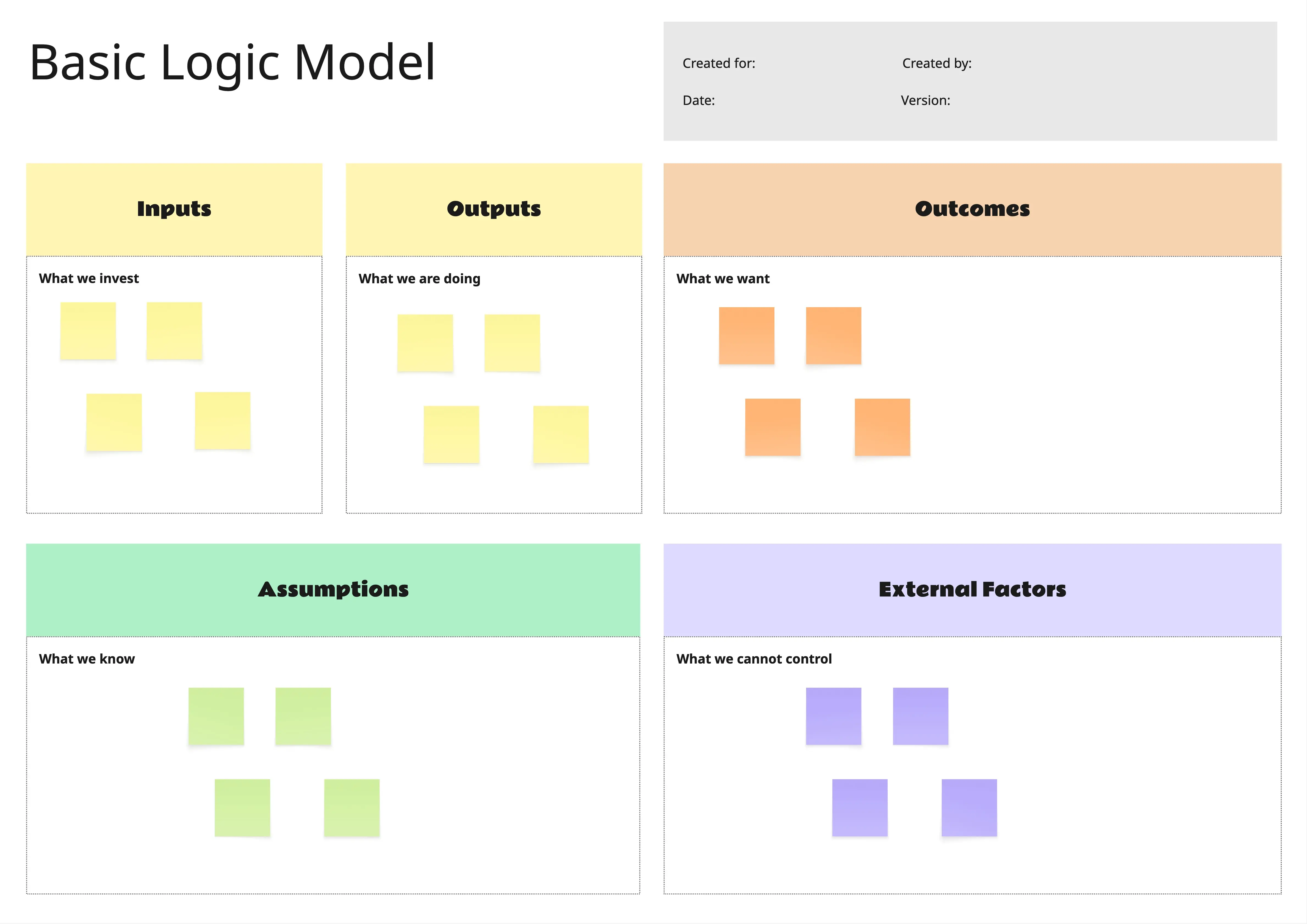
A Program Logic Model is a visual planning tool that maps how a program's resources connect to activities and results. It helps teams plan, communicate program design to stakeholders, and evaluate effectiveness by showing the logical flow from what you invest to the change you create.
Who Can Use It
This template works for nonprofit organizations, program managers, grant writers, government agencies, evaluators, educators, and social service teams who need to plan programs, secure funding, or demonstrate impact to stakeholders and funders.
How to Use It
Work through five columns from left to right:
Inputs — List all resources: funding sources and amounts, staff roles and numbers, materials and facilities, evaluation tools
Activities — Describe what your program does: workshops, services, counseling, assessments
Outputs — Record measurable deliverables: number of people served, sessions held, materials produced, reports completed
Outcomes — Document changes in participants: skills gained, behavior shifts, placement rates, confidence levels
Impact — State long-term community changes: economic improvements, reduced unemployment, decreased social service dependency
Example Overview
The Workforce Development example demonstrates: Inputs ($375K total funding, 22 staff members, 40 workstations, data tracking systems); Activities (12-week training workshops, job placement services, career counseling, program evaluation); Outputs (800 people trained annually, 520 placed in jobs, 1,200 counseled, quarterly reports); Outcomes (85% certification pass rate, 65% job placement rate, 78% improved career readiness); Impact (3% local unemployment reduction, $12M in new community wages, 35% fewer welfare claims).
Cheers!
Khawaja Rizwan