165likes
659uses
RICE is a quantitative framework for scoring product initiatives using the formula: (Reach × Impact × Confidence) ÷ Effort. It turns subjective opinions into comparable scores so teams can rank work by expected value per unit of effort.
Measures the percentage of users affected (1–100%).
Use percent of users, not time-based counts, to avoid baselining issues.
Examples:
A homepage change often reaches 100% of users.
A change to a niche feature might reach 5–20%.
Guidance: estimate realistically based on actual exposure, eligibility, and usage.
Measures magnitude of user change on an order-of-magnitude percentage scale.
1% = Small impact
10% = Medium impact
100% = Massive impact
Bucket estimates to spot outsized opportunities.
Example: Adding sign-up functionality on the homepage may be 100% (massive).
Measures certainty using a graded logarithmic scale (Itamar Gilad).
0.01% = Zero confidence (no evidence)
1% = Low confidence (belief, no discovery/testing)
10% = Medium/increasing confidence (some discovery, early tests)
100% = High confidence (strong evidence, robust tests)
Score based on the degree of discovery, data quality, and validation completed.
Measures time required.
Few days = 3
Few weeks = 15
Months = 50
One-hour task = 1
Avoid simple 1–2–3 sizing; use orders of magnitude to reflect real delivery time.
Use RICE to:
Compare multiple initiatives objectively.
Make roadmap decisions and sequence work.
Align teams on shared scoring criteria.
Establish transparent, repeatable prioritization standards.
List initiatives with clear scopes and assumptions.
For each initiative, score:
Reach as % of users affected.
Impact using the 1%, 10%, 100% scale.
Confidence using 0.01%, 1%, 10%, 100% based on evidence.
Effort using 1, 3, 15, 50 time-based scores.
Calculate the RICE score: (R × I × C) ÷ E.
Rank initiatives by score; review top items for dependencies, risk, and strategic fit.
Revisit scores as new evidence arrives; update Confidence and Reach before each planning cycle.
Cheers!
Khawaja Rizwan

Rizwan Khawaja
ICT Solution Architect @ NUST
I hold master's degrees in computer science and project management along with trainings and certifications in various technologies. All this is coupled with 25+ years of industry experience.
One Pager Template
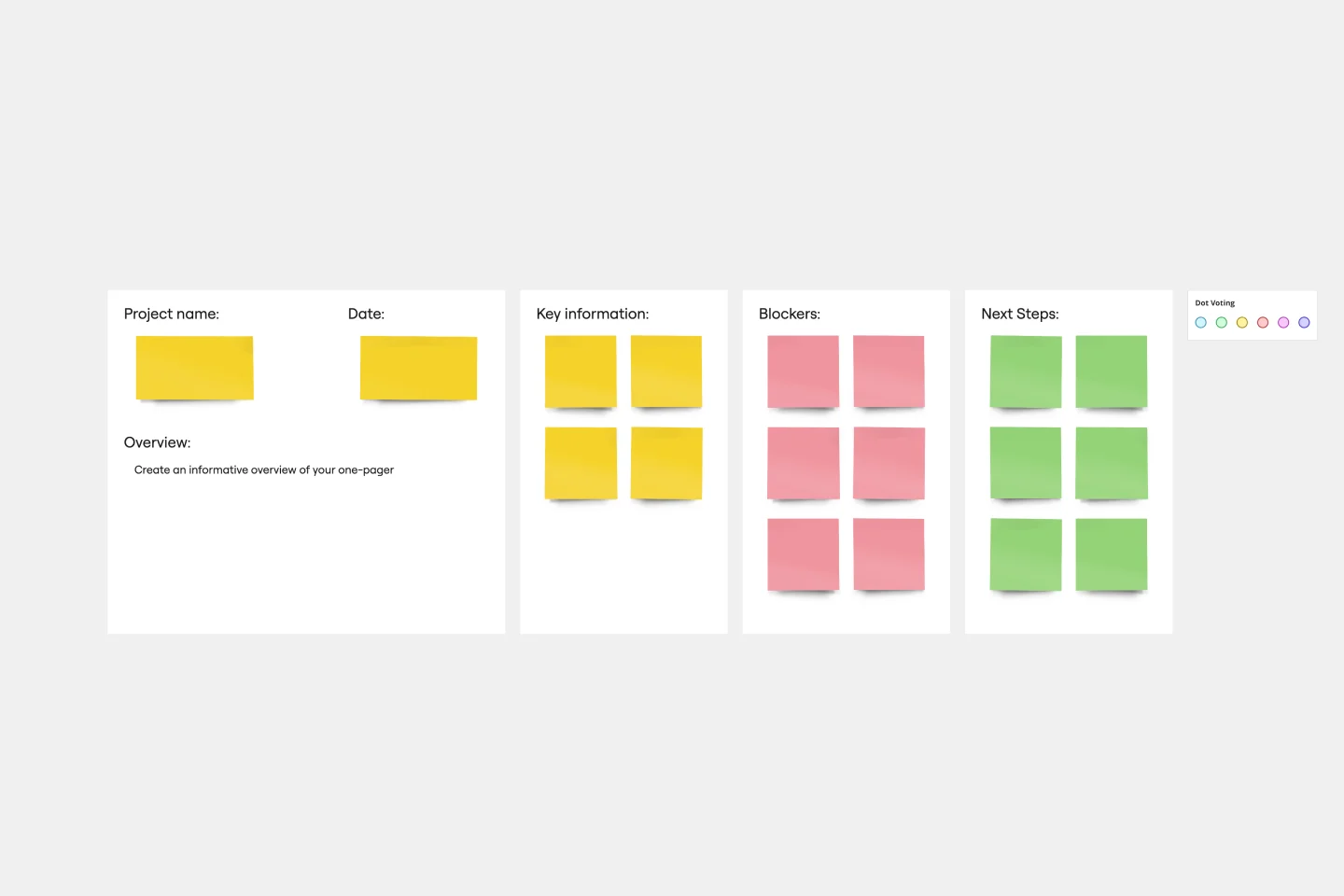
One-page project summaries are essential tools for synthesizing complex information into a clear and concise format. They offer significant benefits by enhancing team alignment. By distilling the core elements of a project or idea onto a single page, these summaries facilitate a shared understanding among team members and stakeholders. This shared understanding is crucial, especially in fast-paced environments where clarity and quick comprehension of key project aspects can dramatically improve decision-making and coordination. The structured yet flexible design of these summaries allows teams to focus on what truly matters, reducing miscommunication and increasing the efficiency of project execution.
One Pager Template
One-page project summaries are essential tools for synthesizing complex information into a clear and concise format. They offer significant benefits by enhancing team alignment. By distilling the core elements of a project or idea onto a single page, these summaries facilitate a shared understanding among team members and stakeholders. This shared understanding is crucial, especially in fast-paced environments where clarity and quick comprehension of key project aspects can dramatically improve decision-making and coordination. The structured yet flexible design of these summaries allows teams to focus on what truly matters, reducing miscommunication and increasing the efficiency of project execution.