What is the Gap Analysis Template?
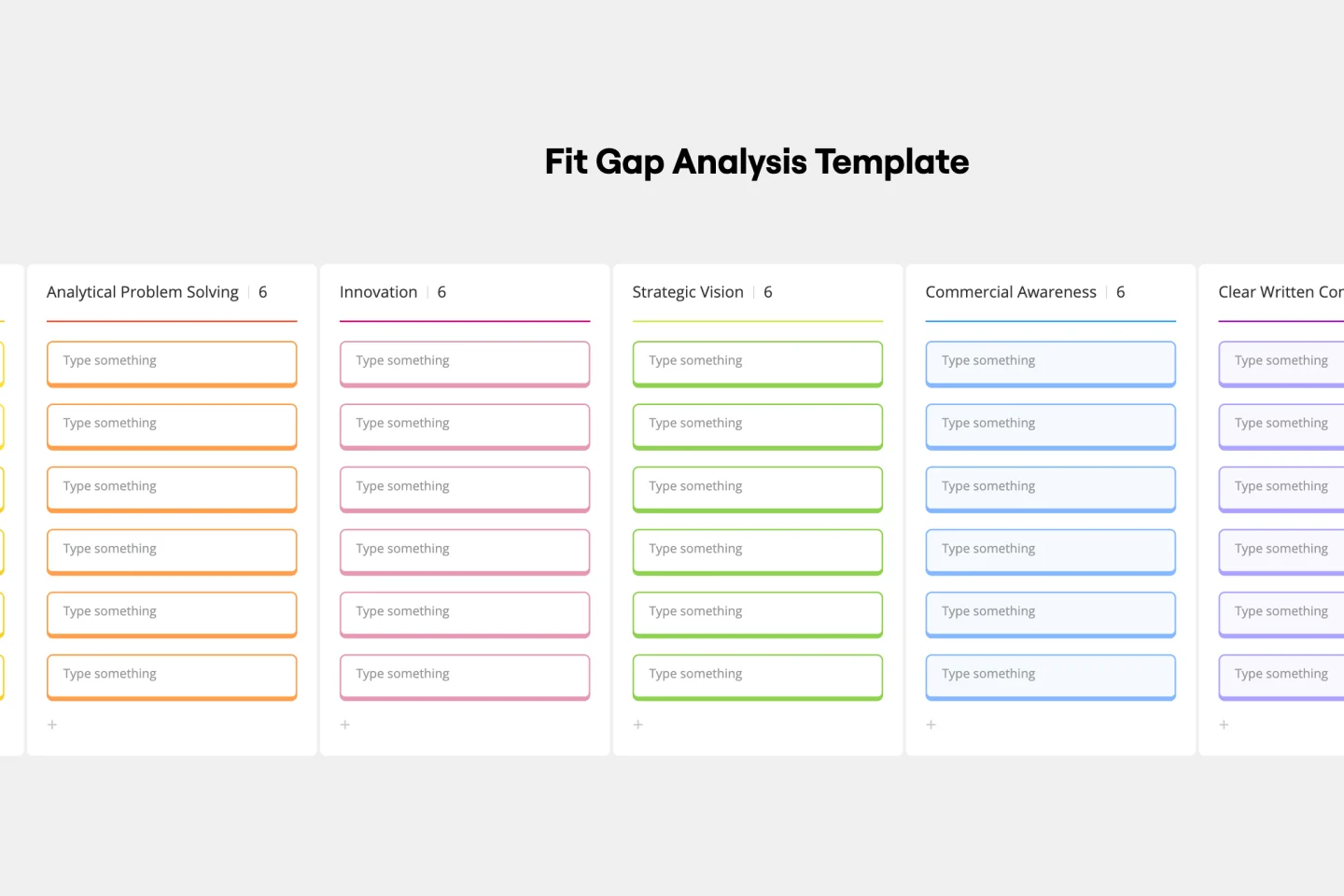
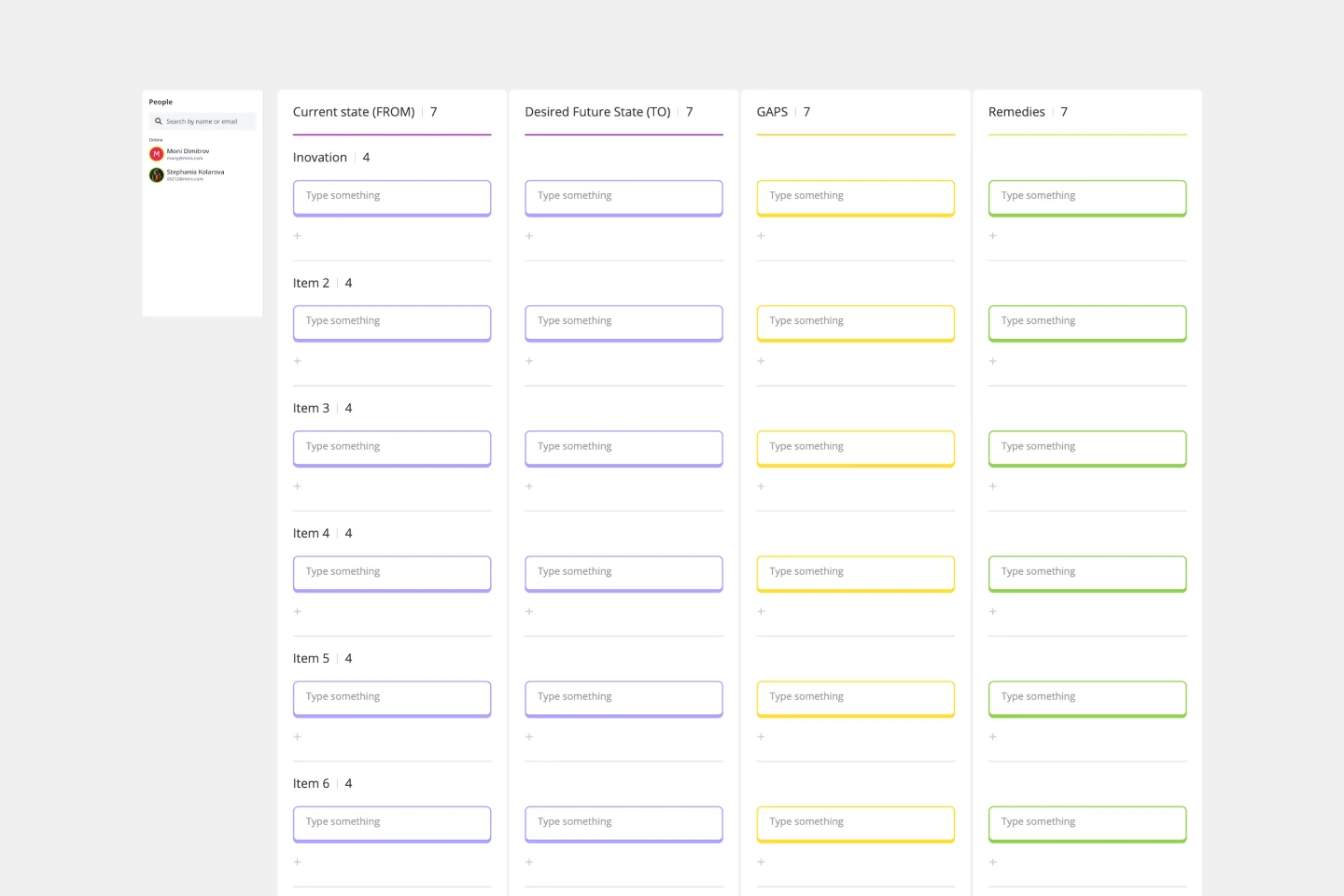
A structured gap analysis template that helps teams evaluate challenges and opportunities through five key dimensions: What, Where, When, Who, and How. The framework provides a systematic approach for identifying current conditions, defining desired outcomes, uncovering gaps, and creating action plans.
What problem does the Gap Analysis Template solve?
Unclear root causes
Process inefficiencies
Misaligned responsibilities
Incomplete improvement plans
Lack of structure during problem-solving sessions
How to use the Gap Analysis Template
Define the process, challenge, or initiative being analyzed.
Document the current state across What, Where, When, Who, and How.
Describe the desired future state.
Identify gaps between current and future conditions.
Capture actions required to close each gap.
Prioritize initiatives and assign ownership.
Common pitfalls
Focusing on symptoms rather than root causes
Creating vague future-state descriptions
Skipping stakeholder perspectives
Defining actions without clear ownership
Trying to solve every issue at once
Ways to avoid mistakes
Use specific examples and evidence
Involve people closest to the process
Define measurable future outcomes
Assign owners for each action
Prioritize the most impactful gaps first
Miro Features You Can Use
Sticky notes for documenting observations and gaps
Voting for prioritization
Tags for ownership and themes
Comments for stakeholder feedback
Color coding for current state, future state, gaps, and actions
FAQs
Q: Who can benefit from this template?
A: Product teams, operations teams, project managers, business analysts, customer experience teams, and organizational leaders.
Q: What makes this different from a traditional gap analysis?
A: The 5W1H framework evaluates challenges through multiple dimensions, helping teams uncover causes and dependencies that might otherwise be overlooked.
Q: Can this be used for process improvement?
A: Yes. It is particularly effective for evaluating workflows, operational processes, service delivery, and cross-functional collaboration.
Q: How long does the workshop take?
A: Most teams complete the exercise in 45–60 minutes.
Q: What will participants leave with?
A: A documented current state, desired future state, identified gaps, prioritized actions, and a clearer understanding of where improvements are needed.