





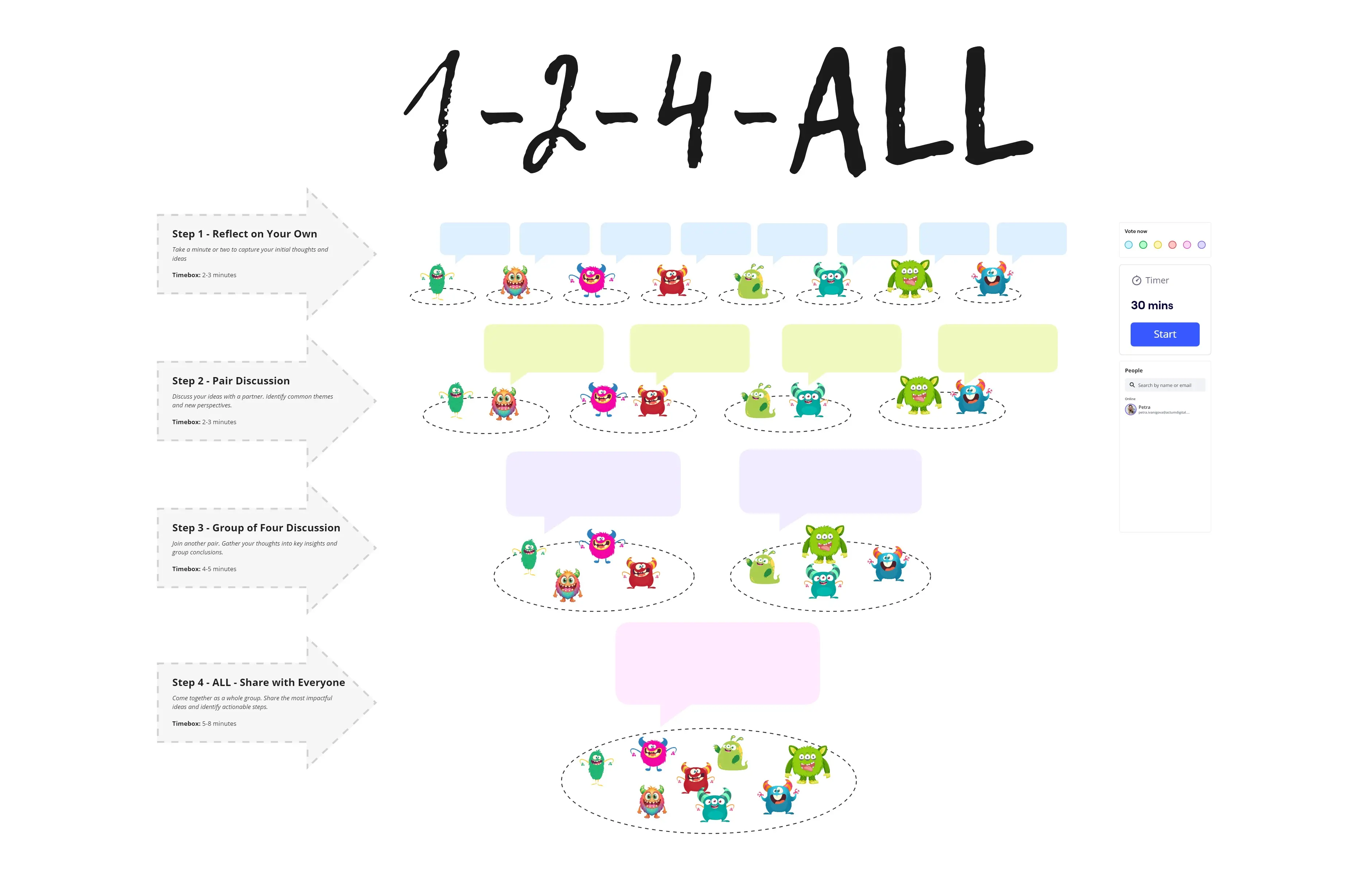
Brainstorming for financial services teams

Turn budget reviews and risk workshops into clear decisions. Run structured ideation sessions your CFO and controllers can act on.

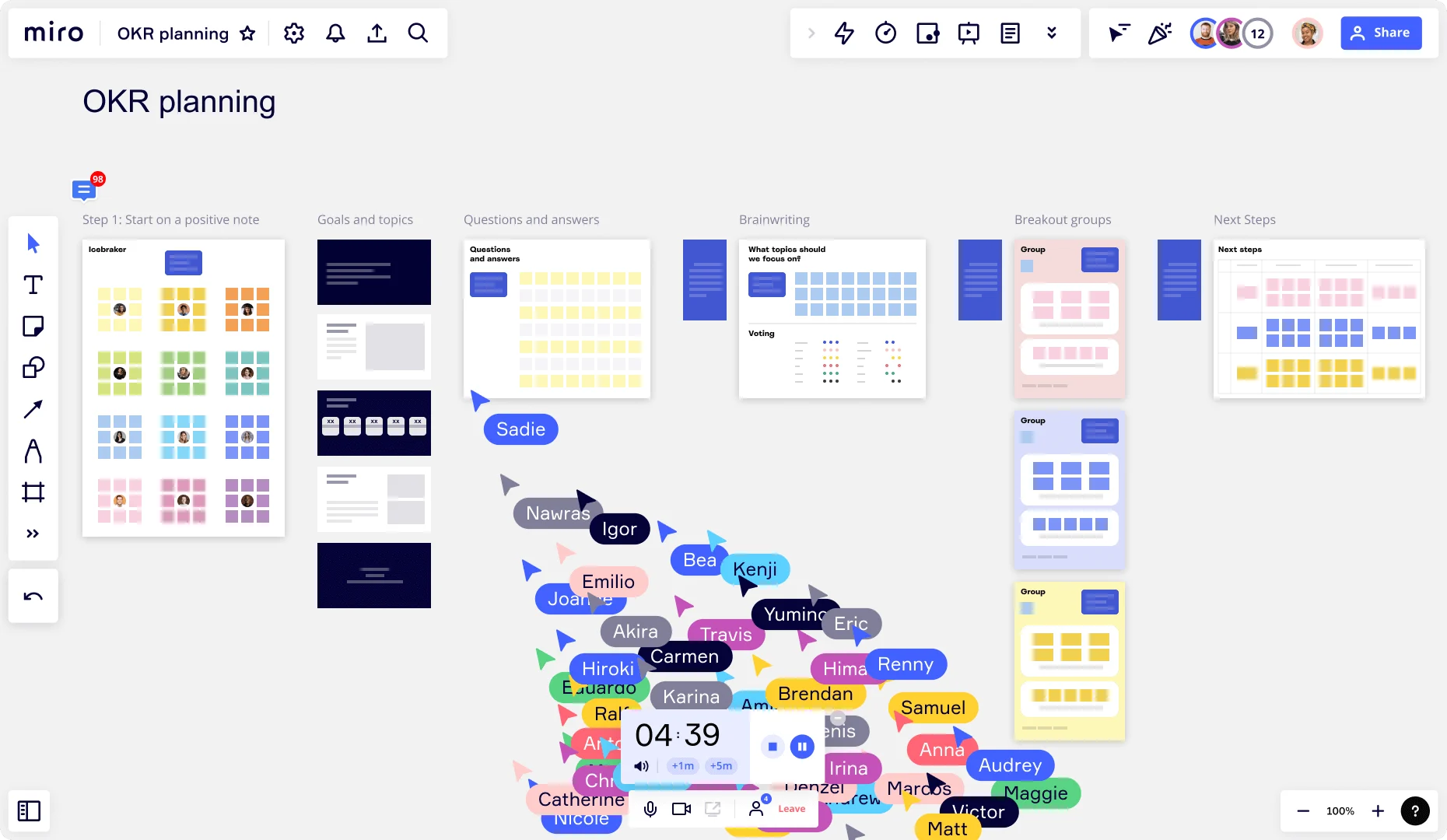
Miro OKR planning board with columns for Start on a positive note Goals and topics Questions and answers Brainstorming Breakout groups and Next steps with many collaborator cursors

The research on brainstorming

  • Design thinking enables finance professionals to generate ideas more inclusively, contributing to strategic decisions by applying empathy, ideation, and prototyping methods to financial processes

    Source: Institute of Management Accountants (IMA)

  • 165 participants

    In a five-minute brainstorming task with 165 experienced participants, continued brainstorming led to more creative ideas.

    Source: Kellogg Insight (Northwestern University)

See brainstorming in action

Related templates for financial services teams

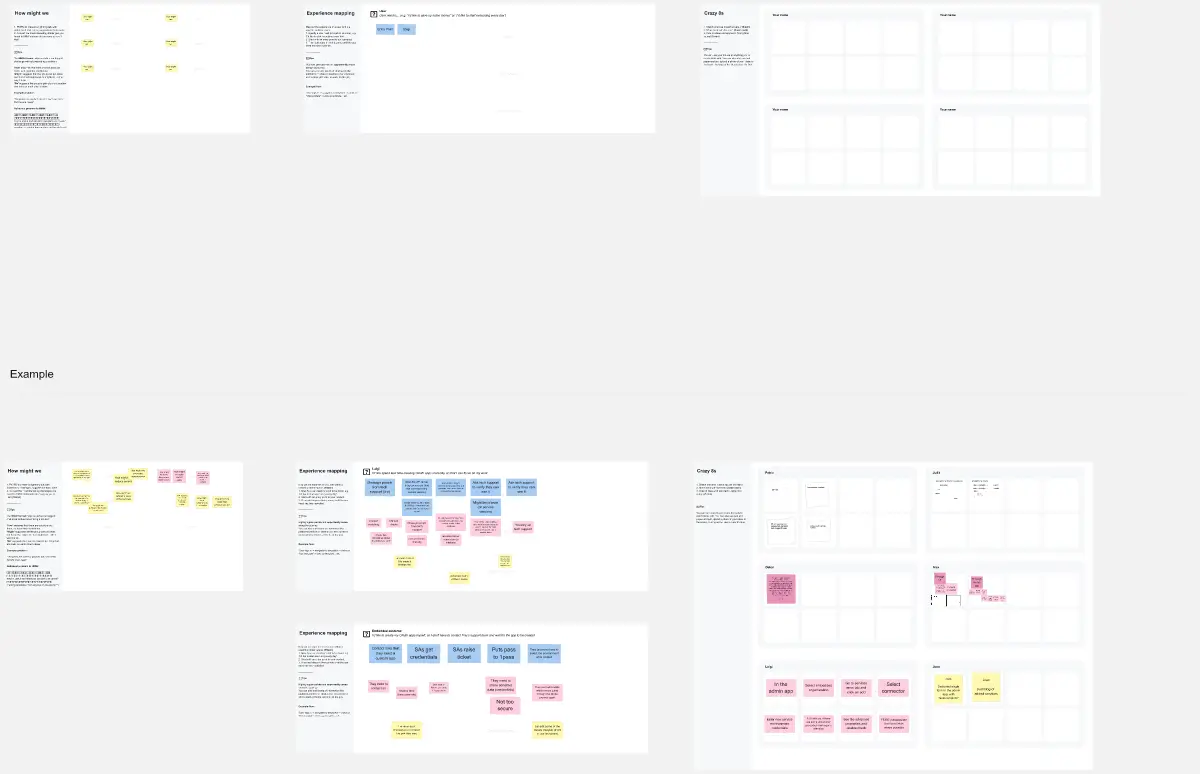
We have 193 templates in our library for Brainstorming.

Why financial services teams love brainstorming in Miro

  • Stop your quarterly planning session from ending in a spreadsheet deadlock

    Q1 planning rounds in financial services move fast, but agreement moves slow. Risk officers, FP&A leads, and business unit heads all show up with different numbers and competing priorities. Miro's anonymous voting surfaces real consensus across the room without anyone anchoring the discussion.
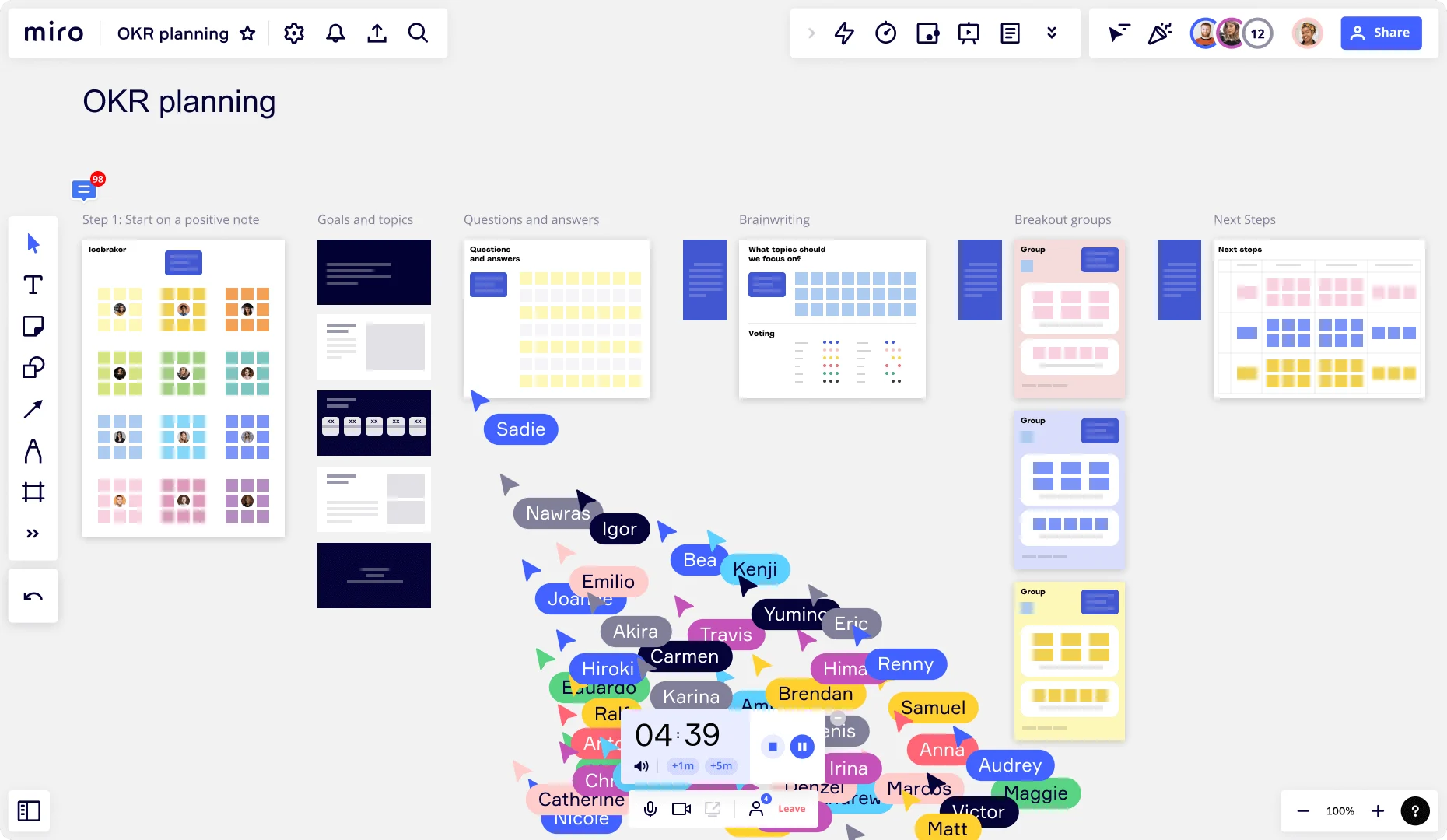
    Miro OKR planning board showing a structured multi-step workshop template with columns for Icebreaker, Goals and topics, Questions and answers, Brainwriting, Breakout groups, and Next Steps, with 20+ live collaborator cursors clustered in the center and a visible 04:39 countdown timer, indicating an active real-time session.
  • From 50 risk ideas to a ranked shortlist your CRO can sign off on

    After a risk brainstorm, you're staring at dozens of unranked control gaps with no clear owner. Miro's AI-powered clustering automatically groups related ideas by theme, so your risk and compliance teams walk away with a prioritized shortlist, not a wall of sticky notes.

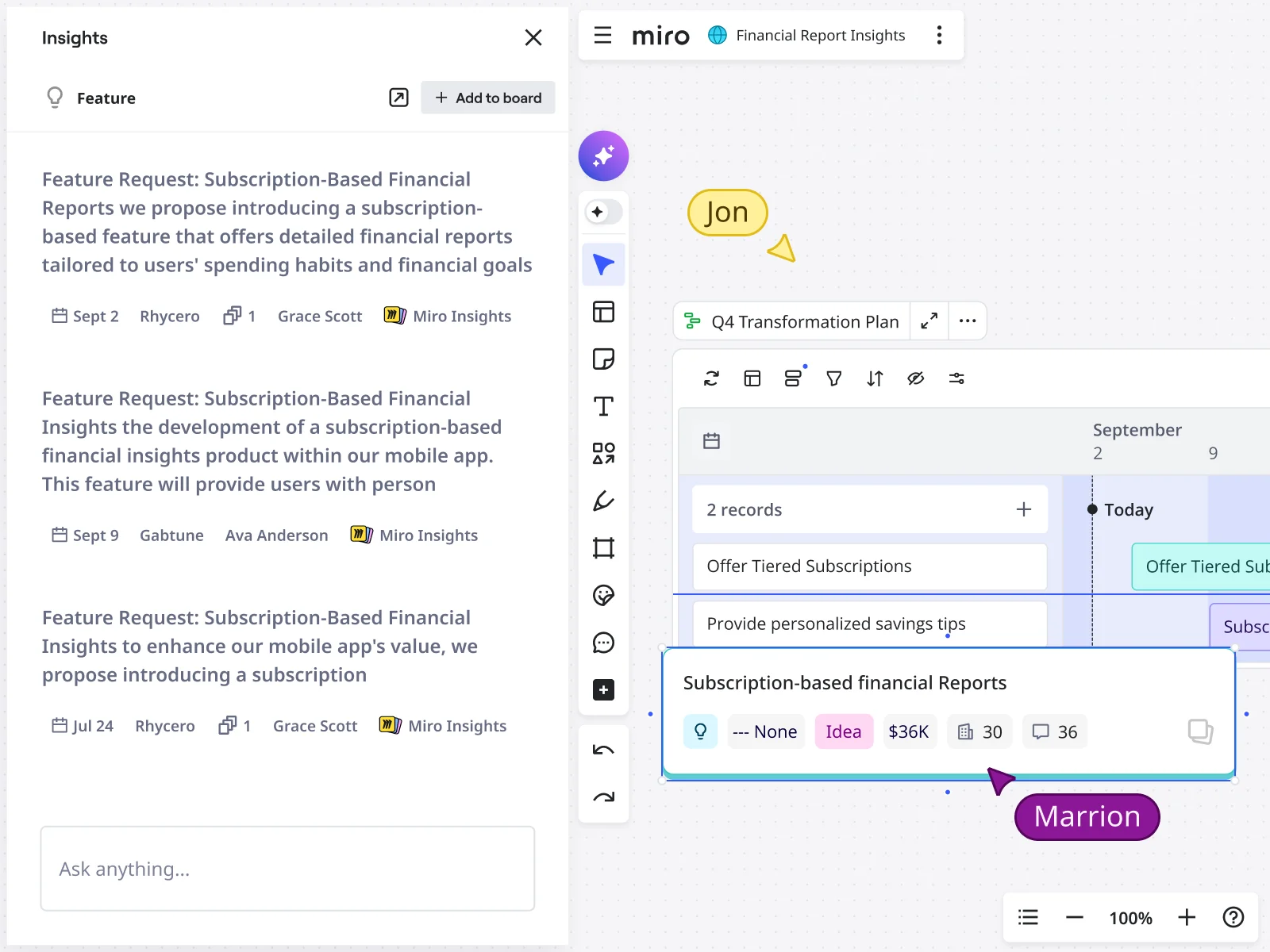
    Miro interface showing an AI-powered Insights panel on the left listing subscription-based financial feature requests, alongside a Miro board on the right displaying a Q4 Transformation Plan Gantt/timeline chart with items like 'Offer Tiered Subscriptions' and 'Provide personalized savings tips', with a popup card showing 'Subscription-based financial Reports' tagged as an Idea with $36K budget and 30/36 metrics.
  • Where your month-end close retrospective actually produces change

    Post-close retrospectives in accounting teams tend to surface the same blockers every cycle - reconciliation delays, approval bottlenecks, intercompany friction. Whether you're a five-person accounting team or a global finance function spanning treasury, FP&A, and internal audit, Miro's structured facilitation tools turn that recurring frustration into a ranked action list before you close the board.

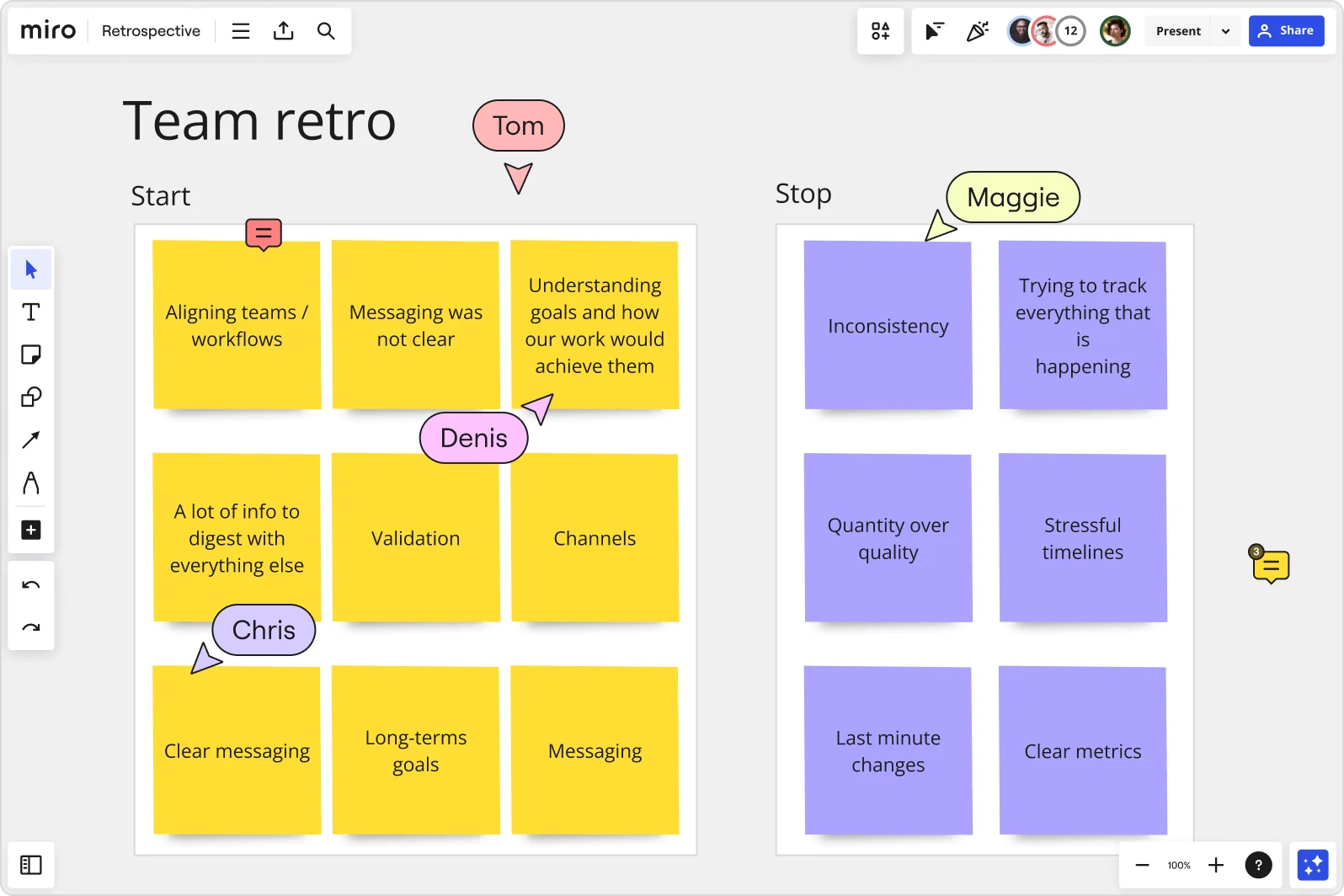
    Miro board showing a Team Retrospective with two sections — 'Start' (yellow sticky notes with items like 'Aligning teams/workflows,' 'Messaging was not clear,' 'Validation,' and 'Channels') and 'Stop' (purple sticky notes with items like 'Inconsistency,' 'Quantity over quality,' 'Stressful timelines,' and 'Last minute changes') — with multiple collaborator cursors (Tom, Denis, Chris, Maggie) visible on the board.
  • Your compliance workshop output, ready for the audit report before you leave the room

    Compliance teams spend more time reformatting workshop output than running the workshop itself. Run your ideation session in Miro, then let AI turn your clustered sticky notes into a structured Miro Doc - export to PDF and drop it straight into the audit pack.

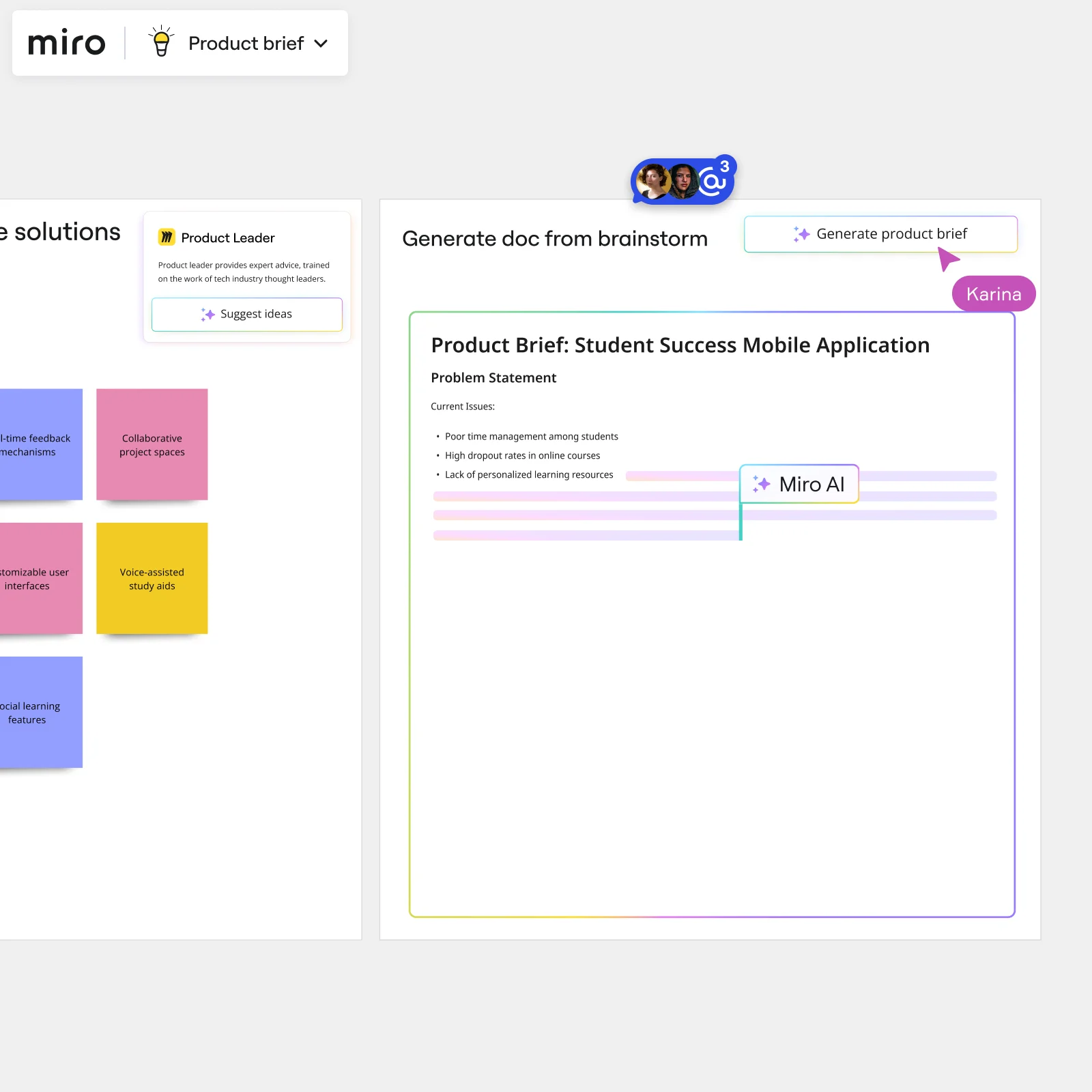
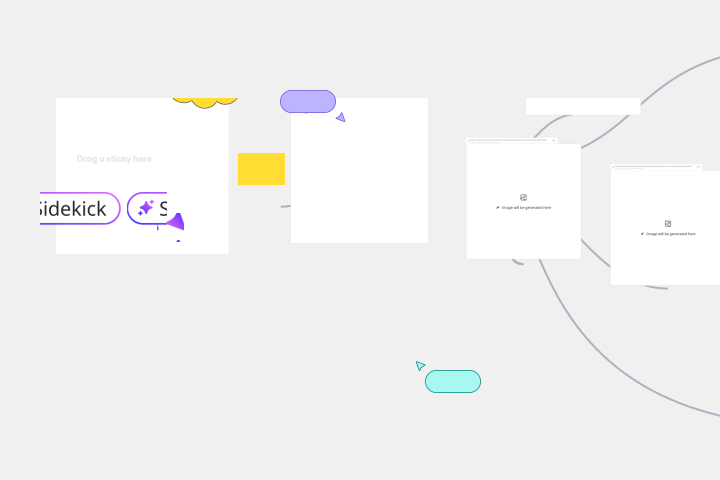
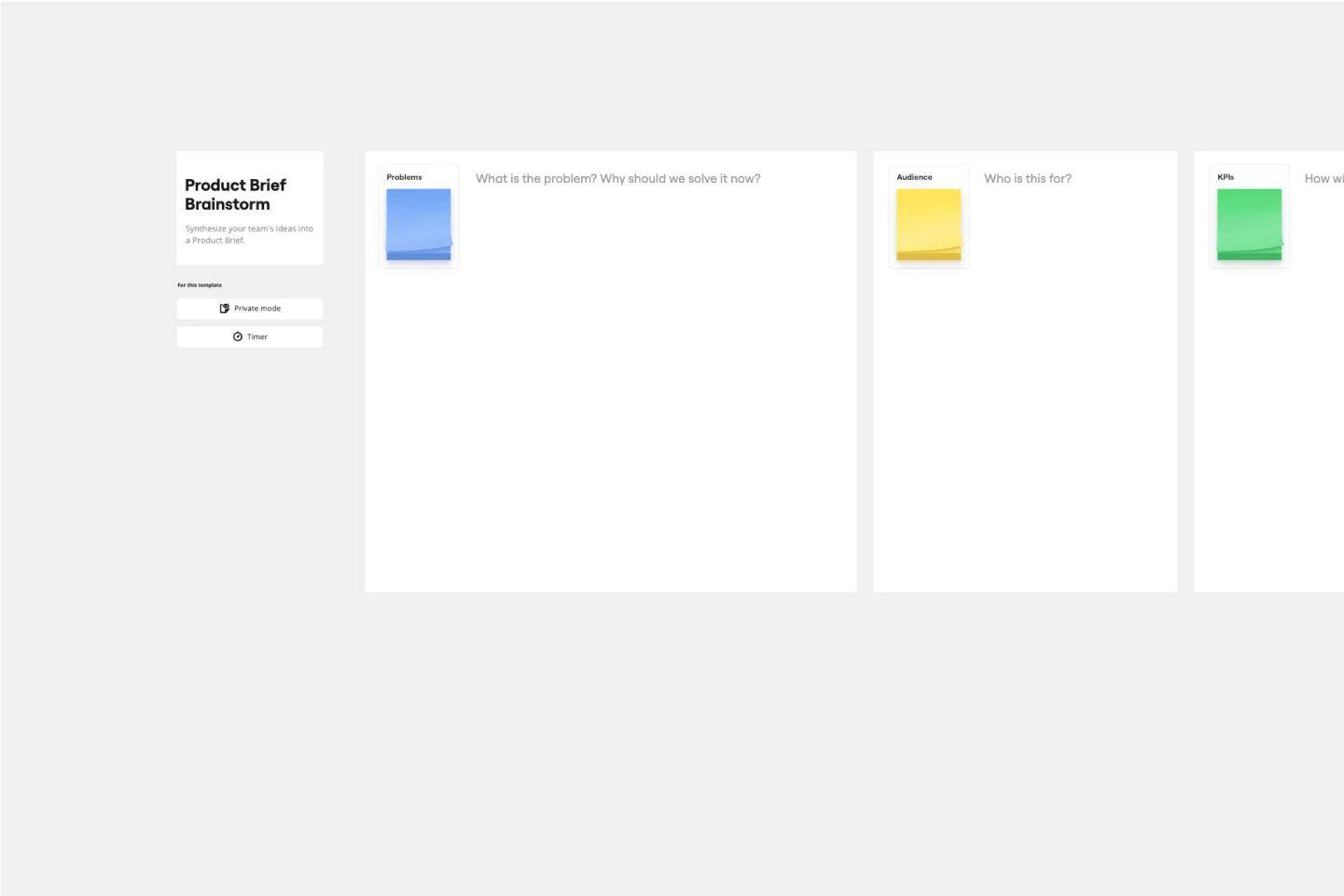
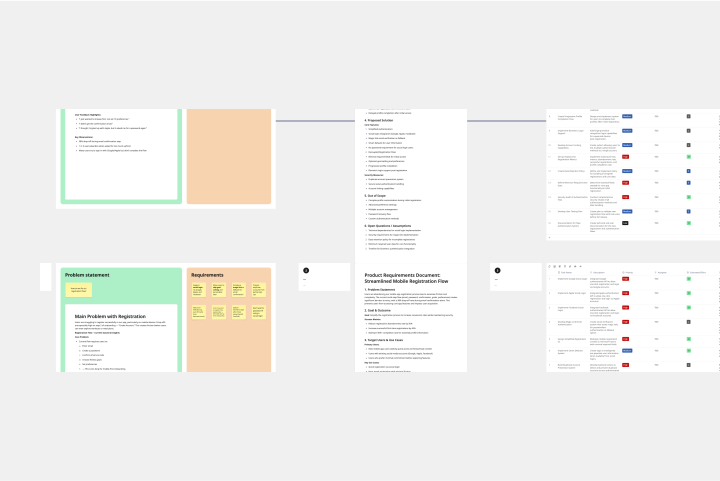
    Miro board showing AI-powered document generation from a brainstorming session, with a Product Leader AI sidekick panel on the left, colorful sticky notes listing solution ideas (collaborative project spaces, voice-assisted study aids, social learning features), and an AI-generated Product Brief document for a Student Success Mobile Application being created in real time by Miro AI.
  • Are your Basel or IFRS change sessions still running on email chains?

    When a regulatory update drops, controllers and risk officers need to gather input fast across lines of business. Remote and in-office analysts join the same Miro board by QR code - no extra account needed - and contribute simultaneously, so your impact assessment is live before the next steering committee call.

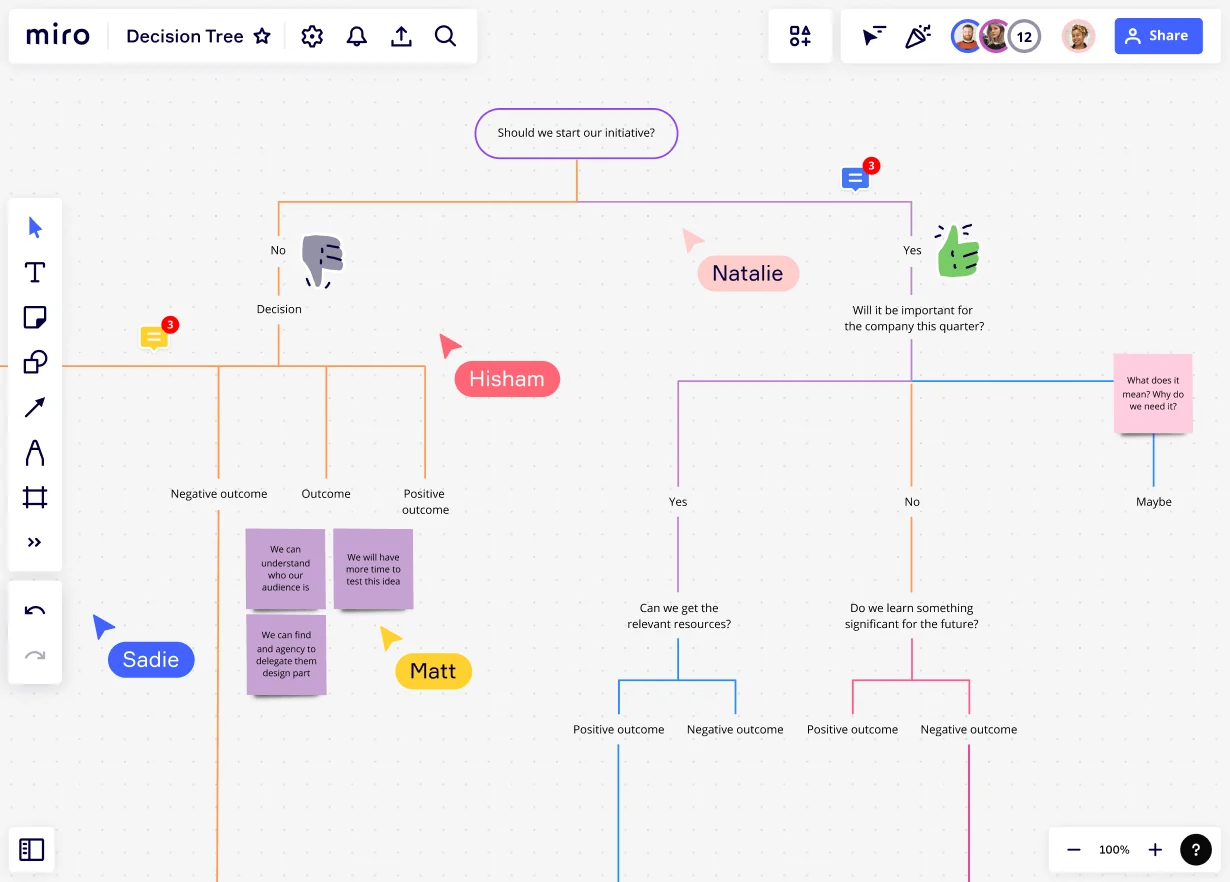
    Miro board displaying a decision tree flowchart starting with 'Should we start our initiative?' branching into Yes/No paths exploring outcomes like 'Will it be important for the company this quarter?' and 'Can we get the relevant resources?', with multiple collaborator cursors (Natalie, Hisham, Sadie, Matt) and sticky notes showing reasoning like 'We can understand who our audience is' and 'We will have more time to test this idea'.

How financial services teams get started with Brainstorming in Miro

  • Frame your regulatory or market trigger

    Open a Template Library brainstorming template, then build a dedicated Frame at the top of the board that names the specific trigger - a regulatory change, a competitor product launch, or a product council gap - alongside the compliance constraints that any idea must clear before it goes further.

  • Run a structured, time-boxed ideation round

    Set the Timer to a focused 5-7 minute interval, activate Bulk Mode on Sticky Notes with a pre-agreed color scheme (compliance concerns in red, commercial opportunities in blue, operational realities in yellow), and have risk, product, and compliance contributors ideate simultaneously so no single function dominates the output.

  • Cluster and prioritize for the investment committee

    Use Clustering to group ideas by theme, then run Dot Voting capped at three to five votes per person so the shortlist reflects genuine conviction - and capture dissenting concerns in Comments with named owners, giving you the audit trail that a steering committee or regulator will eventually ask for.

  • Turn the board into a pitch-ready artifact

    Export the prioritized shortlist as a structured Miro Doc using the AI summary feature to reformat raw stickies into a concept brief with leadership-ready language, then push it into Confluence via the /miro integration so the Chief Product Officer or Head of Digital opens a focused recap, not a wall of sticky notes.

Brainstorming tips for financial services teams

  • When cross-functional participants include quant or actuarial reviewers who rarely facilitate in visual tools, lock board objects before the session so they can only add sticky notes - it prevents accidental canvas changes and keeps the session moving.

  • Tag sticky notes with risk-adjusted return, time to regulatory approval, and addressable market labels using Sticky Stack presets before the session starts, so every idea lands in an evaluative framework your product council already speaks.

  • For large organizations running the same brainstorm across multiple business lines (wealth management, commercial lending, retail banking), use Breakout Frames with identical content to let each line ideate in parallel, then merge outputs for a single cross-business cluster review.

Understand how financial services teams transform their work

  • Best tool for brainstorming and workshops across teams

    Team Lead in Other at Consumer Goods

    TrustRadius
    TrustRadius
    Verified user
    Read review
  • A great collaborative brainstorming tool

    Employee in Other at Computer Games

    TrustRadius
    TrustRadius
    Verified user
    Read review

Brainstorming essential guide for financial services teams

CategoryKey insights
  • Common mistakes to avoid

    Don't skip the warm-up and dive straight into ideation - in sessions that pull together compliance, risk, and product voices, that cold-start kills participation before a single idea surfaces. Lock your board objects before the session starts, and time-box each round with Timer so the energy doesn't drain past the point where anyone's still thinking creatively. Biggest trap for larger financial services orgs: giving everyone unlimited votes during prioritization, which leaves you with a scattered spread and no clear mandate to take to the product council.

  • Key integrations for financial services teams

    Confluence and Jira connect your brainstorming output directly to the documentation and tracking systems where analysts and product managers already live, so ideas don't die in a PDF. Slack and Microsoft Teams keep async contributors in the loop between sessions, which matters when quant or actuarial colleagues are working across time zones or around market hours.

  • When to use it

    Use this when a regulatory change or a quarterly business review has surfaced a gap that leadership needs a funded response to - fast. A head of digital banking, for example, might spin up a Miro board the day a new open banking rule drops, invite compliance, product, and risk into Breakout Frames for structured brainwriting rounds, then use Clustering and Dot Voting to surface the two or three concepts worth building into a concept brief for the investment committee that meets in three weeks. It works just as well for a small fintech team of four as it does for a cross-functional group of twenty who need an auditable record of how they arrived at their top ideas.

  • Security & Compliance

    Miro is SOC 2 Type II certified, which means the audit trail that regulated industries will eventually ask for is already built into the platform's foundation. For larger financial services organizations with data sovereignty requirements, Miro's data residency controls let admin teams govern where content lives. Private Mode keeps pre-decisional ideas confidential during live sessions, so product concepts that haven't cleared regulatory review don't circulate before they should.

Frequently asked questions for financial services teams

Last updated: Monday, September 14, 2026