0likes
84uses
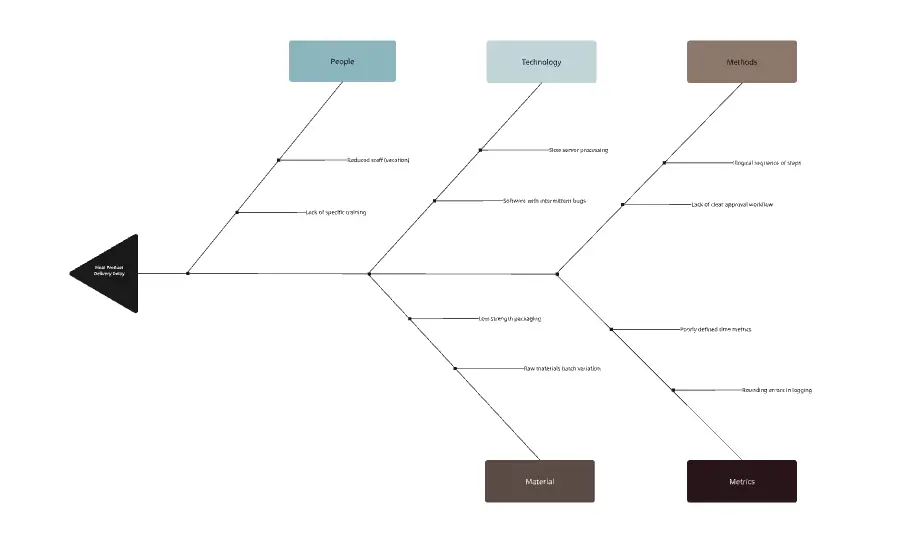
Master operational excellence and drive data-backed improvements with this structured Six Sigma Project Charter template! 🚀 Designed for Product Managers, Operational Excellence Leads, and Black or Green Belts, this document serves as the foundational "contract" for your improvement initiatives. Whether you are optimizing delivery success rates or reducing manufacturing defects, this template ensures your project is aligned with strategic business goals and clearly defined from day one.
A Six Sigma Project Charter is a high-level project definition tool that outlines the scope, objectives, and participants of a DMAIC (Define, Measure, Analyze, Improve, Control) project. 📊 Built for precision, this template provides a comprehensive 9-section framework that guides you through establishing your Business Case, Problem Statement, and SMART Goal Statement. It acts as a single source of truth that secures stakeholder buy-in and provides a clear roadmap for the project team.
Scope misalignment: Teams trying to solve too many problems at once without clear boundaries
Missing stakeholder support: Failing to identify the Project Champion or key sponsors early
Unclear metrics: Not having established baselines or targets to measure success
Disjointed milestones: Lacking a clear connection between DMAIC phases and deliverables
This template solves these problems by providing:
✅ A structured data-first approach: Sections specifically for Problem and Goal Statements ✅ Scope Guardrails: Dedicated "In Scope" and "Out of Scope" tables to prevent bloat ✅ Metric baseline tracking: A specific zone to define primary, secondary, and consequential outcomes ✅ DMAIC Milestone roadmap: A pre-populated table for Define through Control deliverables ✅ Financial transparency: Clear areas to document costs and quantifiable benefits
1. Establish Overview and Case: 💭 Start by identifying your Project Champion and Lead. Describe why this project is a priority for the organization in the Business Case section.
2. Define the Problem and Goal: 🎯 Use hard data to describe the current issue. Then, craft a SMART Goal Statement that defines exactly what success looks like by a specific date.
3. Set the Boundaries: 📋 Fill out the Project Scope table. Clearly list what the team will focus on and what is strictly off-limits to ensure efficiency.
4. Map Metrics and Milestones: 📈 Define your Primary Outcomes and targets. Use the DMAIC Milestones section to set target dates for key deliverables like SIPOC, Root Cause Analysis, and Control Plans.
5. Calculate Value: 💰 Document the estimated costs and the projected monthly benefits to provide a clear Return on Investment (ROI) for leadership.
❌ Suggesting solutions too early: Avoid jumping to the "how" in your Problem Statement; focus only on the "what" and "where"
❌ Ignoring non-quantifiable benefits: Remember to include morale or customer satisfaction improvements alongside cost savings
❌ Vague SMART goals: Ensure your goal has a number and a deadline, such as "reduce failure rate to under 4% by Q3 2026"
❌ Working in a silo: Ensure the Project Champion reviews the charter to secure necessary resources
❌ Skipping the baseline: You cannot prove improvement if you don't document the starting point (Baseline) in the Metrics section
Q: Who can benefit from this template? 👥 A: This template is essential for Product Managers looking to optimize logistics or user flows 📦, Operations Managers driving efficiency 🏢, Quality Engineers 🛠️, and any professional pursuing Six Sigma certification or leading a DMAIC initiative.
Q: Can this be used for non-manufacturing projects? 🏪 A: Absolutely! Six Sigma is highly effective for software delivery 💻, financial services 🌐, healthcare operations, and any business process that requires variance reduction and quality control.
Q: How often should the charter be updated? ⏱️ A: The charter is a "living" document during the Define phase. Once the project moves into Measure and Analyze, it should remain relatively stable, though it should be reviewed at every tollgate meeting to ensure the project remains on track.

Rodolfo Pernambuco
Group Product Manager @ BEES | AB-InBev
Developing digital products since 2019. A creative product leader who loves teamwork and collaboration.
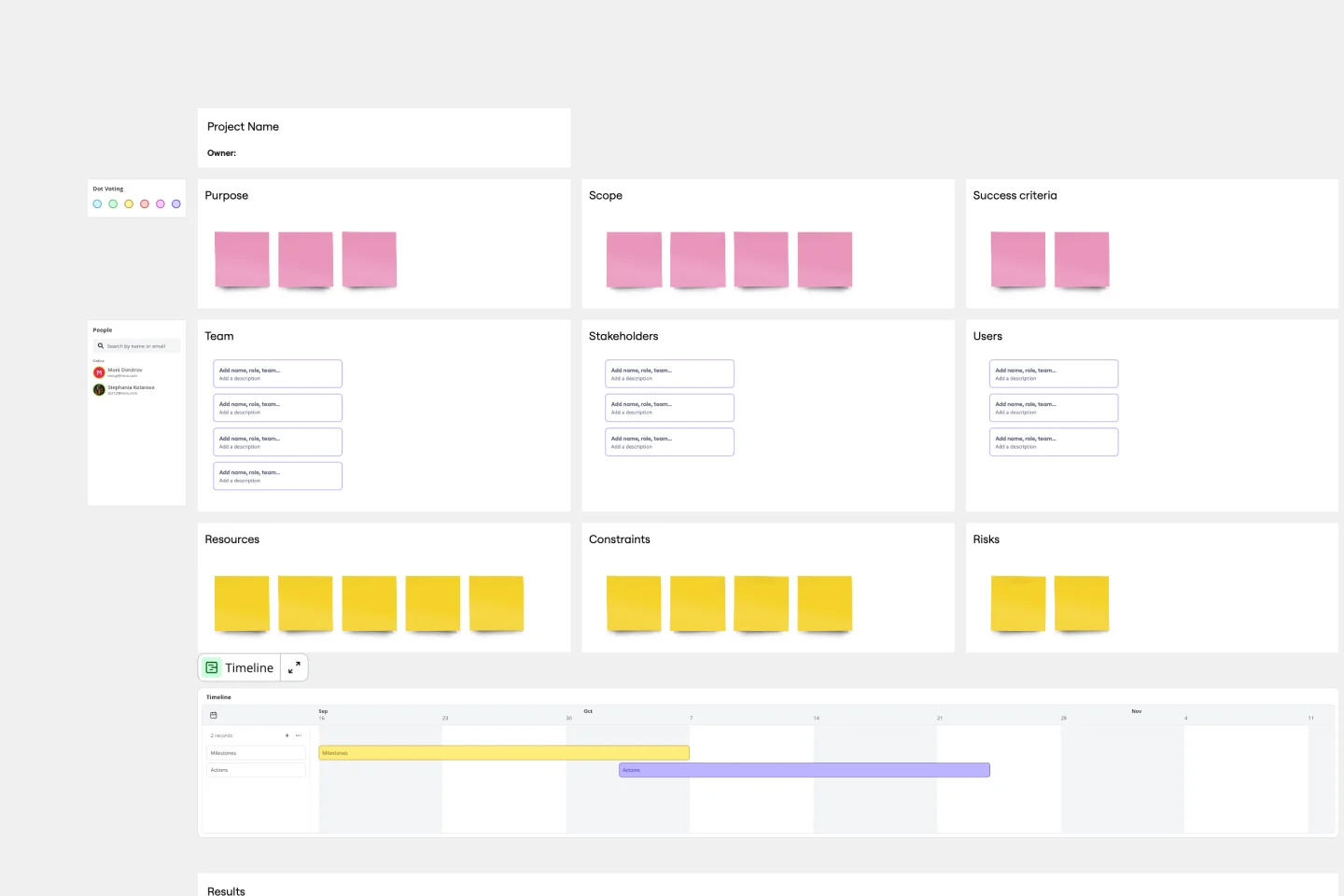
Project Charter Template
Project managers rely on project charters as a source of truth for the details of a project. Project charters explain the core objectives, scope, team members and more involved in a project. For an organized project management, charters can be useful to align everyone around a shared understanding of the objectives, strategies and deliverables for a project of any scope. This template ensures that you document all aspects of a project so all stakeholders are informed and on the same page. Always know where your project is going, its purpose, and its scope.
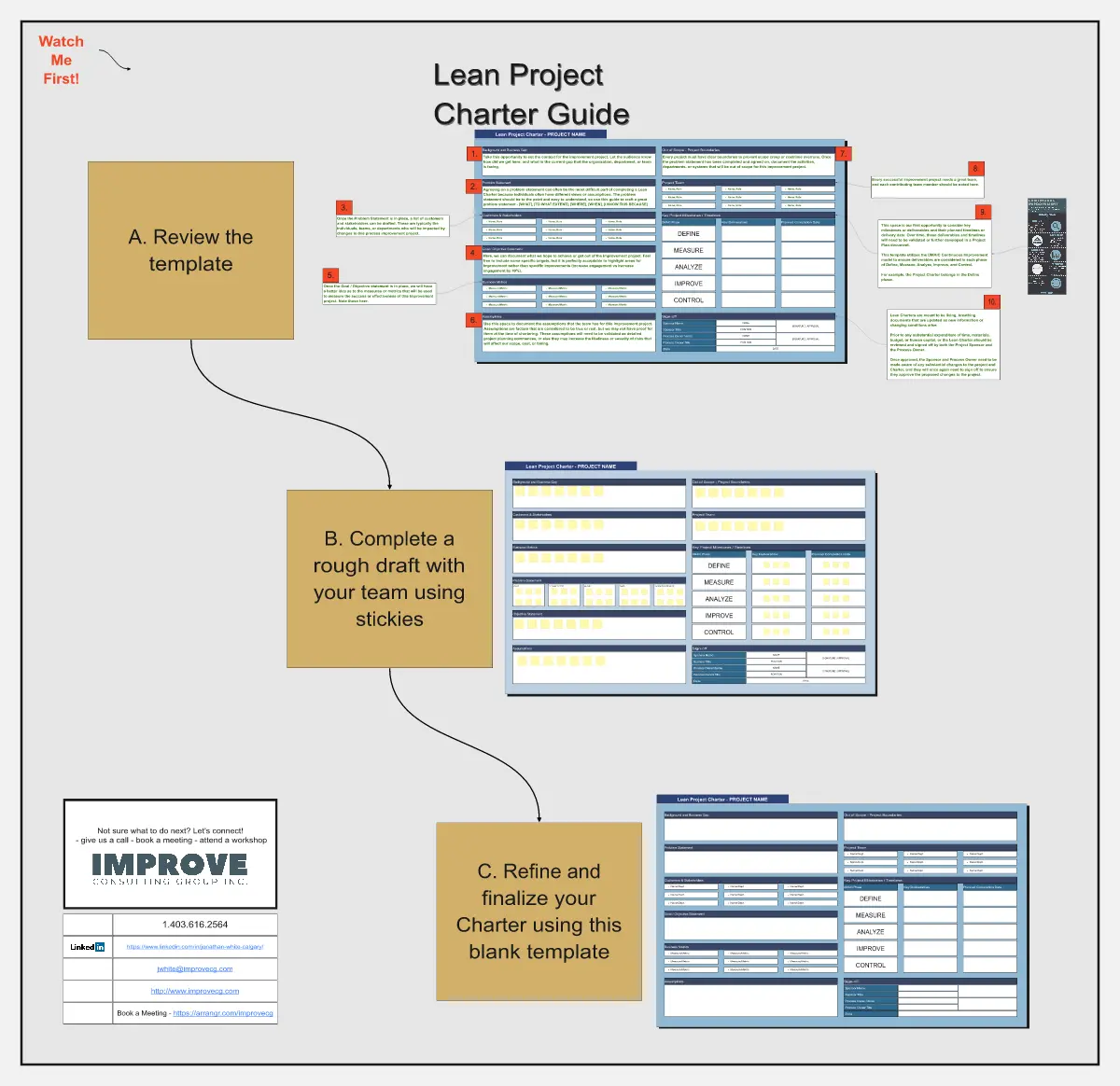
Lean Project Charter
The Lean Project Charter template provides a streamlined approach to defining project objectives, scope, and success criteria. It emphasizes clarity, brevity, and alignment with Lean principles, enabling teams to kickstart projects with focus and purpose. This template empowers teams to set clear goals, establish shared understanding, and align stakeholders, driving efficiency and effectiveness in project delivery. By promoting transparency and accountability, the Lean Project Charter sets the foundation for successful project execution and continuous improvement.
Project Charter Template
Project managers rely on project charters as a source of truth for the details of a project. Project charters explain the core objectives, scope, team members and more involved in a project. For an organized project management, charters can be useful to align everyone around a shared understanding of the objectives, strategies and deliverables for a project of any scope. This template ensures that you document all aspects of a project so all stakeholders are informed and on the same page. Always know where your project is going, its purpose, and its scope.
Lean Project Charter
The Lean Project Charter template provides a streamlined approach to defining project objectives, scope, and success criteria. It emphasizes clarity, brevity, and alignment with Lean principles, enabling teams to kickstart projects with focus and purpose. This template empowers teams to set clear goals, establish shared understanding, and align stakeholders, driving efficiency and effectiveness in project delivery. By promoting transparency and accountability, the Lean Project Charter sets the foundation for successful project execution and continuous improvement.