Customer Journey Timeline
Overview
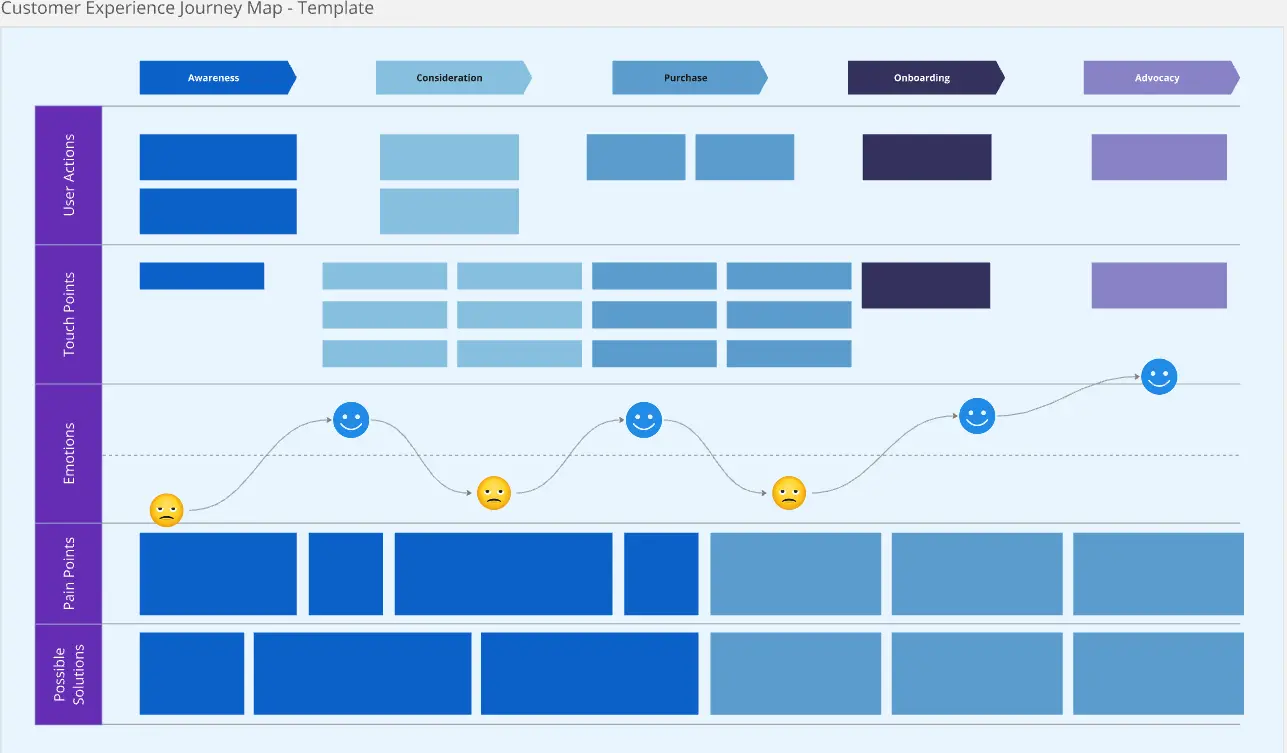
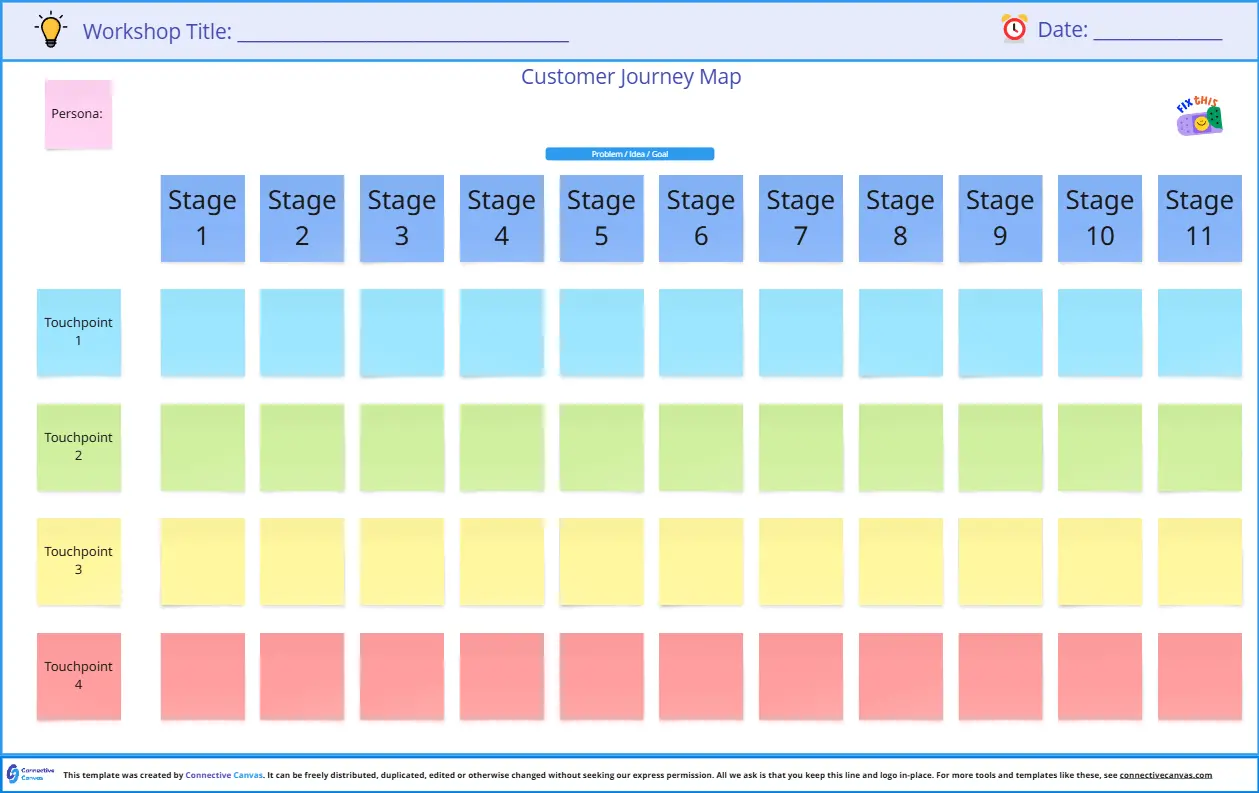
A visual framework that maps the complete customer lifecycle across seven sequential stages, from initial brand discovery to long-term advocacy. Each stage includes timeframes, customer behaviors, and key touchpoints to help teams align their efforts across the entire customer experience.
Template Structure
The timeline progresses through:
Awareness (Week 1) – Initial brand discovery through marketing channels
Consideration (Week 2-3) – Active research and evaluation phase
Decision (Week 4-5) – Trial and purchase decision making
Conversion (Week 6) – Transaction completion or signup
Onboarding (Week 7-8) – Initial product setup and training
Retention (Month 3+) – Ongoing engagement and value delivery
Loyalty (Ongoing) – Advocacy and referral activities
Filling Instructions
For each stage, document:
Timeframe: Specify duration (e.g., Week 1, Month 3+, Ongoing)
Stage Icon: Add a color-coded visual marker representing the phase
Customer Activities: Describe what customers are doing and thinking
Touchpoints: List specific channels, tools, or interactions (ads, emails, demos, support)
Goals: Define what success looks like at this stage
Metrics: Include relevant KPIs to track progress
Customize timeframes based on your sales cycle length and adjust stage names to match your business model.
Use Cases
Marketing Teams: Map campaigns to customer journey stages and identify gaps in coverage across the funnel
UX Designers: Pinpoint friction points and opportunities to improve user experience at each touchpoint
Customer Success Teams: Design proactive engagement strategies aligned with customer lifecycle progression
Product Teams: Understand adoption patterns and feature usage across different journey phases
Sales Teams: Align sales activities with buyer readiness at each decision stage
Executives: Review end-to-end lifecycle management and resource allocation across customer stages
Cheers!
Khawaja Rizwan