Timelines templates
Dive into your next project with our intuitive timeline templates, designed to bring your team's workflow into sharp focus. With these templates, you can effortlessly map out project phases, pinpoint key milestones, and gain a panoramic view of what's ahead and what's been accomplished. Whether you're plotting future objectives or reflecting on past achievements, our timeline examples serve as a springboard for your strategic planning.
34 templates
Timeline Template
9 likes691 uses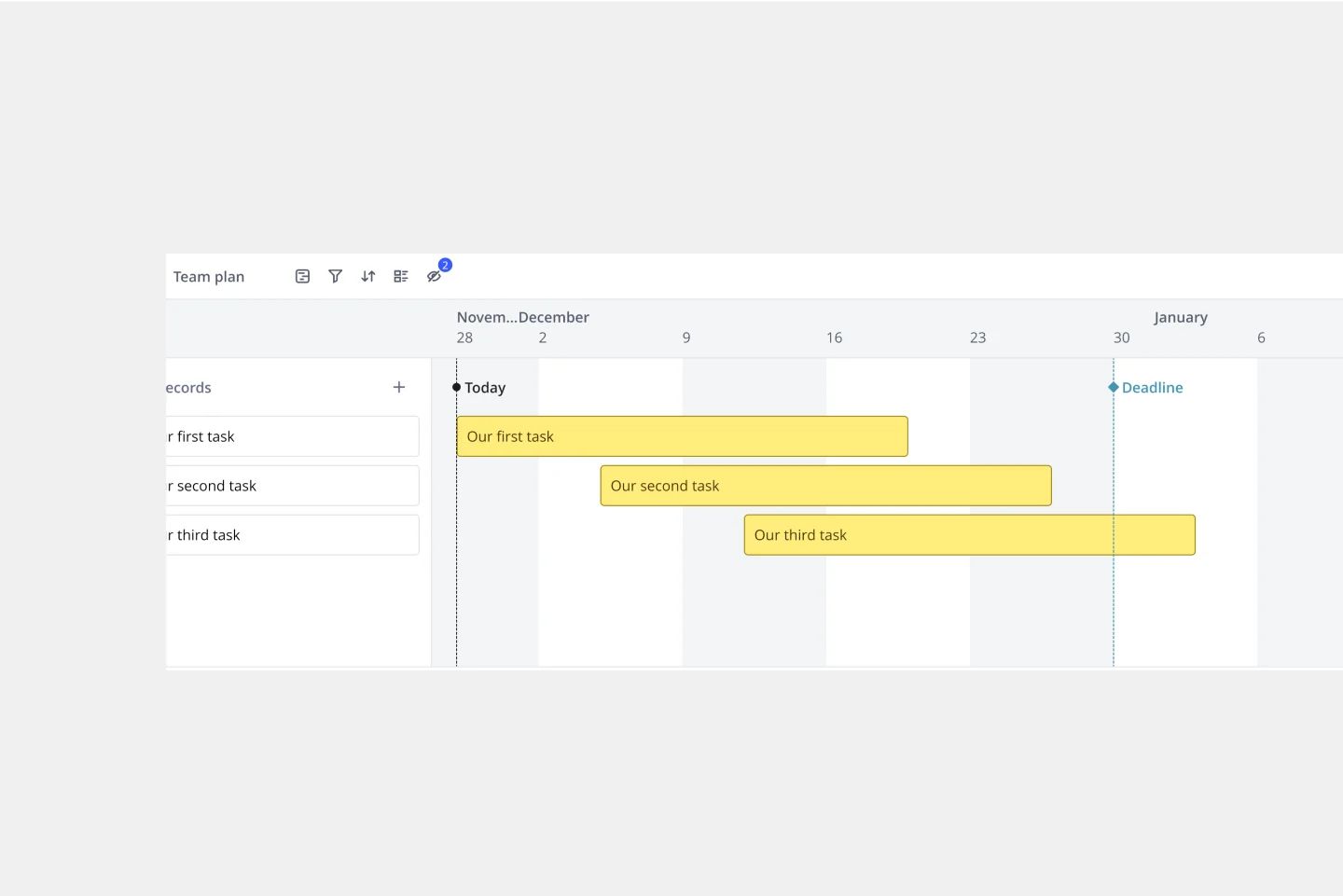
Timeline Template
A timeline displays a chronological order of important dates, and scheduled events. Timelines help product managers, project managers, and team members tell visual stories about progress and obstacles. Timelines enable teams to see at a glance what happened before, what progress is happening now, and what needs tackling in the future. Projects or products with specific purpose or deliverables should be based on a timeline to be successful. Use the timeline as a shared reference for start dates, end dates, and milestones.
Product Launch Timeline
17 likes89 uses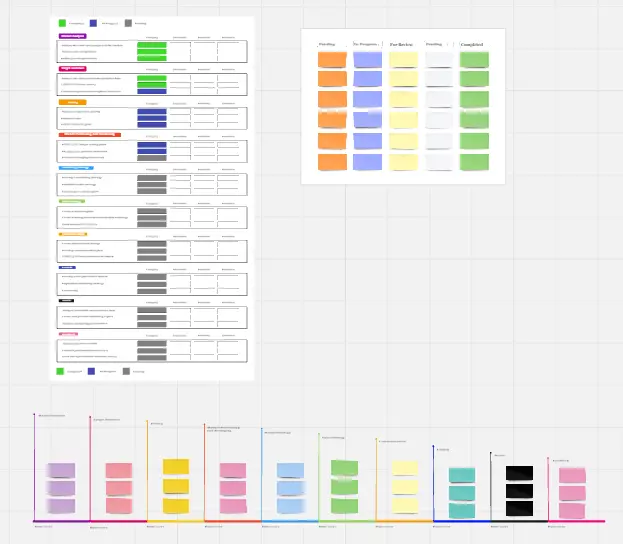
Product Launch Timeline
Launching a new product can be daunting, but with the Product Launch Timeline, you can streamline your entire process. This template helps you track every phase of your launch, from initial planning to post-launch review. Use it to set deadlines, assign tasks, and monitor progress, ensuring no detail is overlooked. Whether coordinating with teams or managing solo, this timeline ensures a successful launch.
Project - Timeline & Key Infos
805 likes6.4K uses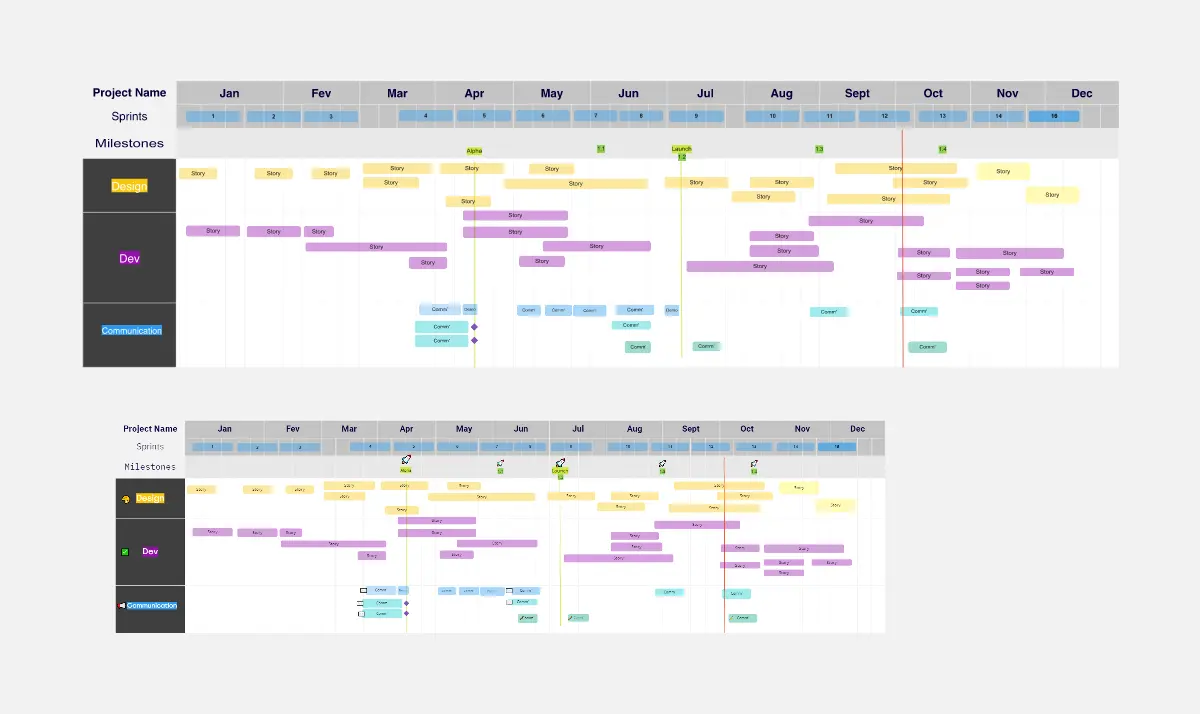
Project - Timeline & Key Infos
The Project - Timeline & Key Infos template provides a visual framework for planning and tracking project timelines, milestones, and key information. It enables teams to align on project objectives, allocate resources, and monitor progress effectively. With customizable timelines and informative dashboards, this template empowers project managers and stakeholders to stay organized and informed throughout the project lifecycle, ensuring successful delivery within scope, time, and budget constraints.
Event Planning Timeline
27 likes276 uses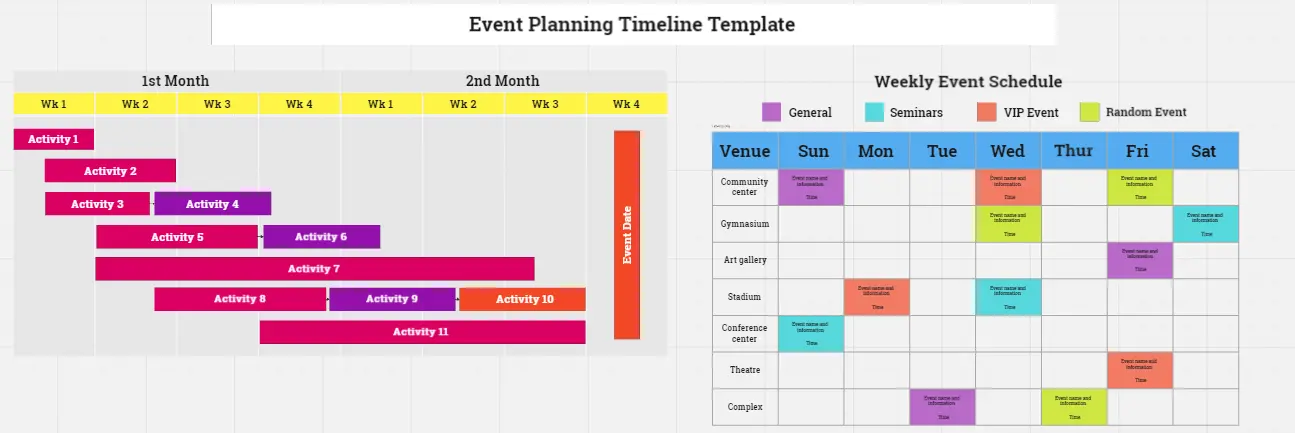
Event Planning Timeline
Organizing an event involves numerous tasks and tight deadlines. The Event Planning Timeline template simplifies this process. Use it to plan and track every aspect of your event, from initial brainstorming to final execution. Assign tasks, set deadlines, and monitor progress to ensure smooth operations. Whether for small gatherings or large conferences, this template helps manage logistics and coordination.
Marketing Campaign Timeline
83 likes399 uses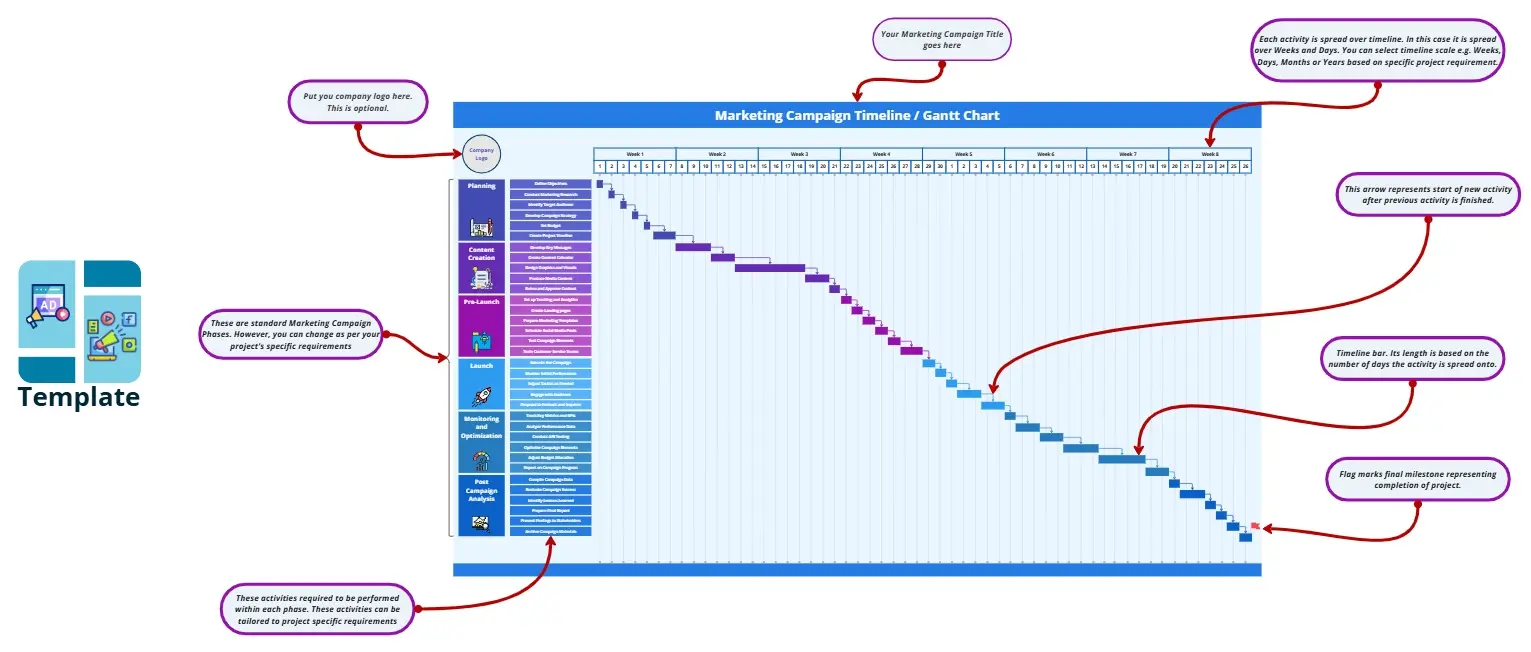
Marketing Campaign Timeline
Plan and execute your marketing strategies seamlessly with the Marketing Campaign Timeline template. This tool allows you to map out every stage of your campaign, from planning to launch and analysis. Visualize key milestones, set deadlines, and track progress to ensure your marketing efforts are well-coordinated and effective. Ideal for marketing teams looking to optimize their campaign management.
Research Project Timeline
91 likes452 uses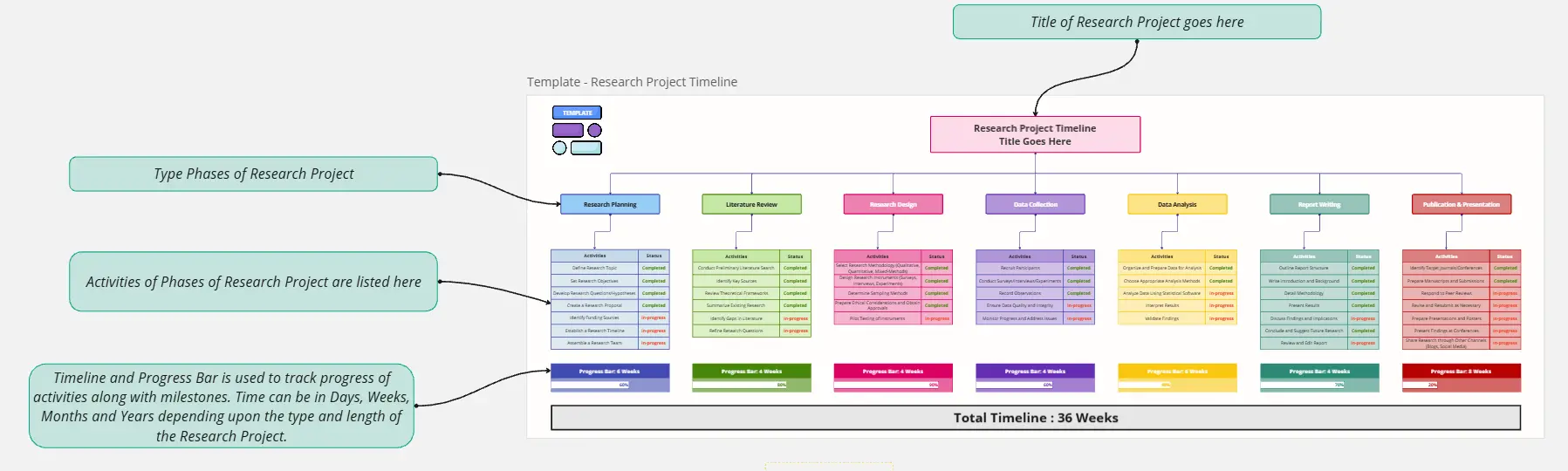
Research Project Timeline
Embarking on a research project? The Research Project Timeline template is an essential tool for planning and managing your research activities. It helps you break down your project into manageable phases, set deadlines, and track progress. From literature review and data collection to analysis and reporting, this template ensures you stay organized and on schedule, enhancing your ability to conduct thorough research.
Timeline Design ⏳
902 likes7.7K uses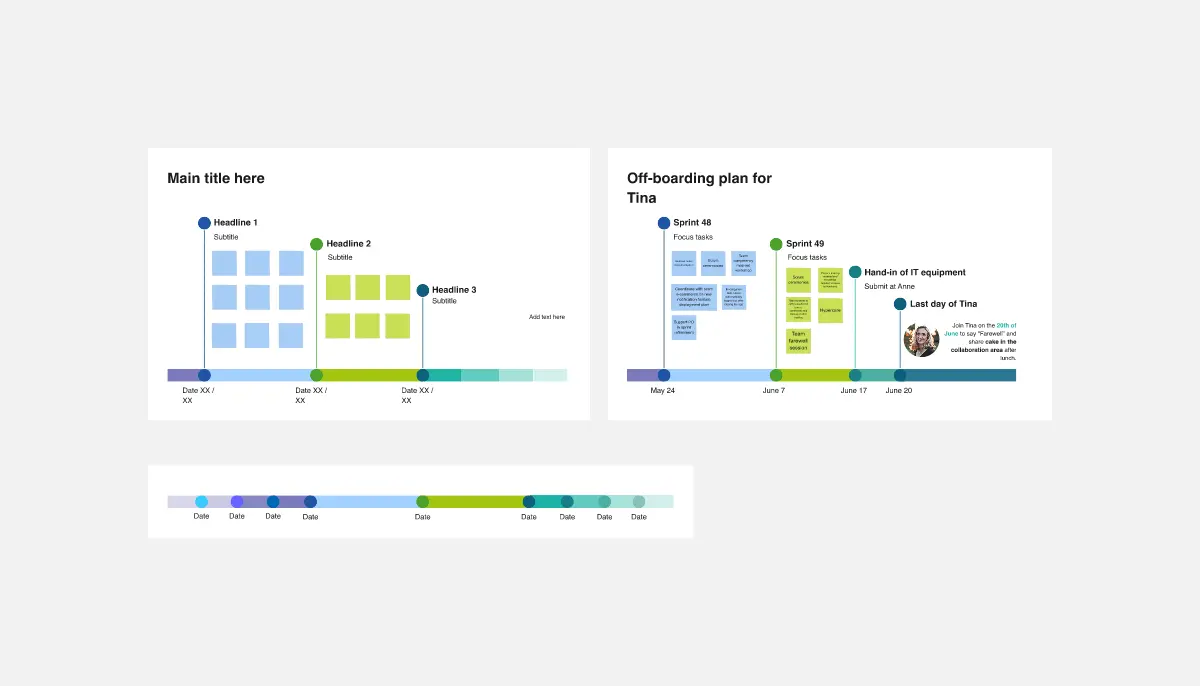
Timeline Design ⏳
The Timeline Design template is perfect for creating visually engaging timelines. It helps you showcase project milestones, deadlines, and important events in a clear and attractive format. Ideal for presentations and reports, this template ensures your timeline is both informative and visually appealing.
Project - Timeline & Key Infos
805 likes6.4K usesProject - Timeline & Key Infos
The Project - Timeline & Key Infos template provides a visual framework for planning and tracking project timelines, milestones, and key information. It enables teams to align on project objectives, allocate resources, and monitor progress effectively. With customizable timelines and informative dashboards, this template empowers project managers and stakeholders to stay organized and informed throughout the project lifecycle, ensuring successful delivery within scope, time, and budget constraints.
Project Timeline Builder
679 likes3.1K uses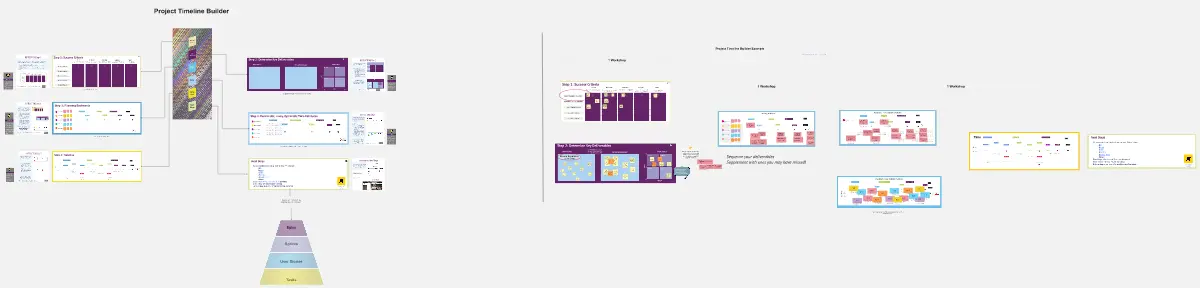
Project Timeline Builder
The Project Timeline Builder template is a powerful tool for planning and managing project timelines. It helps you break down projects into manageable tasks, set deadlines, and track progress. This template ensures you stay organized and meet your project goals efficiently.
Year Timeline
187 likes1.8K uses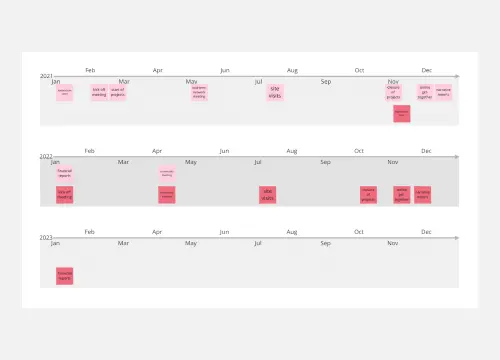
Year Timeline
The Year Timeline template provides a comprehensive view of annual events and milestones. Perfect for planning yearly goals, tracking progress, and scheduling important dates, this template helps you stay organized and focused throughout the year.
English Grammar Timeline Builder
360 likes1.5K uses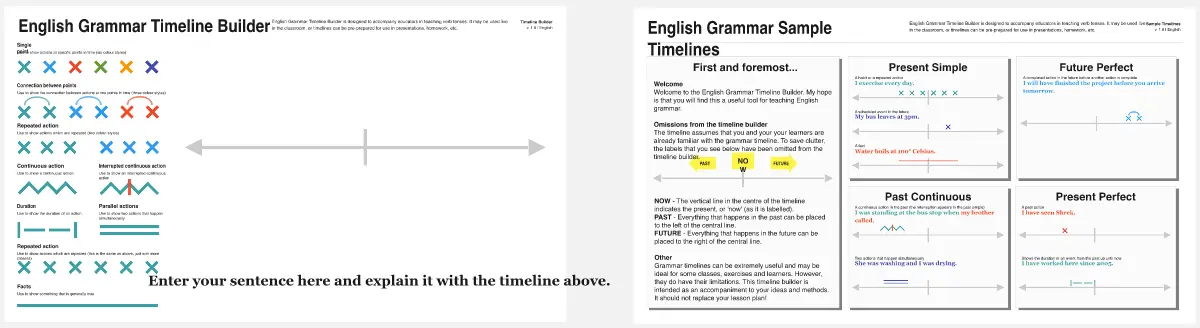
English Grammar Timeline Builder
The English Grammar Timeline template helps you map out the progression of grammar concepts over time. This is a great tool for educators and students to visualize the sequence and relationship between different grammar topics, making learning and teaching more effective.
Timeline-Retrospective
120 likes1.3K uses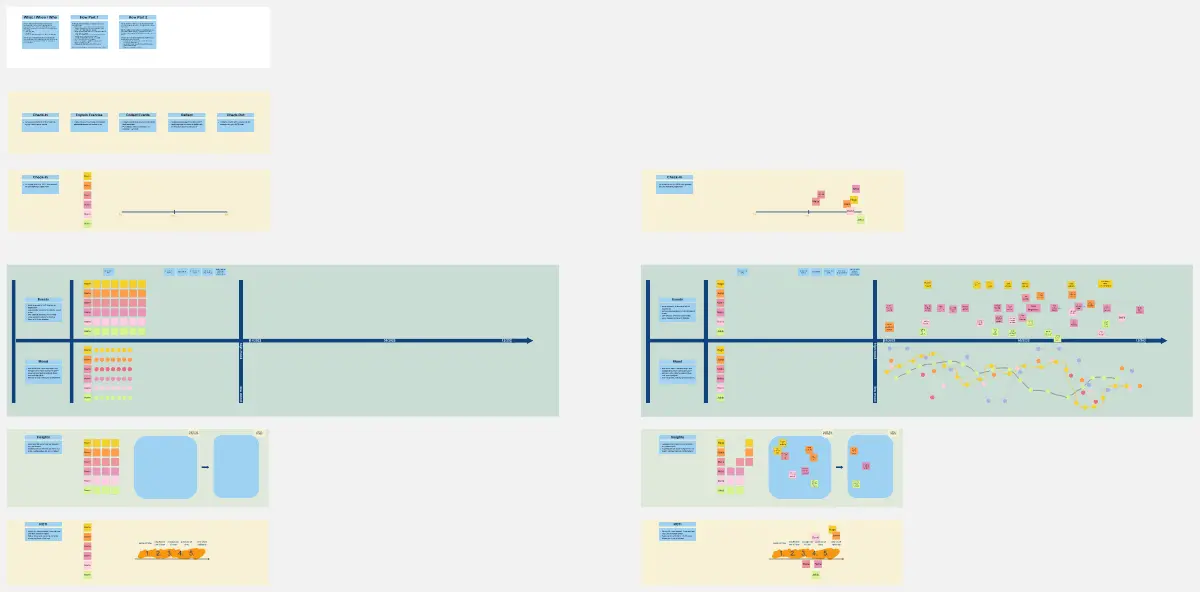
Timeline-Retrospective
Use the Timeline Retrospective template to review project progress and outcomes. It’s ideal for identifying what worked well and what didn’t, facilitating continuous improvement. This template helps teams reflect on their performance and make informed decisions for future projects.
SaaS Implementation Timeline
191 likes1K uses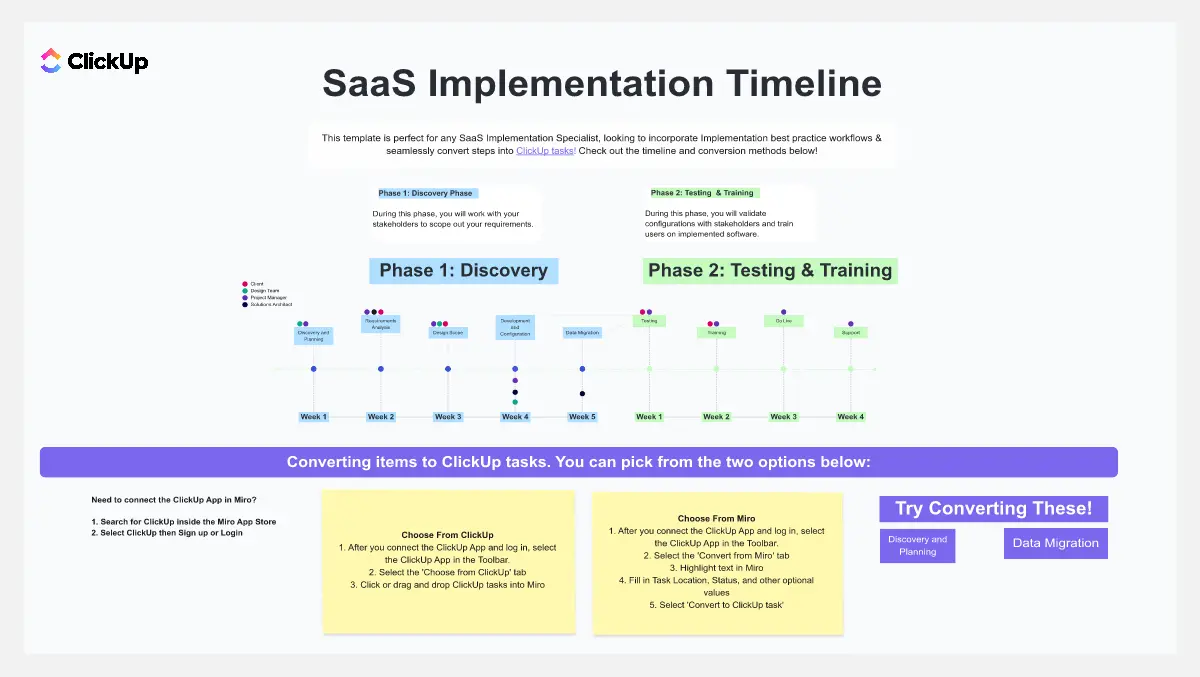
SaaS Implementation Timeline
The SaaS Implementation Timeline template offers a visual roadmap for planning and tracking the implementation of Software as a Service (SaaS) solutions. It provides a structured framework for defining milestones, allocating resources, and monitoring progress. This template enables organizations to manage SaaS deployments effectively, ensuring successful adoption and realization of business value. By promoting transparency and accountability, the SaaS Implementation Timeline empowers teams to deliver projects on time and within budget, driving organizational agility and competitiveness.
History Timeline
47 likes851 uses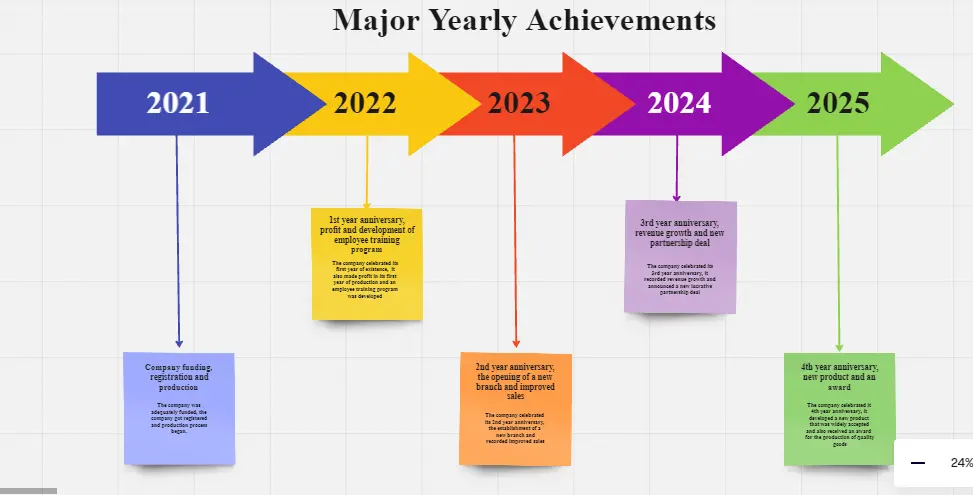
History Timeline
The History Timeline template is perfect for visualizing historical events in a structured and engaging way. Whether you're a teacher, student, or history enthusiast, this template helps you chronologically organize significant events, eras, and milestones. Customize it to highlight key moments, add detailed descriptions, and even include images for a richer experience, making history presentations captivating.
Timeline Template
9 likes691 usesTimeline Template
A timeline displays a chronological order of important dates, and scheduled events. Timelines help product managers, project managers, and team members tell visual stories about progress and obstacles. Timelines enable teams to see at a glance what happened before, what progress is happening now, and what needs tackling in the future. Projects or products with specific purpose or deliverables should be based on a timeline to be successful. Use the timeline as a shared reference for start dates, end dates, and milestones.
Film/TV Production Timeline
106 likes668 uses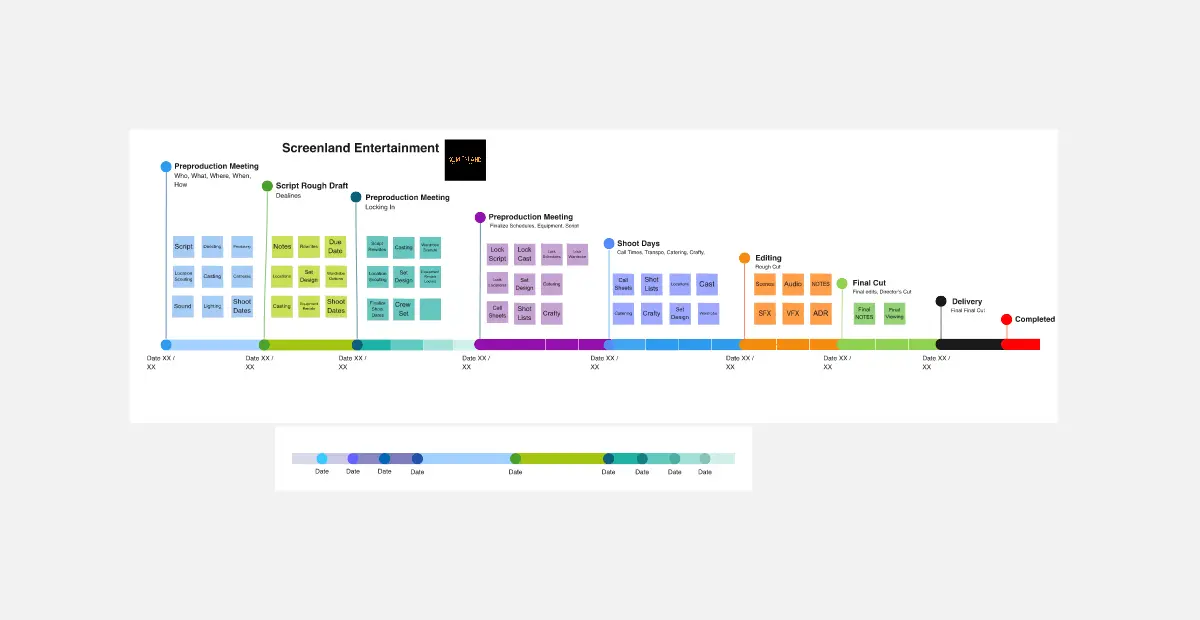
Film/TV Production Timeline
The Production Timeline template is designed for managing production schedules. It helps you plan and track each stage of the production process, ensuring timely completion and quality control. Ideal for manufacturing and creative projects, this template keeps your production on track.
Timeline Workflow
123 likes641 uses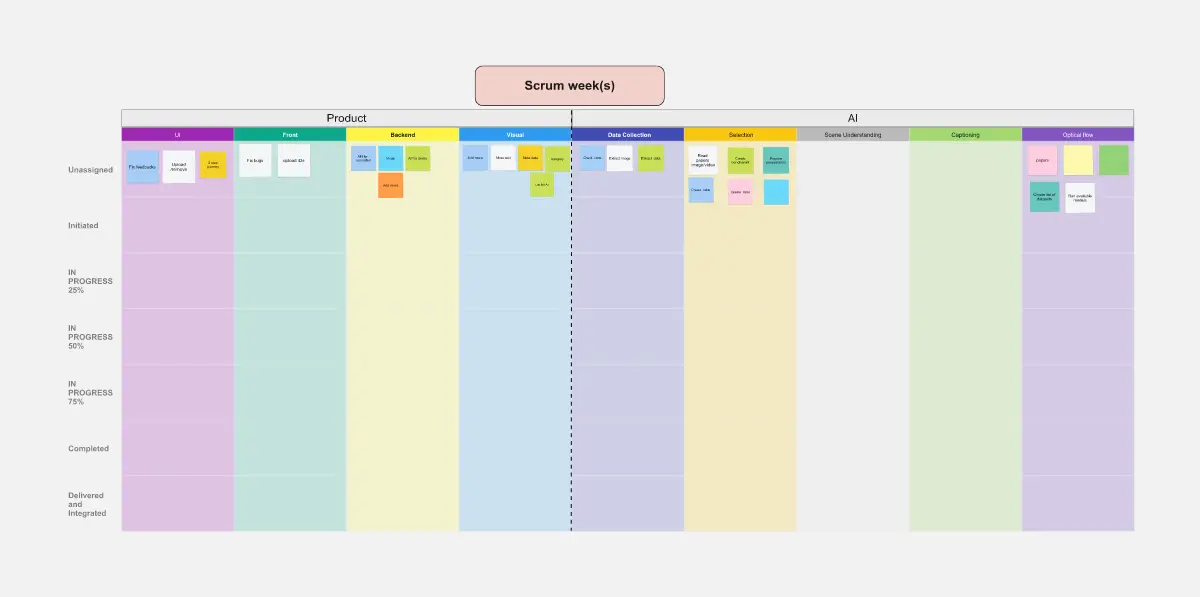
Timeline Workflow
The Timeline Workflow template helps streamline your project workflows. It’s perfect for visualizing processes, identifying bottlenecks, and optimizing tasks. This template enhances team collaboration and ensures smooth project execution.
Research Project Timeline
91 likes452 usesResearch Project Timeline
Embarking on a research project? The Research Project Timeline template is an essential tool for planning and managing your research activities. It helps you break down your project into manageable phases, set deadlines, and track progress. From literature review and data collection to analysis and reporting, this template ensures you stay organized and on schedule, enhancing your ability to conduct thorough research.
Marketing Campaign Timeline
83 likes399 usesMarketing Campaign Timeline
Plan and execute your marketing strategies seamlessly with the Marketing Campaign Timeline template. This tool allows you to map out every stage of your campaign, from planning to launch and analysis. Visualize key milestones, set deadlines, and track progress to ensure your marketing efforts are well-coordinated and effective. Ideal for marketing teams looking to optimize their campaign management.
Parallel Timelines
20 likes345 uses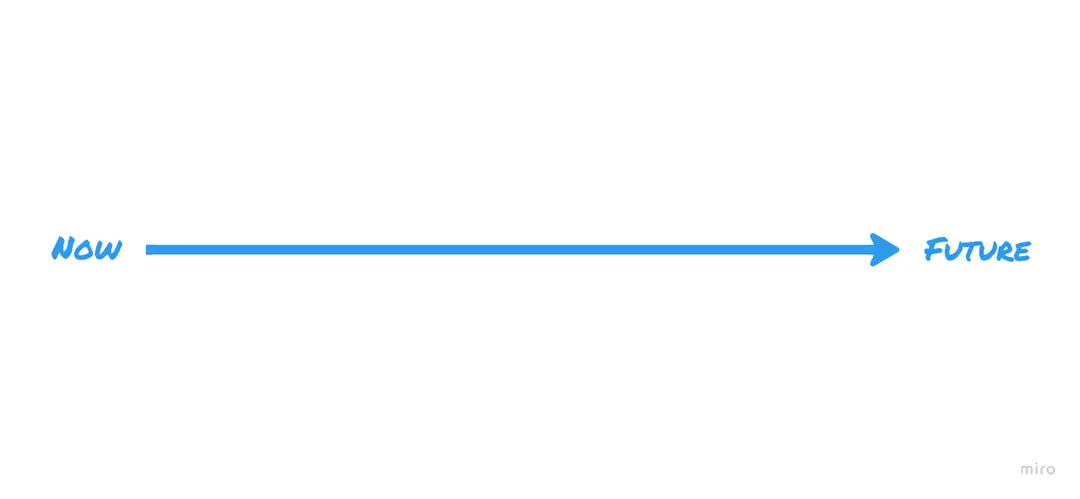
Parallel Timelines
Use the Parallel Timeline template to visualize multiple project timelines side by side. Ideal for tracking parallel project phases, it helps you identify dependencies and potential bottlenecks. Whether you’re managing multiple teams or projects, this template provides a clear view of each timeline, ensuring you stay on track and meet deadlines efficiently.
Project Schedule
5 likes313 uses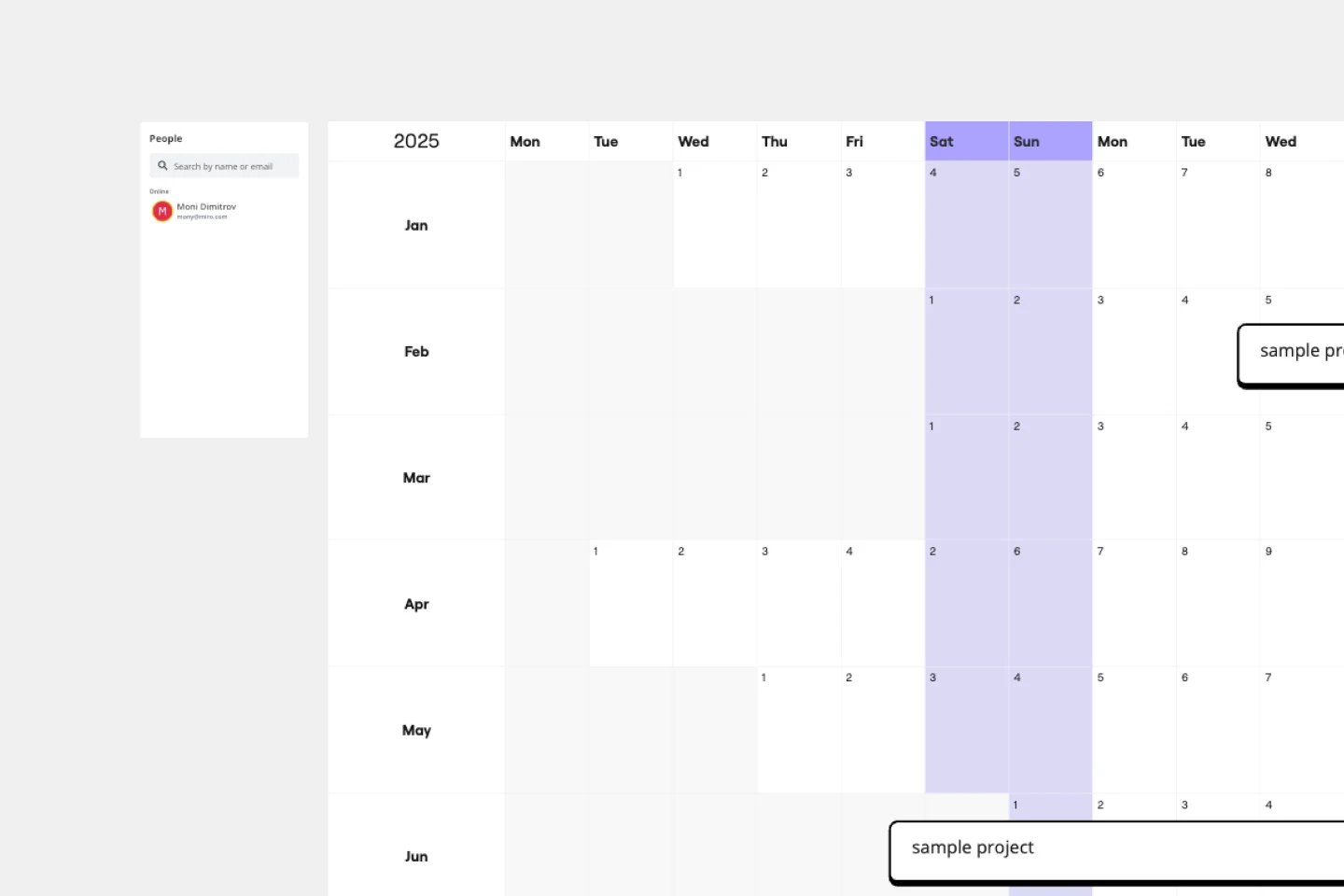
Project Schedule
The Project Timeline Template simplifies project management. Illustrating tasks, milestones, and deliverables on a calendar visually shows teams a project's progression. One of its standout benefits is its ability to foster clarity. With this template, project milestones are translated into an easily digestible format, enabling team members to quickly comprehend the entirety of the project's scope and sequence, thereby enhancing productivity and reducing potential misunderstandings.
Event Planning Timeline
27 likes276 usesEvent Planning Timeline
Organizing an event involves numerous tasks and tight deadlines. The Event Planning Timeline template simplifies this process. Use it to plan and track every aspect of your event, from initial brainstorming to final execution. Assign tasks, set deadlines, and monitor progress to ensure smooth operations. Whether for small gatherings or large conferences, this template helps manage logistics and coordination.
Timeline Meeting
52 likes230 uses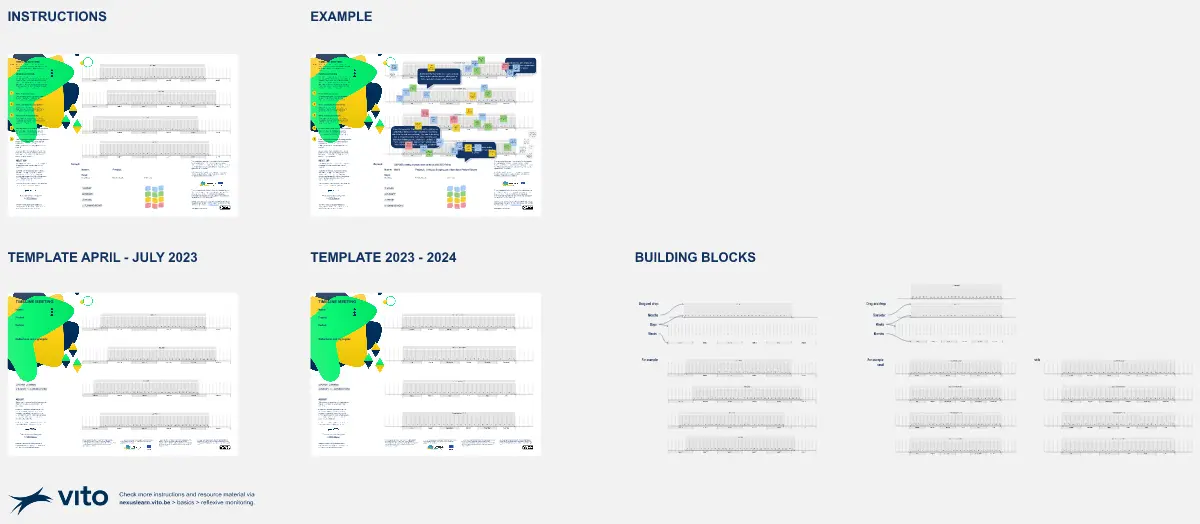
Timeline Meeting
The Timeline Meeting template is tailored for planning and conducting meetings with a focus on time management. It helps you set clear agendas, allocate time for each topic, and keep track of discussion points. This template ensures your meetings are productive and stay on track.
Timeline Workflow
9 likes156 uses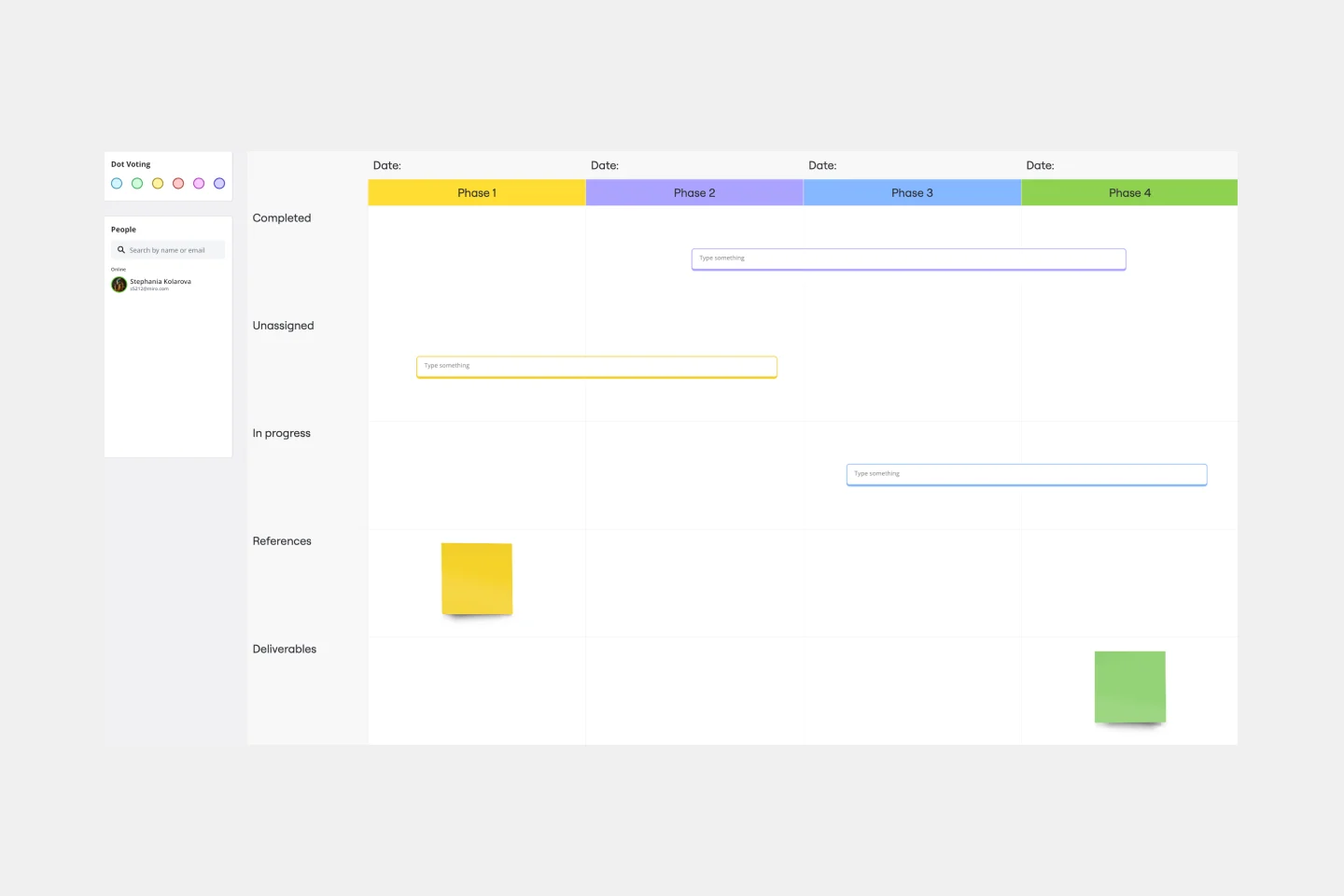
Timeline Workflow
A timeline is a visual tool that chronologically plots out projects step by step. It’s an ideal tool for your team to tell stories (such as an overview of events in your organization) and visualize your projects or processes. The Timeline Workflow template is perfect for any project that relies on visual content. You may find it beneficial to use with your team and also to share with other stakeholders or clients to keep them in the loop on your progress.
Hiring Process Timeline
43 likes133 uses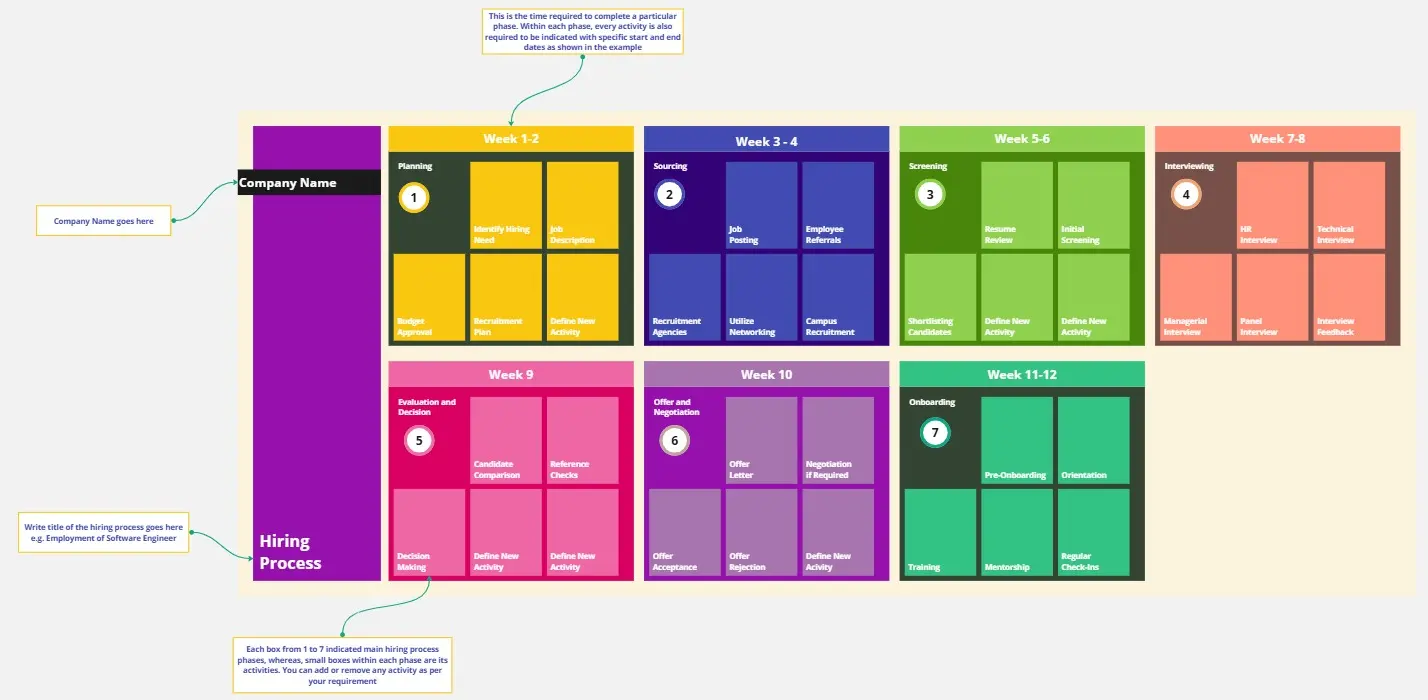
Hiring Process Timeline
Streamline your recruitment process with the Hiring Process Timeline by Rizwan Khawaja. This template helps you organize every step of hiring, from job advertisement to final onboarding. Visualize timelines, track candidates, and ensure an efficient hiring workflow. Perfect for HR professionals aiming to improve their recruitment strategy and reduce time-to-hire.
Delivery Timeline Template
5 likes129 uses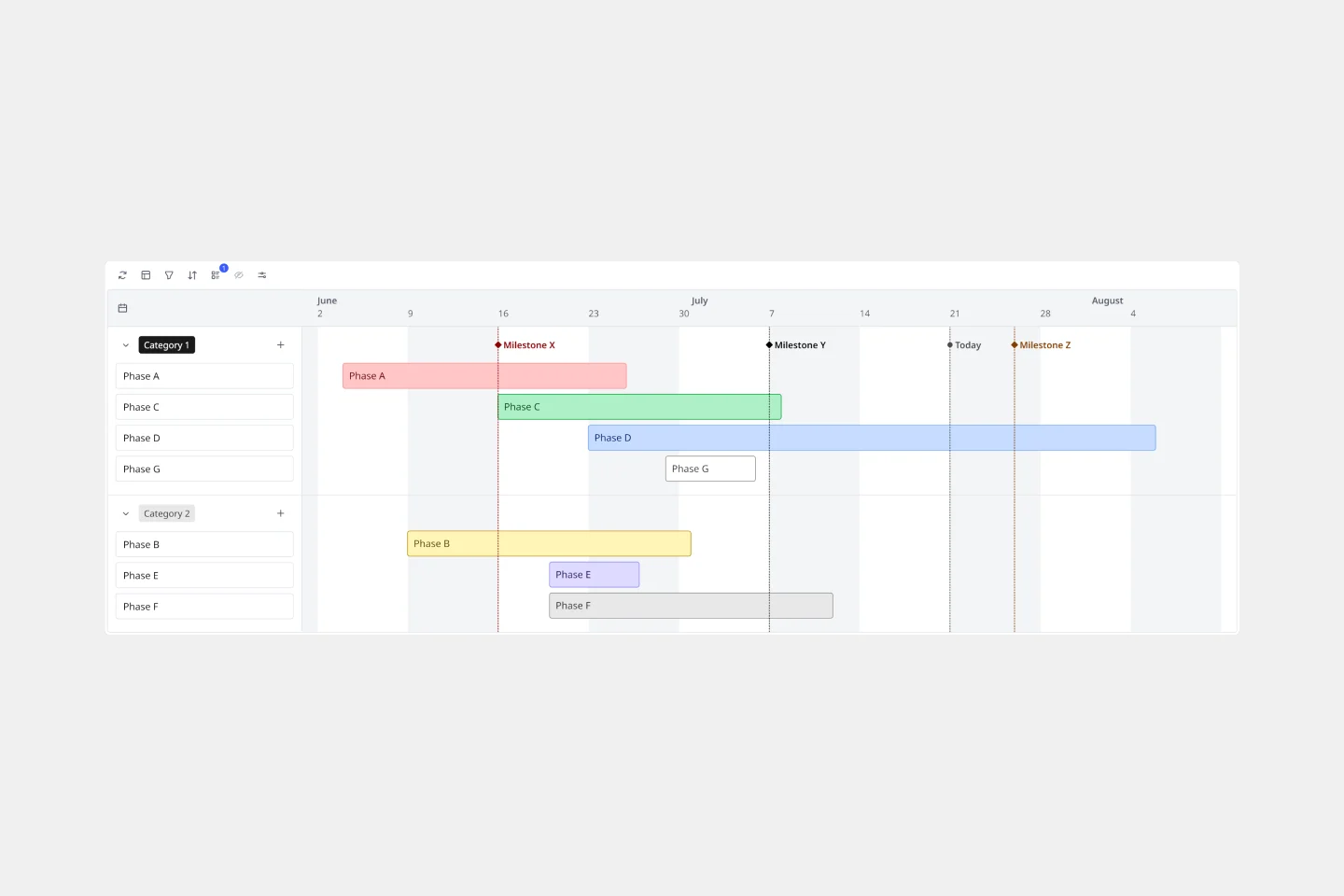
Delivery Timeline Template
Scattered release plans and unclear feature dependencies making your product team feel out of sync? A delivery timeline template provides a visual framework for tracking project phases, milestones, and dependencies from concept to launch. Use this flexible template to create clear timelines that keep everyone aligned on what's shipping when, while spotting potential blockers before they derail your roadmap.
Timelining
21 likes125 uses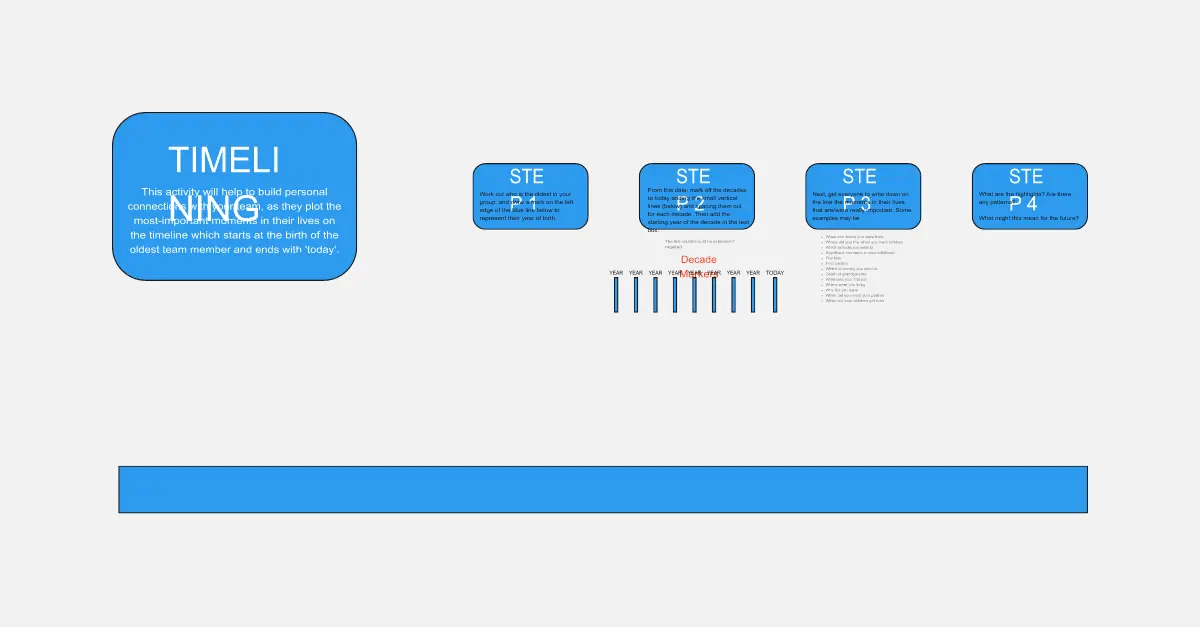
Timelining
Timelining is a versatile template designed for creating detailed project timelines. It allows you to outline tasks, milestones, and deadlines, helping you manage projects efficiently. Whether for business or personal use, this template ensures you stay organized and on schedule.
Production Timeline Template
5 likes122 uses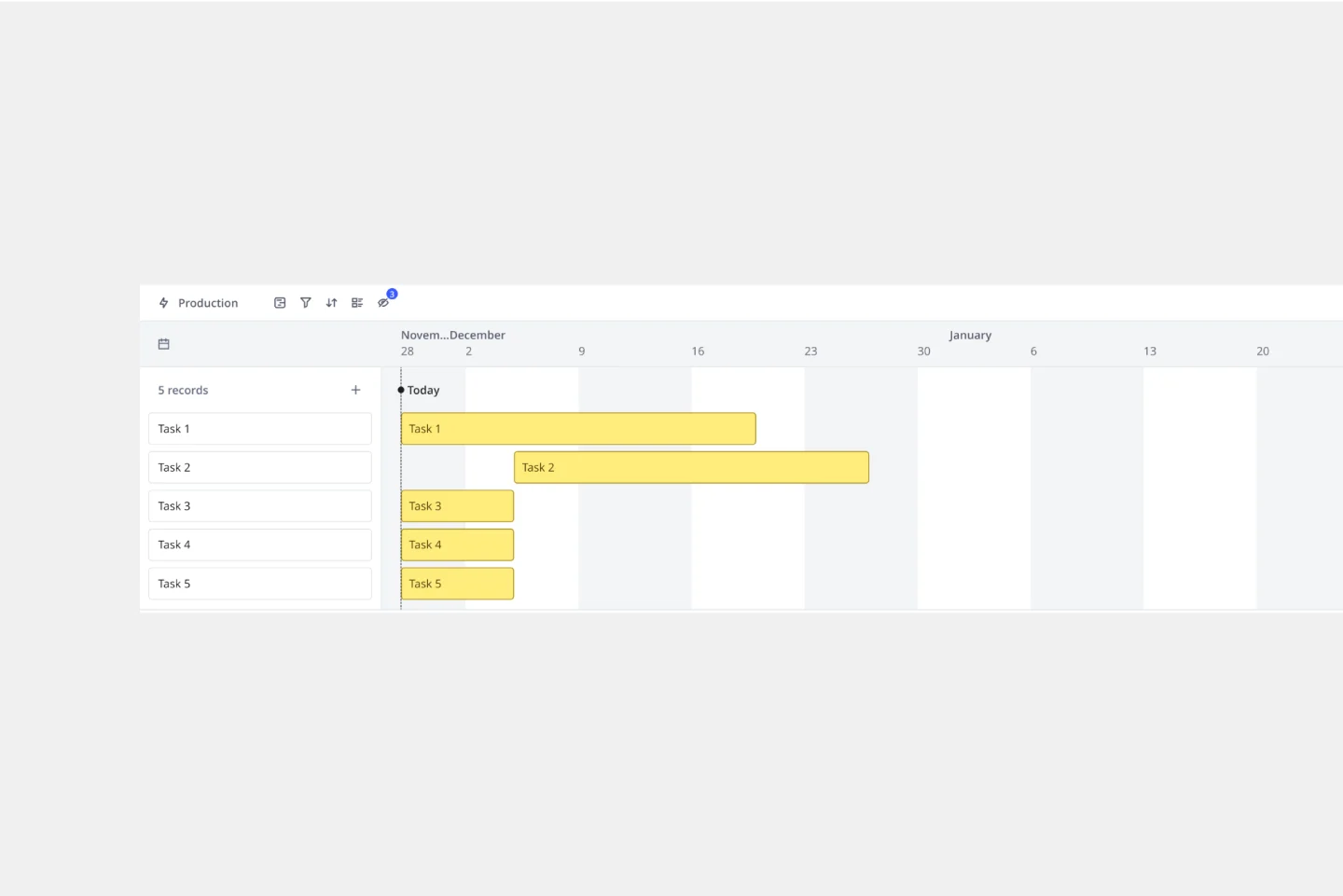
Production Timeline Template
The Production Timeline Template is a visual roadmap, systematically outlining the sequence of activities, tasks, and milestones of a project over a defined timeframe. This graphical representation ensures clarity and direction for project teams, allowing everyone to see the project's entirety in one consolidated view. One of its standout benefits is fostering team alignment. By visually laying out tasks and deadlines, team members clearly understand their roles, responsibilities, and timelines, ensuring harmonious collaboration and reducing potential miscommunication or overlaps. This alignment streamlines the workflow and significantly enhances overall project efficiency.
2023 Timeline
7 likes119 usesMarketing Campaign Timeline Template
9 likes115 uses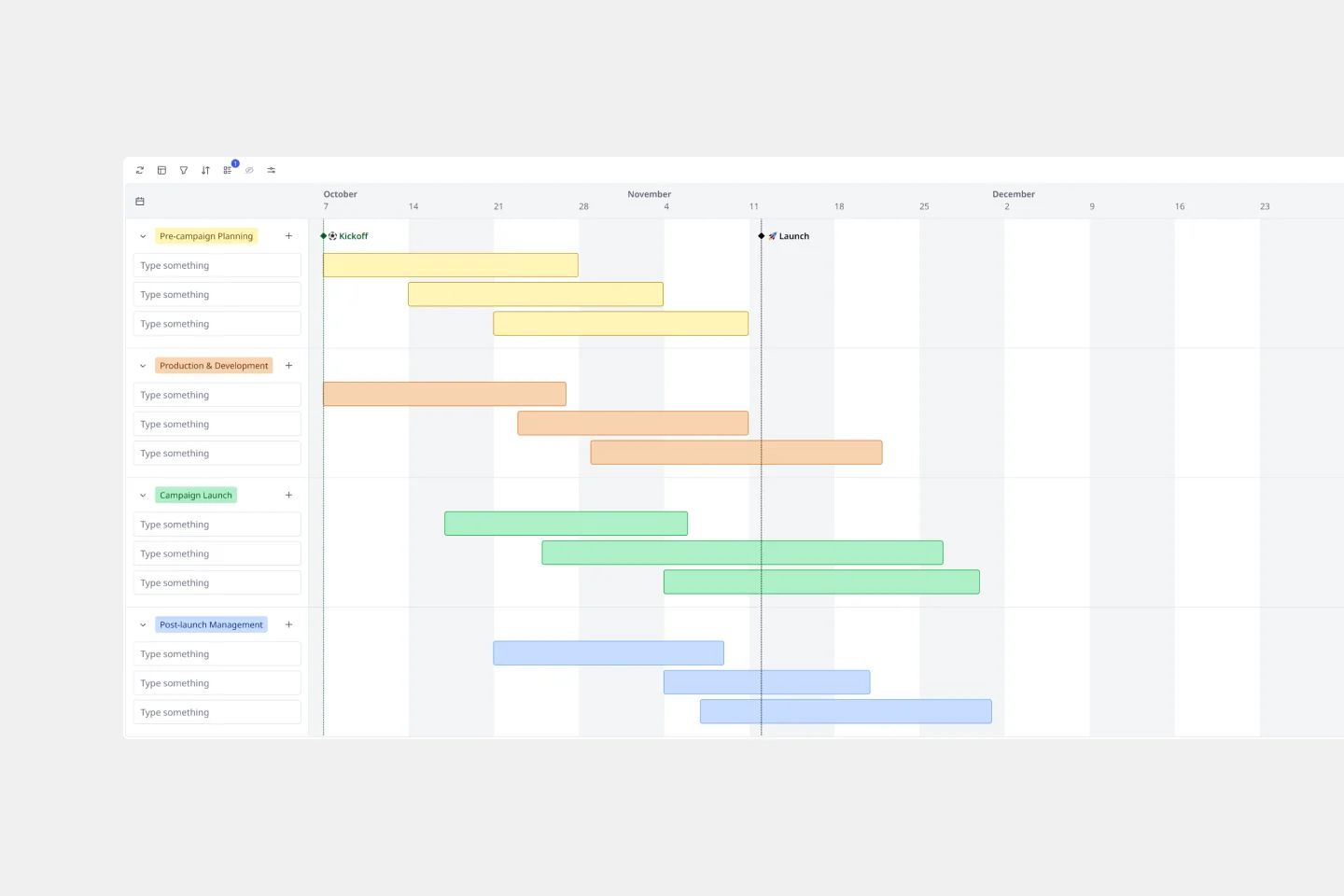
Marketing Campaign Timeline Template
Scattered spreadsheets, missed deadlines, and team confusion don't have to define your marketing campaigns. A marketing campaign timeline template gives you a clear visual roadmap from initial concept to post-launch analysis. Built with Miro's Timeline feature, this flexible template adapts to any campaign type—whether you're launching a product, running a brand awareness push, or coordinating a multi-channel content series. Use this template to create a centralized project hub where every team member knows exactly what's happening when.
Marketing Campaign Timeline
31 likes104 uses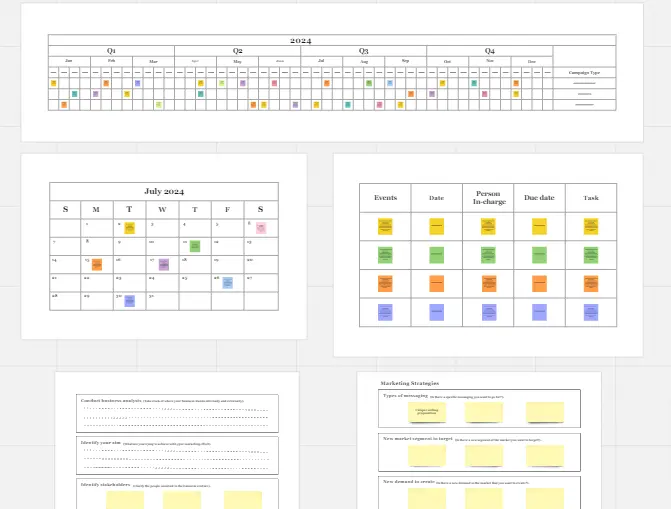
Marketing Campaign Timeline
A marketing campaign timeline allows you to create a detailed plan for your marketing campaign and evaluate it.
Project Timeline Template
1 likes90 uses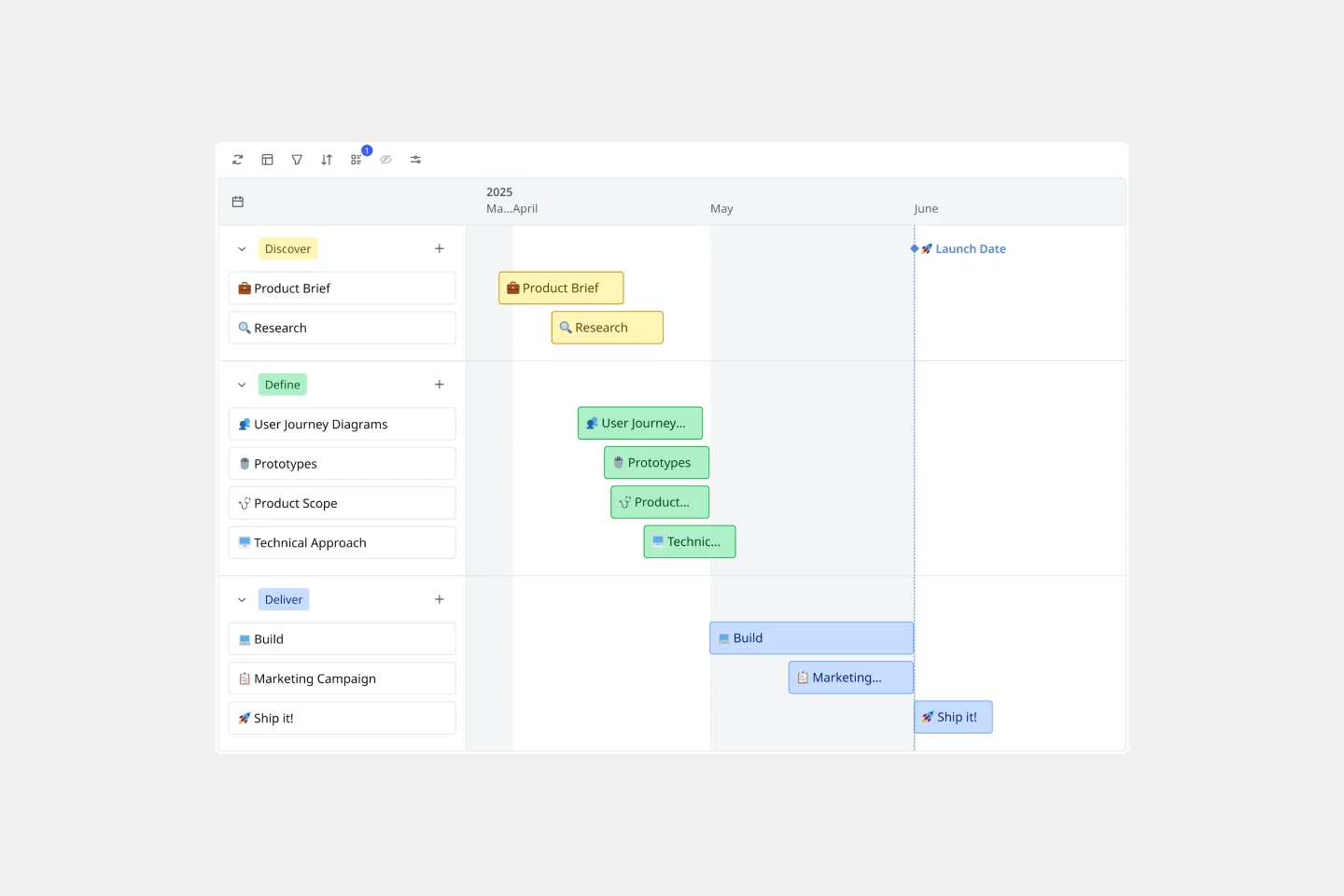
Project Timeline Template
A project timeline template is a visual framework that maps out your product development phases, milestones, and deadlines in one clear, collaborative space. Instead of juggling scattered spreadsheets and conflicting calendars, your entire team can see what's happening when, who's responsible for what, and how each phase connects to your launch goals. Use this template to transform chaotic project coordination into streamlined, deadline-driven execution.
Product Launch Timeline
17 likes89 usesProduct Launch Timeline
Launching a new product can be daunting, but with the Product Launch Timeline, you can streamline your entire process. This template helps you track every phase of your launch, from initial planning to post-launch review. Use it to set deadlines, assign tasks, and monitor progress, ensuring no detail is overlooked. Whether coordinating with teams or managing solo, this timeline ensures a successful launch.
IT Project Timeline
18 likes84 uses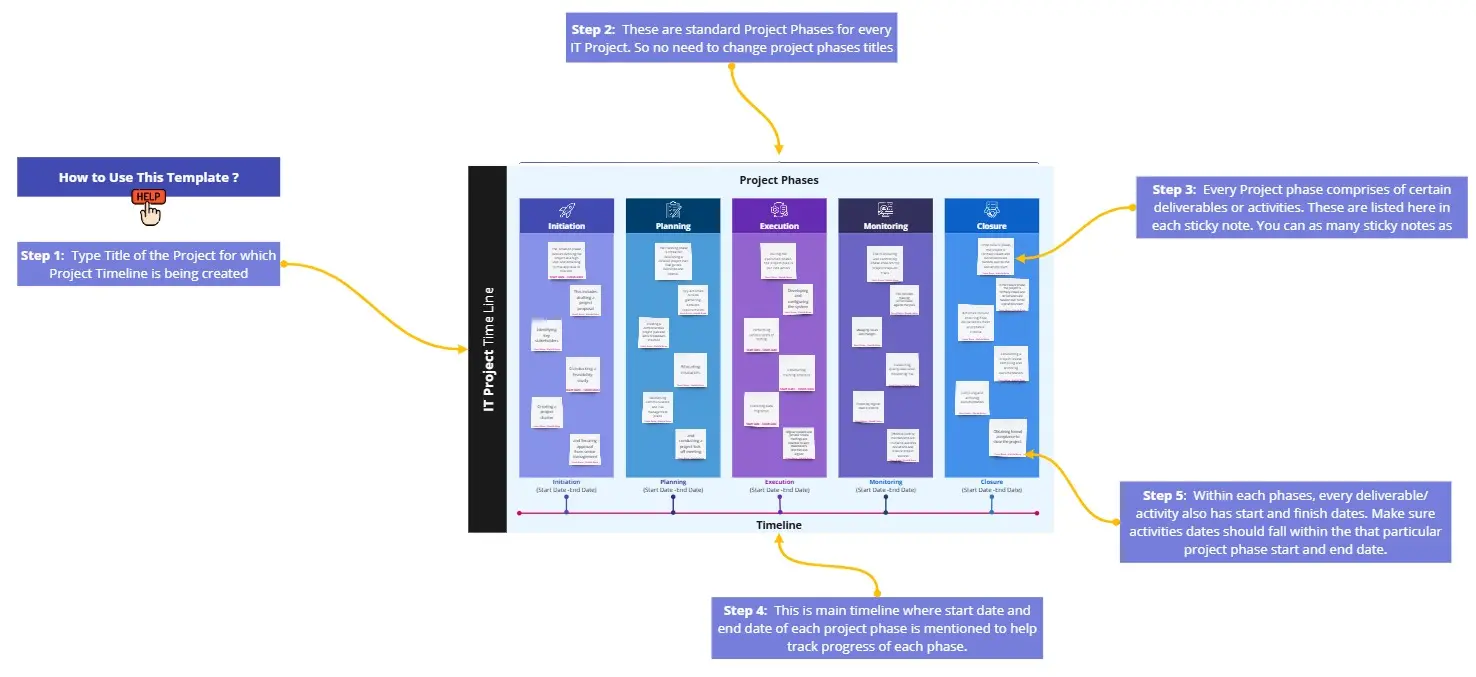
IT Project Timeline
The IT Project Time Line template is essential for managing IT projects efficiently. It allows you to visualize project milestones, deadlines, and key tasks in a clear, chronological format. Track progress, allocate resources, and ensure timely delivery of your IT projects. Ideal for project managers and IT teams aiming to stay organized and meet critical deadlines.
UX Research Plan Timeline Template
5 likes64 uses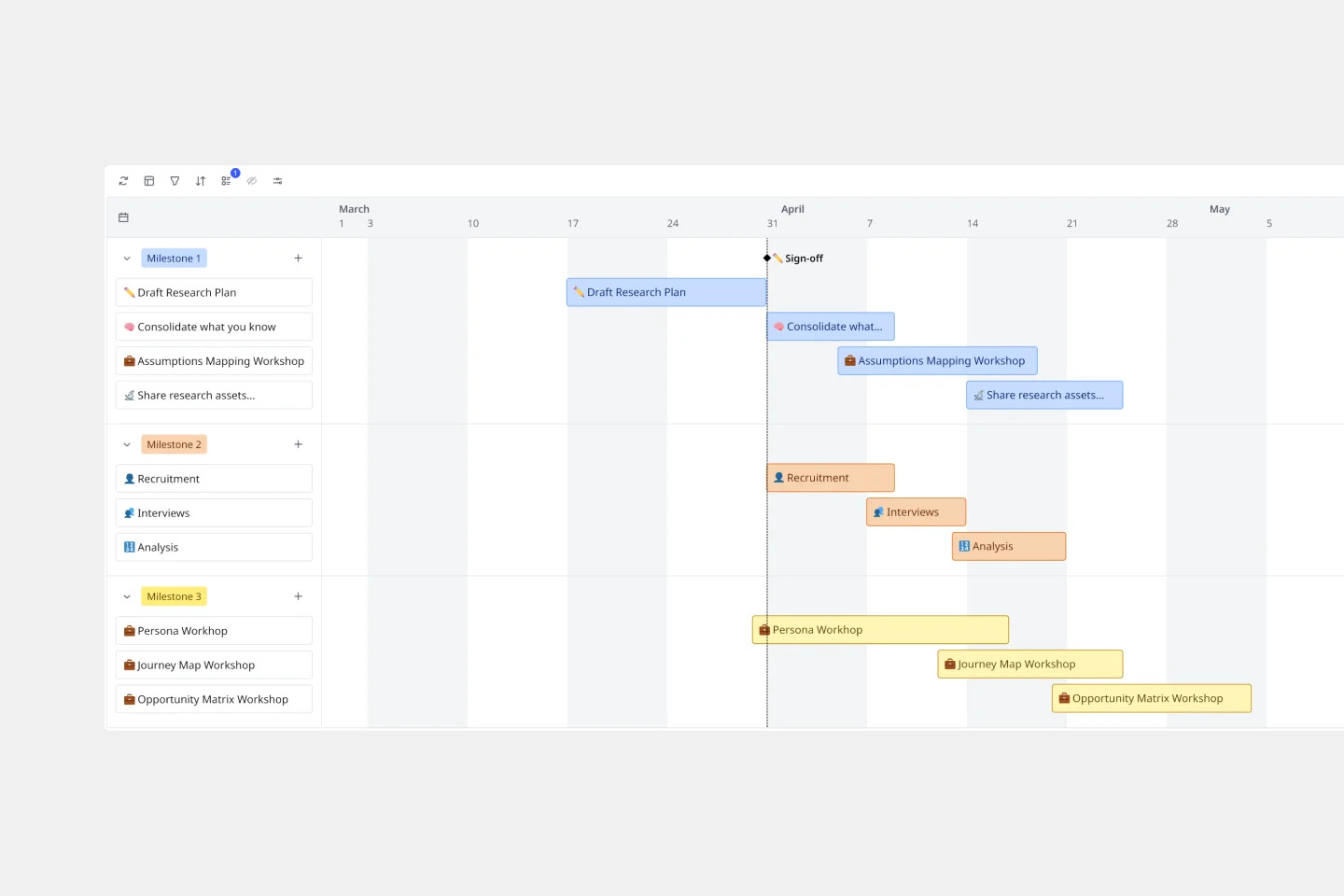
UX Research Plan Timeline Template
Scattered research activities killing your project momentum? A UX research plan timeline template transforms chaotic research coordination into clear, visual project tracking. Map out user interviews, usability tests, and analysis phases on one shared timeline that keeps cross-functional teams aligned on research progress and deliverables. Built with Miro's Timeline feature, this template lets you track dependencies, adjust schedules in real-time, and ensure research insights arrive exactly when product decisions need them most.
Timeline Retrospective
8 likes64 uses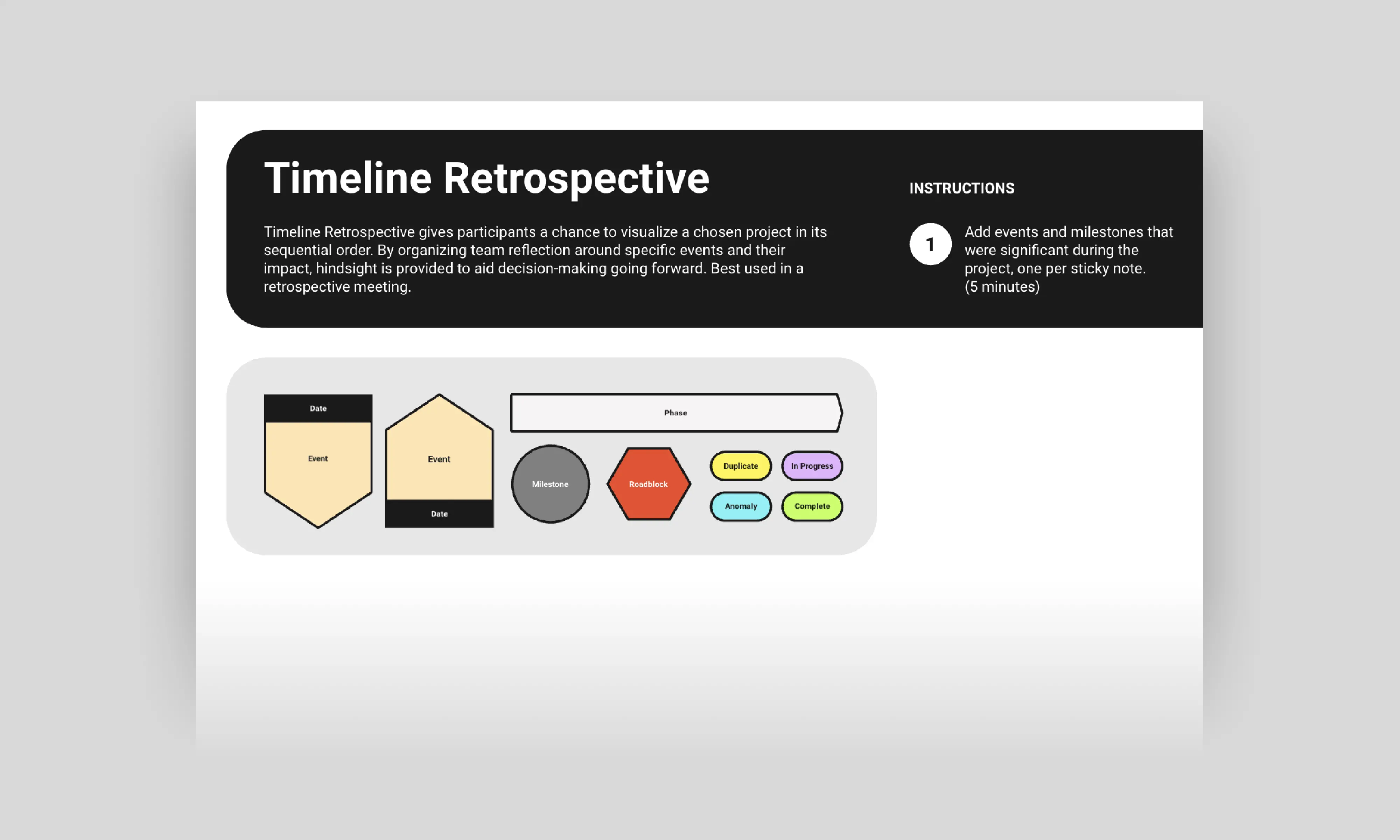
Timeline Retrospective
Reflecting on your project's timeline can provide valuable insights. The Timeline Retrospective template helps you review and analyze the key milestones and events of your project. Identify what went well, what could be improved, and how to optimize future projects. This template encourages team collaboration and open discussion, fostering continuous improvement and better project management skills.
Hiring Process Timeline
14 likes37 uses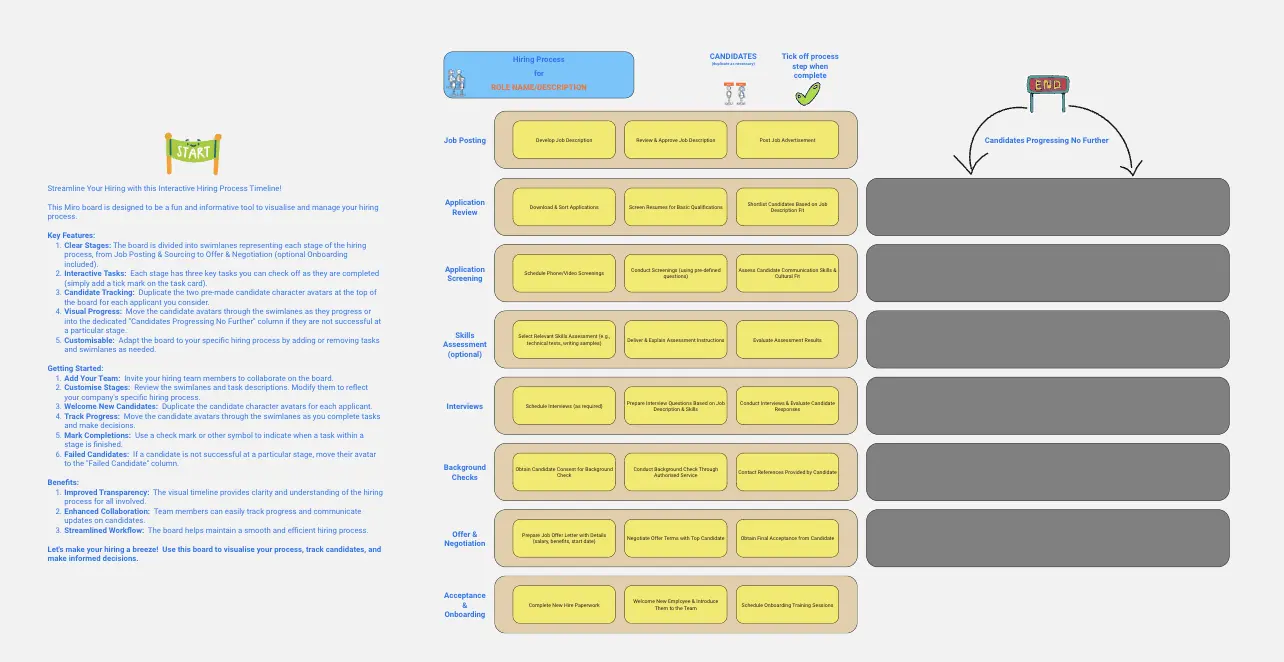
Hiring Process Timeline
Simplify your hiring process with the Hiring Process Timeline template. This tool helps you map out each step of your recruitment process, from job posting to onboarding. Visualize deadlines, track candidate progress, and ensure a smooth and efficient hiring experience. Perfect for HR teams looking to streamline and enhance their recruitment strategy.
Simple User Research Timeline
3 likes25 usesCanvas Playground Template
2 likes10 uses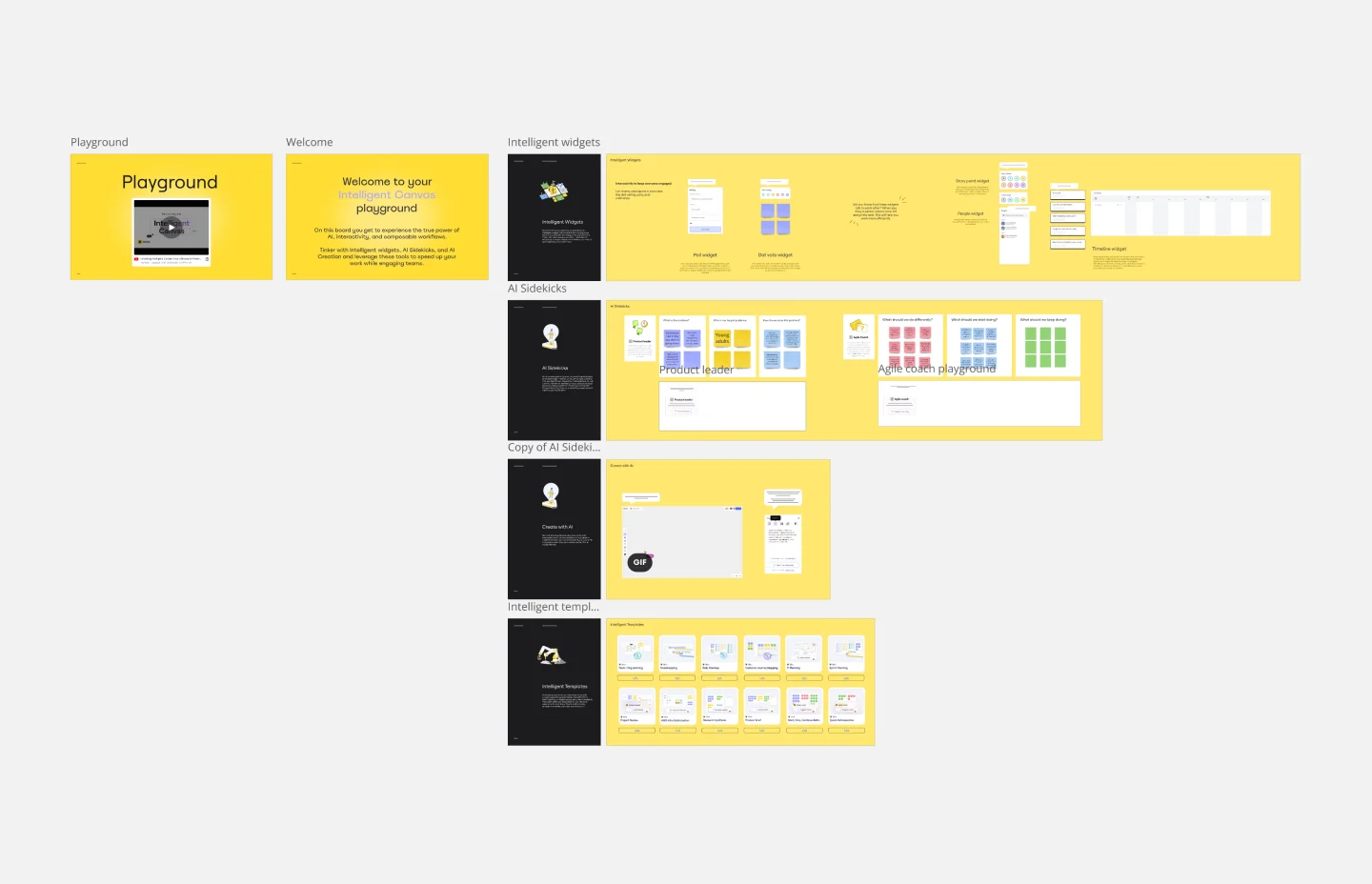
Canvas Playground Template
The canvas playground template is the ultimate way to explore all the features that make up Miro's Intelligent Canvas. This dynamic and interactive space is designed to help you get work done faster while engaging your team. From AI creation and Sidekicks to intelligent widgets, this template allows you to try it all and discover how these capabilities can streamline your workflow and enhance collaboration.
SaaS Implementation Timeline
3 likes4 uses



















Explore more
About the timeline templates collection
Unlock your creativity with Miro's collection of timeline templates. Here, you'll discover a hand-picked selection of templates that revolutionize the way you visualize project timelines and milestones. Whether you're planning the next major product launch or scheduling a series of events, our templates are created to simplify time management. They are user-friendly, customizable, and ready to capture the essence of your project's story.
Why you'll love our timeline examples
Our timeline examples are more than just placeholders; they're a source of inspiration. They show you the potential of what your timelines can be – clear, engaging, and informative. With these examples, you'll see how easy it is to track progress, align your team, and communicate with stakeholders. It's about making every second count and every update shine.
The "Predictive" Timeline: 3 Laws of Realistic Scheduling
A professional timeline isn't just a list of dates; it’s a commitment of resources. To prevent your timeline from becoming "wishful thinking," apply these three expert scheduling laws to your Miro board:
1. The "Critical Path" Identification
The Audit: Can you see which tasks, if delayed by one day, will push back the entire project completion date? The Fix: Use Miro’s Connection Lines to highlight your Critical Path. Most timelines fail because they treat a "Logo Design" task and a "Server Migration" task with equal weight. By visually bolding the critical path, you tell your team exactly where "zero delay" is required.
2. The 20% Buffer Rule (The Planning Fallacy)
The Audit: Is every task scheduled back-to-back with no breathing room? The Fix: Psychological research shows we consistently underestimate how long tasks take (The Planning Fallacy). An authoritative timeline includes "Buffer Zones." In Miro, use a specific color-coded block at the end of each major phase. If you don't schedule the "unexpected," your timeline will be obsolete by week two.
3. Milestone "Hard Gates" vs. "Soft Dates"
The Audit: Are your milestones just glorified deadlines? The Fix: Differentiate your milestones. Use a Diamond Shape for "Hard Gates" (fixed dates like a trade show or board meeting) and a Circle for "Soft Dates" (flexible internal goals). This allows your team to see where they have room to pivot and where they must be rigid.
Horizontal vs. Vertical: Choosing Your Visual Logic
Unlike a standard calendar, a Miro timeline can move in any direction. Choosing the right "Visual Logic" is key to stakeholder clarity. Here is how to choose the right template for your specific goal:
The Linear Roadmap (Horizontal)
Best For: Product Launches and Multi-Year Strategies. Why it works: It follows the natural "left-to-right" reading pattern of time. It’s the best format for showing sequential dependencies and long-term vision.
The Vertical Stack (The "History" View)
Best For: Company Histories, Event Schedules, or Social Media Content Calendars. Why it works: The vertical flow is optimized for mobile viewing and "scrolling" narratives. It’s ideal for chronological storytelling where the relationship between tasks is less about dependencies and more about a simple sequence of events.
The Gantt Hybrid (Swimlane Timeline)
Best For: Complex Project Management with Multiple Departments. Why it works: By using Swimlanes (horizontal rows), you can show what the Marketing, Dev, and Legal teams are doing simultaneously. This is the only way to visualize resource overlapping and prevent one department from being overwhelmed while another is idle.
How to use the timeline templates in Miro
Choose your template: Kick things off by selecting the perfect template from our collection that fits your project's timeline.
Make it yours: Customize your timeline by adding key dates, milestones, and durations. Tailor the aesthetics to match your project or brand style.
Collaborate in real time: Bring your team into the fold. Miro's collaborative environment means everyone can contribute, edit, and update in sync.
Stay agile: Projects change, and so should your timeline. Use our flexible tools to adjust dates and details as your project evolves.
Showcase your timeline: Share your dynamic timeline with stakeholders or your entire team, providing a comprehensive and easy-to-understand visual narrative.
With Miro's timeline templates, you're equipped to turn the abstract into the concrete. It's time to map out success, one milestone at a time. You can also check online weekly calendar templates to plan your week ahead!