157 likes
1.2K uses
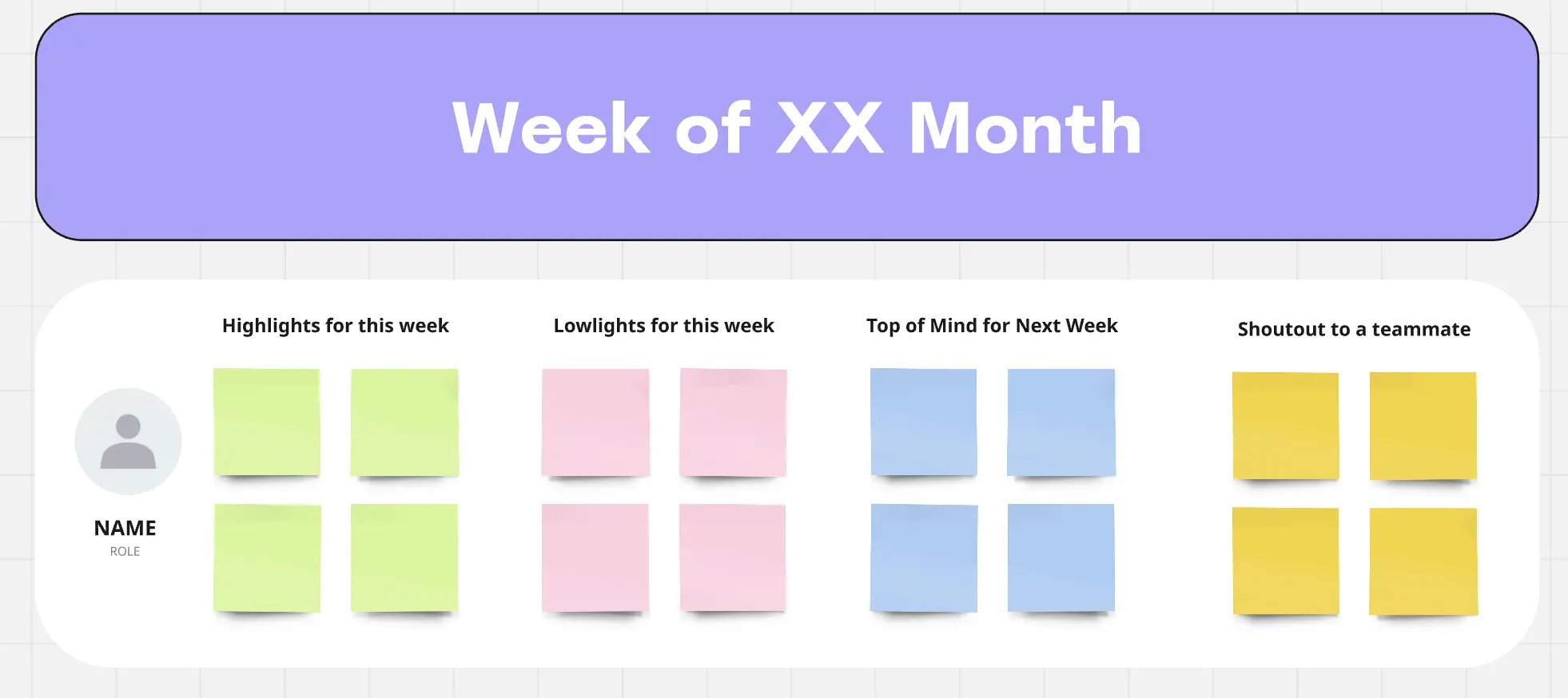
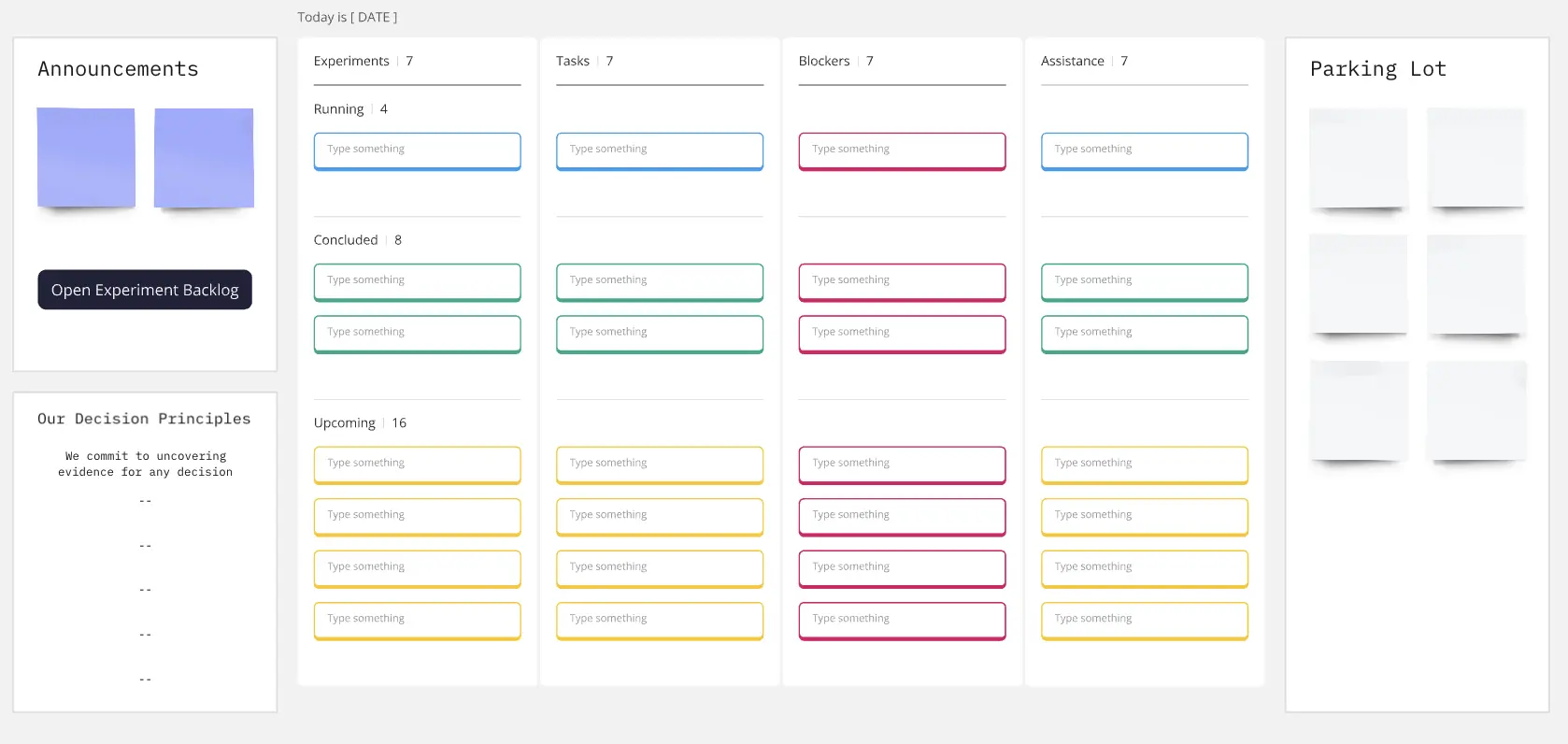
Streamline your team’s workflow with customizable daily standup meeting templates. Keep track of project updates, tasks, and blockers efficiently to ensure everyone stays aligned and productive.
16 templates
AI Accelerated
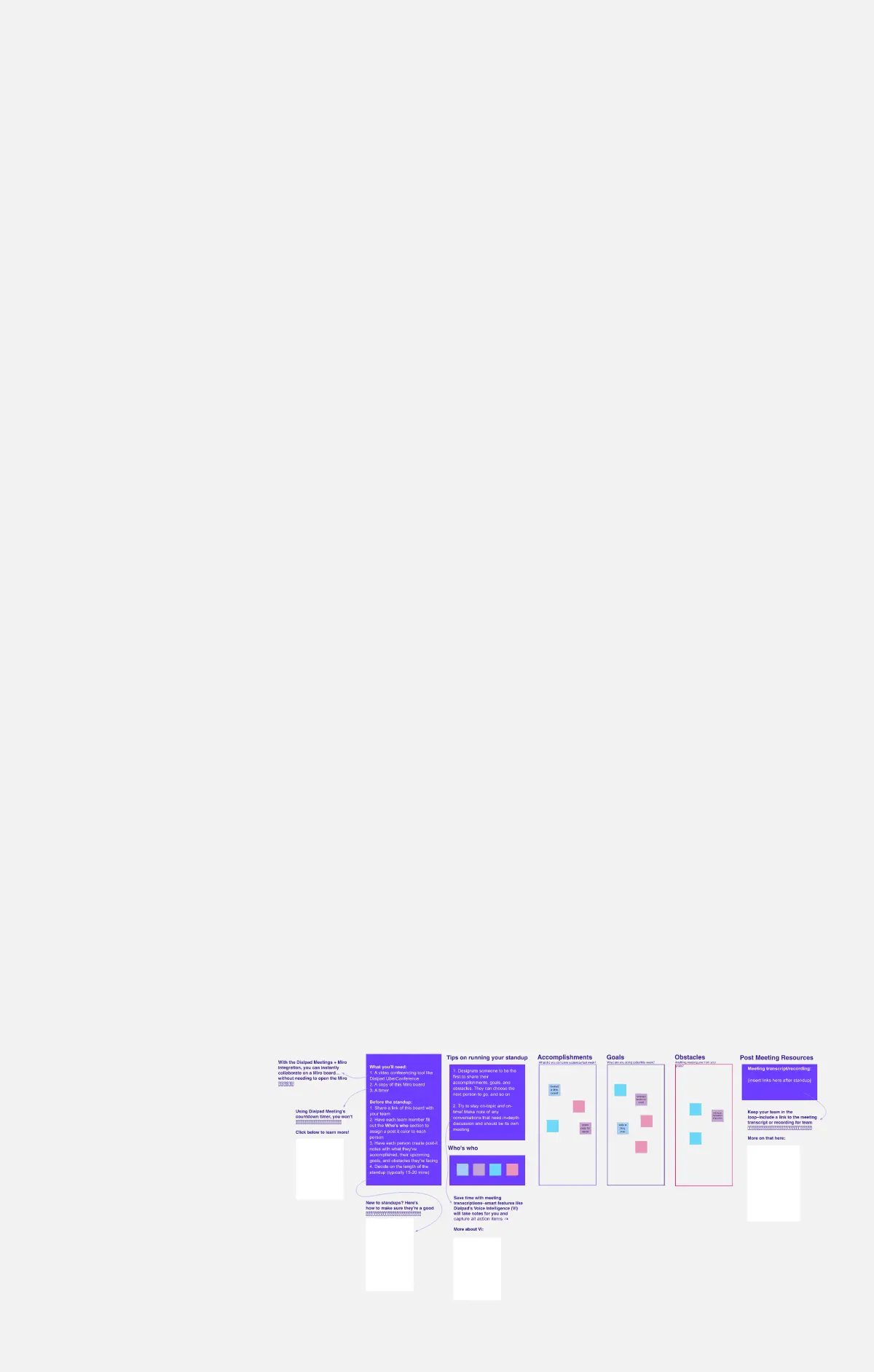
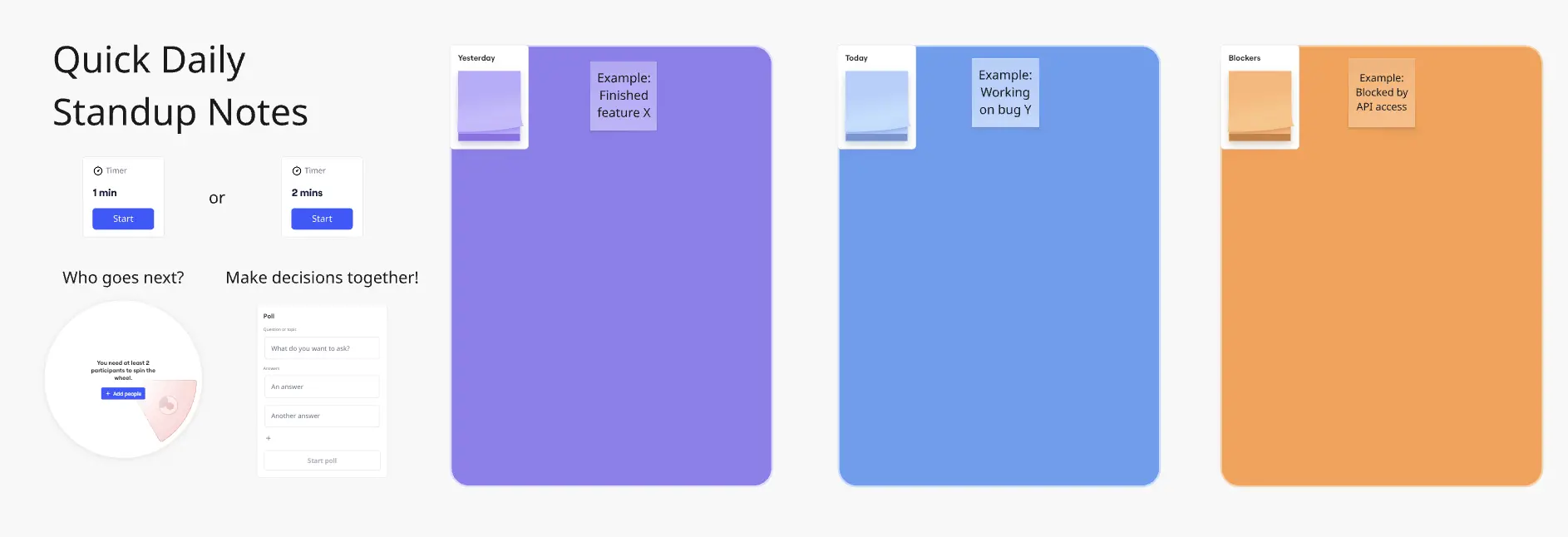
Daily Stand-up Meeting AI Template
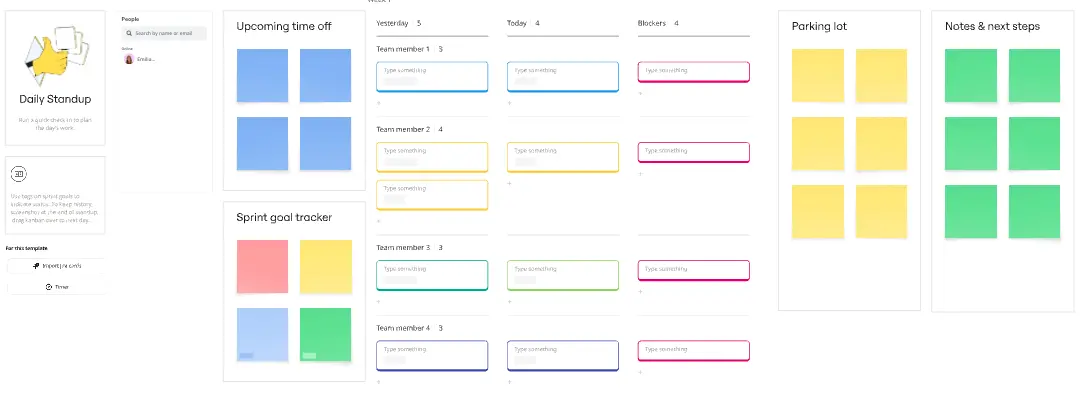
The entire team meets to review the day before and discuss the day ahead. These daily meetings, also known as “scrums,” are brief but powerful — they identify roadblocks, give each team member a voice, foster collaboration, keep progress on track, and ultimately keep teams working together effectively. This template makes it so easy for you to plan daily standups for your sprint team. It all starts with picking a date and time, creating an agenda, and sticking with the same format throughout the sprint.
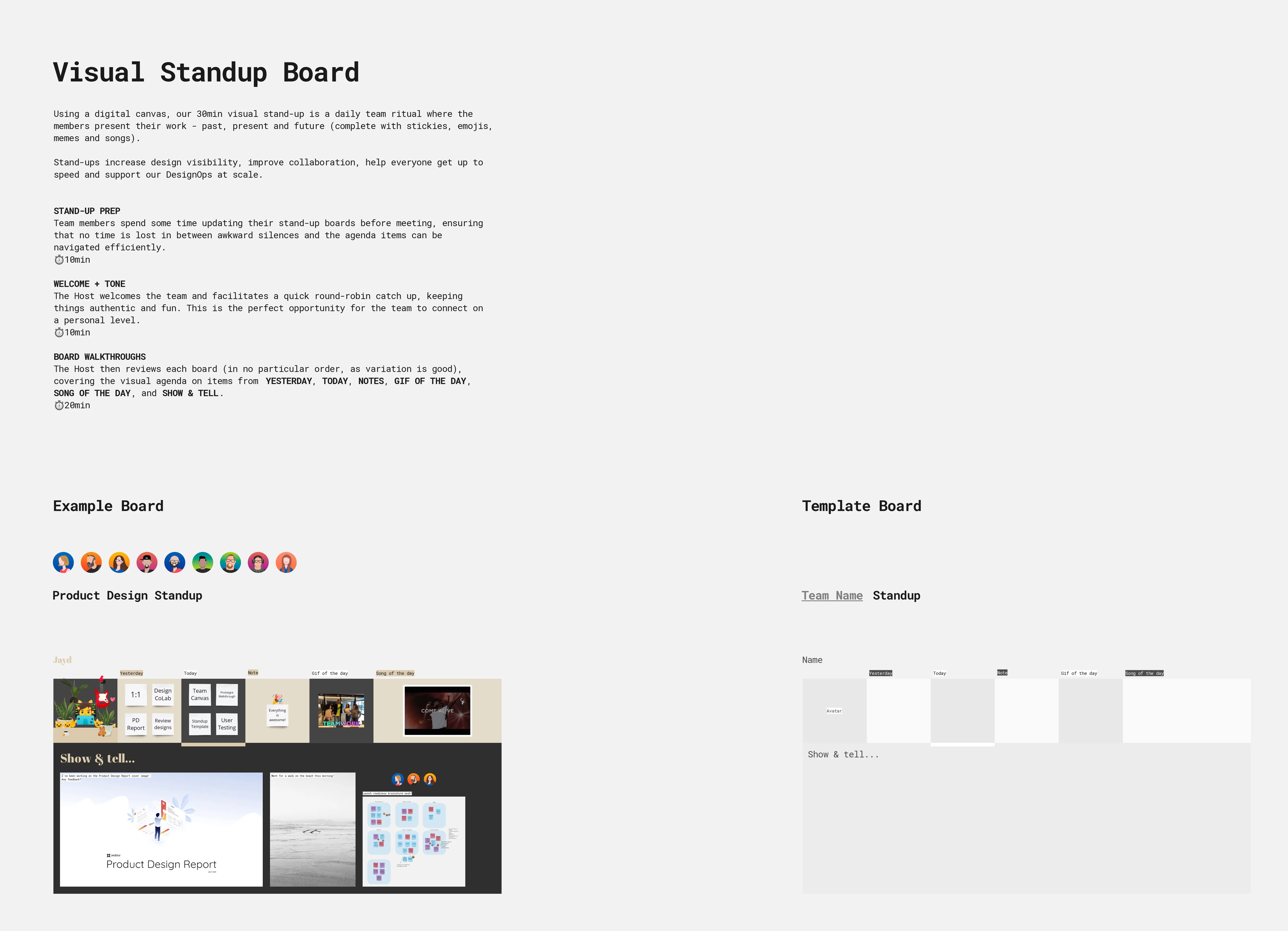
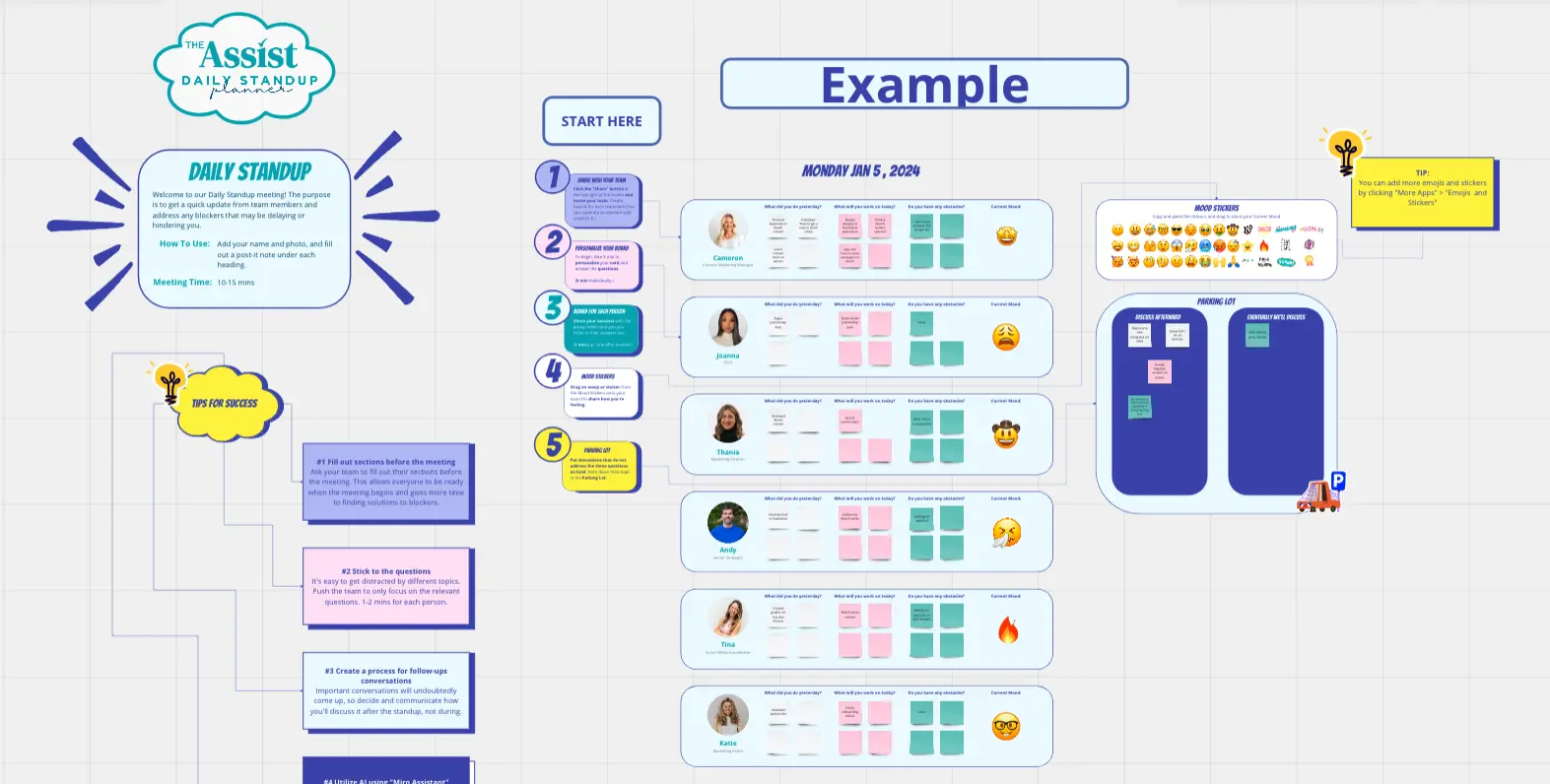
Daily Stand-up Meeting Template
The entire team meets to review the day before and discuss the day ahead. These daily meetings, also known as “scrums,” are brief but powerful — they identify roadblocks, give each team member a voice, foster collaboration, keep progress on track, and ultimately keep teams working together effectively. This template makes it so easy for you to plan daily standups for your sprint team. It all starts with picking a date and time, creating an agenda, and sticking with the same format throughout the sprint.
Meeting Action Items Template
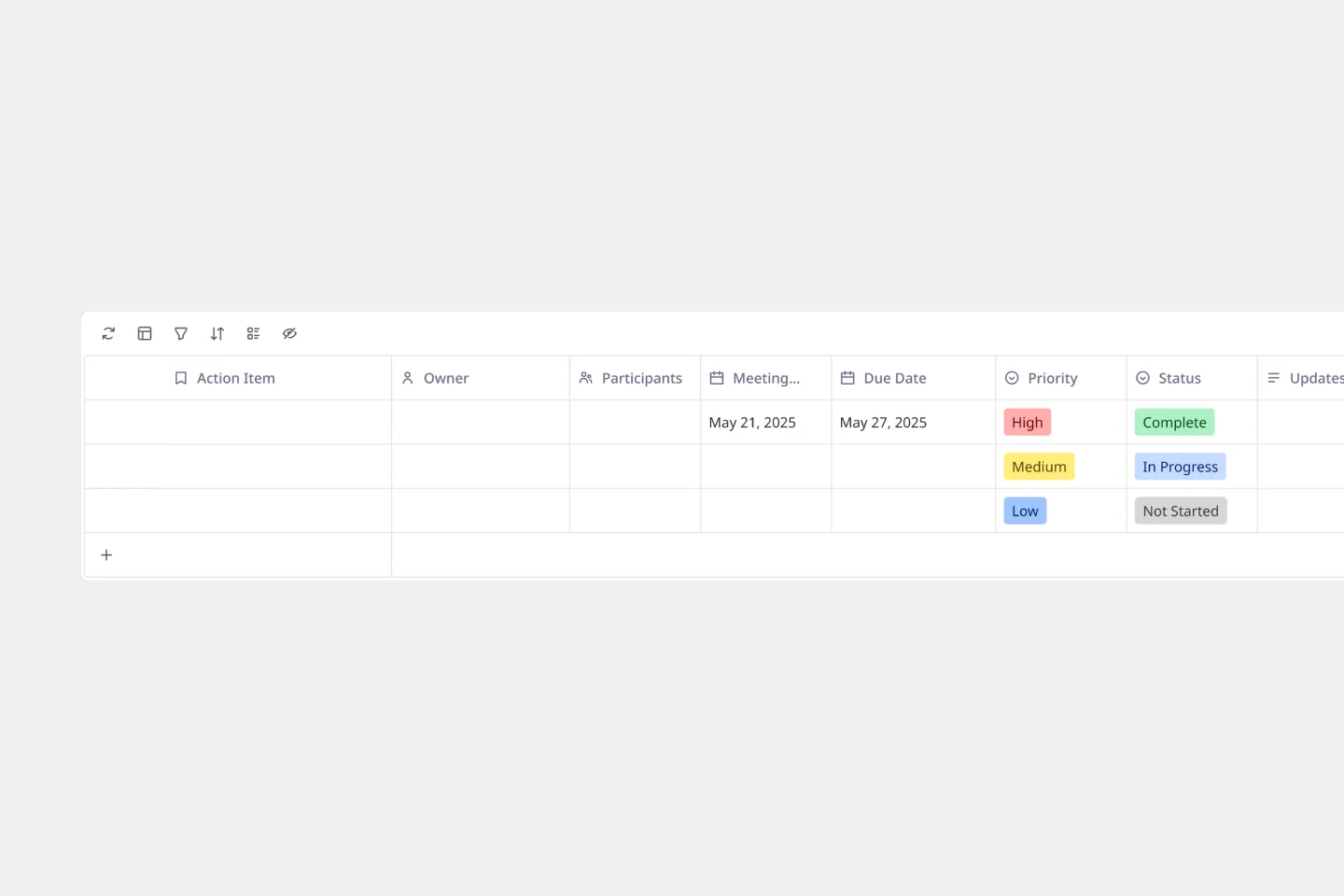
Ever walked out of a productive meeting only to watch great ideas disappear into the void? The Meeting Action Items template helps you capture decisions, assign clear ownership, and track progress—all in one visual workspace. Built with Miro Tables, this template turns your post-meeting chaos into organized accountability that actually drives results.
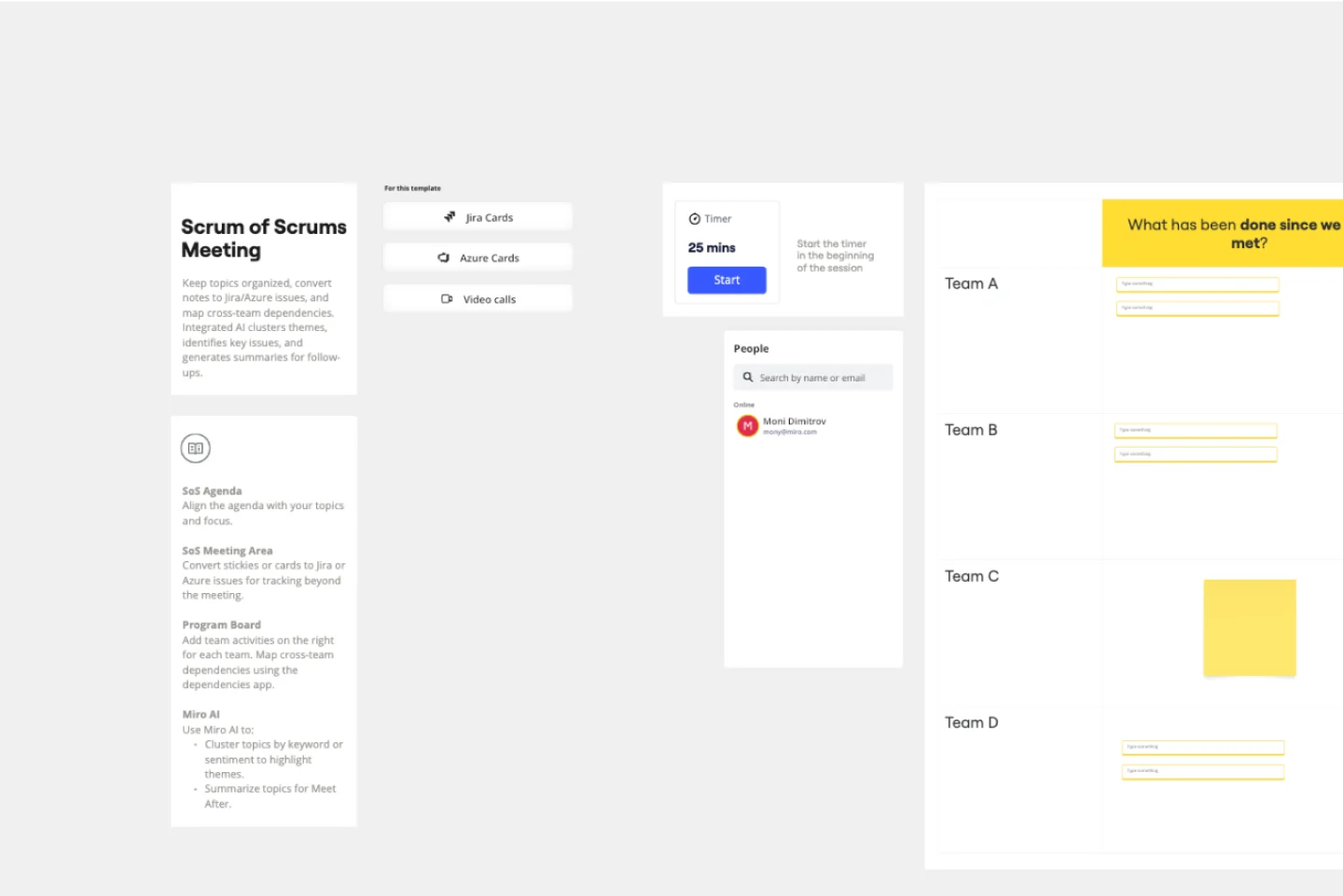
Scrum of Scrums Meeting SAFe Template
The Scrum of Scrums Meeting SAFe template helps teams coordinate and collaborate effectively across multiple Scrum teams. It includes sections such as the Program Board for visualizing progress and dependencies, SM Updates for team progress updates, Meet After for further discussion topics, Closing for confirming follow-up actions, SoS Agenda for outlining the meeting agenda, and SoS Meeting Area for conducting the main meeting and tracking issues. This template ensures organized, focused, and productive meetings, leading to better coordination and successful project outcomes.
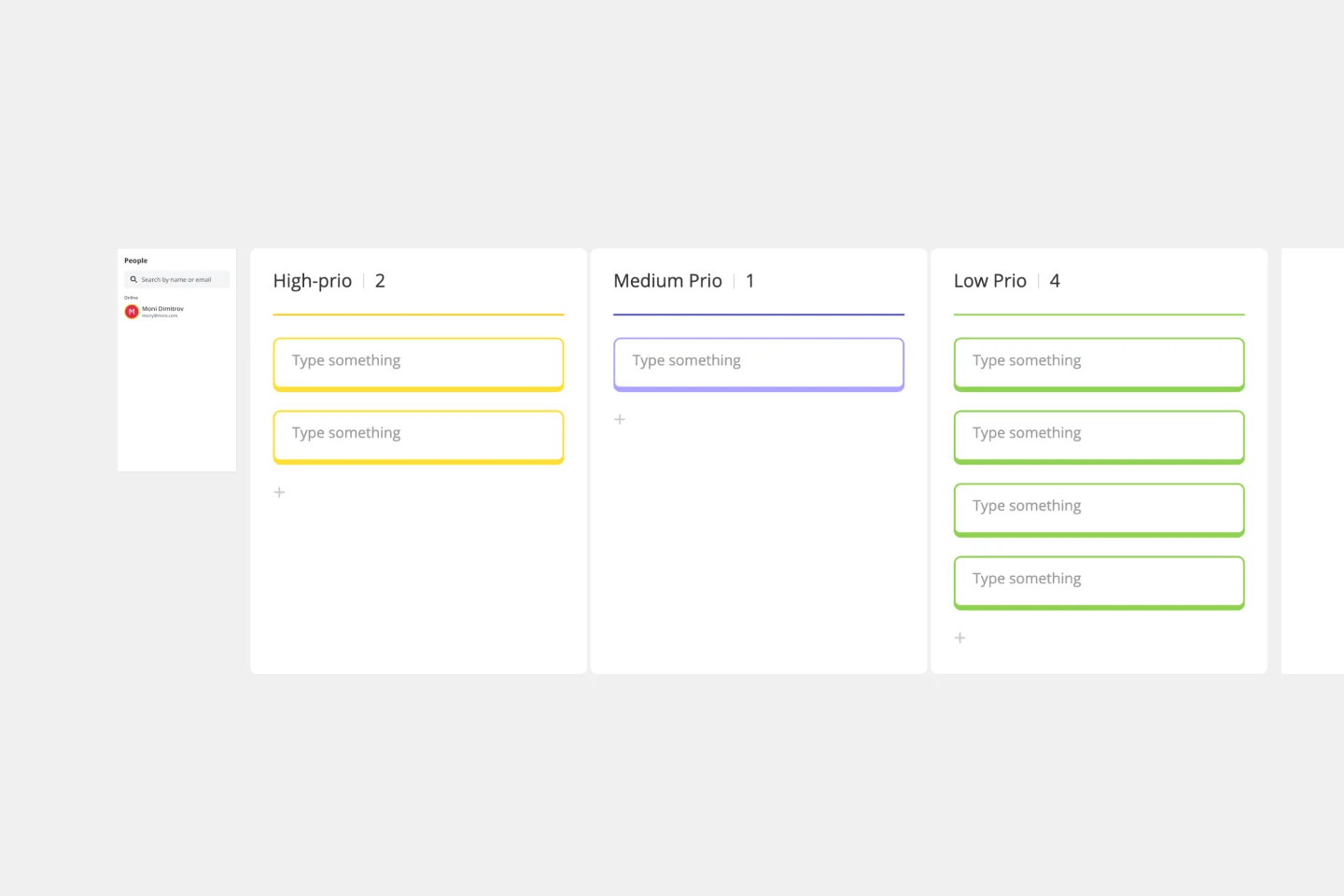
Daily Schedule Template
The Daily Schedule Template is a vital tool for managing daily routines efficiently. It helps plan and organize tasks, appointments, and priorities with great precision. Its adaptability allows users to allocate time efficiently, adjust schedules as per changing priorities, and navigate the day with ease. With this template, individuals can integrate daily activities with their broader goals, contributing meaningfully to their overall success.
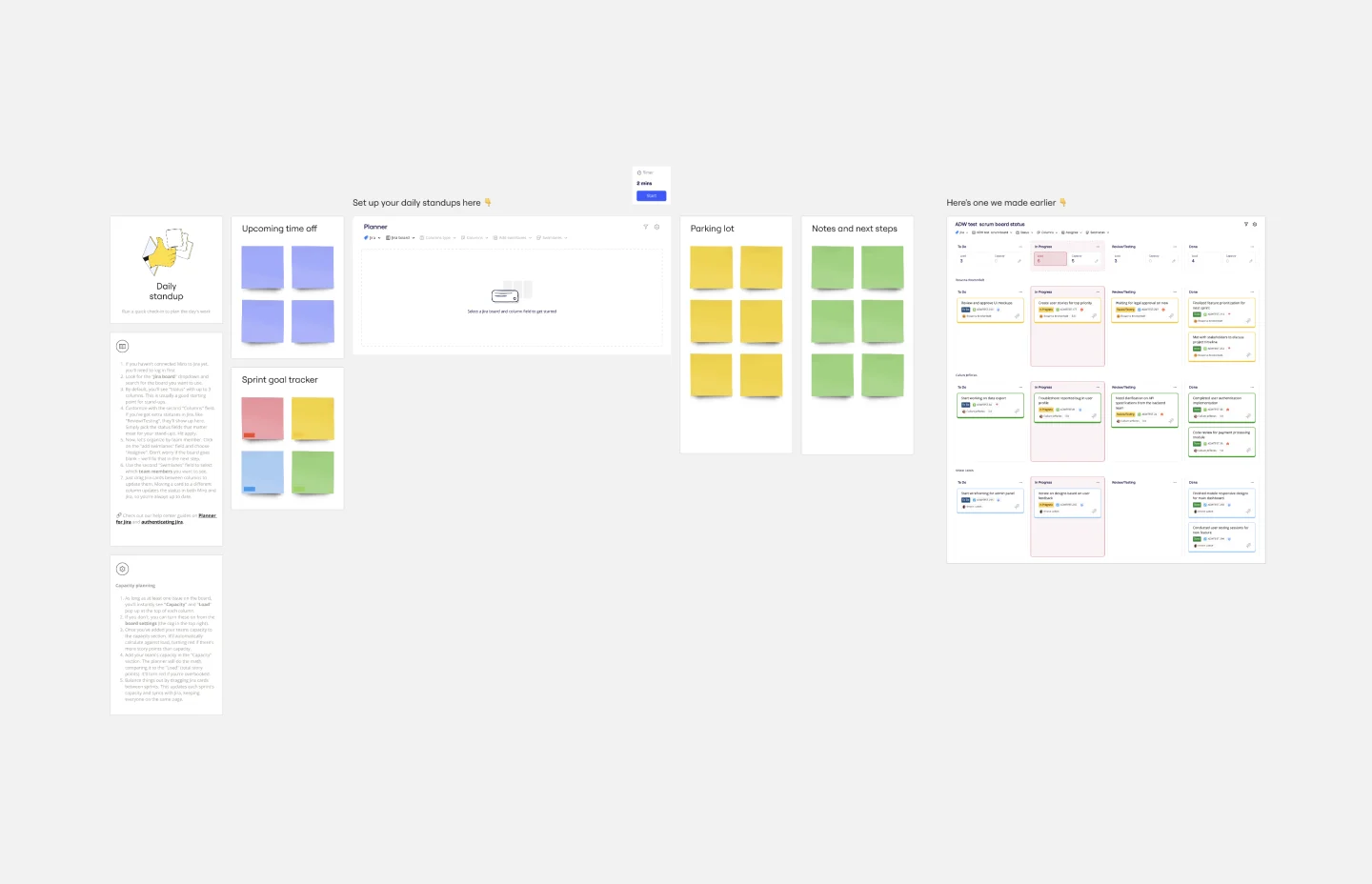
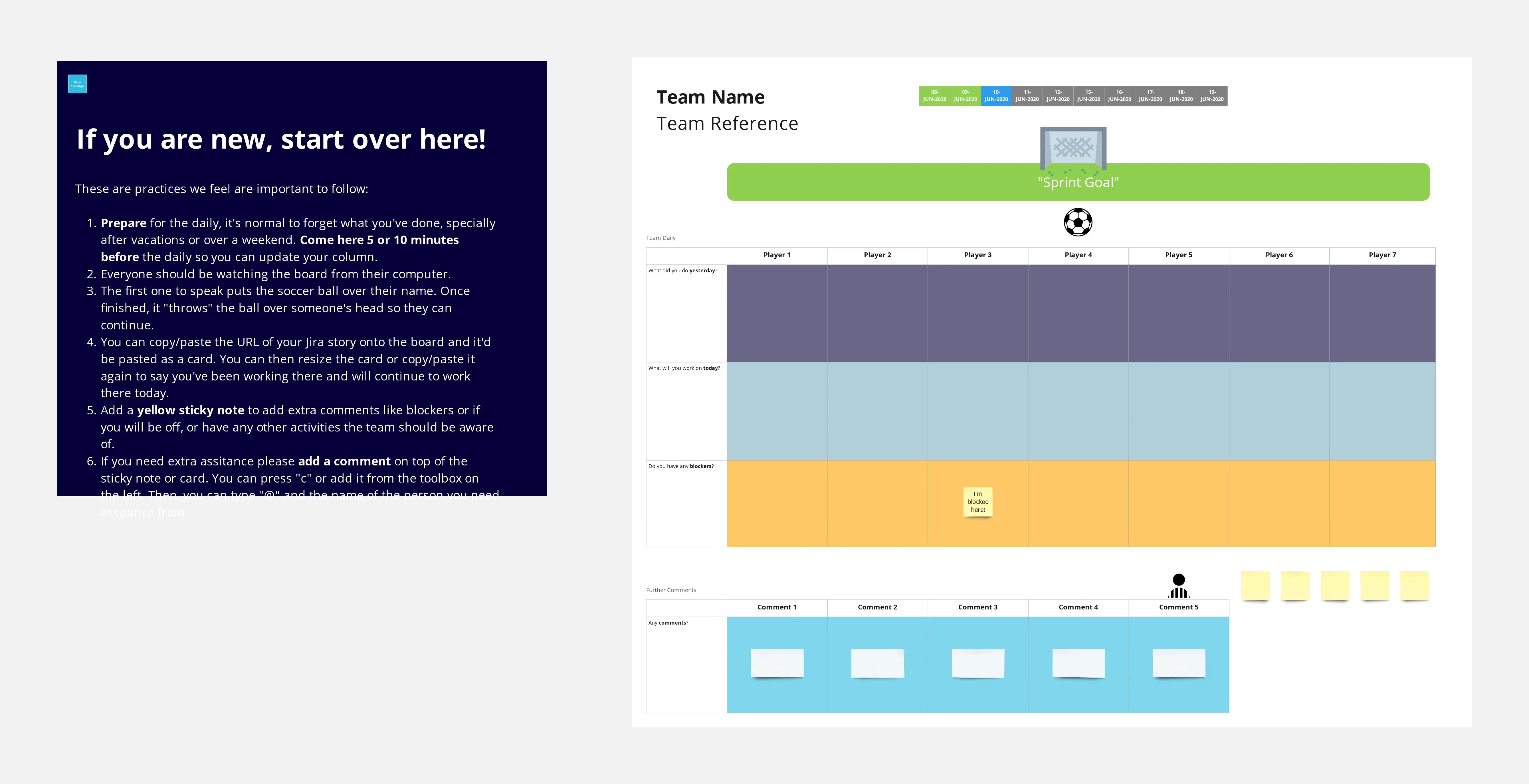
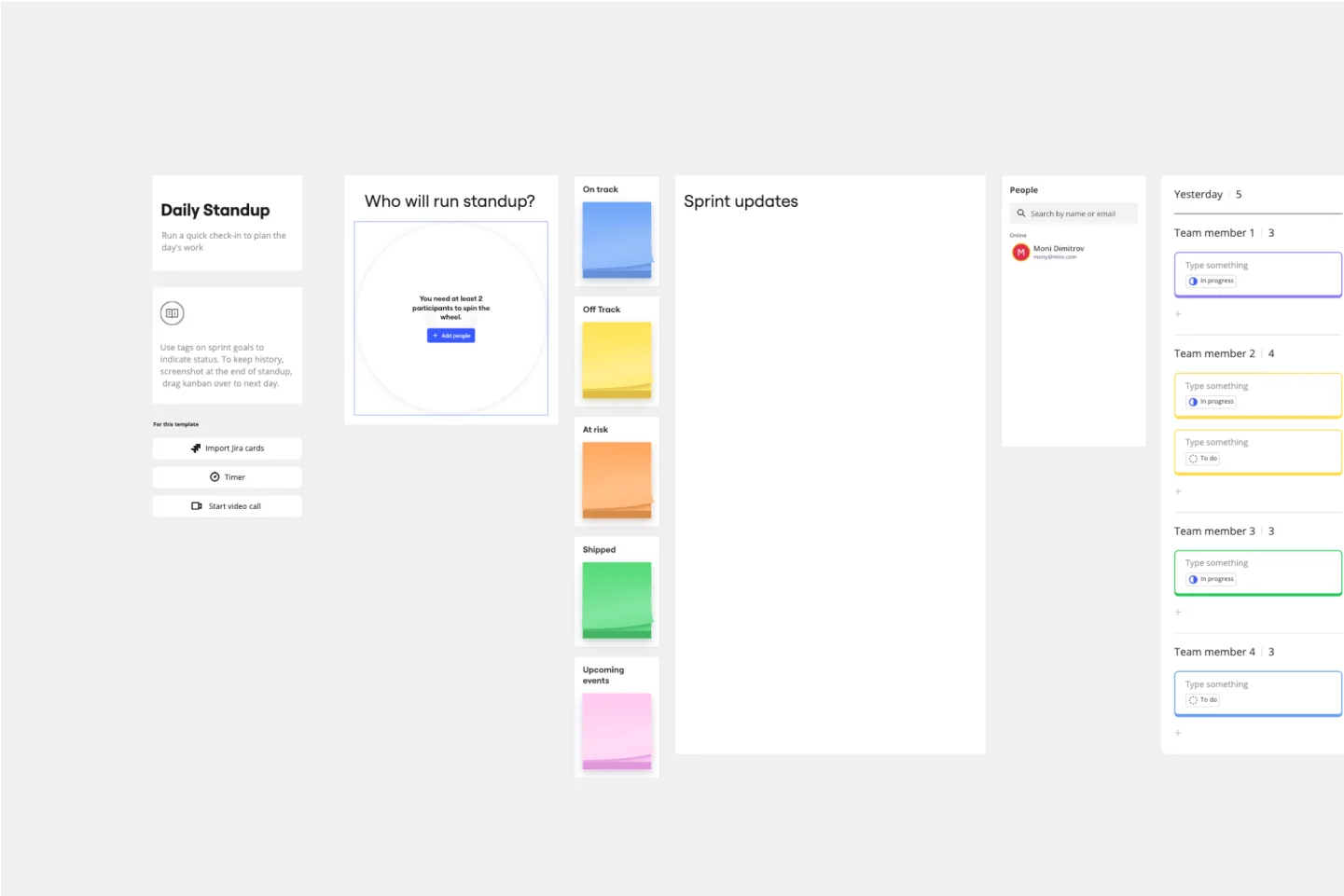
Daily Standup with Jira Template
The template is designed to improve team collaboration and streamline daily stand-up meetings by integrating Jira with Miro. This template transforms stand-ups into visual, interactive sessions, enabling teams to see real-time status updates and automatically sync changes with Jira. The key benefit of this template is its seamless integration, ensuring that all relevant information is centralized in one place. This fosters a more engaging and inclusive environment for team members, while also saving time and reducing the risk of miscommunication.
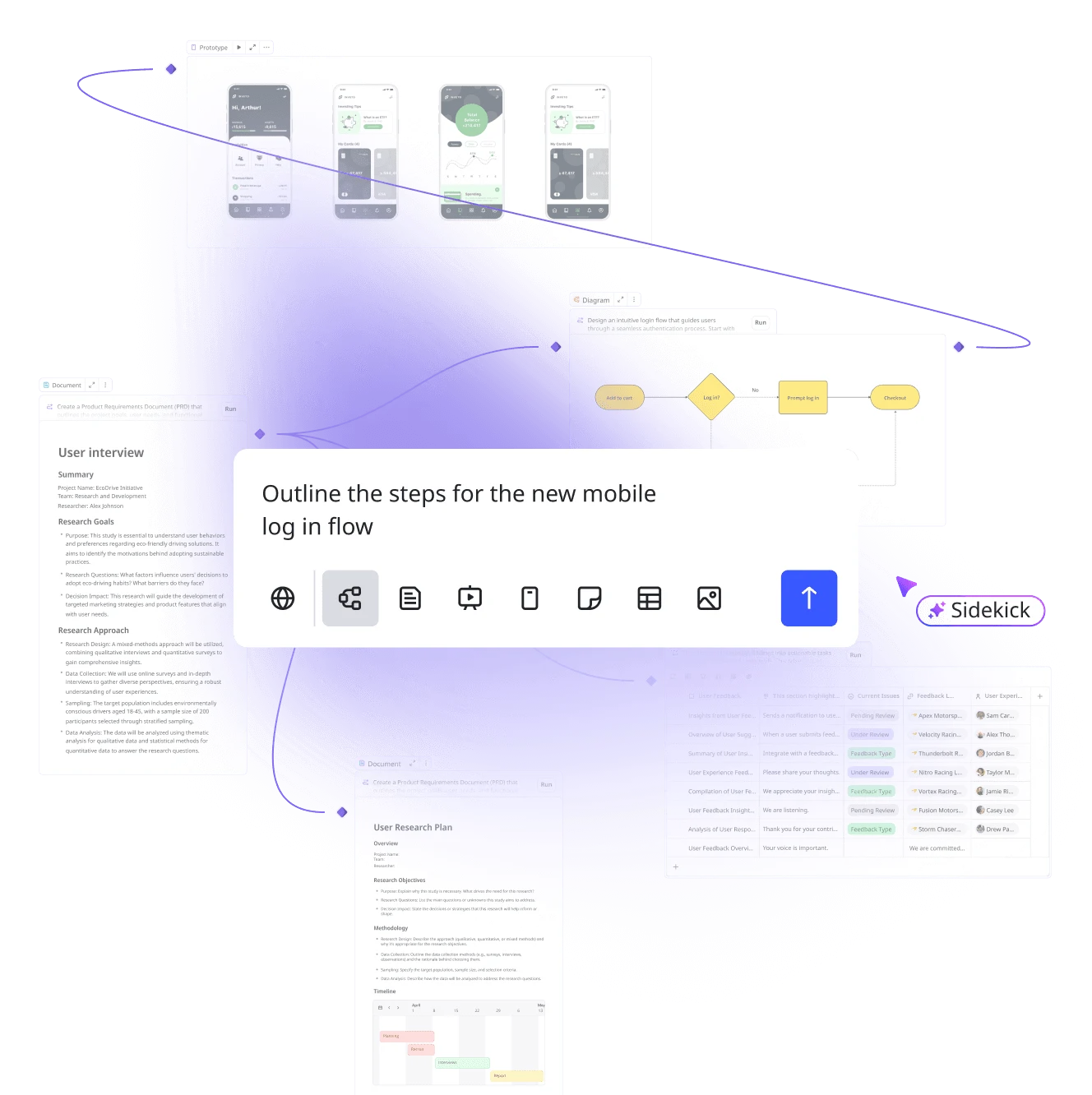
A daily standup template (also known as a Daily Scrum template) is a visual framework used by Agile teams to align on the next 24 hours of work. It is designed to be a time-boxed (usually 15-minute) ceremony where the team identifies blockers and synchronizes their efforts to meet the Sprint Goal. By using a shared Miro board, remote and hybrid teams can see the "Live State" of work, making the conversation focused on movement rather than just activity.
A professional daily standup template acts as the "Pulse" of the sprint. Every high-performance Miro board should include these five elements:
The Sprint Goal: A high-visibility statement of the team's objective for the current cycle.
The Burndown Chart: A visual indicator of whether the team is on track to finish the committed work.
Team Avatars: Small icons or photos used to "claim" tasks, showing exactly who is working on what at a glance.
WIP Limits: Numbers at the top of columns to prevent multitasking and bottlenecking.
The "16th Minute" List: A space to log topics that require a separate, smaller group discussion.
1. The "Walk the Board" Format (Flow-Focused)
Instead of going person-by-person, the team "Walks the Board" from right to left (from Done back to To Do).
How it works: The Scrum Master or a team member starts with the items closest to completion.
The Audit: This format identifies "stale" cards that have been in the Testing or Review column for too long. It shifts the focus from "What am I doing?" to "How do we get this item over the finish line?"
2. The "Blocker-First" Format (Urgency-Focused)
This format is designed for high-pressure environments or teams facing significant external dependencies.
How it works: The meeting starts with the Blocker Parking Lot. Anyone with a red flag on their task speaks first.
The Audit: By addressing impediments immediately, the team ensures that the most critical "stuck" work gets assigned a "solver" before the meeting ends. The rest of the standup is spent on the "Happy Path" tasks that are moving smoothly.
3. The "Goal-Oriented" Standup (Strategic-Focused)
Ideal for teams that tend to get lost in minor administrative tasks that don't contribute to the Sprint's success.
How it works: The Sprint Goal is read aloud at the start. Every update must explicitly state how the work contributes to that specific goal.
The Audit: If a team member realizes their tasks for the day don't align with the goal, the team can pivot their resources in real-time. It eliminates "Busy Work" and keeps the North Star visible.
Using Miro's daily standup templates is straightforward and can be broken down into a few simple steps:
Select a template: Start by choosing a daily standup template. You can find templates specifically designed for scrum daily standup meetings, agile daily standup, and more.
Customize the template: Once you've selected a template, customize it to fit your team's needs. Add sections for high-priority tasks, blockers, and any other relevant information.
Invite team members: Share the template with your team members. Miro's collaborative platform allows everyone to access and edit the template in real time.
Conduct the standup: During the meeting, each team member can update their status directly on the template. This ensures that everyone is on the same page and can see the progress and blockers at a glance.
Follow-up: After the standup, use the team standup template to track any follow-up actions or discussions. This helps in maintaining continuity and ensuring that any issues raised are addressed promptly.
How do I organize my daily stand-up?
You can gather your high-priority tasks and share them with your team. Do mention if you have any problems or blockers completing them. If you want, you can take notes about other projects that might affect you or simply consult the daily stand-up meeting template later on. As this is a daily review practice, make sure not to spend too much time preparing for this meeting. The standup meeting format is supposed to be dynamic and just a regular check-in for teams.
What does a good standup meeting look like in practice?
A good standup meeting is short (15 minutes or less), starts on time, sticks to the three key questions, promotes active listening and interaction, ensures transparency, and is facilitated to keep the focus. If in doubt, check one of our daily check-in templates to run your remote team standup.
Is the Daily Standup just Micromanagement?
If a standup feels like micromanagement, it is being done incorrectly. In a true Agile environment, the Daily Standup is a peer-to-peer synchronization, not a report to a boss. A healthy standup results in "Swarming" where teammates offer to help one another finish a task that is stuck.
How are standups different from other meetings?
Standups differ from other meetings in their frequency (daily), duration (short), purpose (syncing up the team and identifying blockers), format (three-question format), and attendance (mostly the executing team).
What questions should I ask in a standup meeting?
Successful standup meetings rely on asking the right questions and concentrating on progress, obstacles, and teamwork. For team progress tracking, ask: "What did you accomplish yesterday/since the last standup?", "What are you working on today?", and "What are your top priorities?" To uncover roadblocks, ask: "What obstacles are you facing?", "Is anything blocking your progress?", and "Do you need any help from the team?" Finally, for collaboration, ask: "Is there anything you need from other team members?", "Are there any dependencies that might impact others?", and "Do you see any potential roadblocks for the team?" These questions help the team stay aligned, identify issues quickly, and foster a problem-solving environment.
Remember to keep standups concise, focusing on action and moving detailed discussions offline. Encourage team members to be brief and to the point. Optional questions like "What are your learnings?" or "How can we improve our process?" can be helpful depending on your team's needs. By asking the right questions, your standups will be productive, efficient, and contribute to a successful sprint and your Agile workflow optimization.