1K likes
6.4K uses
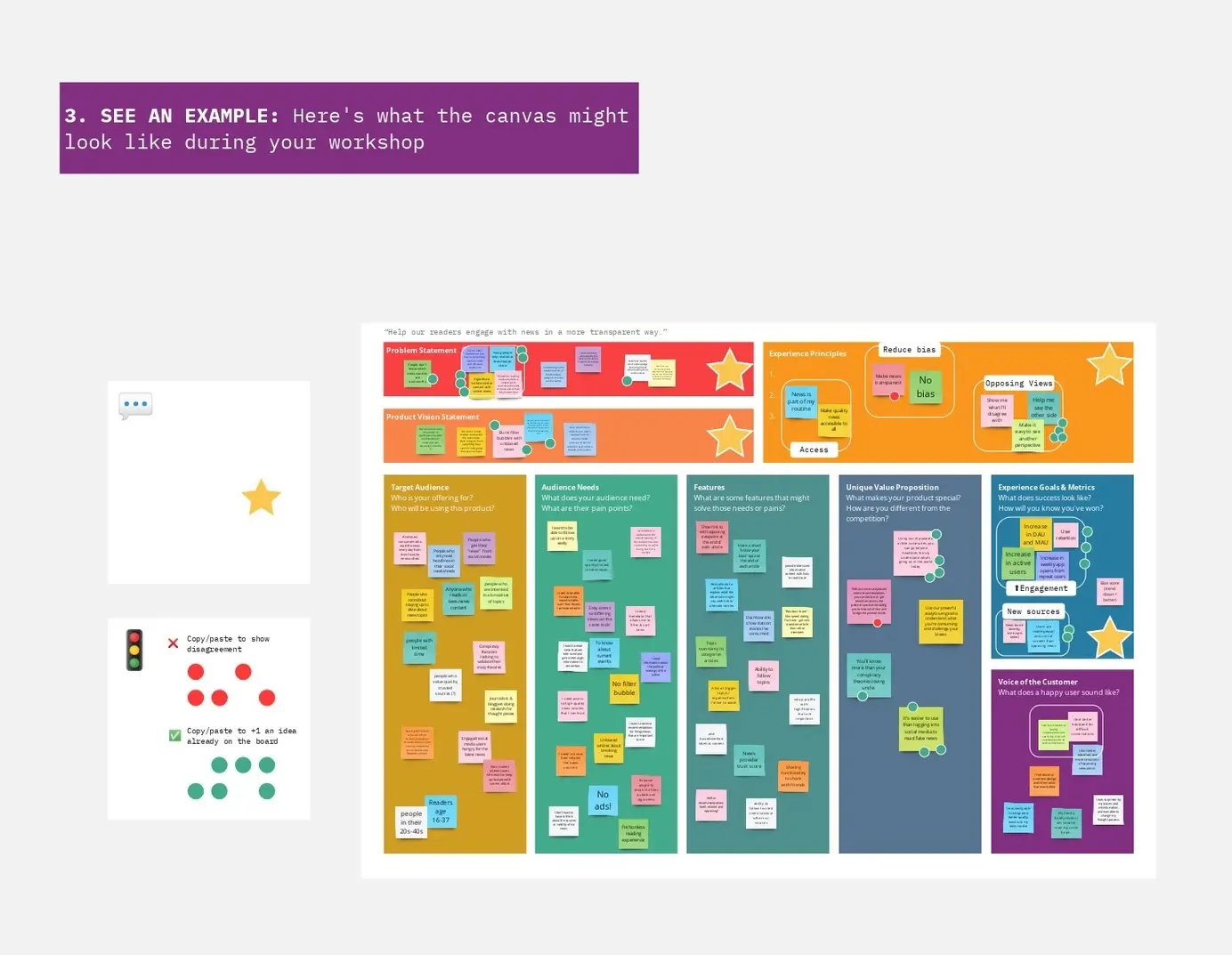
Define your 'North Star' and inspire your organization. The Product Vision template helps you articulate a bold, long-term mission that aligns stakeholders and acts as a strategic guide for every feature you build.
11 templates
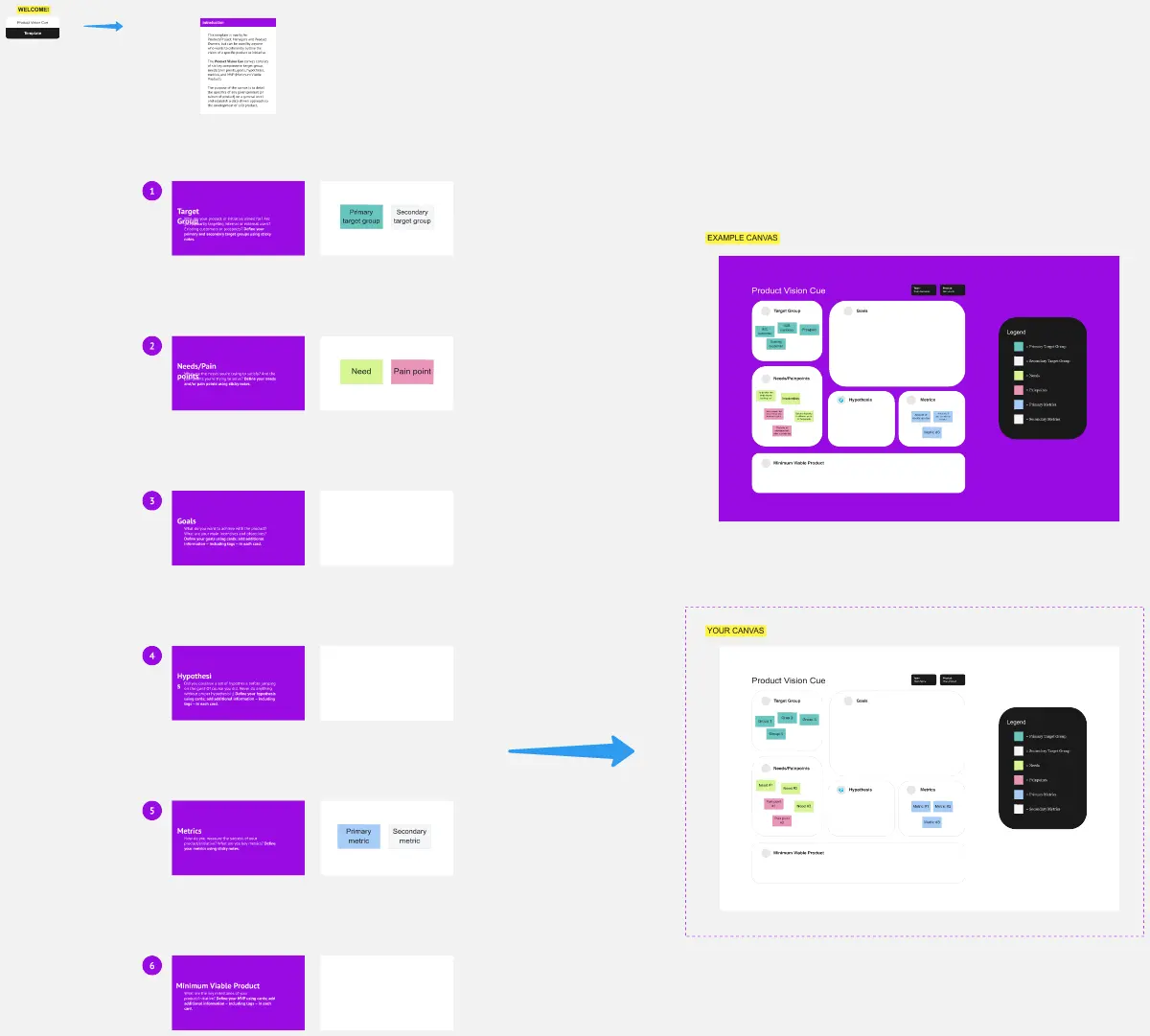
Product Vision Canvas
Bring value to your users and develop better products using this Product Vision Template. Help teams craft a killer product vision statement and improve your business and customer experience.
Product Vision
The Product Vision template helps articulate a clear and compelling vision for product development. By defining goals, target markets, and success metrics, this template aligns teams around a shared vision. With sections for outlining product features, benefits, and competitive advantages, it communicates the value proposition effectively. This template serves as a guiding light for product teams, inspiring creativity and focus as they work towards bringing the product vision to life and achieving business objectives.
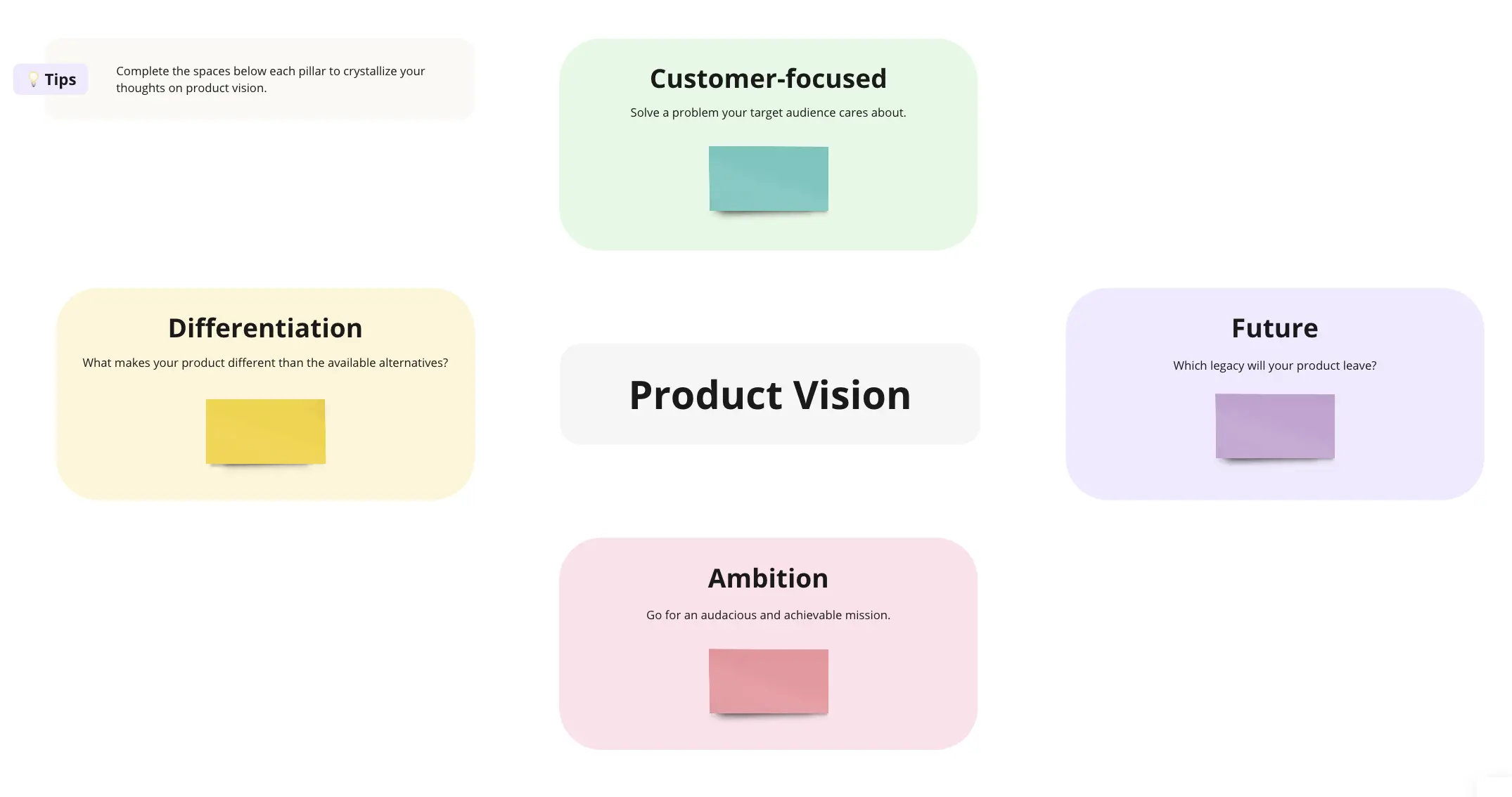
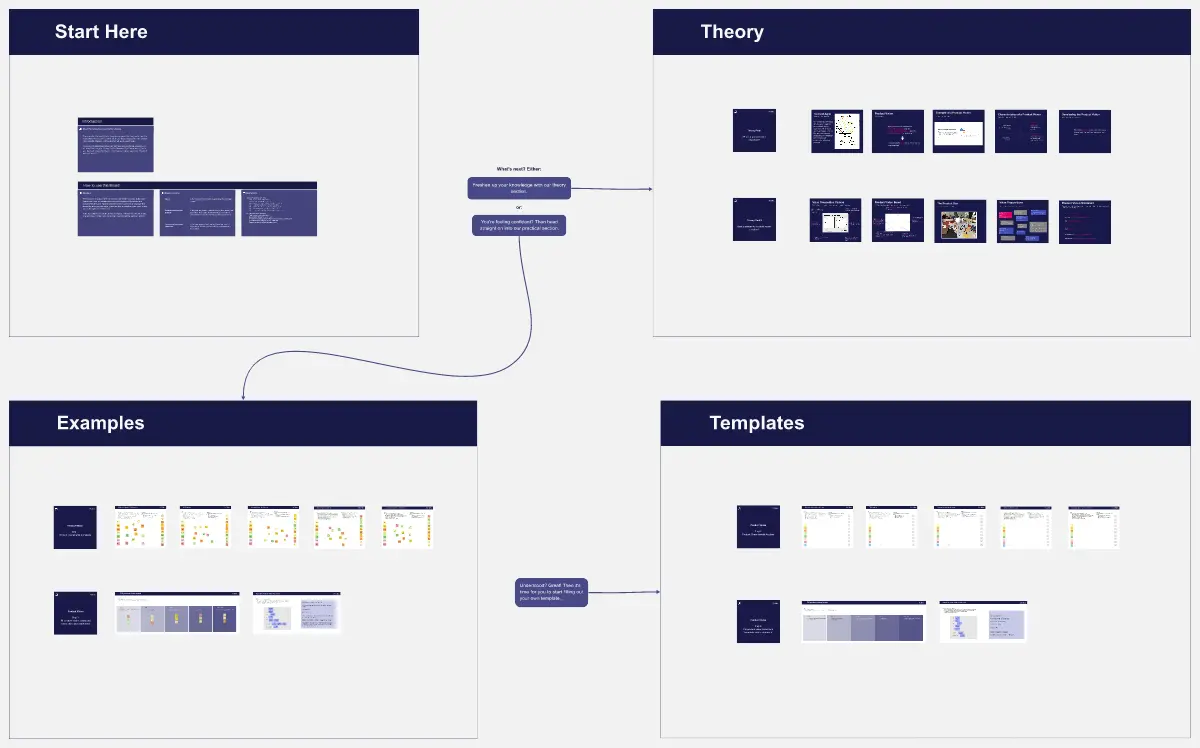
Product Vision & Differentiation Strategy Template
The Product Vision & Differentiation Strategy Template assists product managers in crafting compelling product visions and differentiation strategies. By articulating product goals, unique value propositions, and competitive advantages, this template guides strategic planning and execution. With sections for defining target markets and assessing market dynamics, it enables product managers to create differentiated products that resonate with customers. This template serves as a roadmap for achieving market leadership and sustainable growth through product innovation.
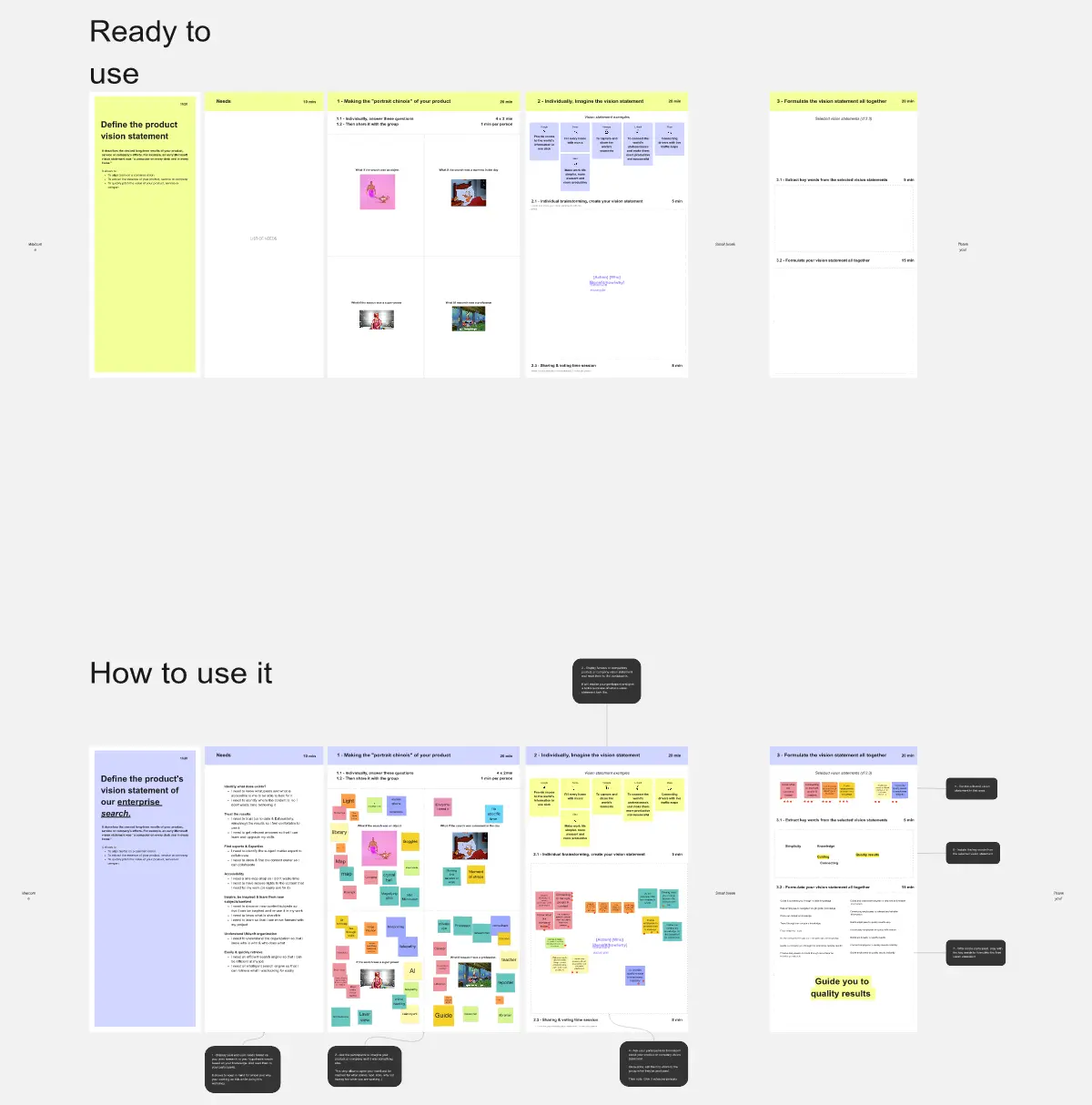
Product Vision Statement
The Product Vision Statement template helps product teams articulate clear and inspiring visions for product development. By defining long-term goals, market aspirations, and customer value propositions, this template aligns teams around a shared vision for success. With sections for outlining strategic objectives, guiding principles, and success metrics, it provides clarity and direction for product development efforts. This template serves as a compass for product teams, guiding them towards meaningful outcomes and driving innovation and growth.
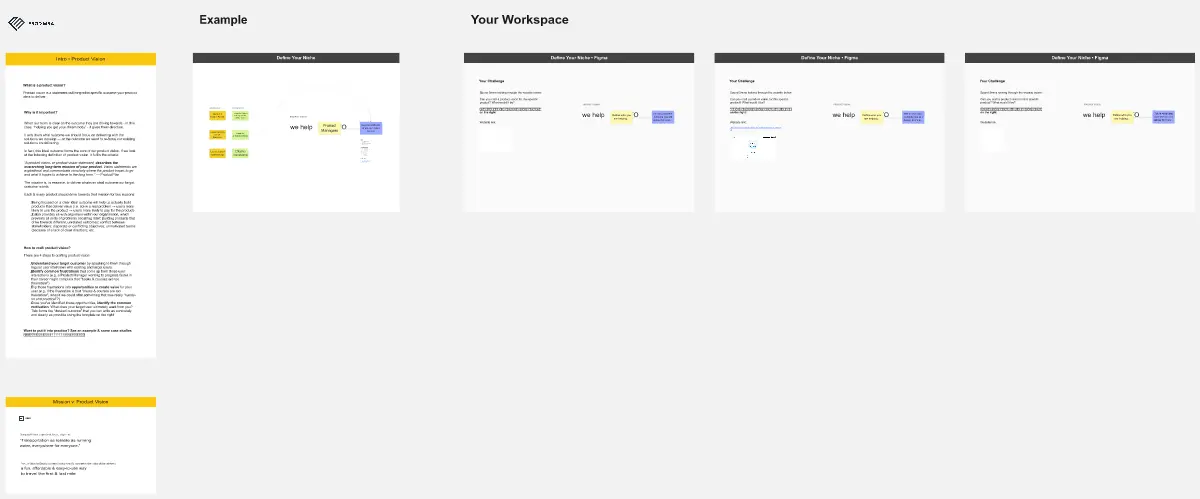
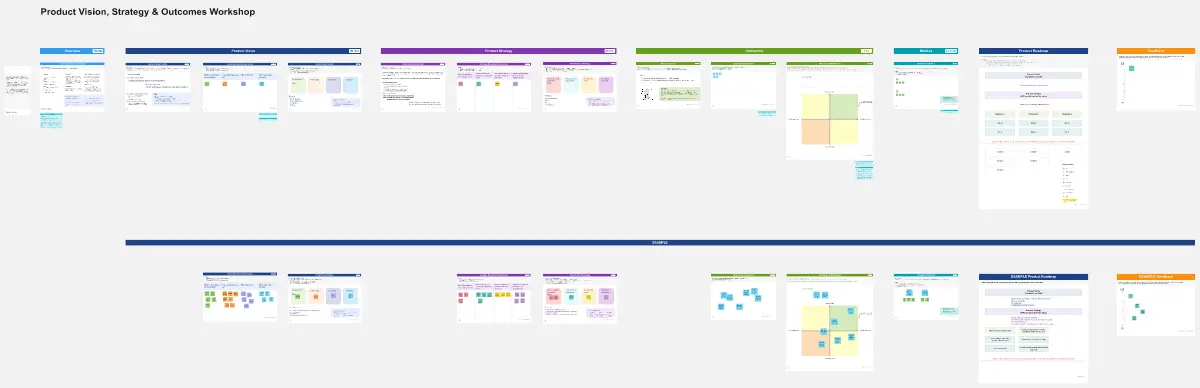
Define A Winning Product Vision
The Define A Winning Product Vision template assists product teams in articulating compelling visions for product development. By defining goals, target markets, and differentiation strategies, this template aligns teams around a shared vision for success. With sections for outlining product features, benefits, and value propositions, it communicates the essence of the product effectively. This template serves as a guiding light for product development efforts, inspiring creativity and focus as teams work towards bringing the product vision to life.

A product vision template is a foundational framework used to define the long-term "Why" behind a product. It describes the world as it will exist once your product has succeeded—usually looking 2–5 years into the future. It serves as the ultimate alignment tool for stakeholders, designers, and engineers, ensuring that every feature built is a step toward a singular, ambitious destination rather than a random collection of requests.
A vision statement is only effective if it inspires action and narrows focus. Before finalizing your Miro board, apply these three expert "health checks":
1. The "Aspirational vs. Attainable" Audit
The Audit: Is your vision so realistic that it’s boring, or so "lofty" that it’s literally impossible? The Fix: Audit your Stretch. A professional vision should feel slightly out of reach today but technically possible tomorrow. If your vision is "To be the #1 CRM," you’ve written a business goal, not a vision. If it’s "To eliminate all human error in sales," you’ve found an aspirational North Star that drives innovation.
2. The "Negative Space" Test
The Audit: Does your vision allow you to say "No" to a profitable but off-brand feature request? The Fix: Audit for Exclusionary Logic. A strong vision defines what you won't do just as much as what you will do. Use your template to list "Non-Goals." If your vision is too broad to help you reject a feature, it isn't a vision—it's a platitude.
3. The "Outcome vs. Output" Audit
The Audit: Does your vision mention a specific technology (e.g., "An AI-powered app")? The Fix: Audit for Solution Agnostic language. Technology changes; the human problem usually doesn't. A professional product vision focuses on the Change in the User’s Life, not the tool used to get there. Focus on the Outcome (e.g., "Instant global communication") rather than the Output (e.g., "A messaging platform").
Select the Miro template that matches your team’s communication style:
The Moore’s Vision Statement (The "Mad Libs" Style):
Best For: Quick alignment and executive summaries.
The Format:For (Target Customer) who (Statement of Need), the (Product Name) is a (Product Category) that (Key Benefit).
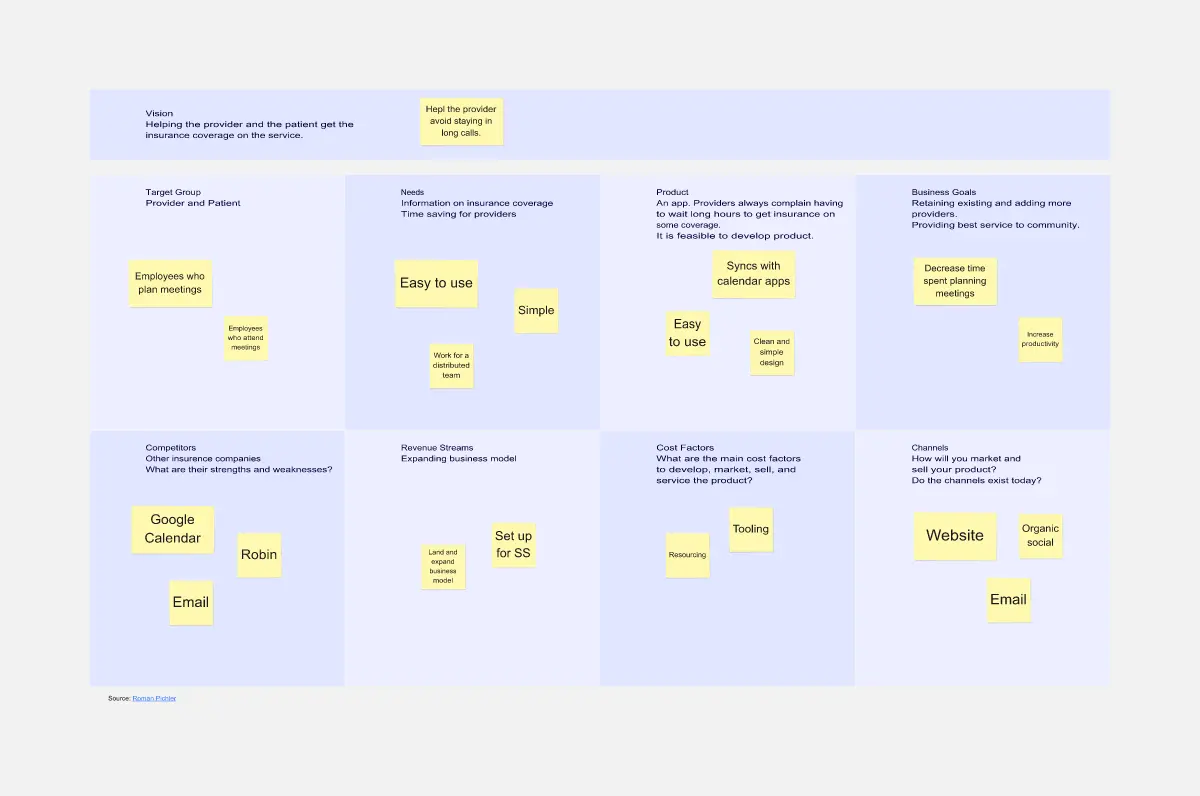
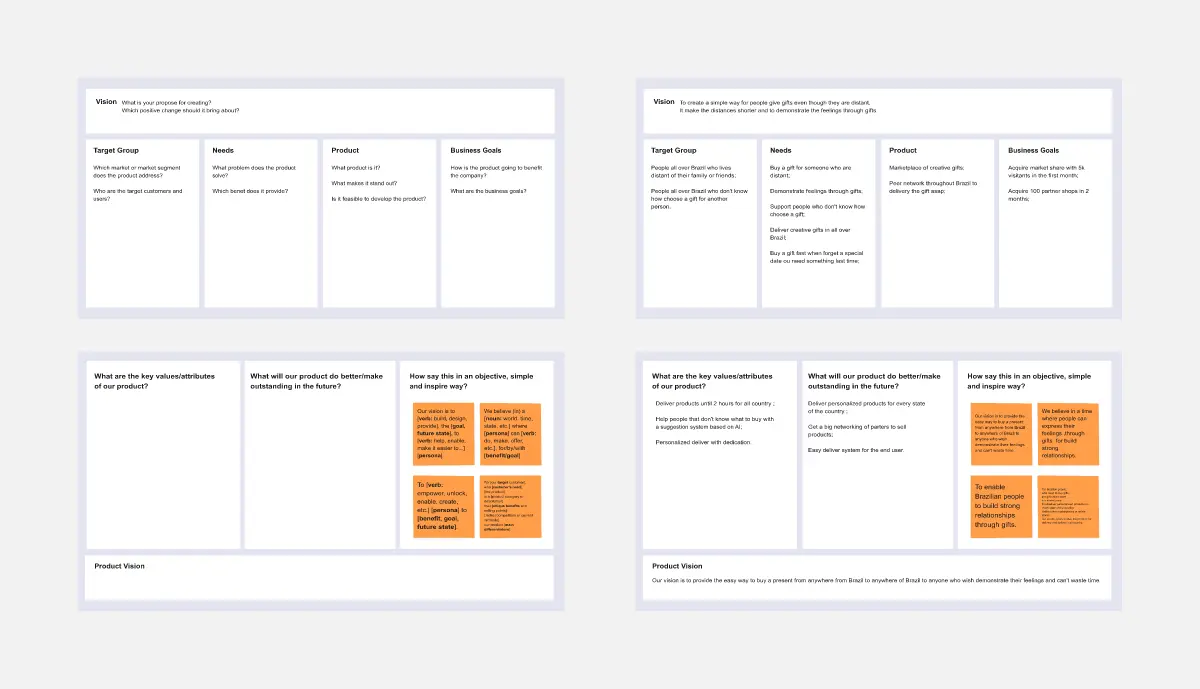
The Product Vision Board (Roman Pichler):
Best For: Cross-functional teams (Product, UX, Tech).
The Goal: To capture the Target Group, Needs, Product Features, and Business Goals in one visual grid.
The "Amazon Press Release" Method:
Best For: Deeply customer-centric organizations.
The Goal: To write a mock press release from the future, describing the product's launch and customer testimonials before a single line of code is written.
A high-performance Miro board for Product Vision requires these five core elements:
The Customer Persona: A clear definition of who we are winning for.
The "Current Pain" Gallery: Images or quotes representing the struggle the user faces today.
The Value Proposition: The primary "Superpower" the product gives the user.
The Competitive Differentiator: Why the world needs this product instead of the existing alternatives.
The "Success Scene": A visual or narrative description of the user's life after using the product for a year.
Confusing Vision with Strategy: Vision is the Destination; Strategy is the Route.
The Fix: Keep the vision board high-level. Don't let "How we get there" clutter the "Where we are going."
The "Committee" Vision: Trying to include every stakeholder's favorite buzzword until the statement is 50 words long and unreadable.
The Fix: Use a Word Count Limit. If you can't explain the vision in a single breath, it won't be remembered.