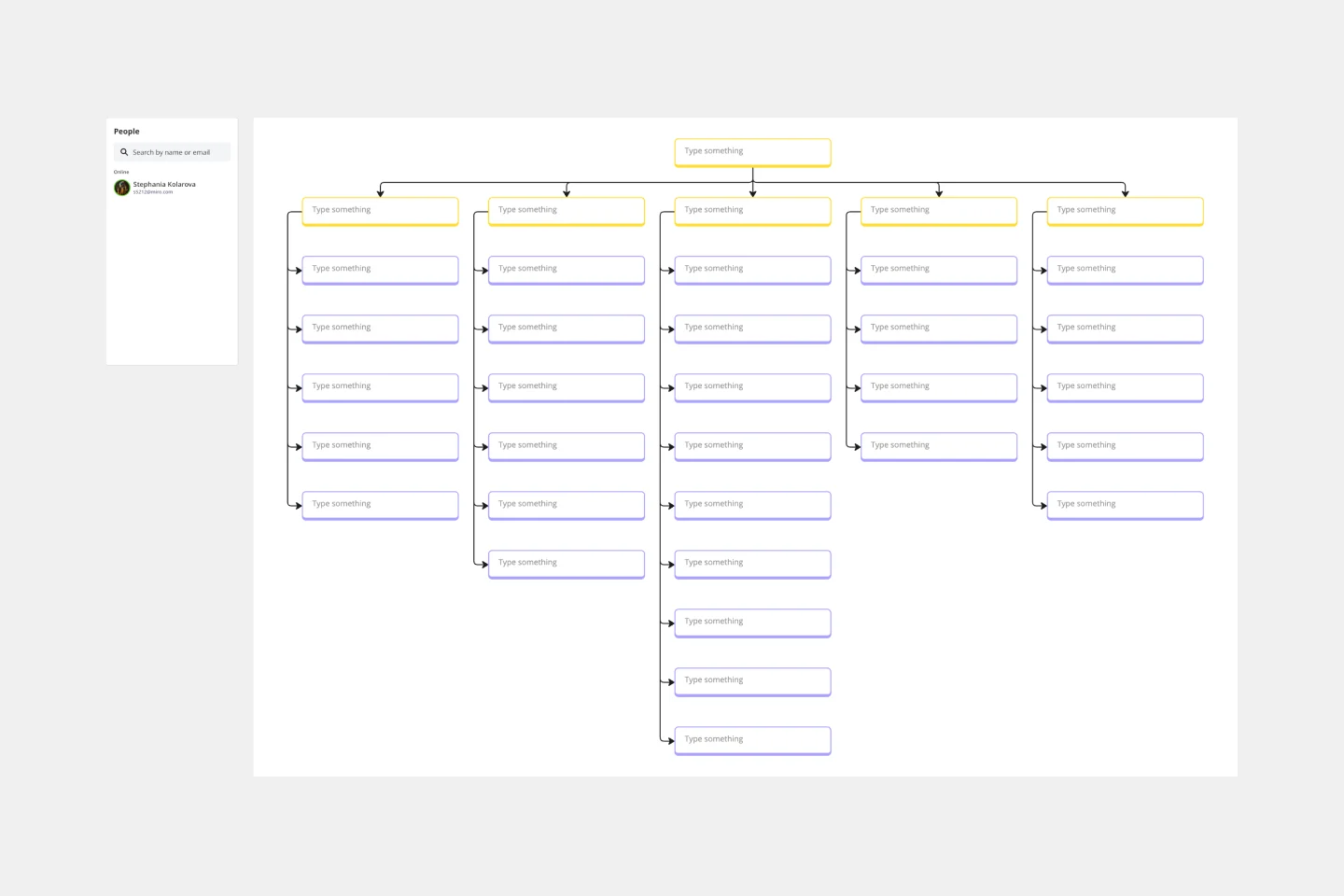
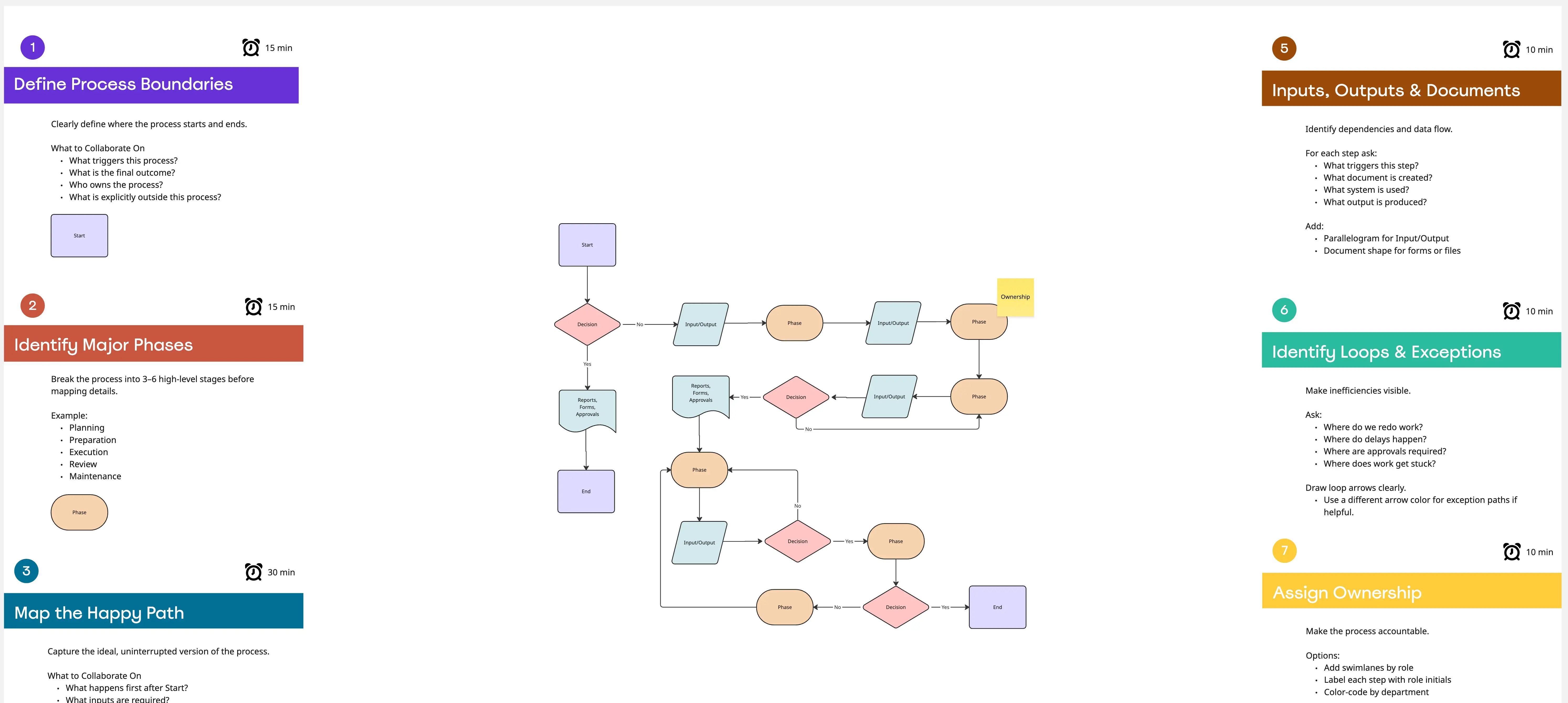
What is the Work Breakdown Structure for Company Project Workshop?
A 60–90 minute working session to break a company project into clear deliverables, components, and tasks so teams can plan more effectively, allocate resources, and track progress with better visibility.
What problem does this solve?
Company projects feel too large or vague to plan confidently
Tasks are not clearly tied to deliverables or project phases
Stakeholders lack a shared view of scope, timeline, and ownership
Project planning becomes harder when work is not broken into manageable parts
How to use
Define the project outcome, scope boundaries, and key constraints (10m)
Identify the major deliverables or project phases (15m)
Break each deliverable into smaller components (20m)
Add task-level detail where more planning clarity is needed (20m)
Review the structure for gaps, overlap, and logic issues (15m)
Add owners or planning notes and finalize the reusable format (10m)
Common pitfalls
Breaking the work down too far, mixing phases and deliverables, listing activities with no clear structure, and building the WBS without agreed scope boundaries.
Ways to avoid mistakes
Start with the final project outcome, keep the top level focused on major deliverables, stop once tasks are clear enough to manage, and review the chart with stakeholders before using it for planning.
Miro Features You Can Use
Shapes for the WBS hierarchy, Connectors to show parent-child relationships, Sticky Notes for deliverables and tasks, Tags for owner or status, Colors to separate project phases, Comments for planning questions, Timer to guide the workshop.
FAQs
Q: Who can benefit from this template?
A: Project managers, operations teams, founders, department leads, PMO teams, and any group planning a company-wide or cross-functional project.
Q: Does it work for virtual and in-person sessions?
A: Yes. Teams can build the WBS directly in Miro, or project the board in a room and update it together live.
Q: What do I leave with?
A: A clear Work Breakdown Structure for the project, better visibility into scope and task groupings, and a reusable planning structure for execution and stakeholder alignment.