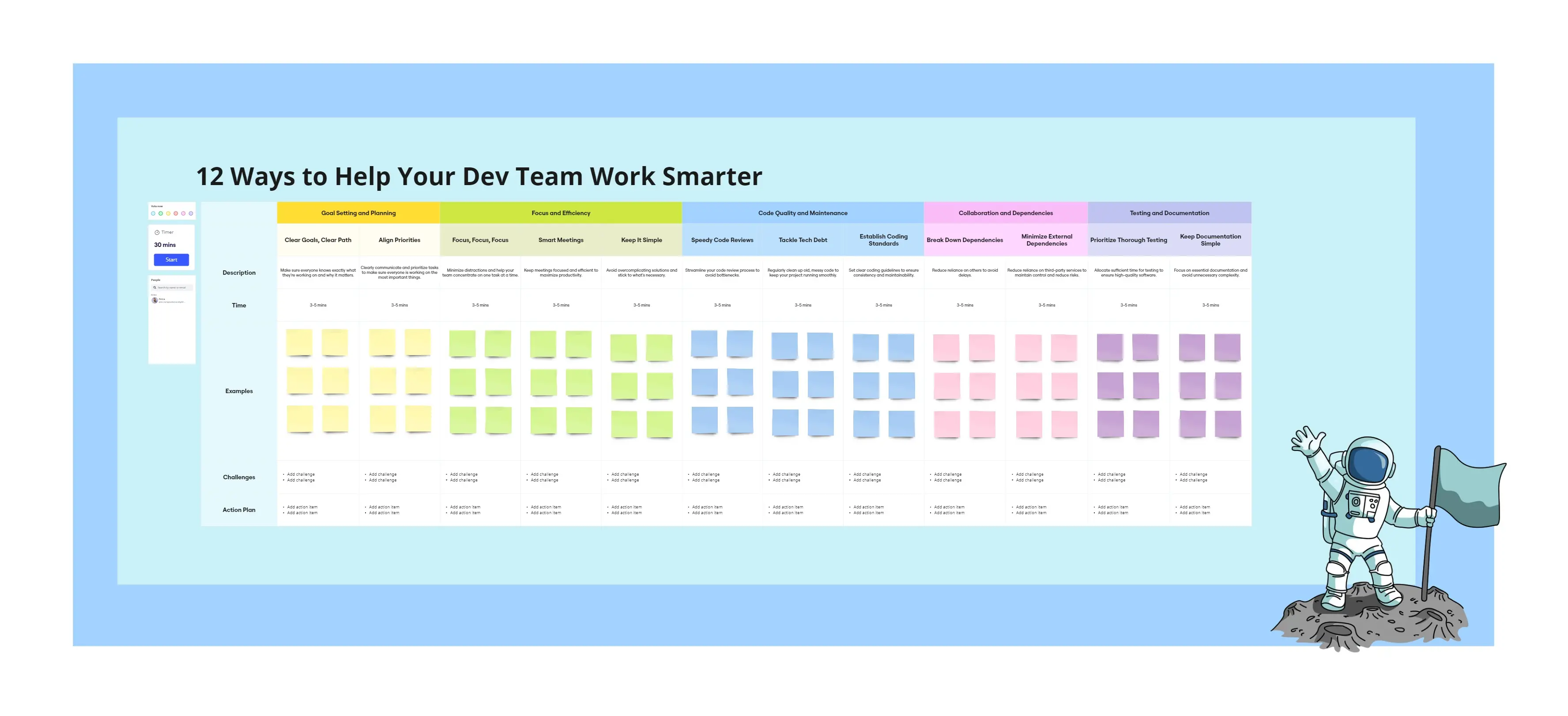
What is a Ways of Working Template?
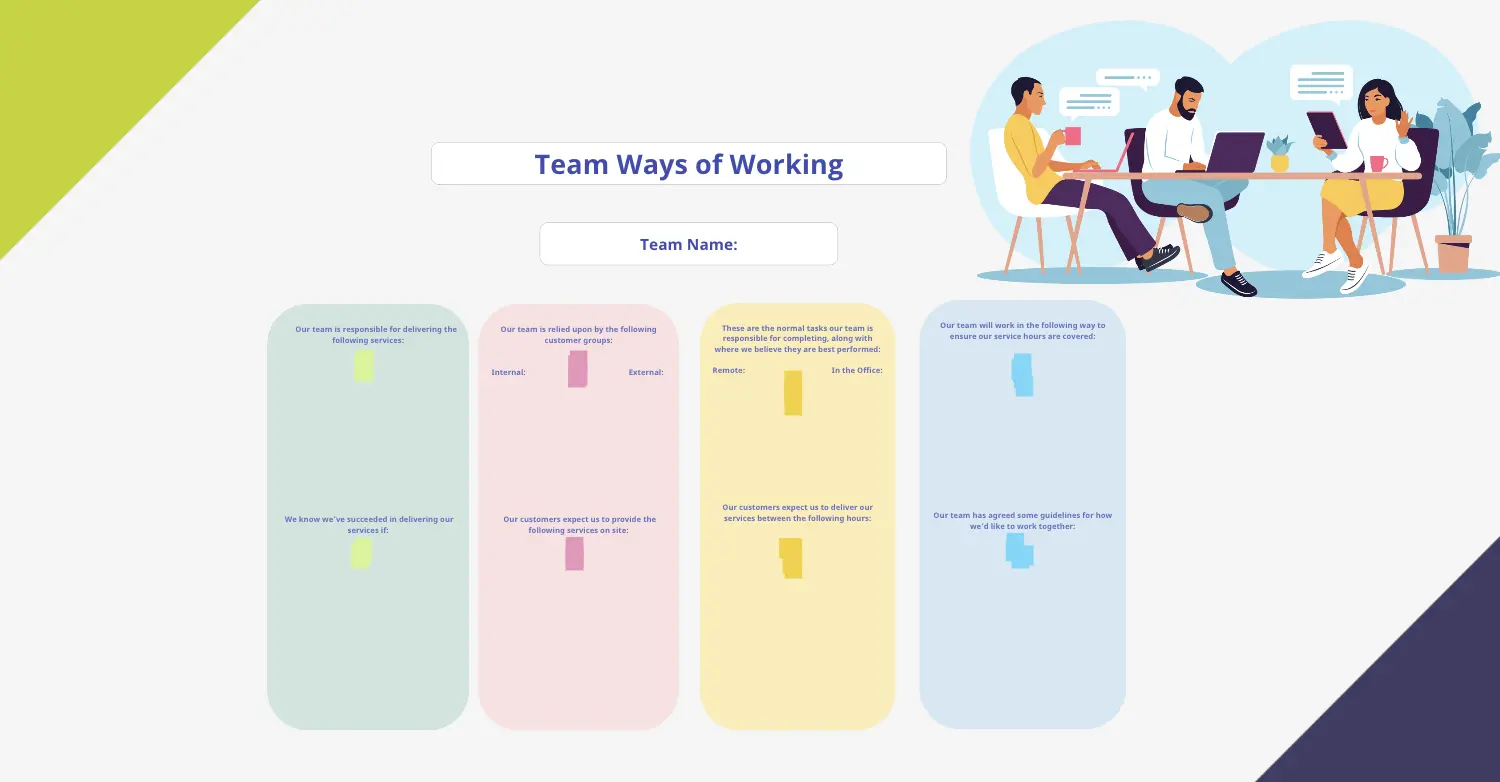
A Ways of Working (WoW) template is a collaborative framework used to align a team on their shared values, tools, and processes. It moves a group from "accidental habits" to "intentional design." Whether you are a new remote startup or an established enterprise department, a WoW document acts as the "Team Manual" that reduces friction, prevents burnout, and ensures everyone knows exactly how to contribute their best work.
The "Operational" Audit: 3 Ways to Design a High-Trust Culture
Culture is what happens when you aren't looking. Before finalizing your WoW board on Miro, apply these three expert "health checks":
1. The "Asynchronous-First" Audit
The Audit: Is your WoW template centered around "Meetings" as the default for every decision? The Fix: Audit for Communication Scalability. A professional WoW must define "The Hierarchy of Urgency." * Deep Work: No-meeting blocks.
Asynchronous: Updates via Slack, Notion, or Loom.
Synchronous: Meetings only for complex debates or social bonding. If your template doesn't define when not to have a meeting, you are designing for "Presence," not "Productivity."
2. The "Decision Rights" Test
The Audit: Does your team constantly wait for "The Boss" to approve minor tasks? The Fix: Audit for Autonomy. Use a DACI (Driver, Approver, Contributor, Informed) or RACI matrix within your WoW. Clearly define who has the "Right to Decide" on specific topics. This prevents the "Consensus Trap" where nothing gets done because everyone is waiting for everyone else.
3. The "Conflict Protocol" Guardrail
The Audit: Does your WoW assume that everyone will always agree? The Fix: Audit for Psychological Safety. A professional WoW includes a "How We Disagree" section. Define the process for escalating a debate (e.g., "Disagree and Commit" or "Third-party Mediation"). Having a pre-defined "Rules of Engagement" for conflict makes it less personal and more productive.
Strategic Frameworks: Which WoW Template Do You Need?
Select the Miro template that matches your team’s "Lifecycle Stage":
Key Components of a Ways of Working Template
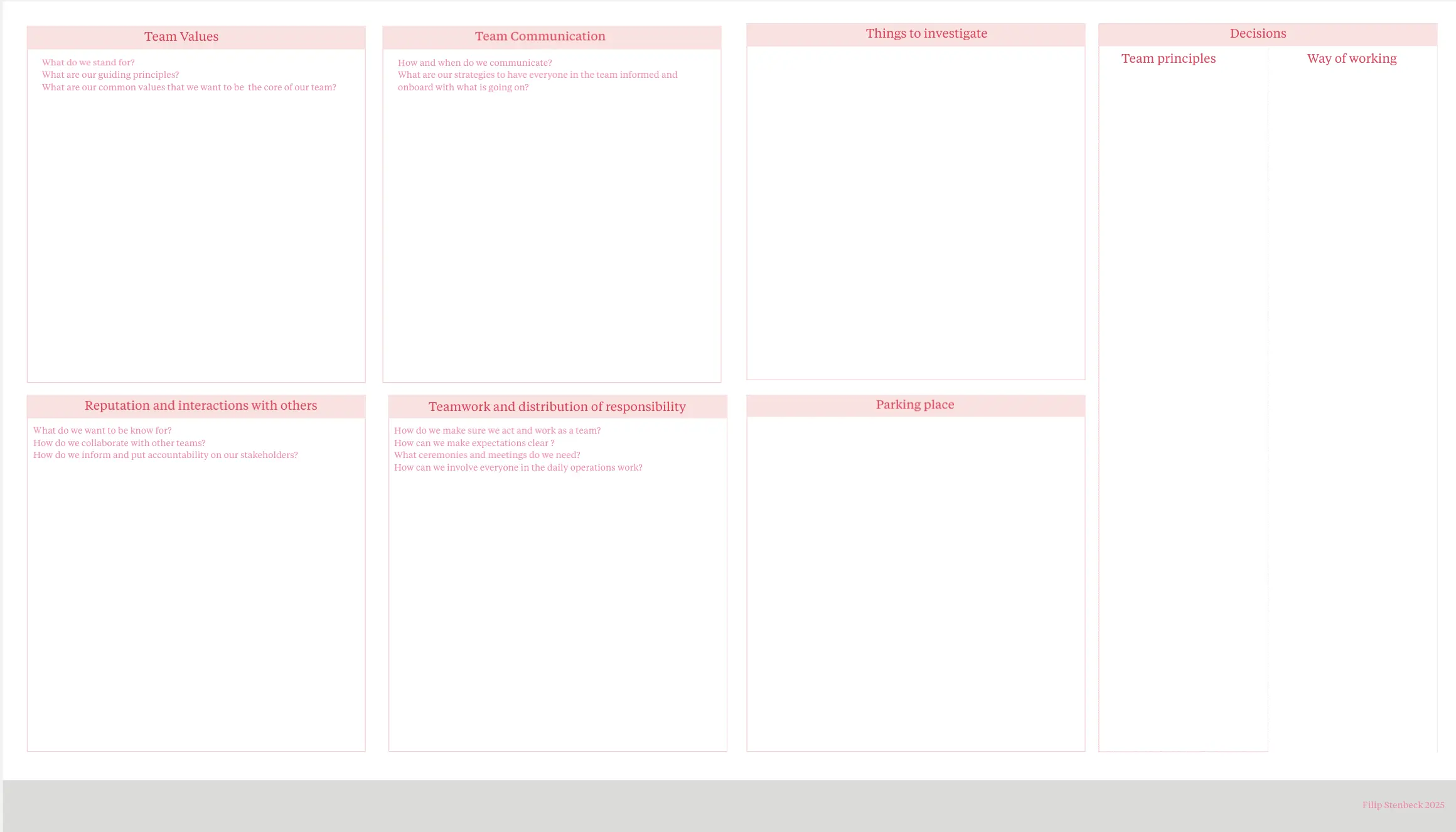
A high-performance WoW Board requires these five core elements:
The Team "Why": A 1-sentence purpose statement that aligns the team's effort.
Communication Stack: A list of which tools to use for what (e.g., "Slack for quick chat, Email for external, Jira for tasks").
Meeting Norms: Standard rules for gatherings (e.g., "No agenda, no meeting" or "Cameras on for socials").
Feedback Loops: A schedule for 1-on-1s, Peer Reviews, and Team Retrospectives.
Success Signals: How the team knows they are winning (beyond just "shipping code").
Common Pitfalls in Team Culture