What is the Red Fishbone Diagram Workshop?
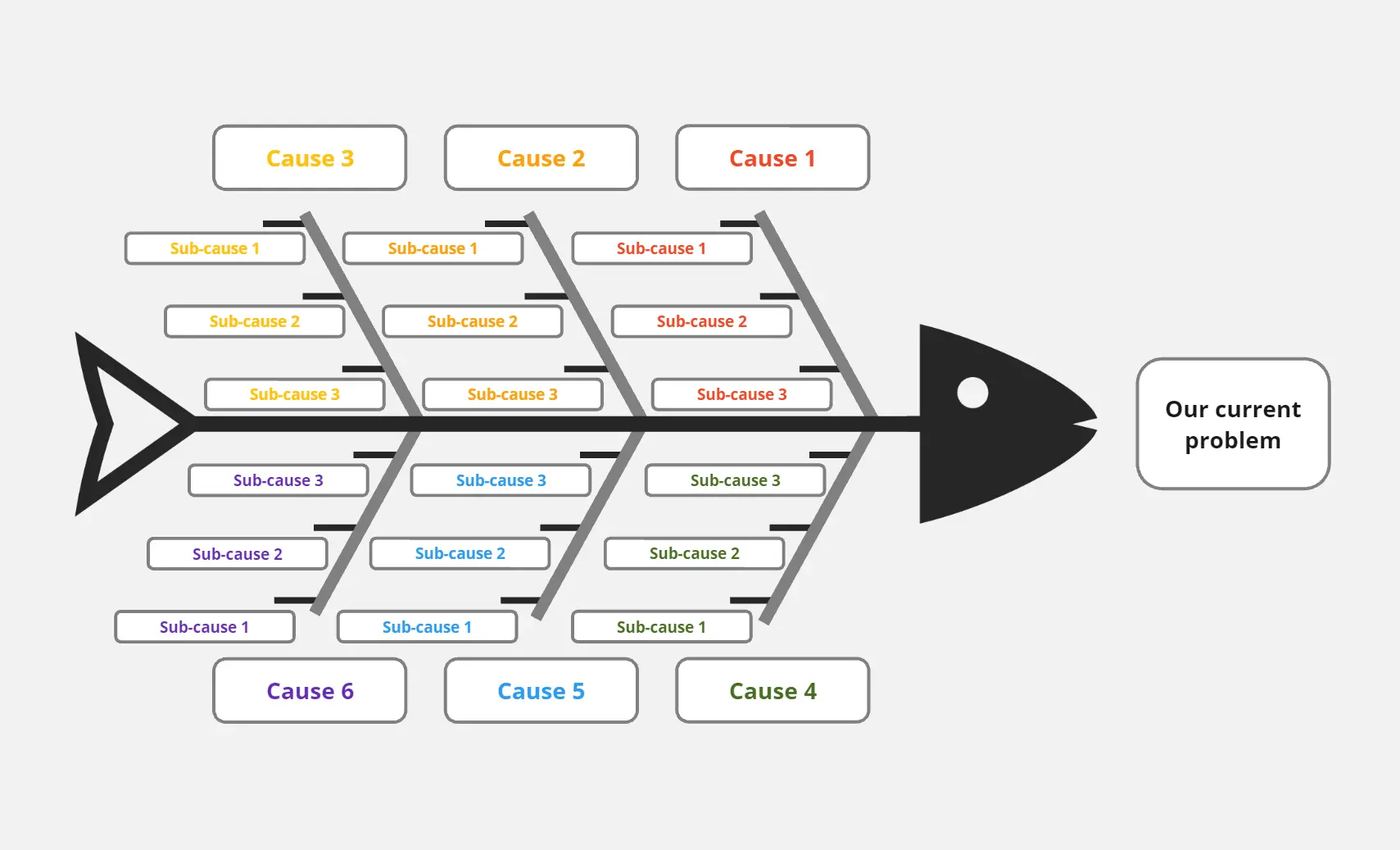
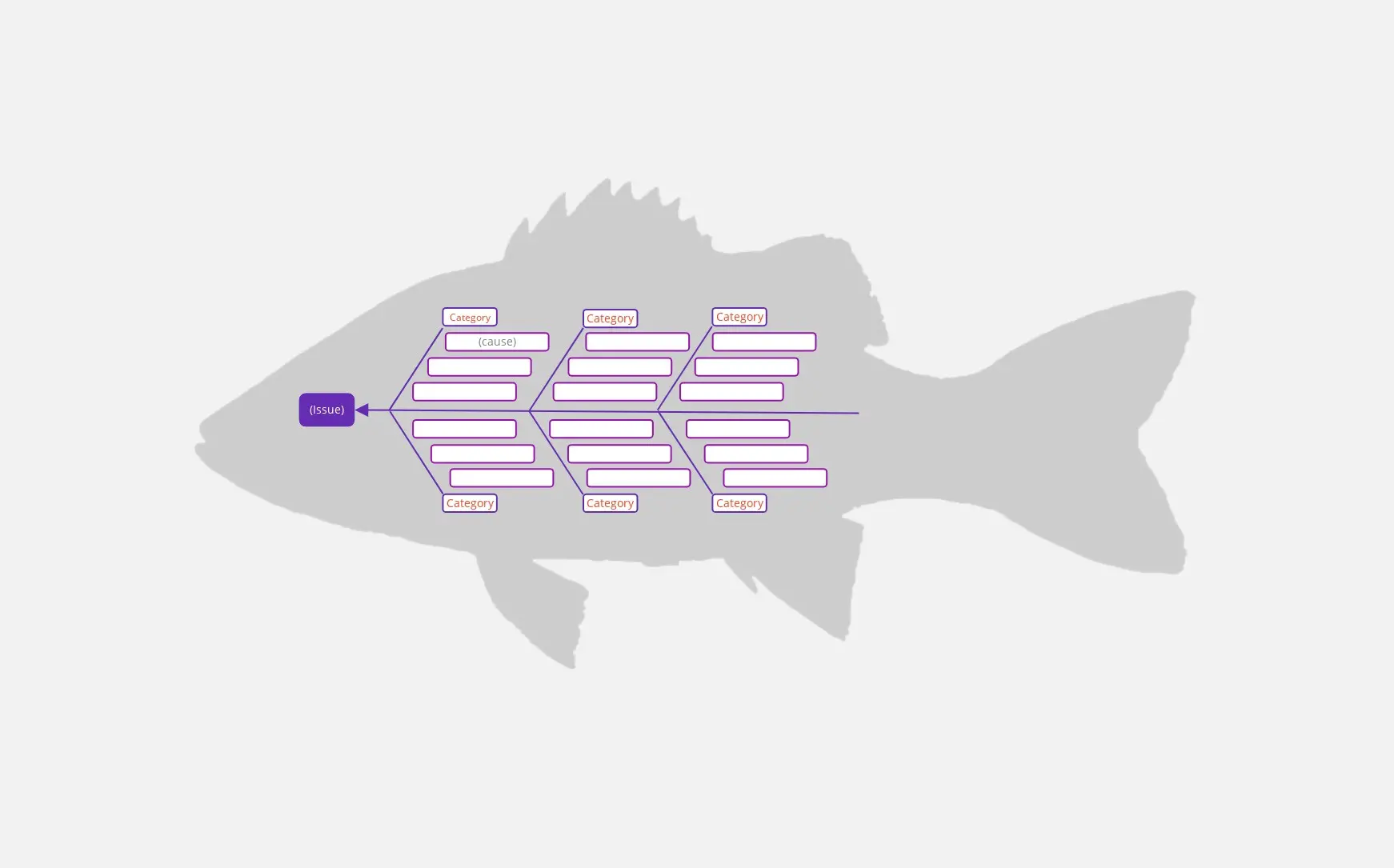
A 45–60 minute working session to map the possible causes of one problem using a simple fishbone diagram. The template helps teams organize cause ideas, move past surface symptoms, and focus on the issues most likely driving the problem.
What problem does this solve?
Teams react to symptoms instead of identifying root causes
Problem-solving conversations become scattered or repetitive
Possible causes are discussed without a clear structure
Teams struggle to decide what to investigate or fix first
How to use
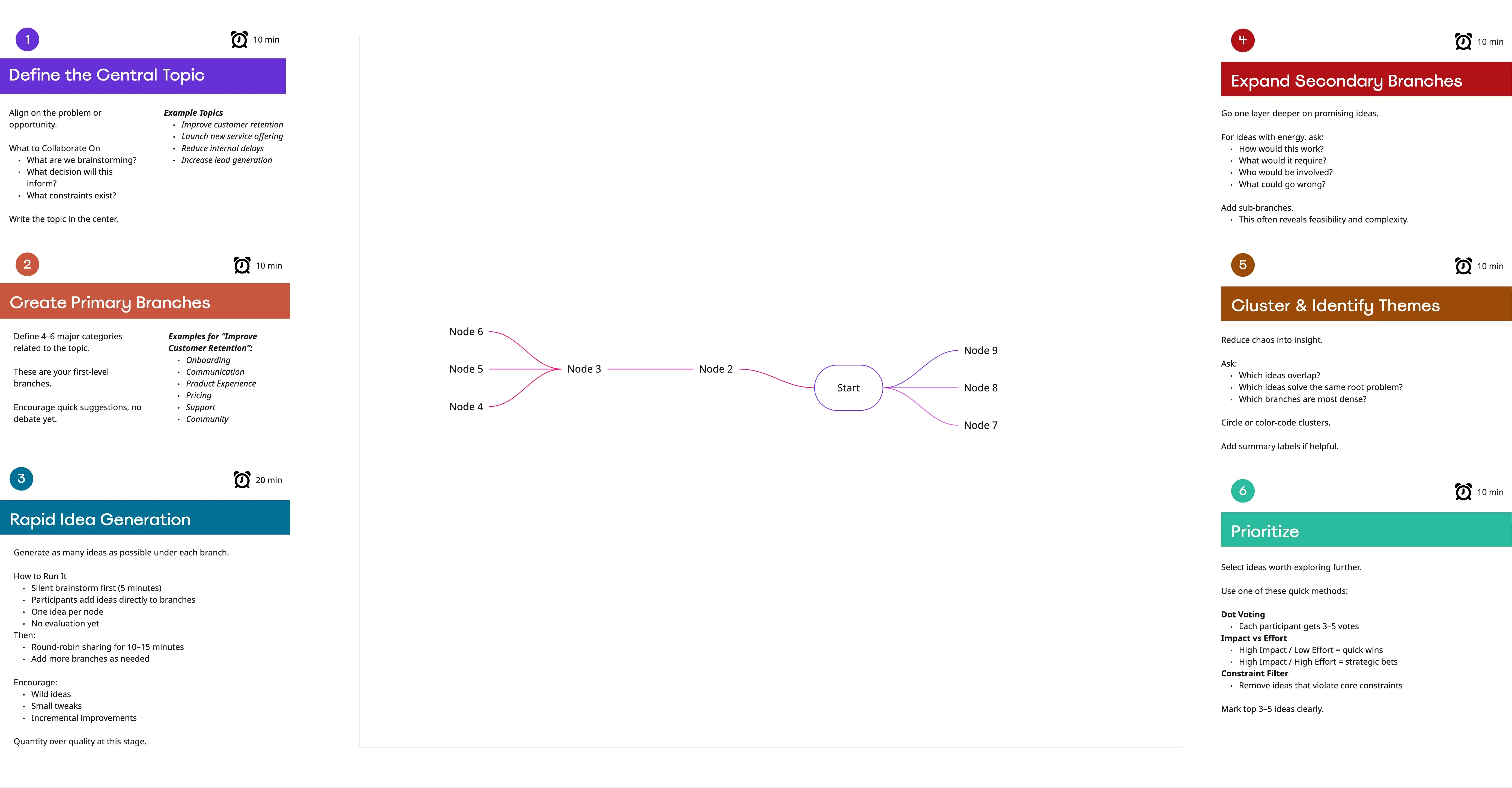
Write one clear problem statement at the head of the diagram (10m)
Choose the main cause categories such as People, Process, Tools, Environment, or Policy (10m)
Brainstorm possible causes under each category (20m)
Add deeper cause branches by asking why (15m)
Review the full diagram and mark the most likely root causes (15m)
Capture next-step actions, owners, and review dates (10m)
Common pitfalls
Using a vague problem statement, turning the session into blame, adding too many categories, and stopping at surface-level causes.
Ways to avoid mistakes
Keep the problem specific, focus on systems and process issues, use a small set of relevant categories, and ask why until the likely causes become more concrete.
Miro Features You Can Use
Shapes and lines to build the fishbone structure, Sticky Notes for possible causes, Tags to mark likely root causes, Colors to separate categories, Comments for evidence or examples, Voting to prioritize the strongest causes, Timer to pace the workshop.
FAQs
Q: Who can benefit from this template?
A: Team leads, operations teams, project teams, quality teams, and any group trying to understand the root causes behind a recurring problem.
Q: Does it work for virtual and in-person sessions?
A: Yes. Teams can build the fishbone diagram directly in Miro, or project the board in a room and update it together live.
Q: What do I leave with?
A: A completed fishbone diagram, a clearer view of likely root causes, and a short action plan for what to investigate or improve next.