Impact–Effort Decision Matrix
The Impact–Effort Decision Matrix is a simple but powerful prioritisation tool that helps individuals and teams decide where to focus their time, energy, and resources. By mapping ideas, tasks, or initiatives along two dimensions—impactand effort—it turns complex decisions into a clear visual overview.
At its core, the template helps answer one essential question:
Where should we invest for the greatest return?
Who this template is for
This template is designed for a wide range of users, including:
Consultants & facilitators running workshops or strategy sessions
Start-ups & entrepreneurs prioritising ideas, features, or experiments
Sustainability & impact teams evaluating initiatives or interventions
Product, marketing, and innovation teams making roadmap decisions
SMEs and organisations aligning on priorities and resource allocation
It works equally well for individual reflection and team co-creation.
When to use it
Use this template when you need to:
Prioritise ideas, actions, or projects
Decide what to focus on (and what not to do)
Allocate limited time, budget, or team capacity
Facilitate structured decision-making in a group
Balance quick wins with longer-term strategic initiatives
How to use it
Start by clearly defining the focus of your session—what you are evaluating, your objective, and what “impact” means in your context.
Then:
Add all potential initiatives, tasks, or options to the board.
Use the guiding questions to define what counts as high impact and high effort.
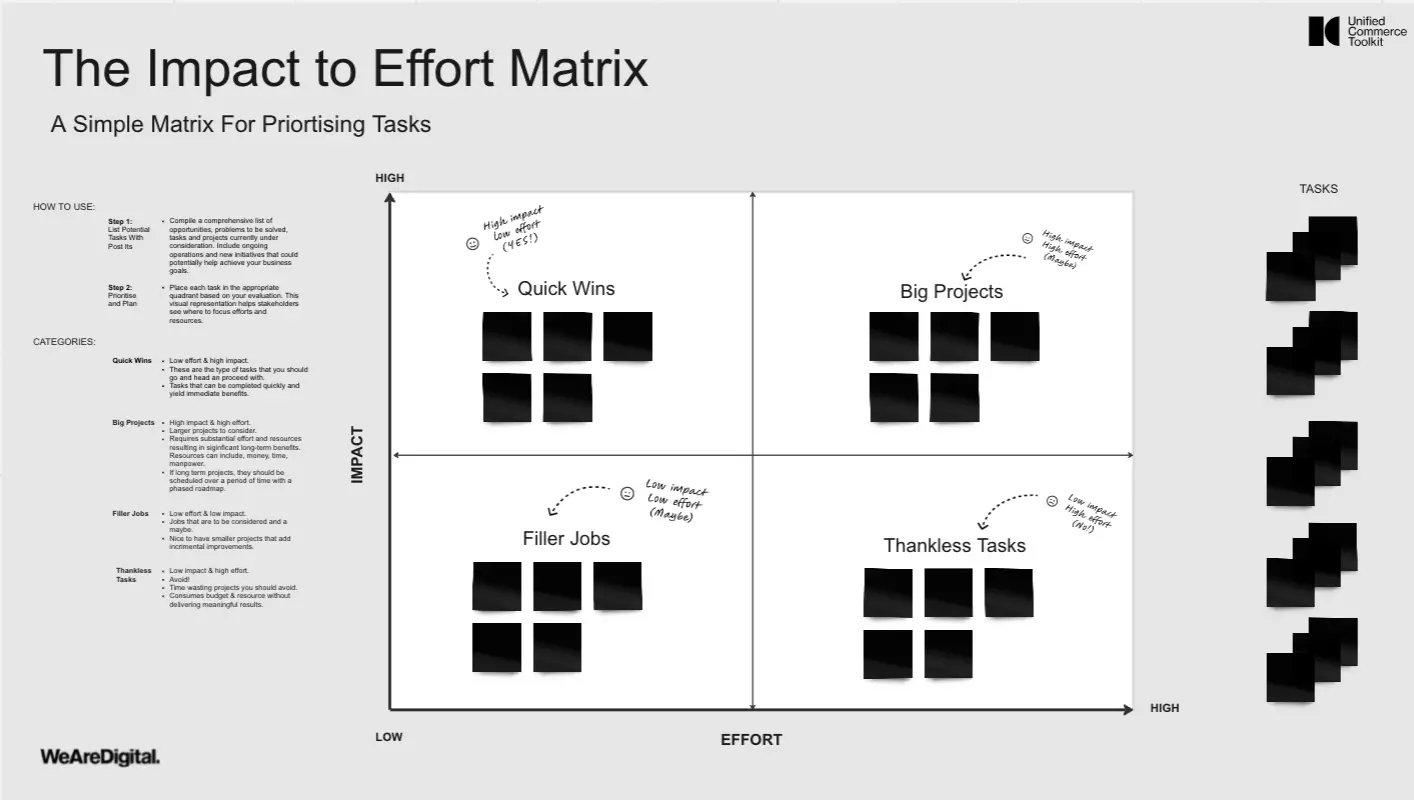
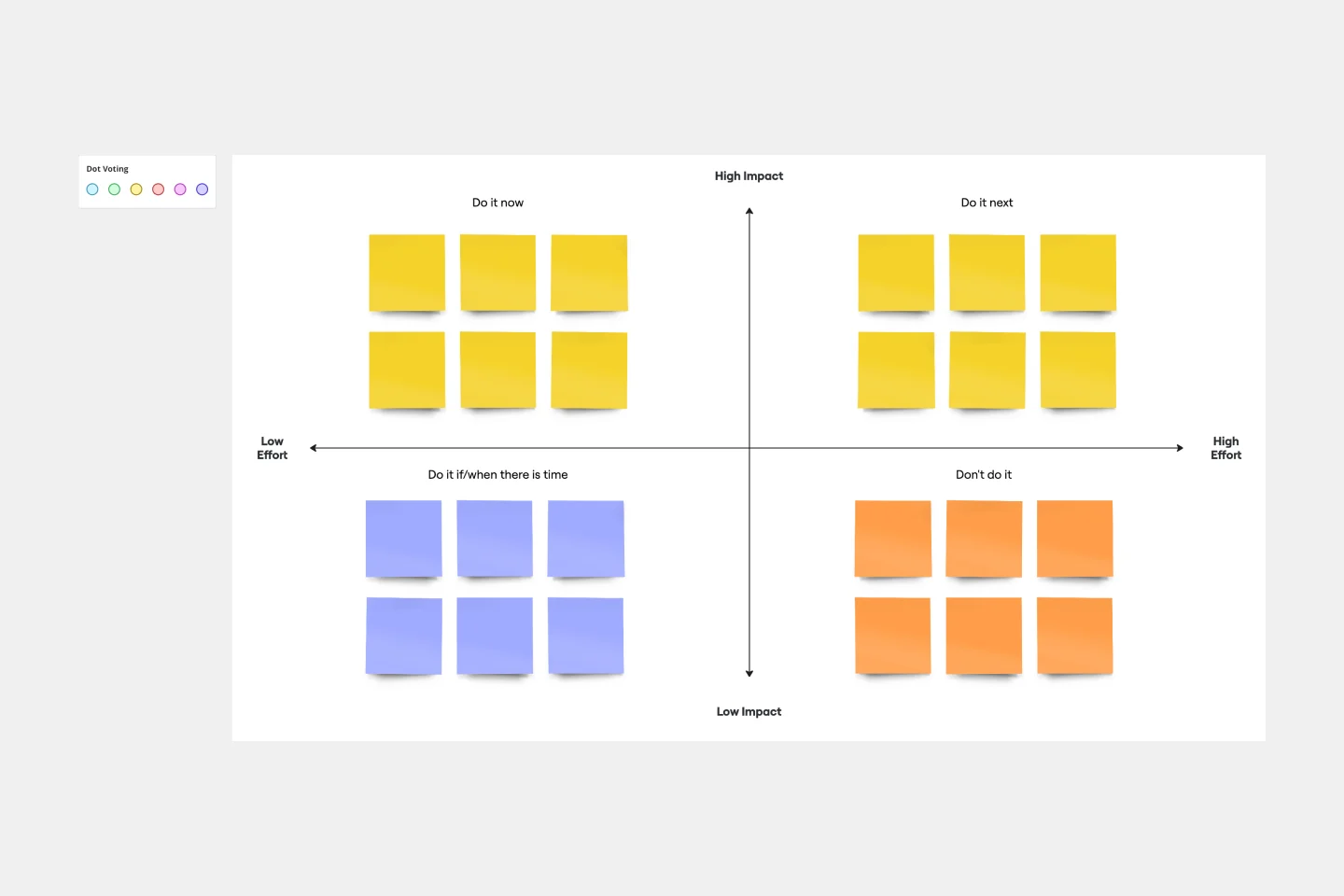
Place each idea into one of four quadrants based on discussion and shared judgement:
Do Now → high impact, low effort (quick wins)
Do Next → high impact, high effort (strategic priorities)
Do Later → low impact, low effort (optional)
Don’t Do → low impact, high effort (avoid)
Encourage participants to explain their reasoning—this is where the real value emerges.
Identify immediate actions, assign ownership, and define next steps.
Why it works
This tool creates clarity by making trade-offs visible. It helps teams move beyond opinions and gut feeling towards more structured, transparent decision-making.
What you gain: