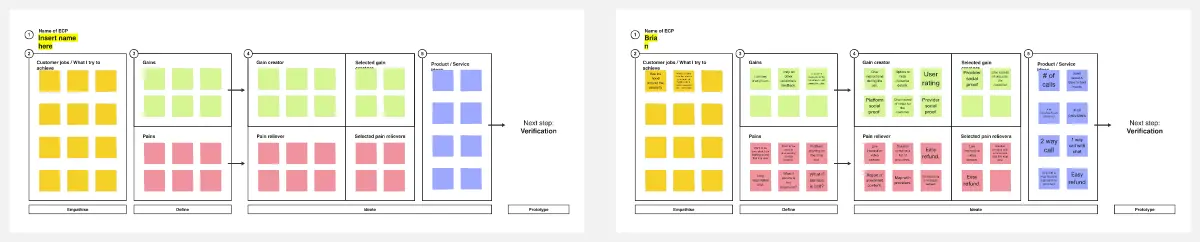
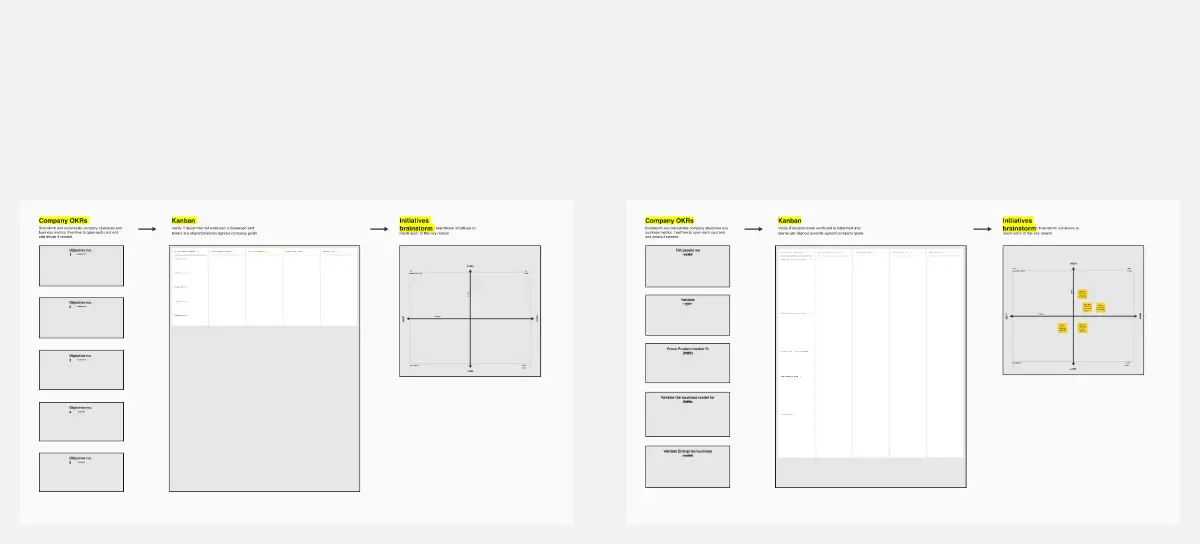
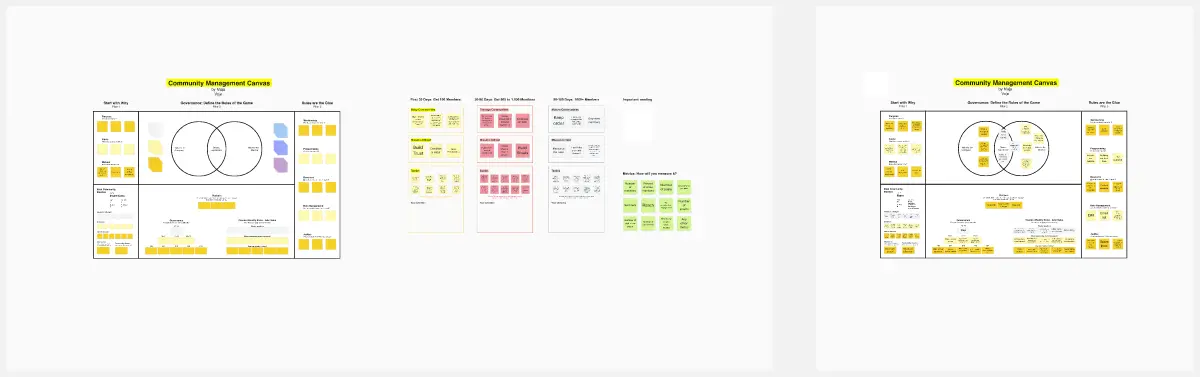
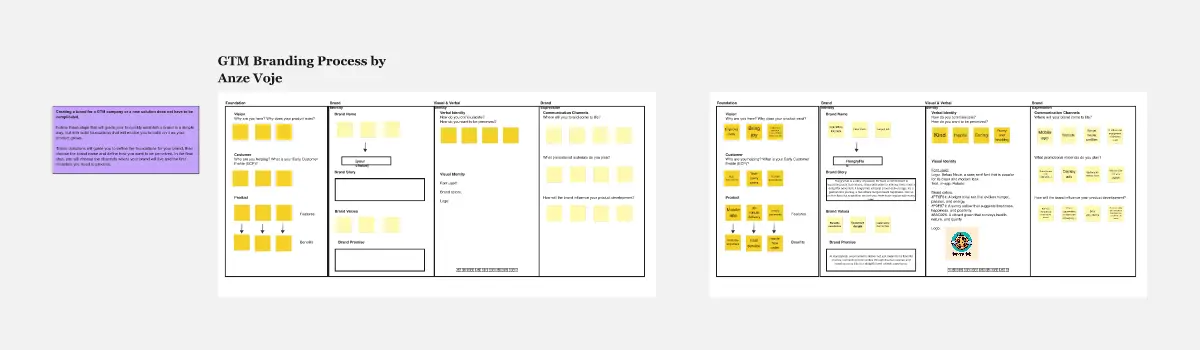
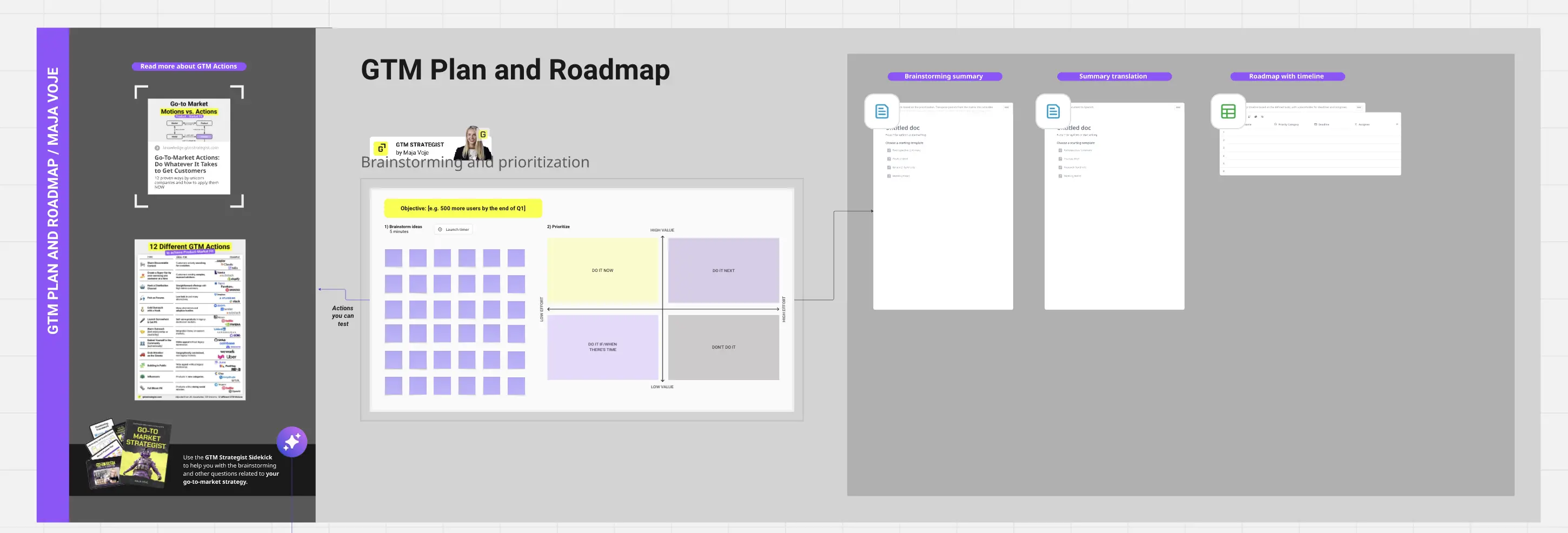
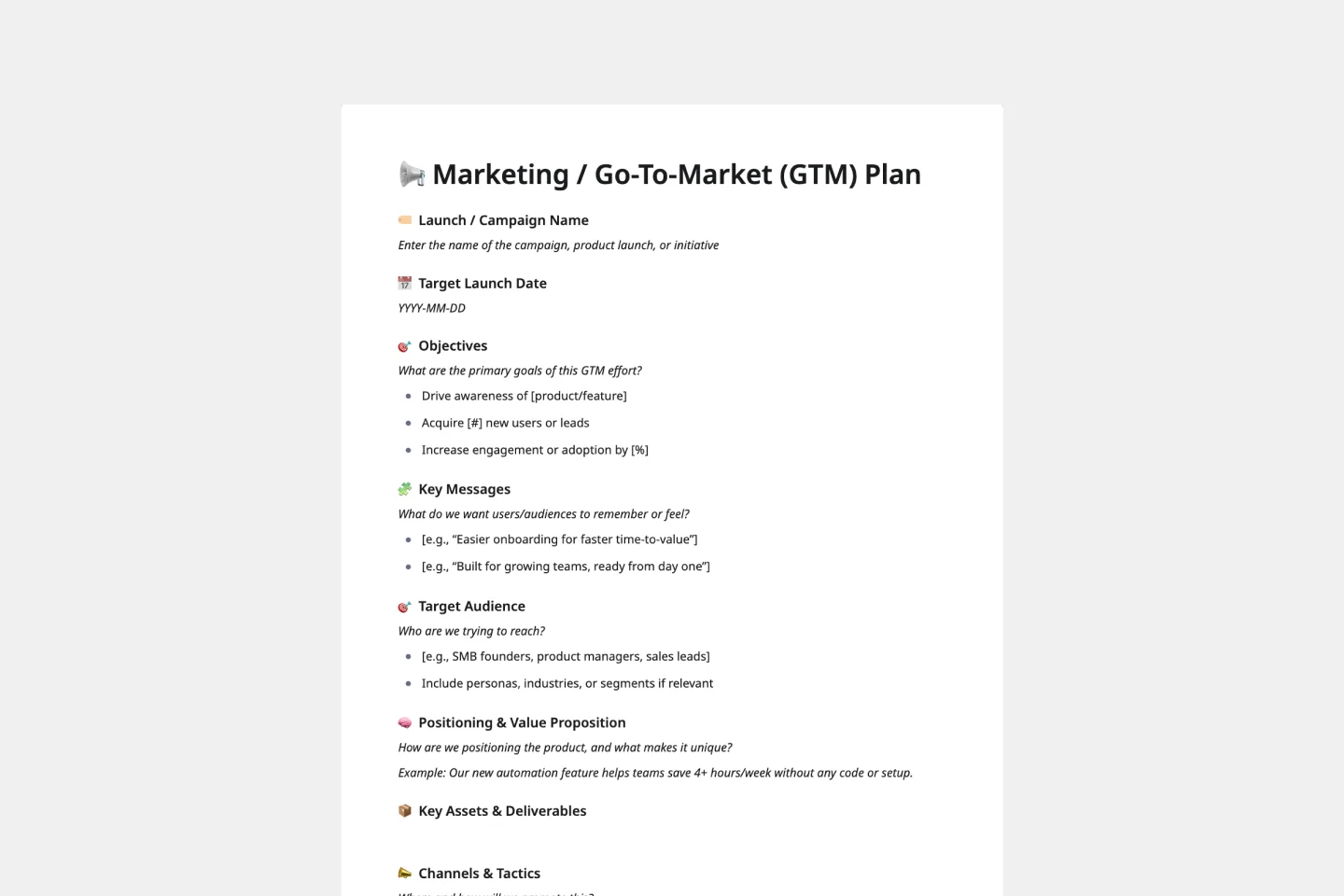
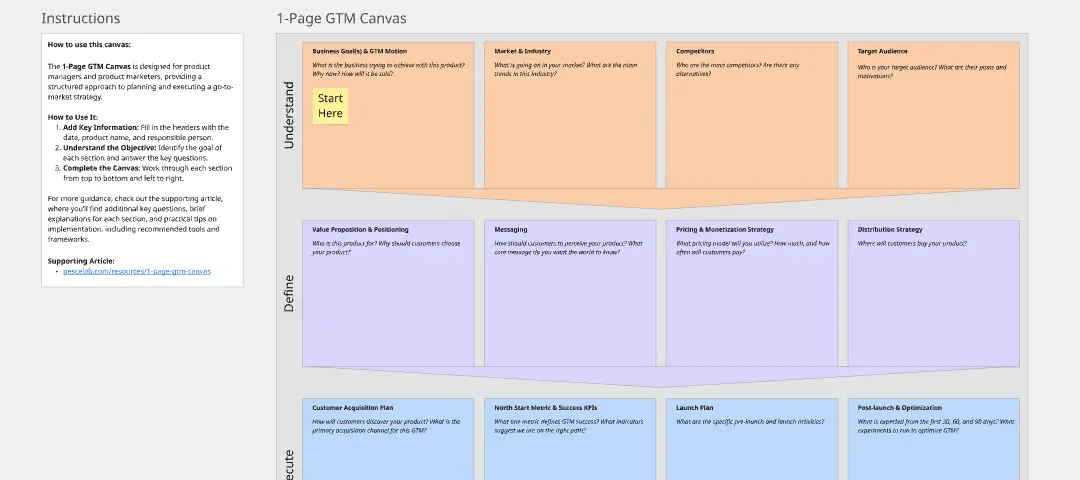
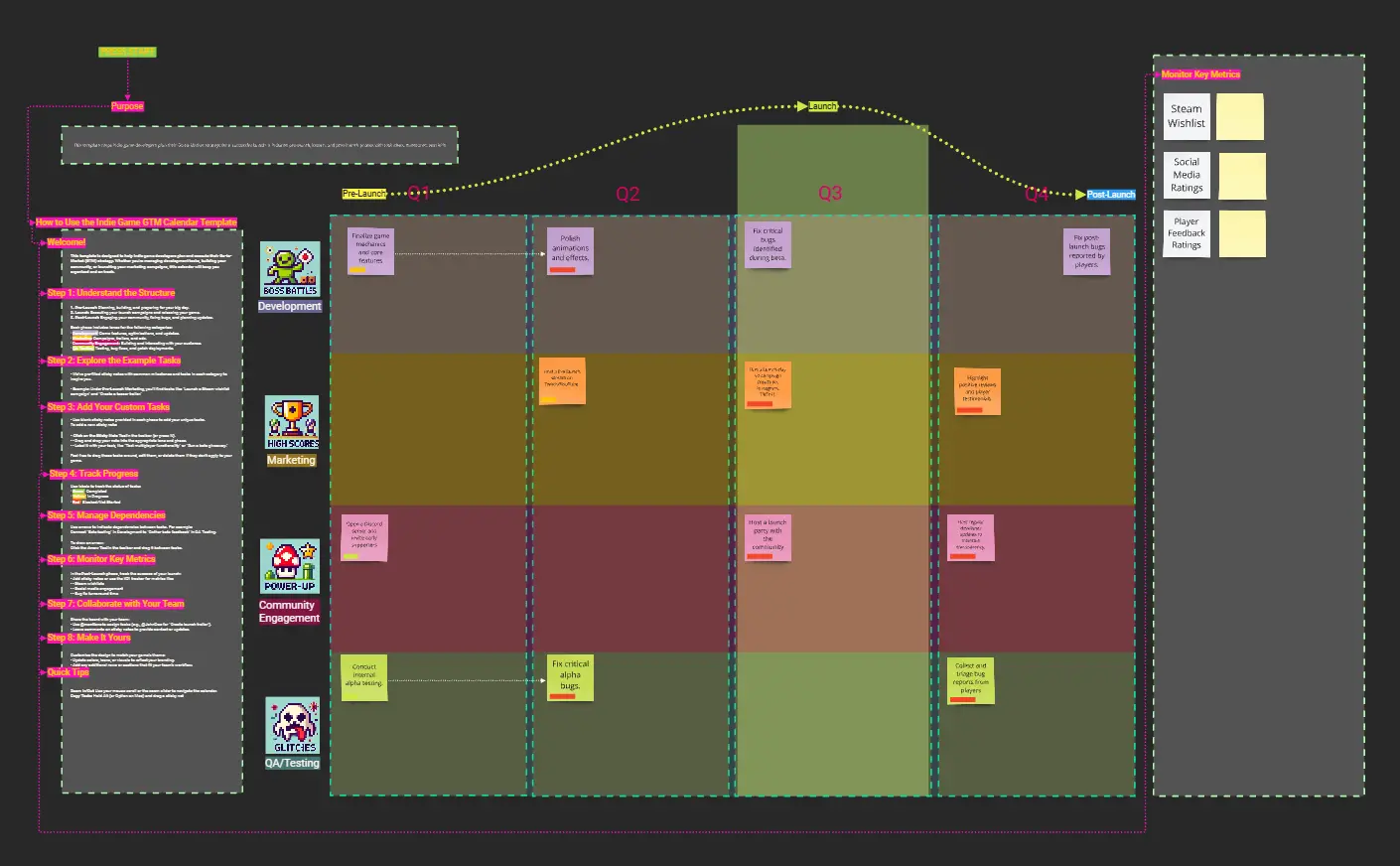
What is a GTM Template?
A Go-to-Market (GTM) template is a comprehensive framework used to launch a new product, enter a new geographic market, or re-launch a brand. It defines exactly who you are selling to, where they live, what you are saying to them, and how much you are charging. Unlike a general business plan, a GTM template is highly tactical and time-bound, focusing on the first 6–12 months of a product's life.
The "Launch Readiness" Audit: 3 Ways to Ensure Market Fit
Most launches fail not because of the product, but because of poor coordination. Before finalizing your GTM board on Miro or Notion, apply these three expert "health checks":
1. The "ICP" (Ideal Customer Profile) Audit
The Audit: Is your target audience too broad (e.g., "Small businesses")? The Fix: Audit for High-Expectation Customers (HXC). A professional GTM template must identify the "Beachhead Market"—the specific group that needs your solution now. If you try to speak to everyone, you will resonate with no one. Define your ICP by Industry, Revenue, Team Size, and specific "Trigger Events" (e.g., "Companies that just raised Series A").
2. The "Pricing vs. CAC" Test
The Audit: Is your Customer Acquisition Cost (CAC) higher than the Lifetime Value (LTV) of the customer? The Fix: Audit for Unit Economics. Use your template to align your pricing model with your sales motion.
Low Price ($): Requires self-service, product-led growth (PLG).
High Price ($$$): Requires an enterprise sales team and high-touch support. If your pricing is in the "Dead Zone" (too expensive for self-serve, too cheap for sales), your GTM will stall.
3. The "Message Testing" Guardrail
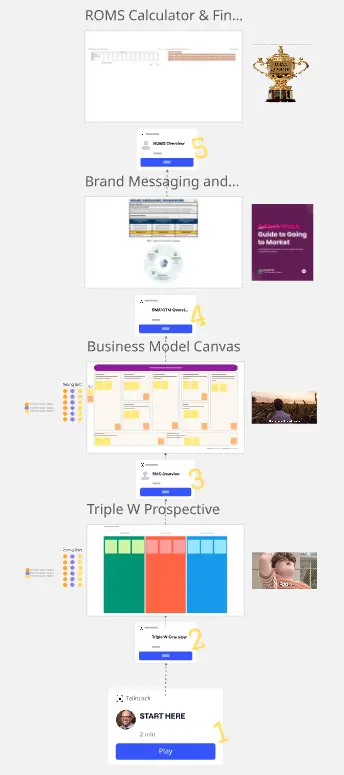
The Audit: Are you using "Internal Jargon" instead of "Customer Outcomes"? The Fix: Audit for Value Messaging. A high-level GTM template includes a Messaging House. It maps your "Features" to "Functional Benefits" and finally to "Emotional Outcomes." Don't sell "Cloud Storage"; sell "The peace of mind that your family photos are safe forever."
Strategic Frameworks: Which GTM Template Do You Need?
Select the framework that matches your specific launch type:
The Product-Led Growth (PLG) Canvas:
The Sales-Led Enterprise Playbook:
Best For: High-ticket B2B services.
The Goal: To coordinate SDR/AE outreach, whitepapers, and webinars to build a sales pipeline.
The Market Expansion Template:
Best For: Taking an existing product into a new country or industry.
The Goal: To identify local competitors, regulatory hurdles, and cultural nuances in messaging.
Key Components of a GTM Template
A high-performance GTM Board requires these five core elements:
The Value Proposition: A 1-sentence statement explaining why you are better than the "Status Quo."
Competitive Landscape: A "Battlecard" style view of how you win against top rivals.
Channel Strategy: Where will you find your users? (e.g., SEO, LinkedIn Ads, Partnerships, Cold Outreach).
Sales Enablement: A list of the decks, scripts, and one-pagers the sales team needs to close deals.
Success Metrics (KPIs): Clear targets for "Leads Generated," "Conversion Rate," and "Customer Acquisition Cost."
Common Pitfalls in GTM Strategy