98 likes
1.2K uses
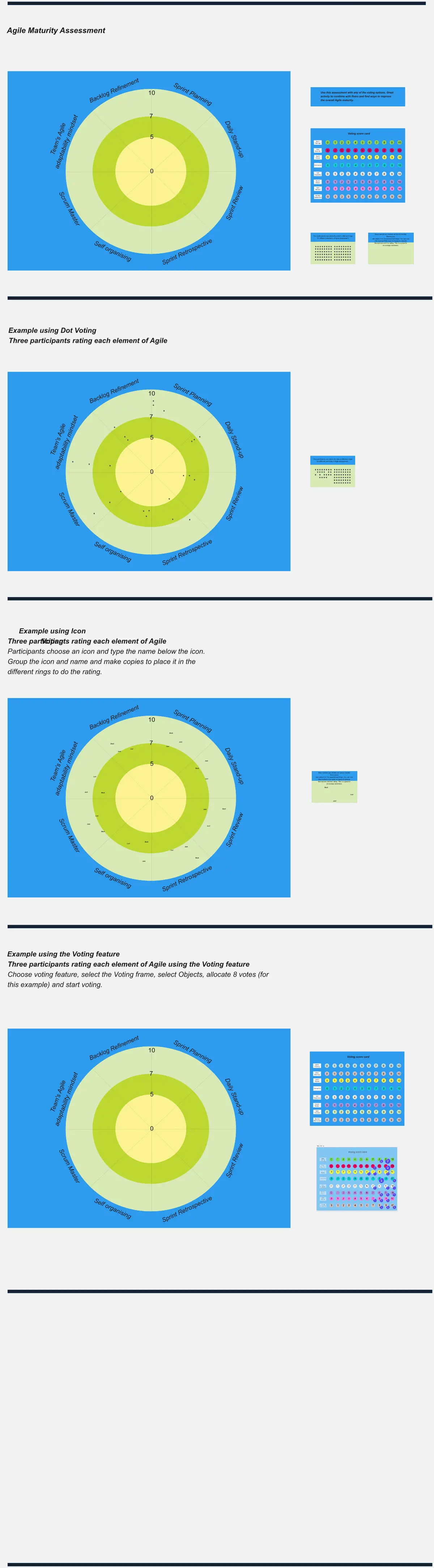
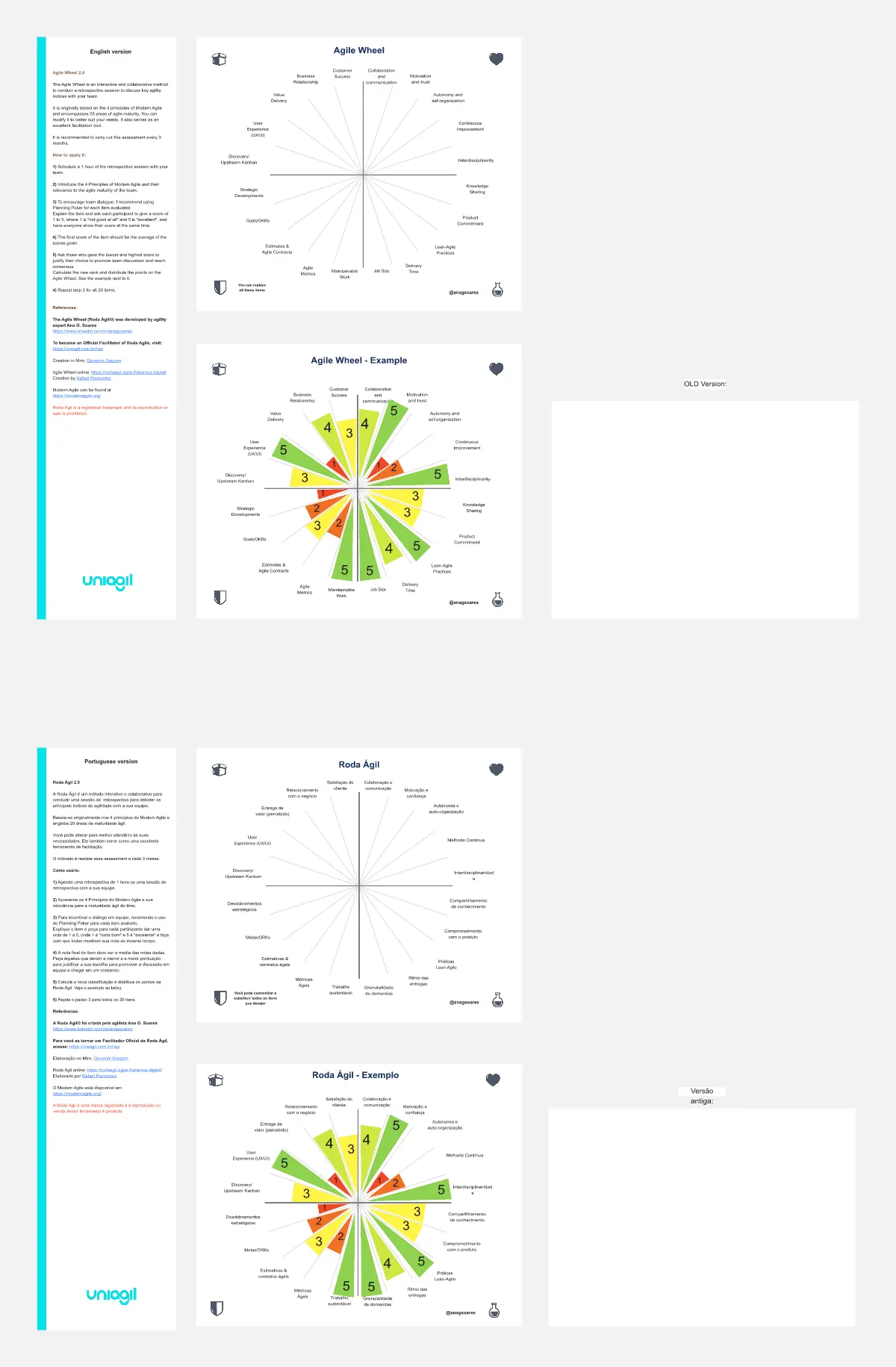
Measure your progress and master the mindset. Use the Agile Maturity Assessment template to benchmark your team’s performance, identify cultural bottlenecks, and create a data-driven roadmap for continuous improvement.
2 templates
An Agile maturity assessment template is a structured framework used to evaluate how effectively a team, department, or entire organization is applying Agile principles. It typically measures performance across multiple dimensions, such as Technical Excellence, Team Culture, Product Vision, and Delivery Flow. Unlike a binary "pass/fail" test, these templates use a tiered scale (e.g., Initial, Emerging, Defined, Managed, Optimizing) to provide a clear path for growth.
An assessment is only as good as the honesty of the data. Before running your survey on Miro or Google Forms, apply these three expert "health checks":
1. The "Outcome over Output" Audit
The Audit: Are you measuring "Agile Rituals" (e.g., "Do we have a Daily Standup?") instead of "Agile Outcomes"? The Fix: Audit for Value Delivery. A professional assessment focuses on Speed to Market, Quality (Bugs), and Customer Satisfaction. If a team has perfect Scrum rituals but hasn't shipped value in three months, they are not "Mature." Your template must prioritize Performance over Ceremony.
2. The "Behavioral Evidence" Test
The Audit: Are people checking "Yes" because they know it’s the "right" answer? The Fix: Audit for Observable Patterns. Instead of asking "Is the team collaborative?", ask for Proof. (e.g., "Can the team demonstrate a shared decision-making process for the Sprint Goal?"). Mature teams can point to specific artifacts, like a shared "Definition of Done" or a "Working Agreement," rather than just giving a vague opinion.
3. The "Psychological Safety" Guardrail
The Audit: Is the assessment being used by management to "Grade" or "Punish" teams? The Fix: Audit for Coaching Intent. A high-level maturity template must be framed as a Team Self-Assessment. If teams feel their "Maturity Score" affects their bonuses, they will "Gamify" the results. The goal of the assessment is to identify Obstacles, not to create a leaderboard.
Select the framework that matches your organizational goals:
The Team Health Radar:
Best For: Scrum Masters looking to improve daily team dynamics.
Focus: Trust, conflict resolution, accountability, and results.
The Five Levels of Agile Maturity:
Best For: Leadership looking at long-term transformation.
The Scale: 1. Ad-hoc, 2. Doing, 3. Being, 4. Thinking, 5. Cultivating.
The Spotify Squad Health Check:
Best For: Scaling Agile across multiple teams.
The Format: A "Traffic Light" system (Red, Amber, Green) for indicators like "Easy to Release" and "Player-Coach Balance."
A high-performance Maturity Board requires these five core dimensions:
Product & Value: Is there a clear vision? Is the backlog prioritized by ROI?
Process & Flow: Are WIP (Work in Progress) limits used? Is the cycle time predictable?
Technical Health: Is there automated testing? Is technical debt tracked and managed?
Culture & Leadership: Does the team feel empowered? Is there a "Fail Safe" environment?
Continuous Improvement: Are retrospectives resulting in actual experiments and changes?
The "One-Size-Fits-All" Trap: Expecting a data science team and a marketing team to have the same "Agile Score."
The Fix:Contextualize the Criteria. Agile looks different in every department. Allow teams to define what "Mature" looks like for their specific constraints.
Measuring Once a Year: Treating maturity like an annual audit.
The Fix: Run a "Light" assessment every Quarter. Maturity is a moving target; teams can regress if leadership changes or if high-pressure deadlines force them to abandon good habits.