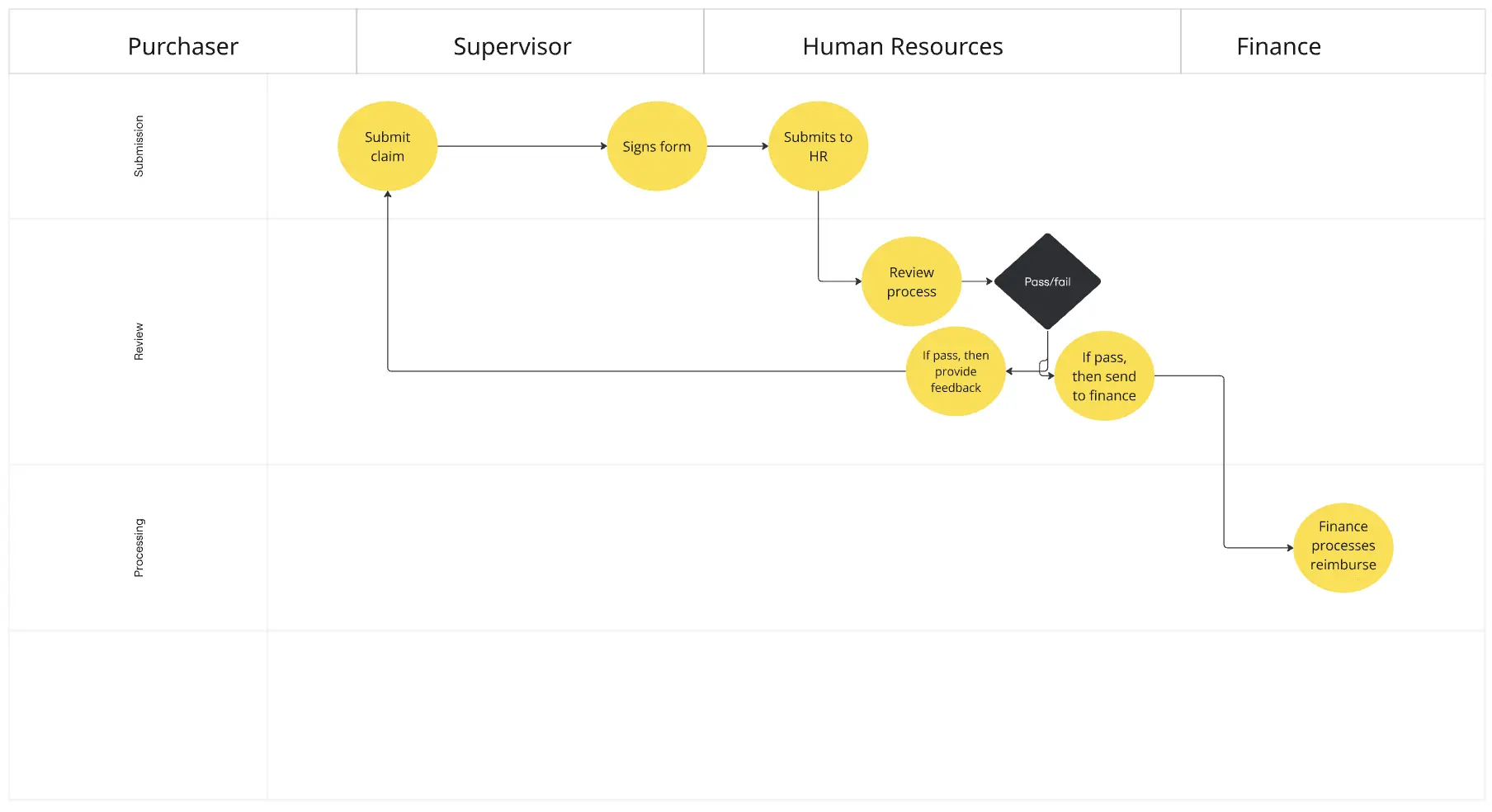
Swimlane Process Mapping: Clarify Roles, Reduce Friction, Improve Flow helps teams map an end-to-end business process by role or department so ownership, handoffs, and delays become visible. Use it to clarify accountability, reduce cross-team confusion, and spot bottlenecks and redundancies that slow work down.
What is it?
A role-based process mapping workshop template that separates actions into swimlanes (teams, roles, or systems) and connects steps across lanes to reveal where work transfers, waits, or loops.
What problem does it solve?
Unclear responsibility that leads to blame and rework
Hidden handoffs that create wait time
Overlapping roles and duplicate steps
Approvals and decisions that stall flow
How to use
Define start/end boundaries and out-of-scope items
Create swimlanes by department, role, or system
Map the happy path across lanes with arrows for every handoff
Add decision diamonds and label Yes/No paths
Mark bottlenecks with red notes and optimization ideas with green notes
Capture owners for each step and list next actions
Common pitfalls
Lanes that mix roles and departments, steps placed in the “wrong” lane, decisions without clear criteria, missing exception paths.
Ways to avoid mistakes
Keep lanes tied to clear ownership, label decision criteria on the diamond, count cross-lane arrows as risk points, validate the map with real examples.
Miro Features Used
Swimlanes (Containers) for roles, Flowchart shapes for steps and decisions, Connectors for handoffs, Sticky notes for pain points and ideas, Tags for ownership and systems, Color coding for lane types and exceptions, Comments for open questions
FAQ
Q: Who can benefit from this template?
A: Process owners, operations teams, cross-functional leads, project managers, systems owners, and teams working across departments.
Q: What do I leave with?
A: A complete swimlane process map with role ownership, visible handoffs, flagged bottlenecks, and a shortlist of optimization opportunities.
Q: How do I decide what swimlanes represent?
A: Use departments for accountability discussions, roles for execution clarity, systems for automation planning.