373 likes
2.9K uses
Don’t solve the wrong problem. Use the Problem Framing template to align your stakeholders on the 'Why' before the 'How,' ensuring every solution you build addresses a verified user need or business goal.
7 templates
A problem framing template is a collaborative framework used to define the boundaries, impact, and "true nature" of a challenge before any solutions are brainstormed. It moves a team from a vague observation (e.g., "Users are leaving") to a structured mission (e.g., "How might we reduce friction in the checkout process for first-time mobile users?"). It acts as a guardrail against "solution bias," where teams jump to building apps before they understand the human struggle.
A problem well-framed is a problem half-solved. Before finalizing your mission statement on Miro, apply these three expert "health checks":
1. The "5 Whys" Depth Audit
The Audit: Is your problem statement just a "symptom" (e.g., "The website is slow")? The Fix: Audit for Root Causes. Use the "5 Whys" method within your template to dig deeper. If the site is slow, why? Because the images are too large. Why? Because there is no compression tool. Why? Because the budget wasn't allocated. Framing the problem as a Resource Allocation Issue leads to a much different solution than just "fixing the code."
2. The "Who, What, Where, Why" Test
The Audit: Is your problem statement too broad (e.g., "Communication is hard")? The Fix: Audit for Specificity. A professional frame must answer:
Who: Specifically who is experiencing the problem?
What: What is the specific obstacle they face?
Where: In what context or environment does this happen?
Why: Why does it matter to the business or the user? If you can't fill these four buckets, your problem is a "theme," not a "frame."
3. The "How Might We" (HMW) Pivot
The Audit: Is your problem framed as a "Complaint" instead of an "Opportunity"? The Fix: Audit for Generative Language. Transform your final problem statement into a How Might We question. A good HMW is broad enough to allow for multiple solutions but narrow enough to provide focus. (e.g., "HMW make it easier for busy parents to track their child's health metrics?")
Select the Miro template that matches your project’s starting point:
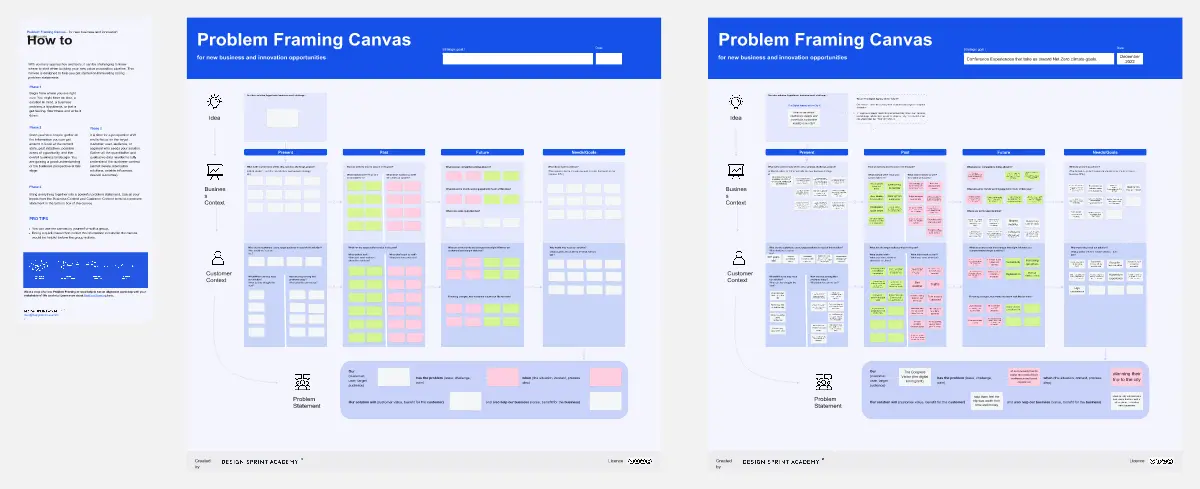
The Problem Statement Canvas:
Best For: Aligning large, cross-functional teams on a single mission.
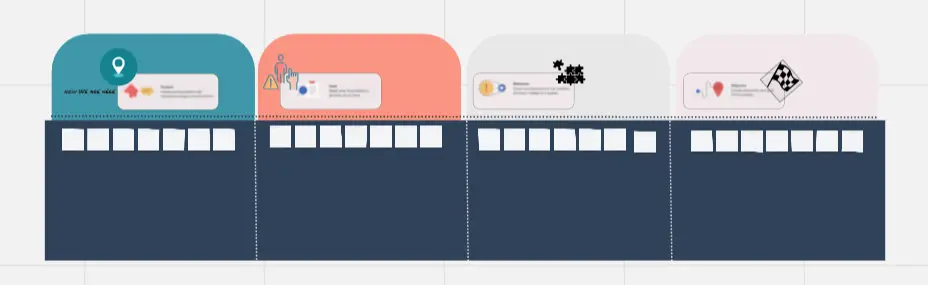
The Goal: To map out the User, Problem, Context, and Impact in a single visual grid.
The "Jobs-to-be-Done" (JTBD) Frame:
Best For: Product innovation and feature prioritization.
The Goal: To frame the problem as a "Job" the user is hiring a product to do (e.g., "When I am [Situation], I want to [Action], so that I can [Outcome].").
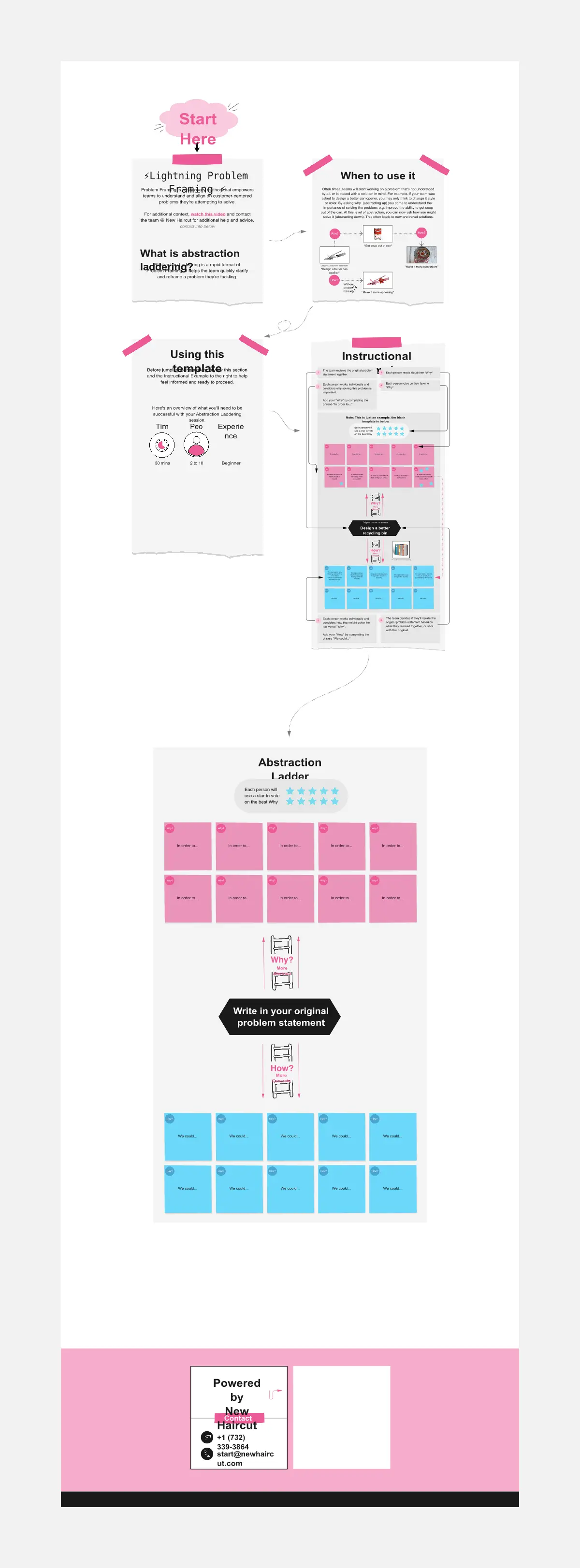
The "Abstraction Ladder":
Best For: When a team is stuck on a very narrow technical problem.
The Goal: To move "Up" the ladder (Why?) to find a broader problem or "Down" the ladder (How?) to find a specific technical execution.
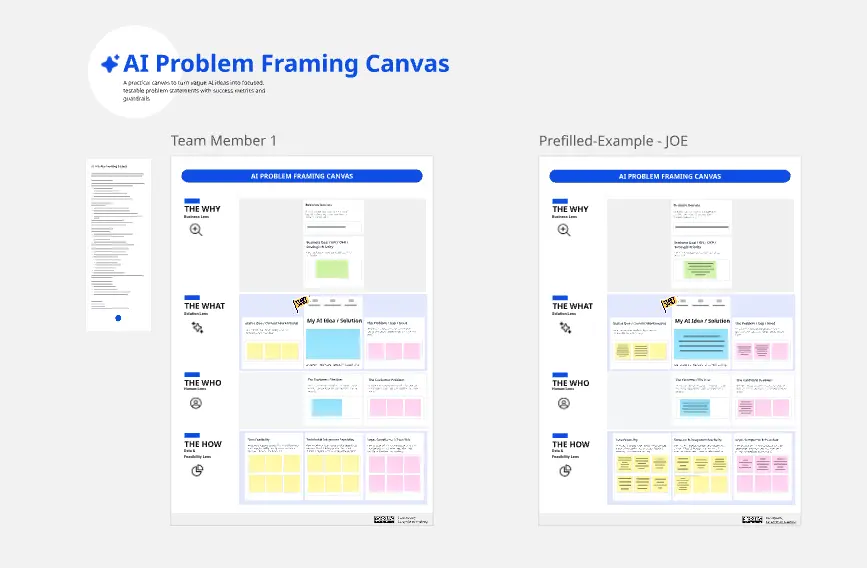
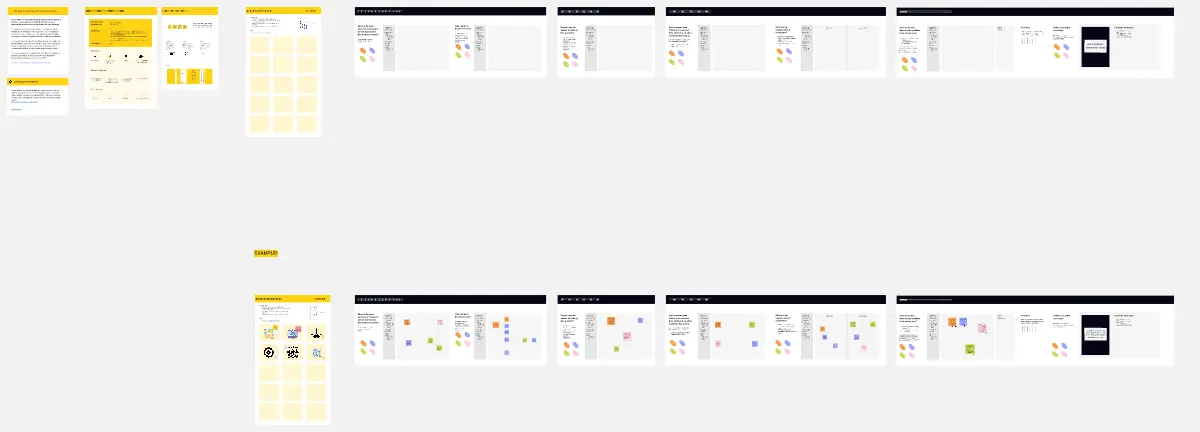
A high-performance Miro board for Problem Framing requires these five core elements:
The User Persona: A brief description of the specific human at the center of the struggle.
Current State vs. Desired State: A visual comparison of "How it is now" vs. "How it should be."
Evidence Gallery: Real data, user quotes, or screenshots that prove the problem exists.
Impact Metrics: What happens if we don't solve this? (e.g., Lost revenue, high churn, safety risks).
The Final "Problem Statement": A 1–2 sentence summary that serves as the "North Star" for the project.
The "Solution-in-Disguise": Framing the problem as "We need an AI chatbot."
The Fix: Remove all mentions of technology from the problem statement. The problem is "Users can't find answers quickly," not "We lack AI."
Ignoring the Business Case: Framing a problem that users have, but that doesn't matter to the company.
The Fix: Ensure every problem frame includes a "Value to the Business" section to justify the investment.