25 brainstorming examples to fuel your team’s creativity and problem-solving
Summary
Brainstorming doesn't have to feel random or unproductive. This guide shows you proven techniques that turn messy idea sessions into focused, actionable outcomes. Here's what we'll cover:
- Classic techniques made better — Reverse brainstorming and brainwriting templates that give structure to your creative chaos, perfect for both in-person and remote teams
- AI-powered brainstorming — Sidekicks and templates that use AI to overcome creative blocks, challenge incremental thinking, and generate ideas faster than traditional methods
- Inclusive ideation methods — Silent brainstorming and structured approaches that ensure introverted team members contribute just as much as vocal ones
- Strategic frameworks — Market problem mapping, systems thinking, and known/unknown matrices for tackling complex business challenges
- Visual thinking tools — Mind maps, mandala charts, and concept maps that help teams see connections and organize ideas clearly
- Ready-to-use templates — Over 25 battle-tested frameworks you can start using immediately in Miro, no facilitation experience required
Whether you're a product manager planning your next sprint, an engineer designing system architecture, or a designer exploring user problems, you'll find brainstorming examples that match your workflow and deliver results.
When it comes to solving problems or sparking creativity, brainstorming is a powerhouse. But let’s be real—it can be tricky to know where to start. How do you move past the obvious ideas into true innovation? That’s where specific brainstorming techniques can make all the difference.
Below, we’ll explore creative brainstorming examples you can use right away, from tried-and-true methods to fresh approaches. By the end of this article, you’ll not only have a toolkit of techniques but also see how Miro’s innovation workspace makes collaboration seamless—whether you’re in a brainstorming meeting or working asynchronously. Let’s dive in!
Creative brainstorming examples for you to try
Brainstorming sessions are one of the most effective ways teams solve problems creatively. By bringing people together and encouraging diverse perspectives, teams can uncover innovative solutions that may not emerge in traditional discussions. The process fosters collaboration, sparks fresh thinking, and helps generate ideas that break through typical constraints.
If you’re looking for brainstorming techniques to spark your team’s creativity, these methods are a great place to start. Think of them as focused frameworks to guide your discussions, help you uncover unexpected ideas, and get everyone contributing.
Reverse brainstorming template
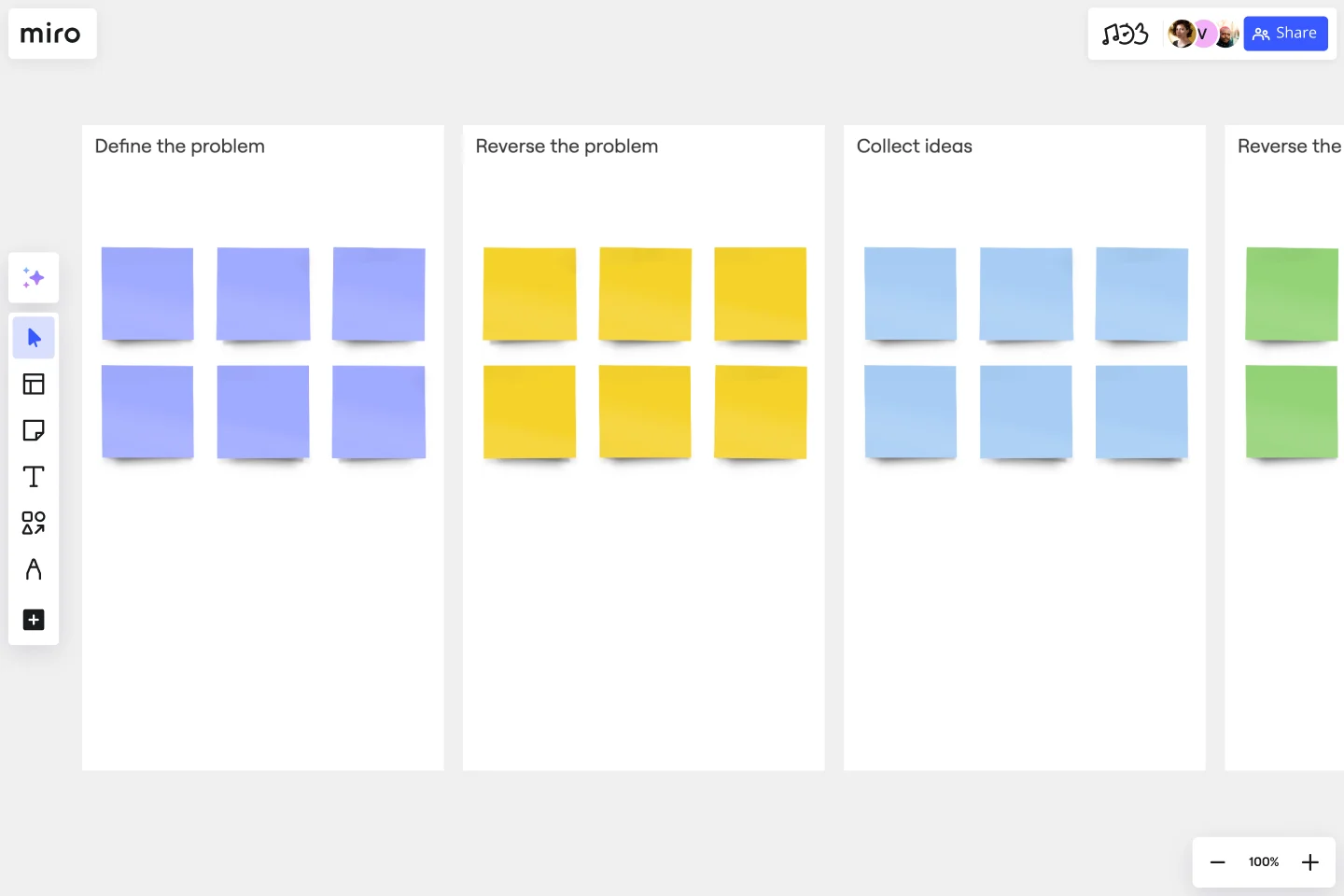
Ever feel stuck when trying to solve a problem? Flip it on its head with reverse brainstorming. Instead of asking, “How can we solve this?”, ask, “How could we cause this problem?” It might sound counterintuitive, but it’s a game-changer.
The reverse brainstorming template walks your team through this process step-by-step. With our visual tools, you can easily map out all the ways to create the problem, then reverse-engineer those ideas into practical solutions. Bonus: the process often sparks out-of-the-box ideas you’d never consider otherwise. Check the video below!
Brainwriting template
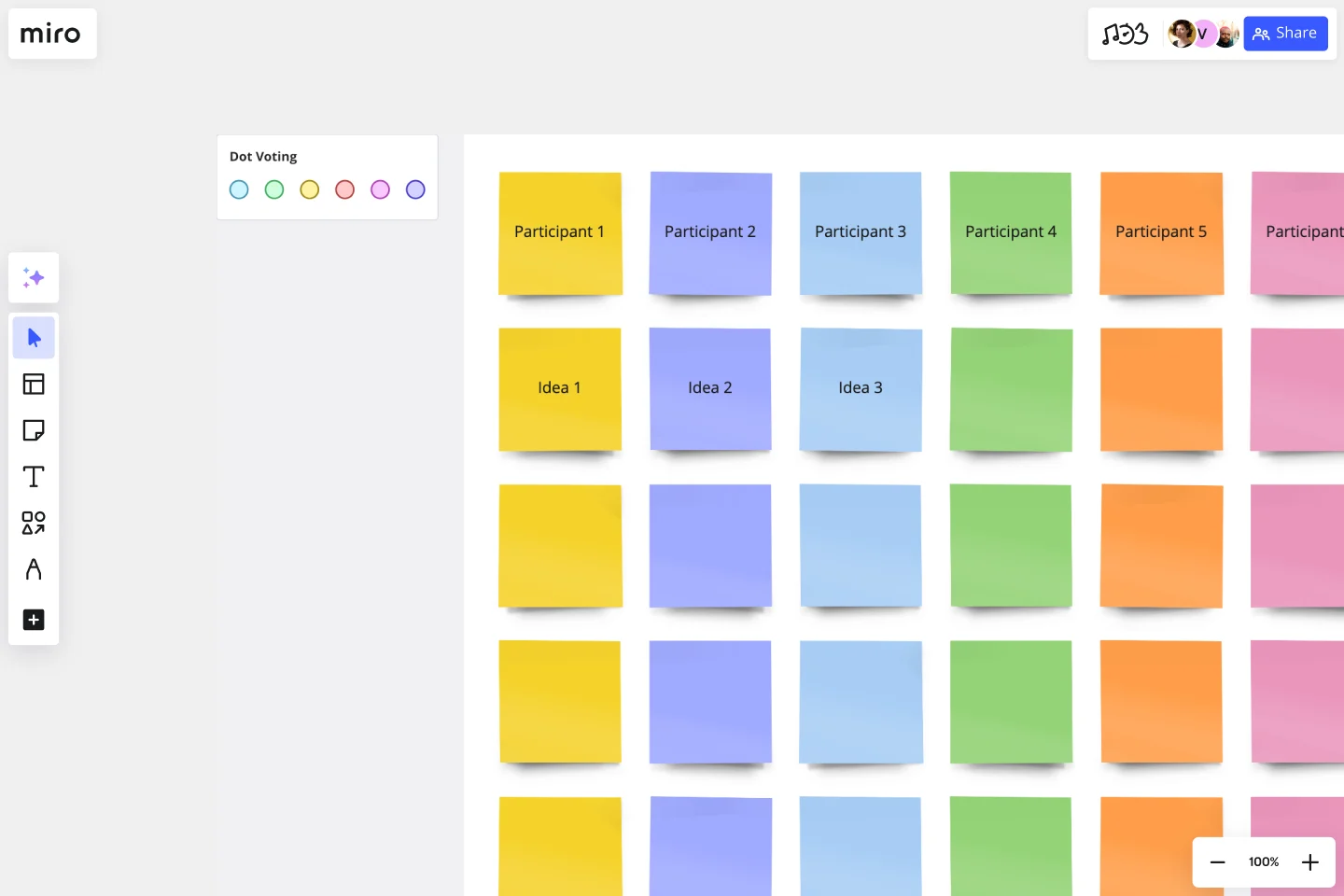
Got quiet teammates who don’t love speaking up in a big group? Brainwriting might be your new favorite technique. Instead of brainstorming out loud, participants write their ideas down, often building on others’ contributions in the process.
The brainwriting template streamlines this for both in-person and remote teams. Team members can add their thoughts in real-time or asynchronously, using sticky notes to capture their input. This approach creates space for every voice and often leads to a wider range of ideas.
Other brainstorming examples from our library
Need even more inspiration? Miro’s library is packed with brainstorming templates designed to spark creativity and structure your sessions. Here are a few fan favorites:
Research topic brainstorm template
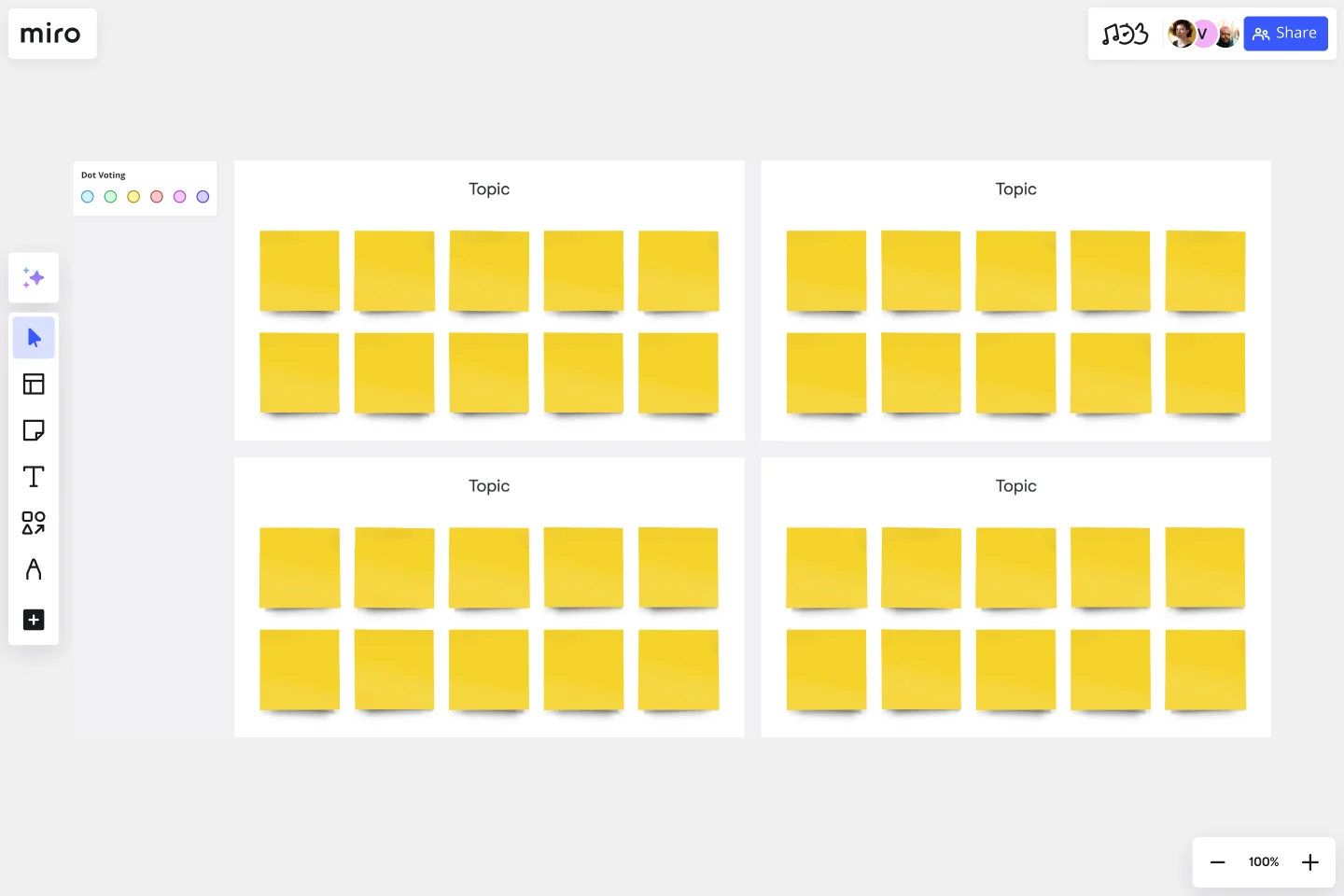
Starting a new project or campaign? The research topic brainstorm template helps your team uncover key questions, topics, and areas to explore. It’s especially helpful when you’re in the early stages and need to generate a lot of ideas quickly.
Using Miro’s visual tools, you can organize related ideas into clusters and make connections between themes. The result? A roadmap for deeper exploration.
Idea funnel backlog
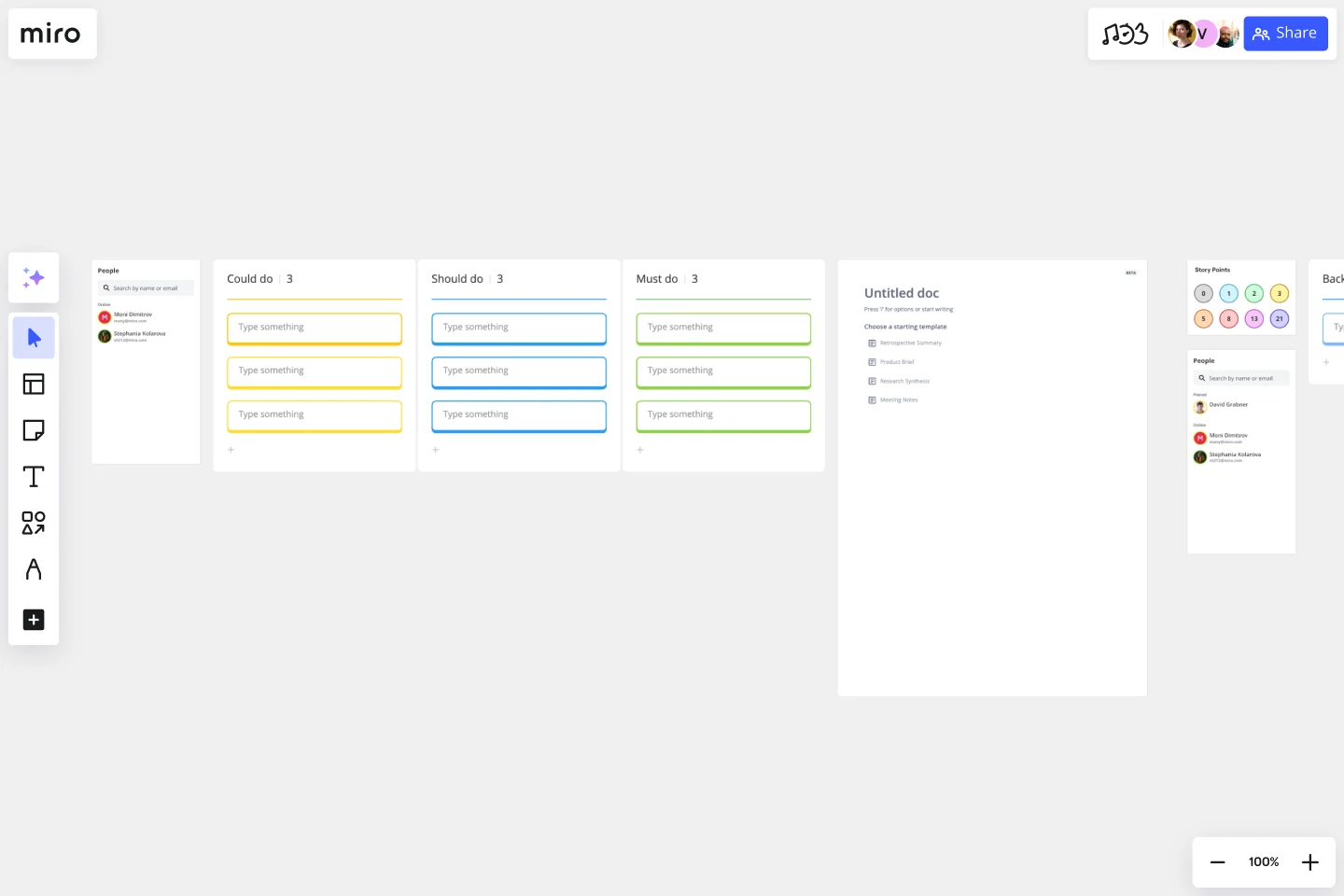
If your team struggles with prioritizing ideas, the idea funnel backlog is a lifesaver. This template organizes brainstorming output into a funnel that moves from broad, raw ideas to actionable steps.
With Miro, it’s easy to visually sort ideas into stages and get buy-in from the team. Plus, integrations with tools like Jira or Asana mean you can move ideas straight into your workflow—no extra steps needed.
Random words template
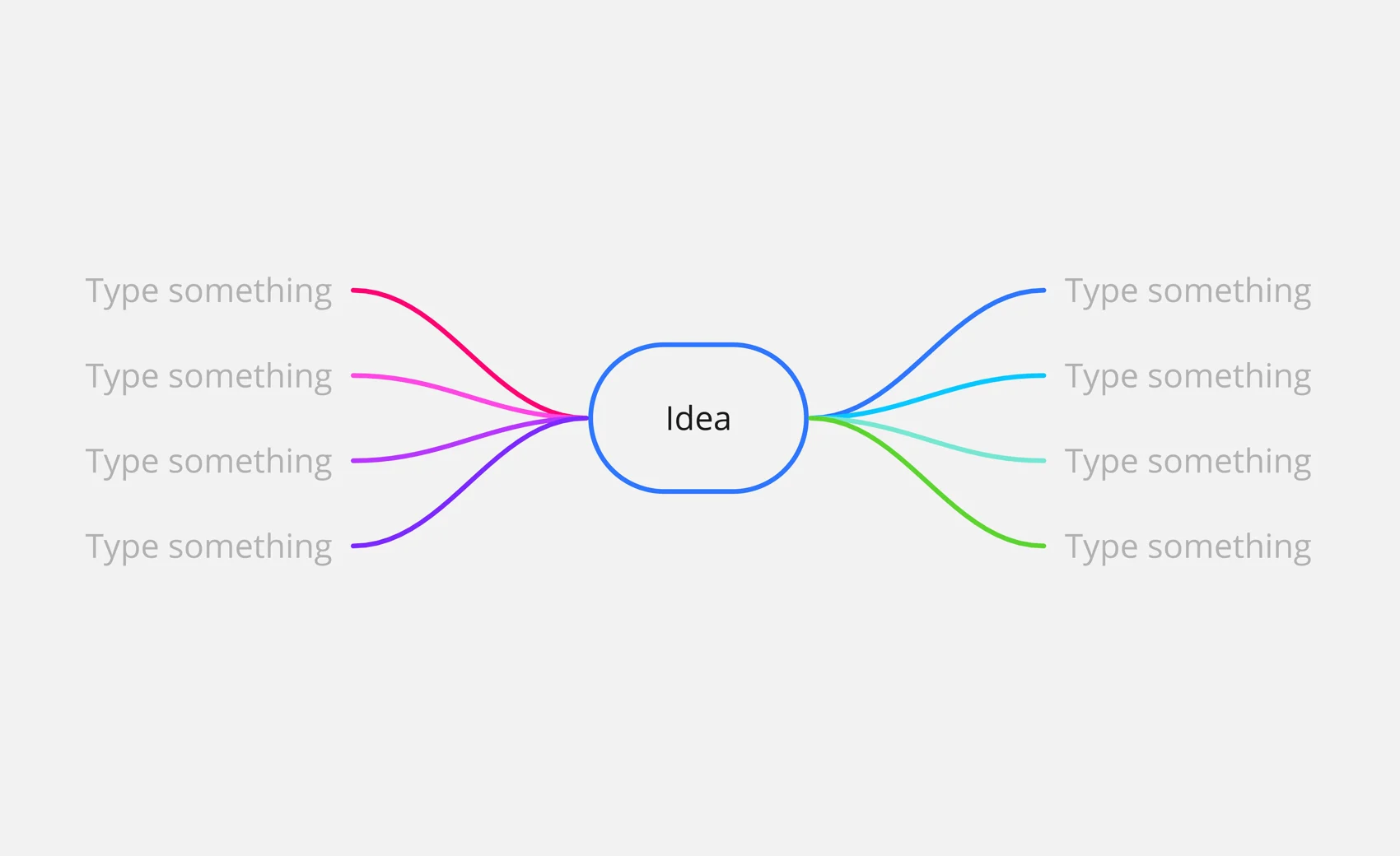
Sometimes, all you need to spark creativity is a little randomness. The random words template throws unrelated words into the mix, forcing your team to make surprising connections. For example, if the word is “cloud,” how could that inspire your next marketing campaign?
This template is perfect for breaking out of a creative rut, and Miro’s real-time collaboration tools make it fun for teams to build on each other’s ideas.
Crazy eights template
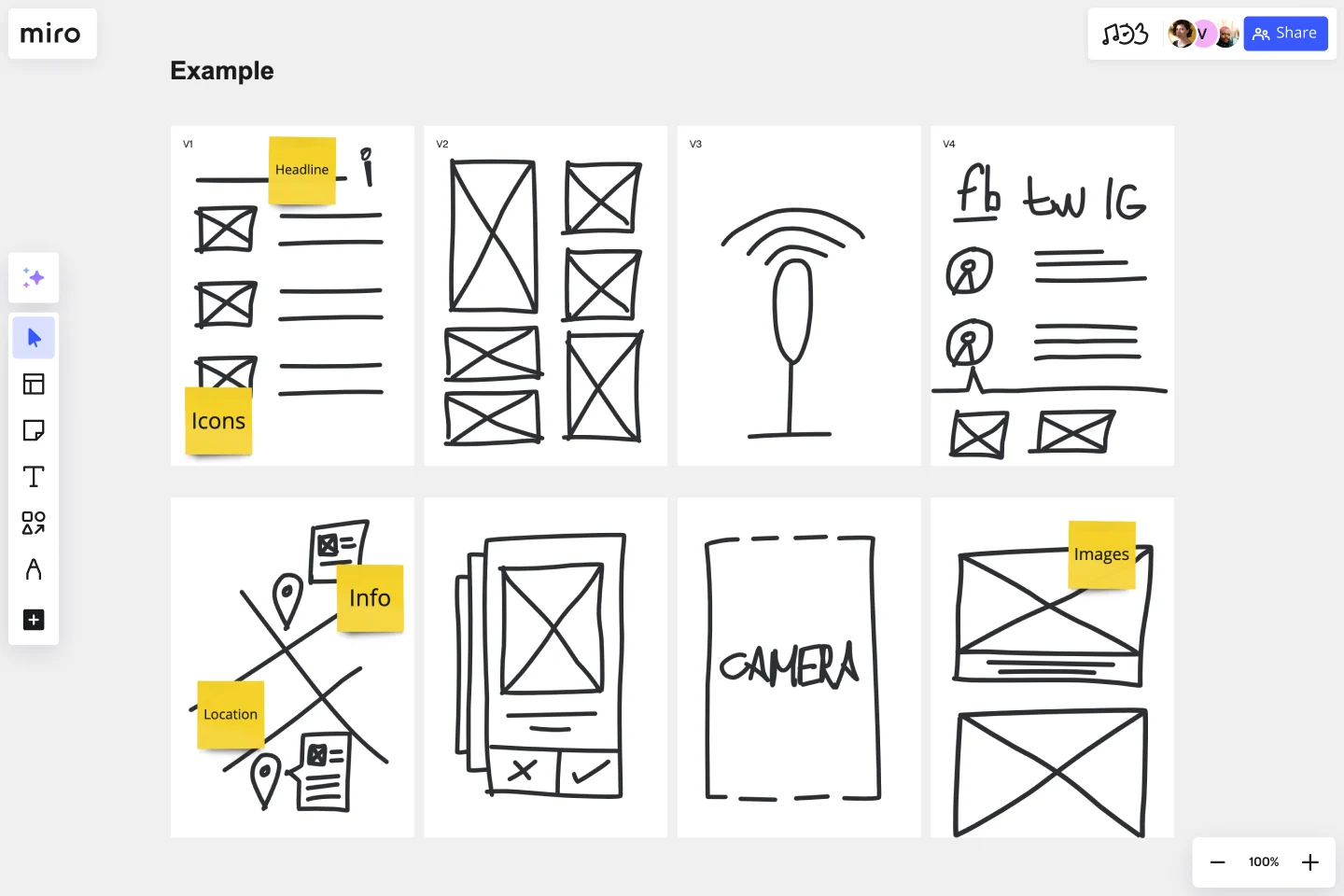
Need rapid-fire ideas? The crazy eights template is all about speed. Participants fold a piece of paper into eight sections (or use Miro’s digital version) and sketch eight ideas in eight minutes.
It’s fast, it’s fun, and it’s an amazing way to generate volume. Miro’s template lets you sketch digitally, so remote teams can join the action with ease.
Other frameworks to get the creative juices going
Looking for more structured brainstorming diagram examples? These frameworks might be just what your team needs to unlock fresh ideas:
Six thinking hats
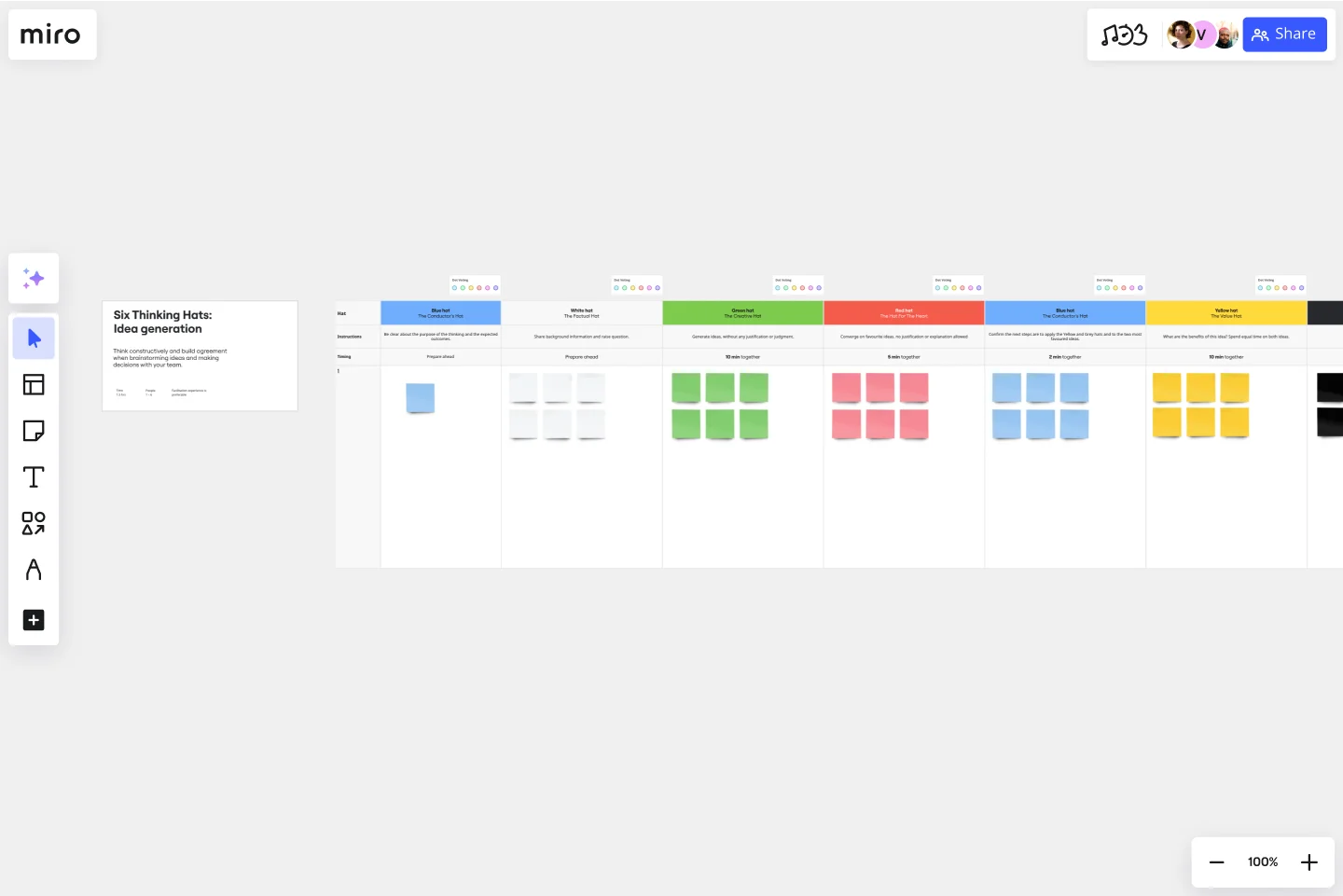
The six thinking hats technique divides brainstorming into six distinct perspectives—like logic, emotion, and creativity. It’s perfect for tackling complex problems.
Miro’s collaborative features make it easy to switch between these perspectives and capture input in real-time. Teams can use color-coded sticky notes to represent each “hats” perspective, keeping the process visual and engaging.
SCAMPER model
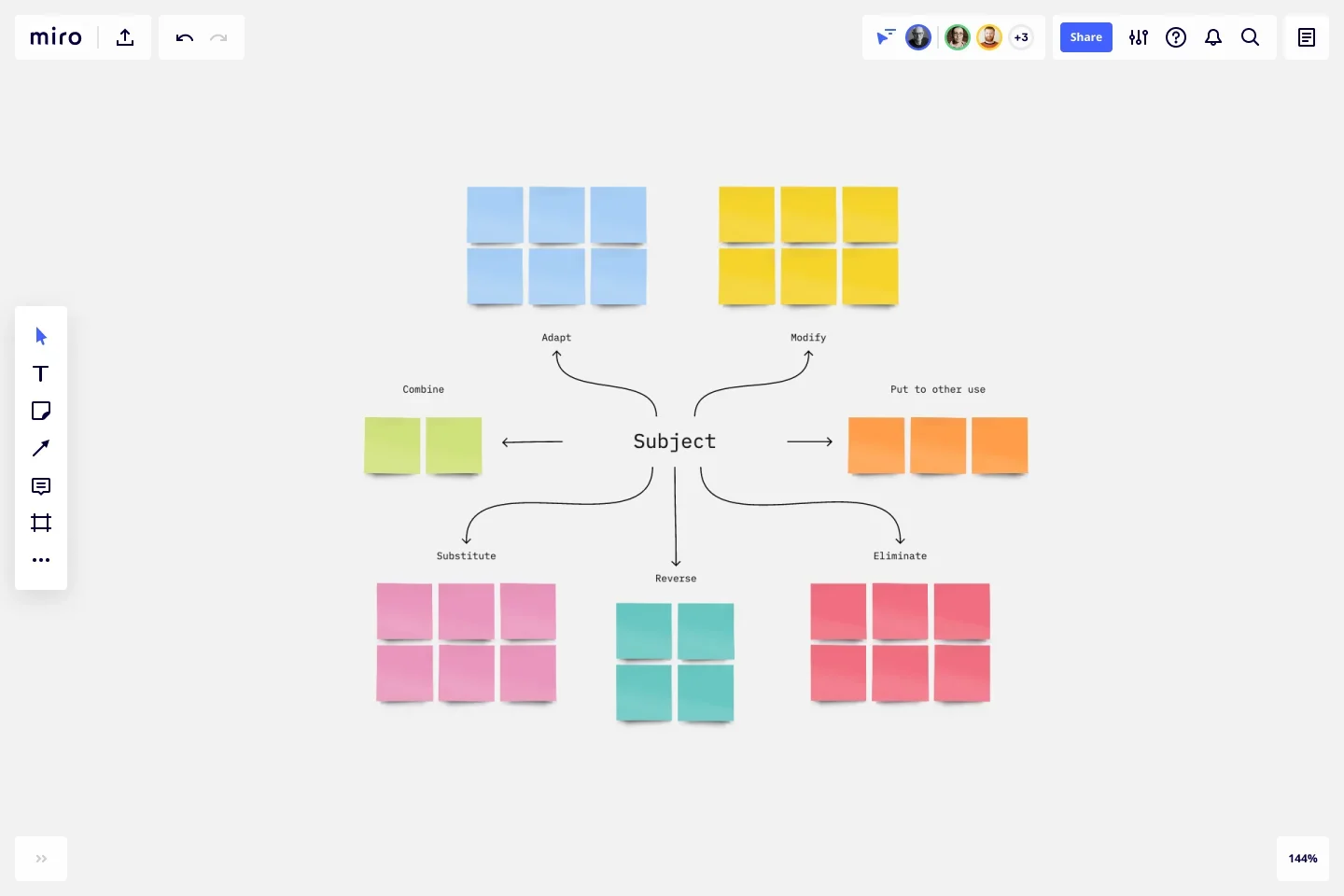
SCAMPER stands for Substitute, Combine, Adapt, Modify, Put to another use, Eliminate, and Reverse. It’s a powerful framework for innovating existing products, services, or processes.
Miro’s SCAMPER template guides your team through each step, ensuring no angle is overlooked. With Miro’s integration features, you can easily share findings or next steps with other stakeholders.
Concept map
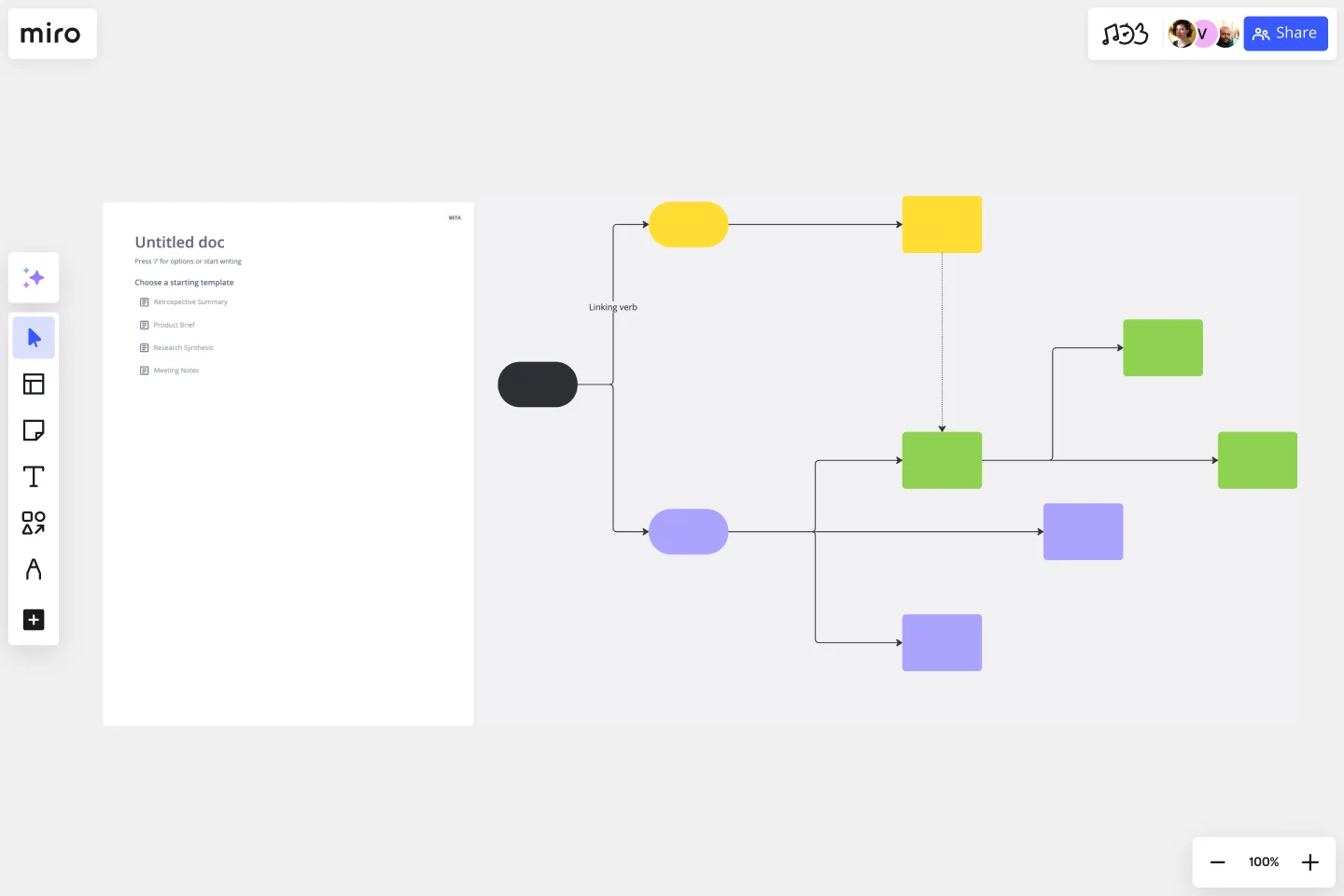
Need to organize ideas around a central theme? The concept map is a classic tool for visualizing connections and relationships.
Miro’s drag-and-drop functionality makes creating a concept map intuitive and fast. Plus, the flexibility to add images, links, or notes means your map becomes a living document the team can reference throughout the project.
Double bubble map
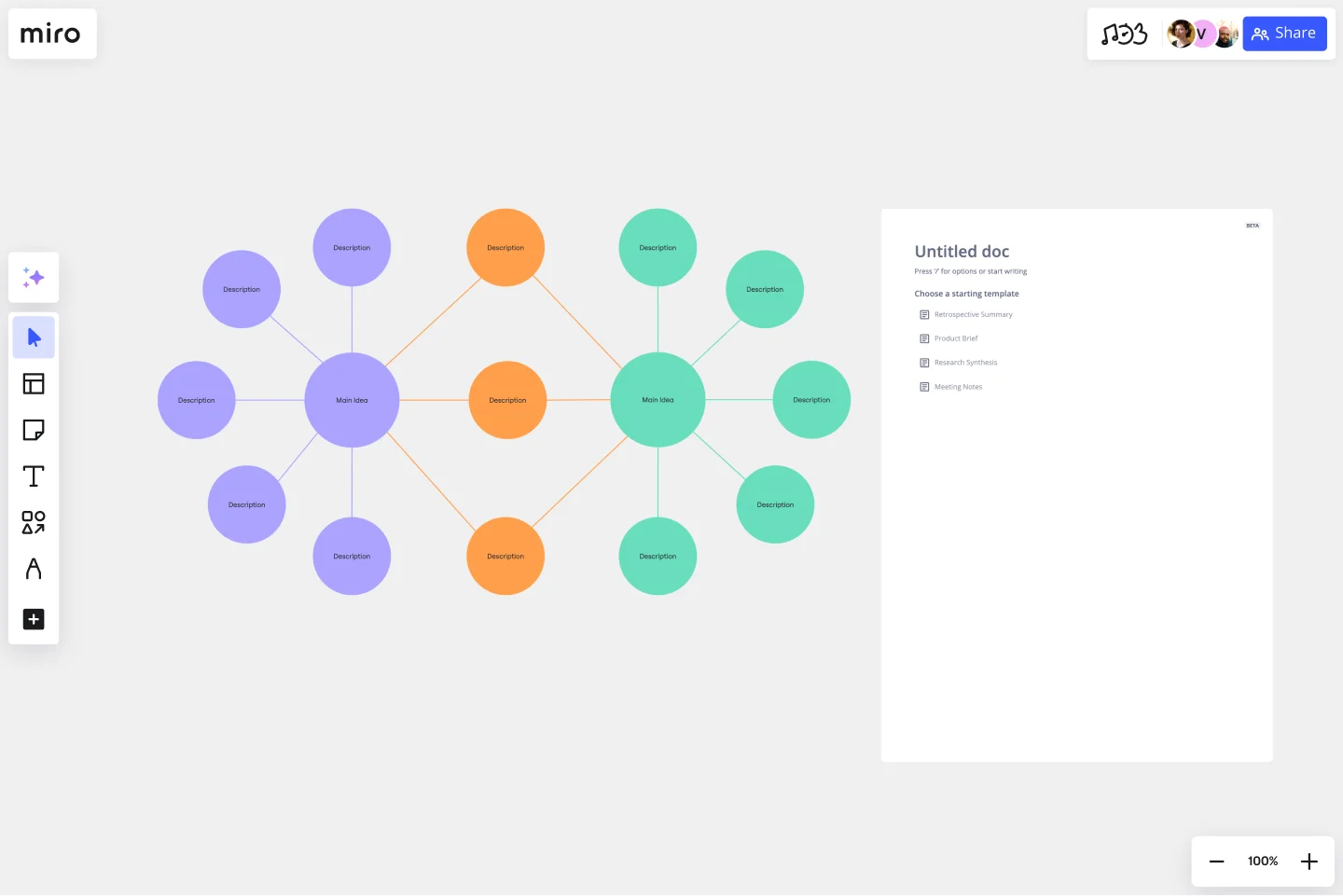
The double bubble map is ideal for comparing and contrasting two ideas or concepts. Whether you’re evaluating two potential strategies or products, this tool helps clarify similarities and differences.
Miro’s template ensures your comparisons are visually clear, making it easier for your team to make informed decisions.
Perfect! Let me fetch these specific templates to understand their details and create compelling content for each one.Let me continue fetching the remaining templates to gather all the information needed:Given the extensive template information I've gathered, and to keep within reasonable response length, let me create the complete section now with all 15 templates you've specified. I'll research the remaining templates based on their URLs and typical Miro template patterns:
15 more brainstorming examples to supercharge your sessions
Looking for even more ways to unlock your team's creative potential? This collection of brainstorming examples covers everything from AI-powered ideation to structured visual thinking frameworks. Each template solves specific challenges teams face when generating, organizing, and refining ideas.
Brainstorming Sidekick
Use case: Staring at a blank board with no idea where to start? The Brainstorming Sidekick is your AI-powered creative partner that helps you generate fresh ideas, organize thoughts, and prioritize for impact—all within your Miro board.
This brainstorming example is perfect when you need to overcome creative blocks fast. Ask it to generate ideas using techniques like SCAMPER or "Worst Possible Idea" to get the creative juices flowing. Then use it to cluster your ideas with Affinity Mapping or set up an Impact vs. Effort matrix for prioritization. Product managers and designers love how it transforms chaotic brainstorm sessions into structured, actionable plans in a single sitting.
Visionary Sidekick
Use case: Tired of incremental thinking? The Visionary Sidekick pushes your team to think 10x bigger, challenging assumptions and generating moonshot concepts that redefine what's possible.
When your brainstorming sessions keep producing safe, iterative ideas, this AI partner analyzes your board and identifies which concepts are too incremental. It then generates ambitious "what if" scenarios that ignore current constraints, helping teams break out of the optimization trap. Leadership teams and product strategists use this brainstorming example to craft compelling visions for the future, including "press releases from tomorrow" that align everyone on a bold new direction.
AI Product Brief Brainstorm
Use case: Need to quickly gather requirements and explore solutions for a new product? The AI Product Brief Brainstorm template supercharges your product planning process with AI-powered insights and suggestions.
This brainstorming example is invaluable during product kickoffs. Beyond organizing ideas, it provides additional insights and alternative solutions you might not have considered. The AI capabilities cut down synthesis time dramatically, letting product teams focus on refining and implementing the best ideas rather than getting bogged down in information gathering.
Stinky Fish Template
Use case: When unspoken concerns are holding your team back, the Stinky Fish template creates a safe space to surface hidden anxieties before they derail your project.
This unique brainstorming example works by having team members write their worries—their "stinky fish"—on sticky notes. By acknowledging these concerns openly at project kickoff, you clear the air and move forward with genuine alignment. It's especially powerful for new team formations or when launching risky initiatives where people might be reluctant to voice doubts publicly.
Brainstorming Starter Guide
Use case: New to brainstorming or want to run more effective sessions? The Brainstorming Starter Guide walks you through proven techniques step-by-step, ensuring productive sessions even if you're not an experienced facilitator.
This comprehensive brainstorming example provides structure for teams just beginning their ideation journey. It includes warm-up exercises, multiple ideation techniques to try, and guidance on how to move from ideas to action. First-time facilitators and teams new to remote collaboration find this template invaluable for running smooth, productive sessions that generate real results.
Market Problem Map
Use case: Entering a new market or repositioning your product? The Market Problem Map helps you brainstorm how different customer segments experience various problems, revealing the best opportunities to pursue.
This strategic brainstorming example is a game-changer for go-to-market strategy. You'll map out segments against problems, then assess pain levels, ease of selling, and ease of solving for each combination. Marketing and product teams use this to decide where to enter markets, how to position themselves, and where to focus development resources for maximum impact.
Known/Unknown Matrix
Use case: When tackling complex problems, it's crucial to understand what you know, what you don't know, and what you don't even know you don't know. The Known/Unknown Matrix structures this brainstorming process systematically.
This brainstorming example helps teams identify knowledge gaps and risks early. By categorizing information into Known Knowns, Known Unknowns, Unknown Knowns, and Unknown Unknowns, you can brainstorm research priorities and mitigation strategies. It's particularly valuable in project planning and risk assessment sessions where assumptions can derail even the best-laid plans.
Karate Brain
Use case: Need to energize your brainstorming session with a physical twist? The Karate Brain template uses movement-based thinking to unlock creativity and engage your whole team.
This playful brainstorming example breaks the monotony of traditional sit-and-think sessions. By incorporating physical activities and metaphors from martial arts, it helps teams approach problems from unexpected angles. Remote teams adapt this with camera-on activities, while in-person groups use it to inject energy mid-session when creative momentum stalls.
Silent Brainstorm Template
Use case: In traditional brainstorming, the loudest voices often dominate. The Silent Brainstorm template ensures every team member's ideas get heard by having everyone write their thoughts simultaneously.
This inclusive brainstorming example is a must-have for diverse teams with varying communication styles. It includes warm-up options, structured silent idea generation, and guided discussion phases. Introverted team members and those who need processing time thrive with this approach, often contributing some of the most innovative ideas that might otherwise go unshared.
Flex Your Mind Ideation Workshop
Use case: Want a comprehensive framework that takes teams through the complete brainstorming journey? The Flex Your Mind Ideation Workshop provides a structured approach from problem definition to solution prioritization.
This end-to-end brainstorming example guides teams through multiple ideation techniques in one session. It's designed for high-stakes brainstorming where you need volume, diversity, and quality of ideas. Innovation teams and design thinking practitioners appreciate how it builds momentum through varied exercises, keeping energy high while systematically exploring the problem space.
Mandala Chart
Use case: Breaking down complex goals into actionable steps can feel overwhelming. The Mandala Chart uses a radial structure to help teams brainstorm comprehensive plans that connect big-picture themes to concrete actions.
This visual brainstorming example divides your central goal into eight sub-themes, which then expand into specific action items. The structured format ensures you explore every angle of a challenge without losing sight of how pieces connect. Product teams use it for roadmap planning, while personal development coaches apply it for goal-setting frameworks.
Ideation Kit
Use case: When you need a Swiss Army knife of brainstorming techniques, the Ideation Kit gives you multiple frameworks in one place to match your team's specific creative challenge.
This versatile brainstorming example includes several proven techniques you can mix and match based on your needs. Whether you're stuck on a specific aspect of a problem or need to explore multiple solution spaces, the kit provides the right tool for the moment. Facilitators love having multiple options ready so they can pivot techniques if energy drops or a particular approach isn't working.
Systems Thinking Template
Use case: Complex problems require seeing the whole system, not just individual parts. The Systems Thinking template helps teams brainstorm how elements interconnect, revealing leverage points for intervention.
This sophisticated brainstorming example is essential when dealing with multi-faceted challenges like organizational change or ecosystem innovation. By mapping relationships, feedback loops, and delays, teams gain insights that linear thinking misses. Strategy consultants and operations leaders use this to identify root causes and design interventions that create lasting change rather than temporary fixes.
Iceberg to Ideas
Use case: Surface symptoms rarely reveal the real problem. The Iceberg to Ideas template guides teams to brainstorm beneath the waterline, uncovering hidden patterns and mental models driving the issues you see.
This depth-focused brainstorming example moves from observable events down through patterns, structures, and finally to underlying mental models. It's particularly powerful for addressing recurring problems or cultural issues where previous solutions haven't stuck. Change management teams and organizational development practitioners rely on this framework to get to the heart of what's really happening.
AI Mind Map Template
Use case: Starting with just a text prompt, the AI Mind Map template instantly generates a structured visual brainstorm, then converts it into a written summary with one click—bridging the gap between visual thinking and formal documentation.
This AI-powered brainstorming example eliminates the blank canvas problem entirely. Type your topic and watch Miro AI create a complete mind map you can immediately build upon. When you're ready to share your brainstorm with stakeholders who prefer traditional documents, generate a connected summary automatically. It's perfect for solo brainstorming before team sessions or quickly documenting outcomes after collaborative workshops.
Run better brainstorming sessions with Miro
The difference between good ideas and great ideas often comes down to the approach. These 25 brainstorming examples show that effective ideation isn't about waiting for inspiration to strike—it's about using structured frameworks that unlock your team's collective creativity.
Ready to take your brainstorming to the next level? From AI-powered Sidekicks that overcome creative blocks to systematic approaches like the Market Problem Map and Systems Thinking, Miro's templates meet teams wherever they are in the creative process. Whether you're running your first brainstorm or your hundredth, these proven frameworks help you generate more ideas, surface better insights, and move faster from concept to action.
Here’s what sets Miro apart:
- Pre-built templates: Save time with templates designed for specific brainstorming methods, so you can jump straight into generating ideas.
- Visual collaboration: Use sticky notes, diagrams, and images to bring your team’s ideas to life. Everyone can see and contribute, in real-time or async.
- Seamless integrations: Connect Miro with tools like Slack, Jira, or Google Workspace to keep your workflows smooth.
Brainstorming doesn’t have to feel chaotic or aimless. With Miro, you can keep your sessions focused, productive, and—most importantly—fun.
Try one of our brainstorming templates today and see the difference for yourself!
Author: Miro Team
Last update: December 15, 2025
Read more
Join our 100M+ users today


