
370 likes
3.1K uses

A Stakeholder RACI map is our mash-up of a traditional responsibilities chart, and a stakeholder map often used in service design.
While this template is not intended to help you be exhaustive in defining responsibilities, it should help you get a quick start on identifying and involving the right people in the right ways from the beginning of your project - or help you realign a project that has already begun.
People: 1-3+ people (dependent upon people knowledge)
Length: 30+ minutes or less
Steps:
Identify key cross-functional stakeholders and teams (or switch out "Team" with "Deliverable Name" instead)
Place each of them across the map dependent upon their level of responsibility and involvement in the project
Use markers to identify important aspects about people
Share out with teams to ensure alignment
Tips:
Ask for help - partner with someone in your company or on your team that knows who's who to work with
Look out for too many people in the same RACI group with not much representation in others, or the same people across many different groups as they could become a bottle-neck
This map should have strong cross-functional representation - if it doesn't, you could be faced with some pretty big knowledge gaps

H&R Block
H&R Block, Inc. (NYSE: HRB) provides help and inspires confidence in its clients and communities everywhere through global tax preparation, financial products, and small business solutions.
Prune the Product Tree Template
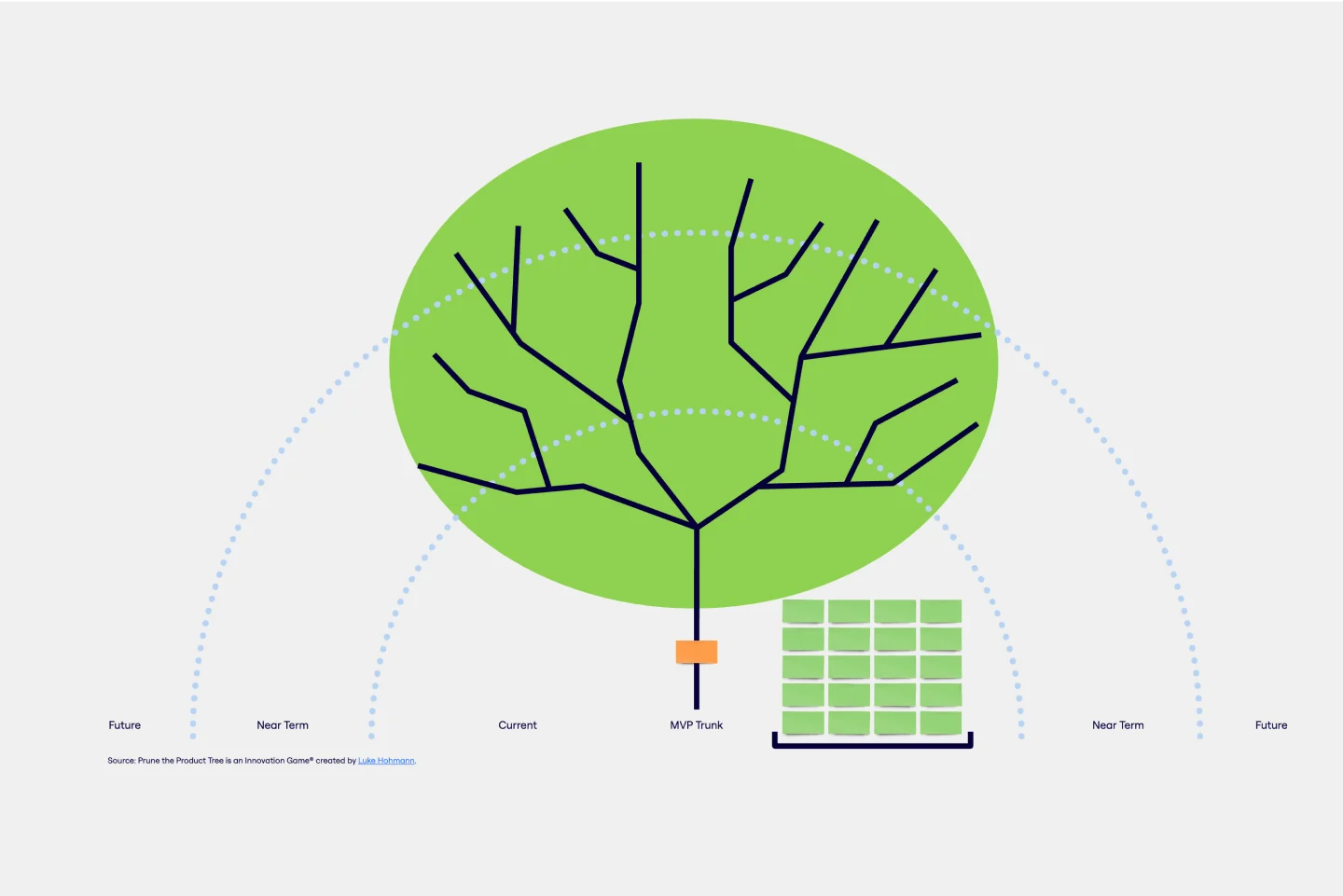
Prune the Product Tree (also known as the product tree game or the product tree prioritization framework) is a visual tool that helps product managers organize and prioritize product feature requests. The tree represents a product roadmap and helps your team think about how to grow and shape your product or service by gamifying feedback-gathering from customers and stakeholders. A typical product tree has four symbolic features: the trunk, which represents the existing product features your team is building; the branches, each of which represents a product or system function; roots, which are technical requirements or infrastructure; and leaves, which are new ideas for product features.
Prototype Template
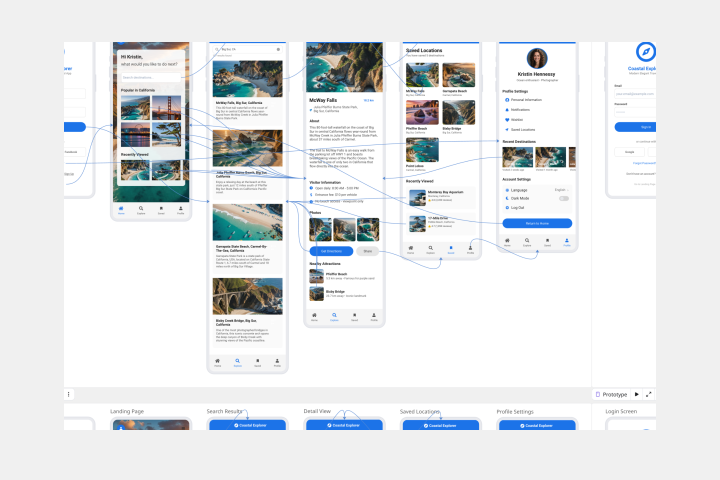
A prototype is a live mockup of your product that defines the product’s structure, user flow, and navigational details (such as buttons and menus) without committing to final details like visual design. Prototyping allows you to simulate how a user might experience your product or service, map out user contexts and task flows, create scenarios to understand personas, and collect feedback on your product. Using a prototype helps you save money by locating roadblocks early in the process. Prototypes can vary, but they generally contain a series of screens or artboards connected by arrows or links.
Prune the Product Tree Template
Prune the Product Tree (also known as the product tree game or the product tree prioritization framework) is a visual tool that helps product managers organize and prioritize product feature requests. The tree represents a product roadmap and helps your team think about how to grow and shape your product or service by gamifying feedback-gathering from customers and stakeholders. A typical product tree has four symbolic features: the trunk, which represents the existing product features your team is building; the branches, each of which represents a product or system function; roots, which are technical requirements or infrastructure; and leaves, which are new ideas for product features.
Prototype Template
A prototype is a live mockup of your product that defines the product’s structure, user flow, and navigational details (such as buttons and menus) without committing to final details like visual design. Prototyping allows you to simulate how a user might experience your product or service, map out user contexts and task flows, create scenarios to understand personas, and collect feedback on your product. Using a prototype helps you save money by locating roadblocks early in the process. Prototypes can vary, but they generally contain a series of screens or artboards connected by arrows or links.