About the Project Startup Template
The Project Startup Teamplate is a comprehensive framework for defining, aligning, and documenting the strategic and tactical foundations of a digital product. It guides teams through six critical dimensions, from understanding your users to defining the look and feel, ensuring everyone is building toward the same vision.
This template is designed for product teams, designers, founders, and strategists who need to move from ambiguity to clarity before jumping into design and development.
How to use the Project Startup Template
The template is organized into six interconnected frames. Work through them sequentially or jump to the areas where you need the most clarity. Each frame includes structured prompts, examples, and guidance to help you capture decisions and align your team.
1. User Personas
Start by defining who you're building for. Create a persona for each key user type and describe their behaviors, motivations, goals, barriers, values, and context. Use prompts like "What do I do?", "Why do I do it?", "What's stopping me?", and "Where am I?" to build a grounded, human picture of your audience. Base personas on real research or interviews, not assumptions.
2. Features
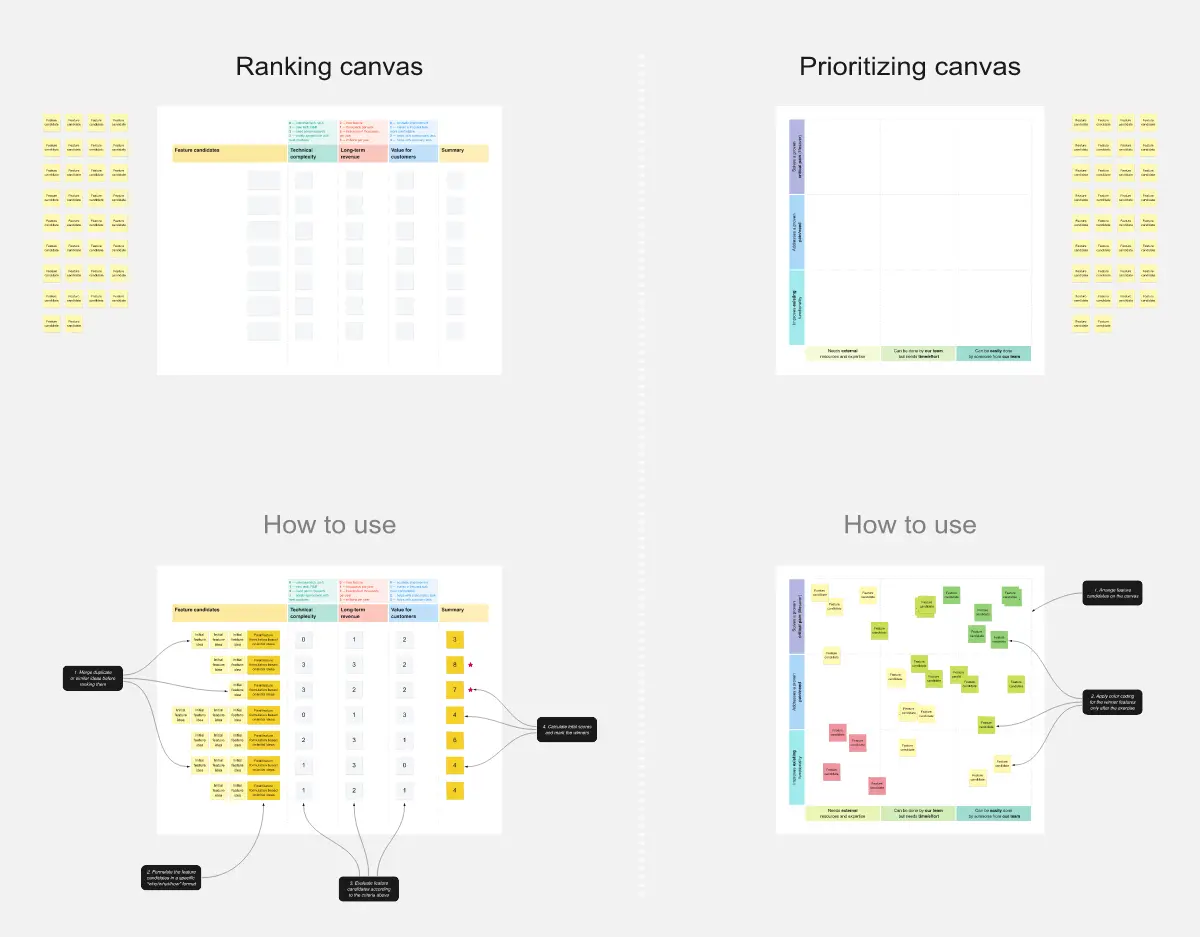
Map out what your product will do. Organize features by Component (platform) and Area (journey or module), then prioritize ruthlessly using four columns: Must Have (launch-blockers), Could Have (important but not critical), Nice to Have (future optimizations), and No Design Needed (backend or infrastructure work). Use the test: "If this took a year to build, would we wait to launch?" to separate must-haves from everything else.
3. Competitors
Research 3–4 key competitors and document how they position themselves, what they offer, who they target, how they sell, and where they fall short. Fill in rows for positioning, pricing, product, audience, offering, competitive advantage, sales channel, marketing strategy, support, and content. Use this analysis to identify market gaps and opportunities where you can differentiate or do better.
4. Environmental & Social Impact
Assess the broader impact of your product on the environment, individuals, and communities. Track metrics like carbon emissions, data storage, green hosting, accessibility compliance (WCAG 2.1 AA for web and mobile), localization, target user base, data privacy (GDPR/CCPA), and ethical AI practices. Treat this as a living document and update it as your product scales or practices improve.
5. Tone of Voice
Define how your product communicates. Capture your brand personality (who you are and who you're not), language rules, words to never use, what customers want and don't want from your communication, and 3–4 tone pillars that guide every message. Use real examples from your product (error messages, CTAs, emails) to test whether your guidelines hold up in practice.
6. Mood Board
Build a visual reference that captures the aesthetic, emotion, and style you want your product to embody. Collect images, color palettes, typography, UI patterns, textures, and descriptive words that evoke the right feeling. Start broad, look for patterns, refine to 8–12 strong pieces, and arrange with intention. Use this board as a decision-making tool when debating design choices later.
When to use the Project Startup Template
Use this template at the start of a new product, feature, or redesign to align your team before design and development begin. It's especially useful when you're moving from concept to execution, onboarding new team members, or resolving misalignment across stakeholders. It's also a great tool for auditing an existing product to identify gaps in strategy, accessibility, or positioning.
The Project Startup Template works best as a living artifact. Return to it as you learn, iterate, and scale, updating assumptions, refining priorities, and holding yourself accountable to the standards you set.