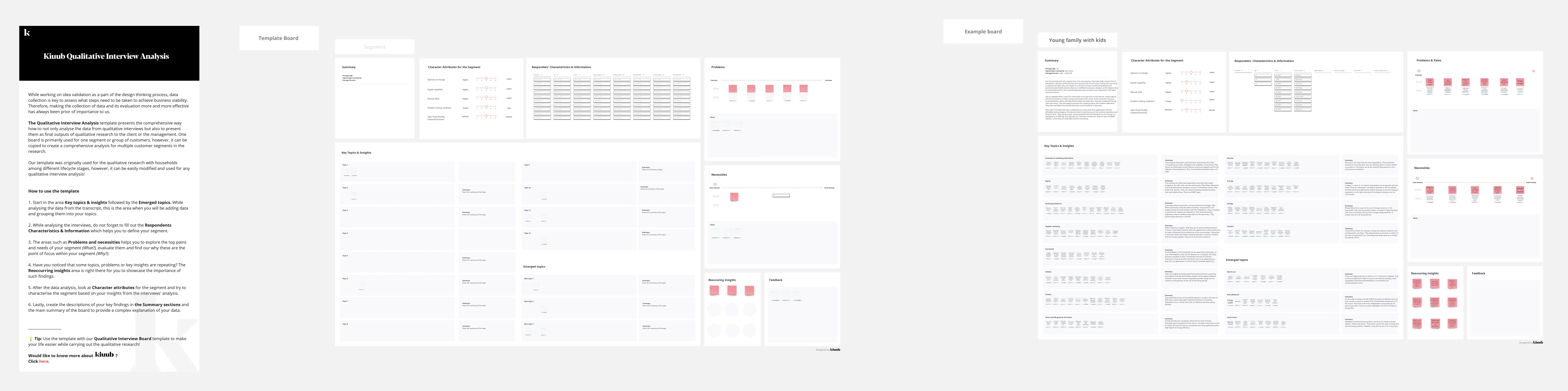
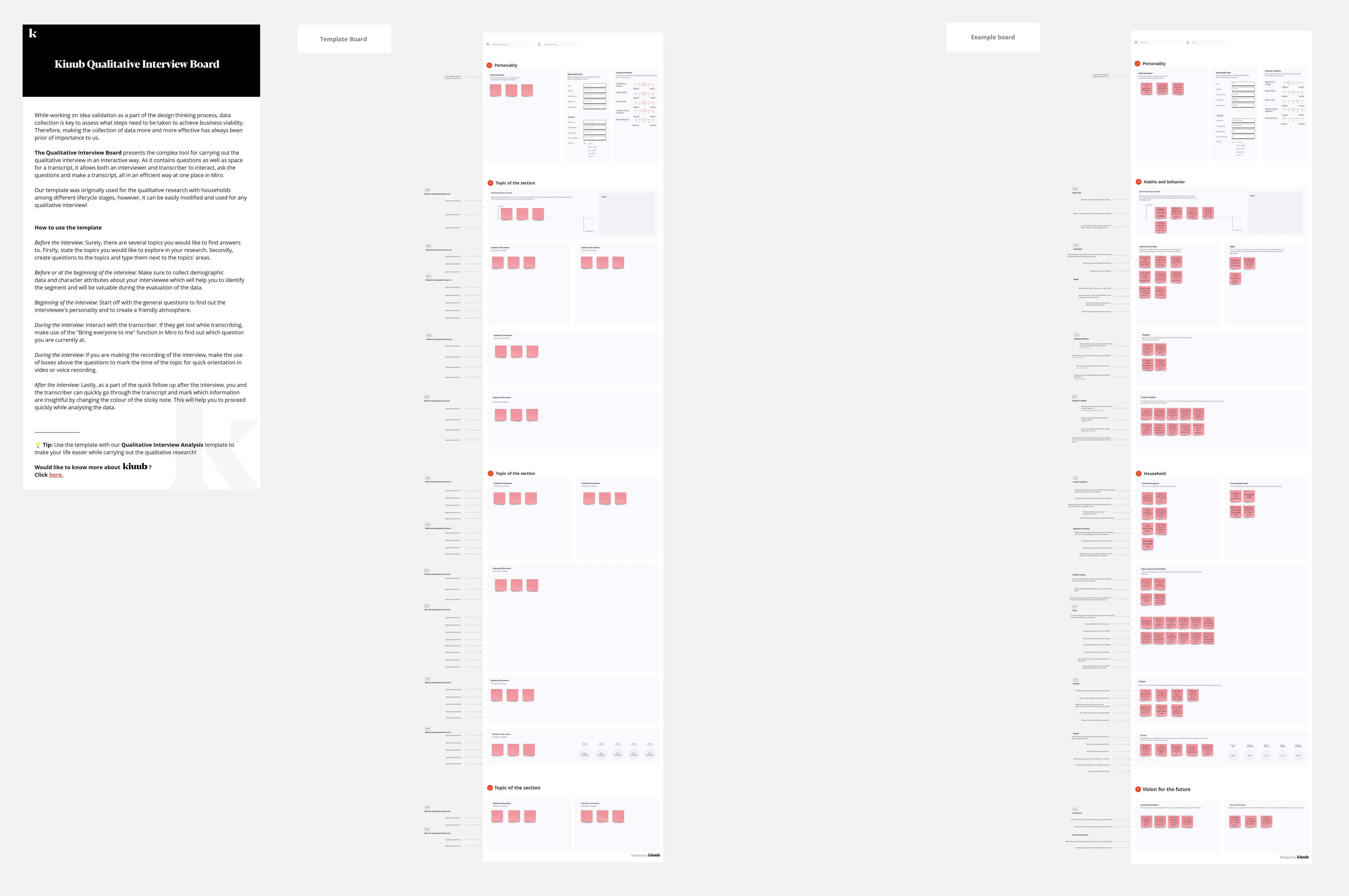
This intro will explain to you how to use the Miro board and overall analyse your qualitative interviews
Conduct interview - focus on the conversation and record it
If you're doing a qualitative interview alone, don't take notes and concentrate only on the conversation. Ask open questions, go deeper where the participant states interesting aspects and cover at least the pre-defined set of questions. Most importantly, record it.
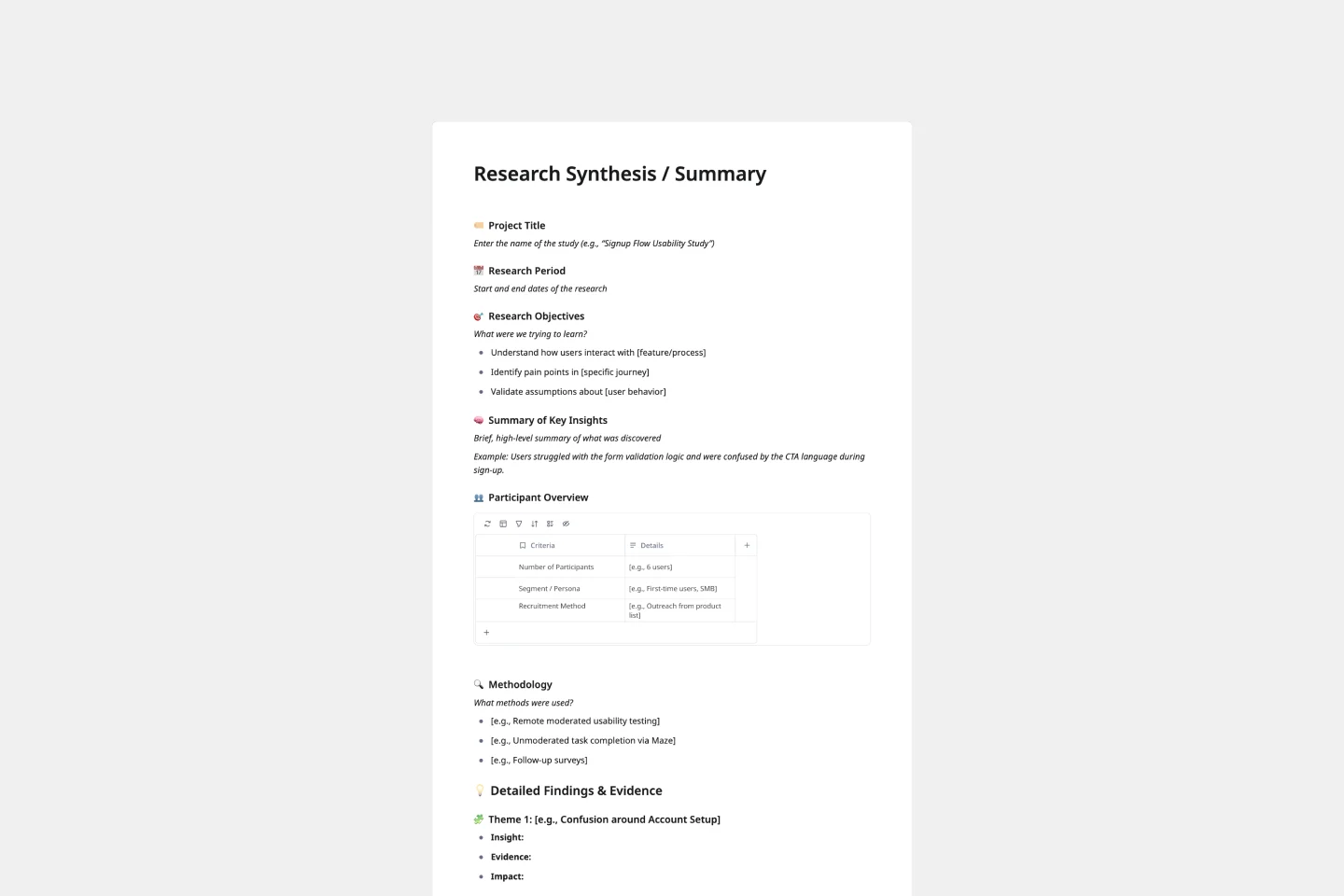
Summarize the interview findings per participants
Make sure you create a transcript out of the recording - via a tool if needed. Read through the transcript and extract the insights which can answer your assumptions or just feel important overall. Insert them within the board below.
Tip: Assign tags to the sticky notes (e.g. positive = statement that validates an assumption or quote = a quote which can be used in the presentation to generate trust in the presented slides)
Create an overview of the key findings that (in)validate your assumptions
Copy-paste the most important findings from point 2 into the board, which is structured based on an assumption. This will be your central board with the answers to your assumptions.
Draw conclusions, build storyline and create presentation based on findings
Based on the findings, you can answer whether your assumption was validated or invalidated. Also, why they were (in)validated and what implications that has for the project and the client company.
E.g. If you have invalidated an initial value proposition by a company, but you were able to find new needs and a new value proposition for the same target groups, you underline that with quotes from the interviews. Ultimately, you can propose next steps for the company to test this value proposition.