About this template
The Personal Brand Workshop template helps you run a structured, visual session to clarify and activate a personal brand you can move from reflection to decision to action in one collaborative space. Use this board when you want a practical, step‑by‑step flow rather than a theoretical exercise.
This template is designed to be easy to navigate, even for people new to the topic, with concise instructions, guided questions, and examples that show what good looks like. It also includes built‑in prompts to capture decisions so you leave the session with a concrete plan instead of loose notes.
Who this template is for
This template is ideal for:
Individuals who want to clarify their personal brand or professional positioning
Mentors and coaches guiding 1:1 or small‑group sessions
Team leads, managers, or HR partners facilitating development conversations
It works well for both remote and in‑person workshops, and can be used in live sessions or asynchronously as a self‑paced exercise.
When to use this template
Use this template when you need a repeatable, visual process to:
Prepare for a mentoring or coaching conversation
Align on goals, audience, and key messages before creating content
Turn high‑level ideas into a concrete 30‑day action plan
It fits well into short 20–30 minute meetings (for example, mentor check‑ins) as well as deeper solo work blocks where you want more time for reflection and writing.
How to use this template
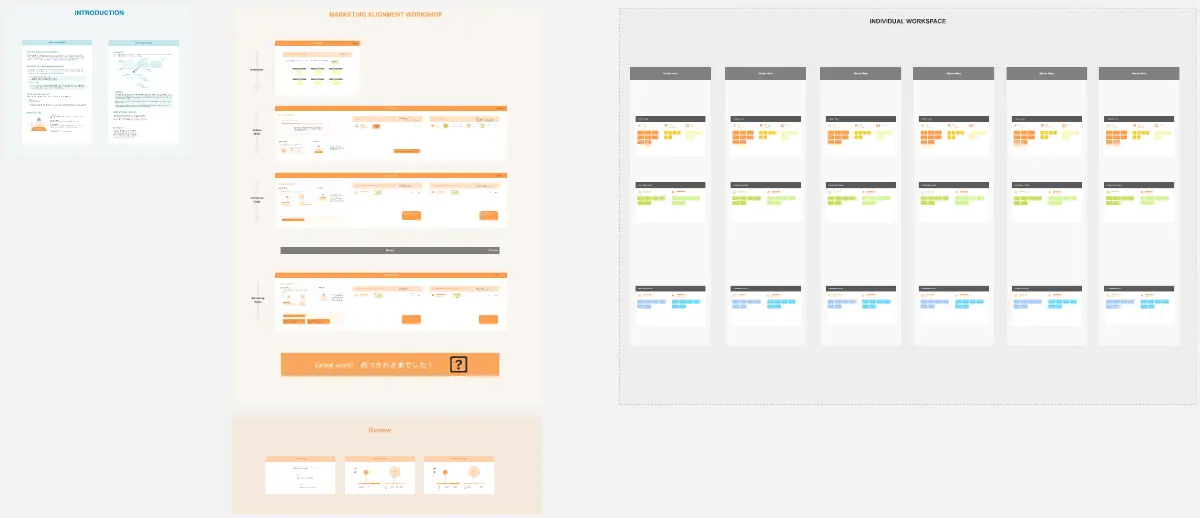
Start with the overview frame
Encourage everyone to zoom out first to see the full flow, then navigate frame by frame.
Complete the reflection frames
Invite participants to add sticky notes to the prompts (for example: 'What do I want to be known for?' or 'Who is my primary audience?'). Use color coding or dot voting to distinguish different themes, and cluster similar ideas together as you go.
Move into decision frames
Alone or with a mentor, review the clustered ideas and turn them into a small set of clear decisions, such as a one‑sentence positioning statement, 2–3 main goals, and 3–5 content or focus pillars.
Create the action plan
Use the final frames to translate decisions into concrete next steps, owners, and timelines. Perhap, you could create a simple Kanban or calendar section on the board so that you leave with an actionable plan you can follow after the session.
Review and iterate
At the end of the session, zoom out and review the board. Add comments or reactions to clarify anything that feels unclear, then refine text labels or instructions so the template is easier to reuse next time.