45 likes
334 uses

Once you've defined a validated problem or opportunity, the next challenge is generating solutions and getting buy-in for them. This template provides a structured approach to move from problem definition to tested concepts, helping teams brainstorm widely, prioritize strategically, and develop ideas in a format that makes validation easy.
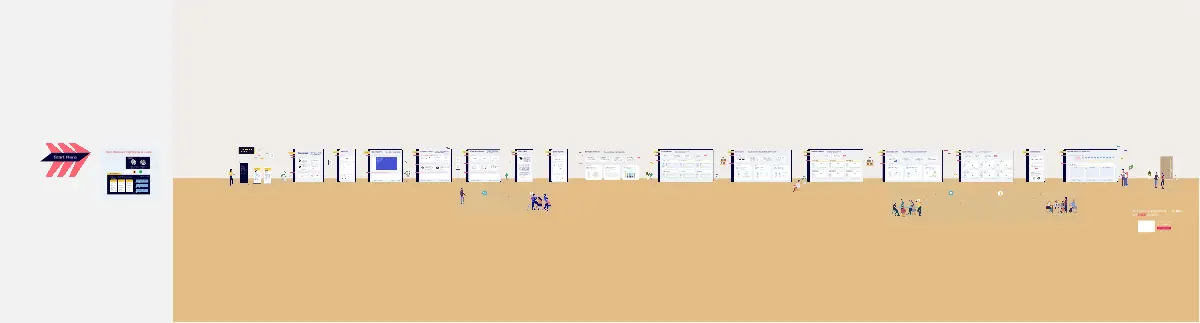
This template guides product and project teams through the Develop phase of the Double Diamond framework, moving through creative ideation, evaluation, and concept development. Use it to ensure you invest resources in solutions customers actually want before committing to full development.
This template is designed for:
Product managers who need to generate and validate concepts
Project leaders moving from problem definition to solution development
Innovation teams exploring multiple approaches before committing resources
Design teams facilitating brainstorming and concept development sessions
Anyone leading creative problem-solving sessions who wants better structure and outcomes
Whether you're working on new features, services, products, or process improvements, this framework helps you generate better ideas and select the right ones to pursue.
This template enables you to:
✅ Generate a wide range of creative solutions using structured ideation techniques
✅ Involve the whole team in creative thinking, not just the loudest voices
✅ Evaluate ideas strategically based on customer impact and implementation difficulty
✅ Prioritize which concepts to develop before investing significant resources
✅ Bring the best ideas to life in a way that stakeholders and customers can react to
✅ Validate solution desirability early, reducing the risk of building the wrong thing
This template is designed for collaborative workshops with your cross-functional team. The template includes structured activities that make creative thinking accessible to everyone, not just those who consider themselves "creative."
Revisit the problem or opportunity you've defined. What challenge are you solving? For whom? What would success look like? This grounds the ideation in real customer needs rather than abstract creativity.
Use the Creative Matrix to generate a wide variety of solution ideas. This structured approach helps teams think beyond obvious solutions and explore unexpected combinations.
The Creative Matrix works by combining different dimensions of your solution space, forcing you to consider unusual approaches you might not naturally generate. This technique democratizes creativity as everyone can contribute, not just those who think of themselves as "idea people."
Work together to fill the matrix. Quantity matters here. Resist the urge to evaluate too early. Encourage wild ideas alongside practical ones.
Not all ideas are created equal. Use the Importance/Difficulty Matrix to evaluate your concepts based on two critical dimensions:
Importance (Impact) – How well does this idea solve the customer's problem? How much value would it create?
Difficulty – How hard would this be to implement? What resources, time, or capabilities would it require?
Evaluate importance first before you consider or discuss difficulty.
Plot your ideas on the matrix to identify which concepts offer the best combination of high customer impact and feasible implementation. These "high importance, low difficulty" ideas become your priority candidates for development.
This step helps you make strategic choices about where to invest your energy, focusing on ideas most likely to succeed.
Take your most promising ideas and develop them into concrete concepts using the Value Proposition Poster. For each concept, articulate:
Who it's for – Which specific customers or users would benefit?
What value it creates – What jobs does it help people accomplish? What pains does it solve? What gains does it deliver?
How it works – What does the solution actually do? What are its key features or components?
The Value Proposition Poster transforms abstract ideas into tangible concepts that stakeholders and customers can understand and react to. This visual format makes feedback conversations productive.
Decide what to do with your developed concepts. What validation is needed? Who should you get feedback from? What would you need to test or prototype? Turn your creative work into actionable next steps that move concepts toward implementation.
💡 Separate ideation from evaluation – Generate lots of ideas individually first, then evaluate. Mixing these modes kills creativity and results in safer, less innovative solutions.
💡 Include diverse perspectives – The best ideas emerge when you have different roles, expertise, and viewpoints in the room. Don't limit brainstorming to designers or product people.
💡 Be honest about difficulty – Teams often underestimate implementation challenges. Include technical and operational experts when evaluating difficulty to get realistic assessments.
💡 Focus on customer value, not features – When describing concepts, lead with the value created for customers, not the features you'd build. Features are how you deliver value, not the value itself.
💡 Test concepts early – Use your Value Proposition Posters to get customer feedback before you invest in detailed design or development. Paper concepts are cheap to change; built products are expensive to fix.
Most brainstorming sessions produce predictable, incremental ideas or get dominated by the loudest voices in the room. Without structure, teams either generate too few ideas or too many unfocused ones, then struggle to know which to pursue. This template provides proven frameworks that help diverse teams generate better ideas, evaluate them objectively, and develop the right concepts. Increase your chances of building solutions customers actually want.
This template gives you the framework, but sometimes you need an experienced facilitator to guide the conversation and navigate complex stakeholder dynamics.
What Could Be works with product and innovation leaders to facilitate these sessions, coach through tricky situations, and build internal capability.
Get in touch to explore how we can help.

What Could Be
Create more things people love ❤️
Create more things people love and fewer things that people hate. What Could Be make decades of design expertise available to teams in an instant. Our customers use our tools every day to deliver better work. • Quickly assess a project and identify exactly what you need to do • Take action confidently with self-guided activities in Miro • Make the most of design thinking training by putting what you learn to work