Walk the Wall: From Purpose to Action
Walk the Wall is a structured facilitation template designed to help teams slow down before they speed up. When change feels complex, messy, or stuck, this template creates the space to clarify why a change matters, what needs to be true for it to succeed, and how the work should realistically unfold over time.
Rather than jumping straight into a plan or timeline, Walk the Wall guides teams through the thinking that often gets skipped. It helps align people on outcomes first, then conditions for success, and only then the work itself.
This template is especially useful when teams feel busy but misaligned, when initiatives stall despite good intentions, or when leaders sense that everyone is working hard but not necessarily on the right things.
What this template helps you achieve
This template helps teams:
Clarify the purpose behind a change before defining solutions
Identify the conditions and enablers required for success
Translate those enablers into concrete, actionable work
Map that work over time in a way that reflects real-world constraints
Build shared understanding and alignment across diverse stakeholders
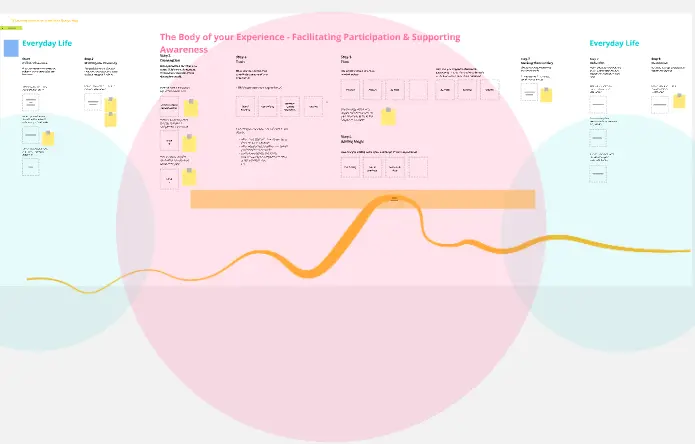
By walking the wall from left to right, teams move from abstract intent to practical action without losing sight of the bigger picture.
Who this template is for
Walk the Wall is designed for people who facilitate change, strategy, or transformation work, including:
Consultants and advisors
Change leaders and transformation teams
Leaders facilitating strategy or planning sessions
Workshop facilitators and internal practitioners
It works well in live workshops, leadership offsites, working sessions, and collaborative planning meetings. While it is structured, it does not require deep change management expertise to use. The prompts and layout guide participants through the process naturally.
How to use the template
The template is designed to be used from left to right, following four simple steps.
1. Clarify the Purpose
Start by defining why the change is happening in the first place. Participants add sticky notes describing the outcome they are trying to achieve and why it matters. This section intentionally avoids solutions or activities. The focus is on intent, not execution.
Helpful prompt:
2. Define the Enablers
Next, identify what must be true for the purpose to be realized. Enablers are the conditions required for success. These might include capabilities, alignment, readiness, decisions, behaviors, or infrastructure.
Helpful prompt:
3. Identify the Work
Once enablers are clear, participants brainstorm the specific actions required to put those enablers in place. Each sticky should clearly support one or more enablers. This creates a focused inventory of work tied directly to outcomes.
Helpful prompt:
4. Map the Work Over Time
Finally, participants move the work into the timeline. No new work should be created in this step. The goal is to decide what needs to happen first, what needs to happen next, and when the rest of the work should realistically occur.
Helpful prompt:
Why this template works
Many planning tools focus on activities and timelines before teams are aligned on purpose and success conditions. Walk the Wall intentionally reverses that pattern.
By separating the why, the conditions, the work, and the timing, teams are able to have better conversations, make clearer tradeoffs, and create plans that reflect reality rather than aspiration.
The visual, left-to-right layout makes thinking visible and shared. The structure provides guardrails without feeling rigid, making it equally effective for facilitated sessions or independent use.
Inspired by Lean Change | Adapted by Reroute Consulting