What is the Logic Model with Stickies Template?
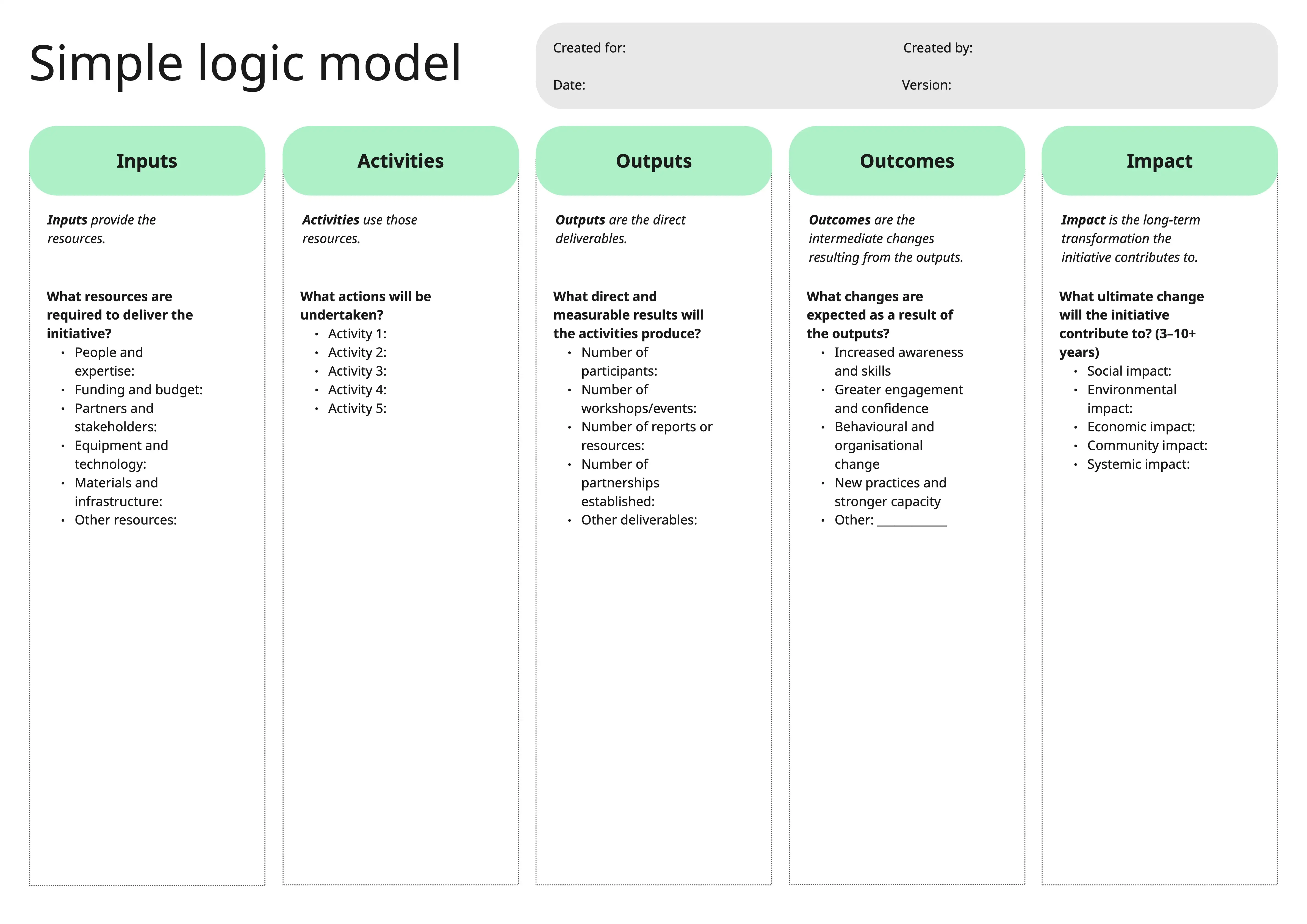
A visual planning template that helps teams map inputs, outputs, project-level outcomes, community-level outcomes, information ecosystem changes, and long-term community impact. Sticky notes make it easy to move ideas, compare options, and test the logic between each stage.
What problem does the Logic Model with Stickies Template solve?
Unclear links between resources and results
Outputs confused with outcomes
Missing community impact
Weak evaluation planning
Disconnected project ideas
Limited visibility into system-level change
How to use the Logic Model with Stickies Template
Add inputs to the first column.
List activities and direct products as outputs.
Capture project-level outcomes.
Add community-level outcomes.
Document information ecosystem changes.
Define the long-term community impact.
Connect related sticky notes across columns.
Review the model for weak or missing links.
Common pitfalls
Using vague outcomes
Listing activities as impact
Skipping community-level change
Adding too many sticky notes
Failing to connect ideas across columns
Treating every outcome as immediate
Ways to avoid mistakes
Use one idea per sticky note.
Keep outputs measurable.
Write outcomes as changes.
Separate project results from community results.
Limit each column to the strongest items.
Review the full chain from left to right.
Miro Features You Can Use
Sticky notes for inputs, outputs, and outcomes
Columns for each logic model stage
Connectors for cause-and-effect links
Color coding by section
Tags for evidence, owner, or status
Comments for assumptions and risks
Voting to select priority outcomes
Frames for presentation mode
FAQs
Q: Who can benefit from this template?
A: Nonprofits, program teams, project managers, community organizations, researchers, evaluators, funders, and public-sector teams.
Q: What is the difference between outputs and outcomes?
A: Outputs are the activities completed or products created. Outcomes are the changes that follow.
Q: What are project-level outcomes?
A: Changes experienced by participants, users, or direct stakeholders.
Q: What are community-level outcomes?
A: Broader changes across groups, networks, services, or systems.
Q: What belongs under information ecosystem changes?
A: Changes in access, quality, trust, sharing, or creation of information.
Q: What will participants leave with?
A: A completed logic model showing resources, outputs, direct outcomes, community changes, and long-term impact.