Build a shared theory of change
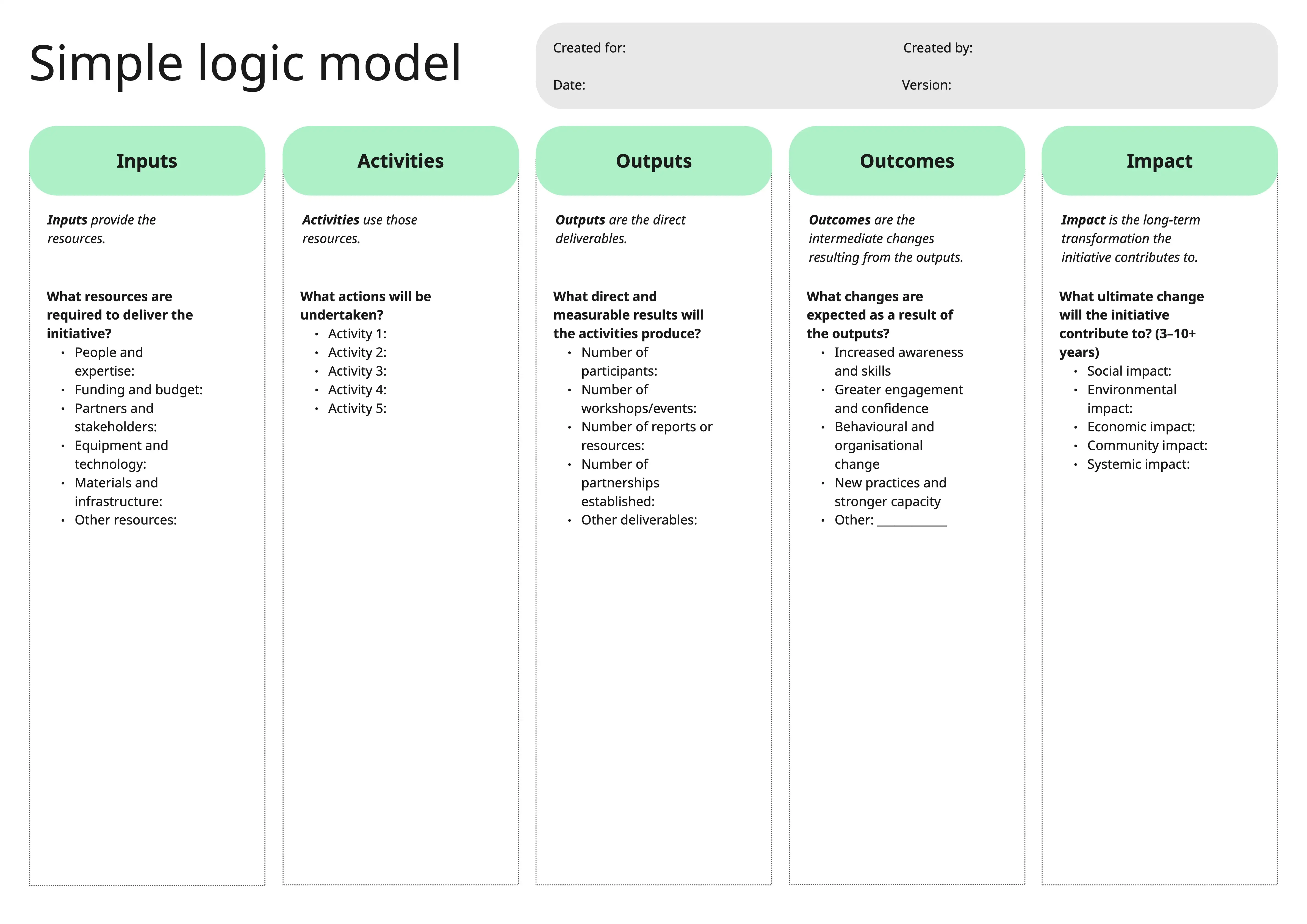
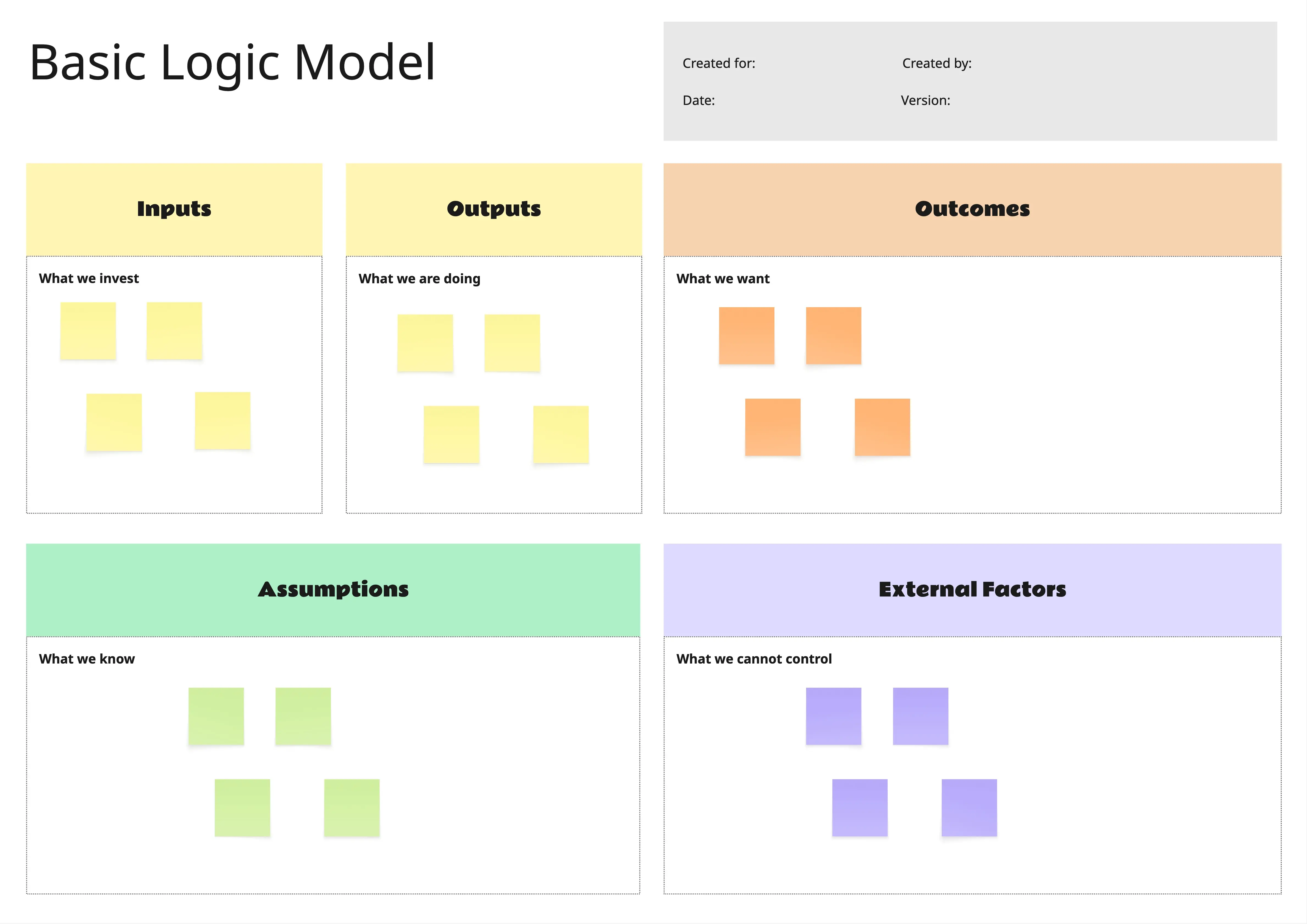
A clear white, yellow, and orange workspace for mapping how a project, programme, or initiative is expected to create change. Also known as a theory of change template, it helps teams connect the problem they are addressing with the resources they invest, the actions they take, and the outcomes and long-term conditions they want to support.
What’s included
The template guides you through the essential parts of a logic model:
Situation — the challenge, need, or opportunity you are responding to.
Inputs — people, funding, knowledge, tools, facilities, and partnerships.
Activities and outputs — what you will do, what you will deliver, and who you will reach.
Short-, medium-, and long-term outcomes — the changes you expect to see over time.
External influences and assumptions — the policies, conditions, partners, risks, and other factors that could affect success.
Project details — space to record the project name, author, date, and version.
The spacious sticky-note layout makes it easy to capture ideas, move them as your thinking develops, and make the links between actions and expected change visible.
How to use it
Start with the Situation: agree on the need, who is affected, and the evidence behind it.
Add the key Inputs you can invest in the work.
Define the Activities you will carry out and the concrete Outputs you expect to deliver.
Clarify who you will Reach through the work.
Map the changes you expect in the short, medium, and long term.
Discuss the external conditions and assumptions that could help or hinder progress.
Review the completed model: do the inputs and activities plausibly lead to the outcomes you want?
Suggested 75-minute workshop
10 min — Frame the situation: Define the challenge, affected groups, and evidence.
10 min — Identify inputs: Add the resources, expertise, partners, and capabilities available.
15 min — Map activities and outputs: Agree what the team will do, deliver, and who it will reach.
20 min — Define outcomes: Work backwards from the desired long-term change, then identify the medium- and short-term outcomes needed to achieve it.
10 min — Test assumptions: Add external influences, risks, related programmes, and conditions for success.
10 min — Review and commit: Identify gaps, choose indicators to track, and agree owners for the next steps.
Who it’s for
Ideal for nonprofit and community organisations, public-sector teams, educators, social-impact initiatives, funders, consultants, programme managers, and cross-functional project teams. Use it for strategy design, project planning, grant applications, stakeholder alignment, monitoring and evaluation, or communicating a project’s intended pathway to impact.