
9 likes
53 uses
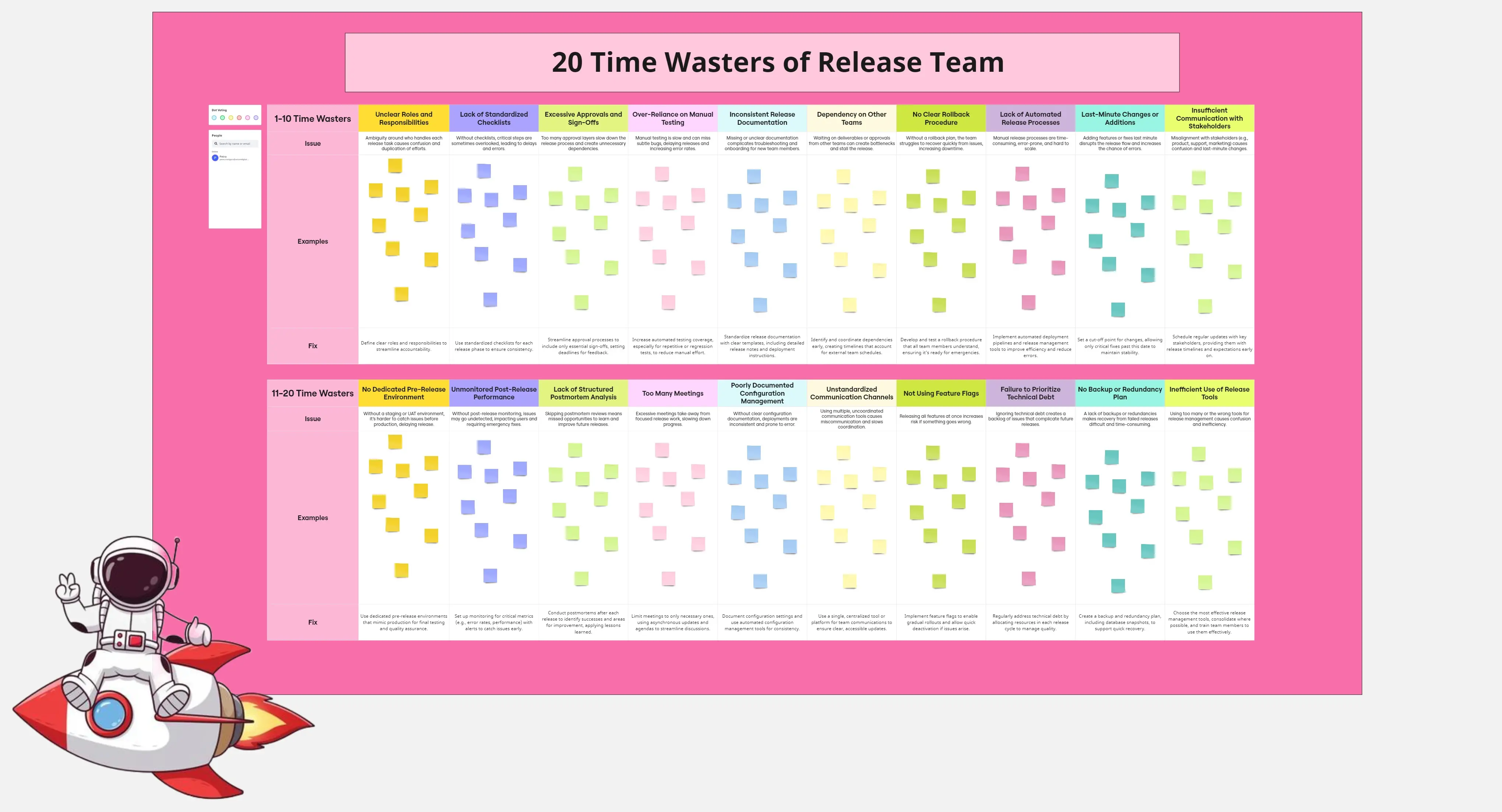
We’ve all been there — staring at story cards, debating whether
it’s a 3, 5,or 8… and wondering if we’re really estimating effort or just rolling dice.
This board is for a quick, reflective session — from guesswork to groundwork - to find out the story behind estimation — where we’ll unpack what estimation really means for us, how to make it more meaningful, and why the conversation around the numbers matters more than the numbers themselves. Duration: atleast 60 minutes Audience: Scrum team (devs, QA, PO, designer, etc.) Facilitator: You (Scrum Master)
By the end of this session, the team will:
Understand what story points represent (relative effort, not time)
Learn to calibrate “1”, “2”, “3”, “5”, “8” based on their backlog
Practice estimating together through discussion and alignment
Build a shared reference baseline for future sprints Workshop Flow
Purpose: Get everyone’s assumptions out in the open.
Activity:
Ask: “When you give a story 5 points, what does that mean to you?”
Capture answers on Miro with sticky notes (e.g., effort, risk, unknowns, size, time).
Group responses into buckets like:
Effort / Work volume
Complexity
Risk / Uncertainty
Dependencies
Say:“Points aren’t hours. They’re how we feel about relative effort considering these factors — how big, how complex, how risky.”
Purpose: Define your team’s “1”.
Steps:
Pull 5–6 real user stories from your backlog (recently done ones work best).
“Which one of these feels like the simplest, smallest, most straightforward piece of work?”
Mark that story as your baseline = 1 point.
Discuss why it’s a 1 — what made it simple?
Say: “This story becomes our yardstick. Everything else will be compared to this.”
Purpose: Compare and calibrate other stories.
Steps:
Take one new story at a time.
“Compared to our 1-point story, is this about the same, twice as complex, or more?”
Use Planning Poker cards (1, 2, 3, 5, 8, 13).
Have everyone vote. You could tell the team about different virtual tools like planitpoker.com / simply ask them to turn on their cameras and use their fingers for voting.
If votes differ, ask:
“What’s making you think 5 instead of 3?”
“Is there risk, unknowns, or integration work?”
Let the team align through discussion.
Say:“There’s no right number — we’re building shared understanding. The conversation is more valuable than the number itself.” On the right side of the board , I've mentioned about the Miro approach for stories that the team finds difficult to point. We break the story down in terms of dependencies, blockers, risks, unknowns. The team gets a numerical value against each breakdown. Then total score =Dependencies + Risks + Unknowns + Blockers
Use the total score to quickly decide the story’s readiness. Additional details about the model are on the board itself.
Ask the team:
“What helped you decide your number?”
“Was it easier once we had a 1?”
“How might this help in future sprint planning?”
Capture takeaways (like “define our 1 early”, “avoid mixing time and effort”, etc.)
If time allows — gamify it:
Split into sub-teams/ breakout rooms.
Give both the same 3 new backlog stories.
Each team estimates independently.
Compare results and discuss differences.
See if reasoning aligns — great conversation starter!
Story points ≠ hours or days.
“1” means our simplest story so far. Capture the conclusions.
Everything else is relative to that baseline.
The value is in the discussion, not the digits. Capture all the conclusions
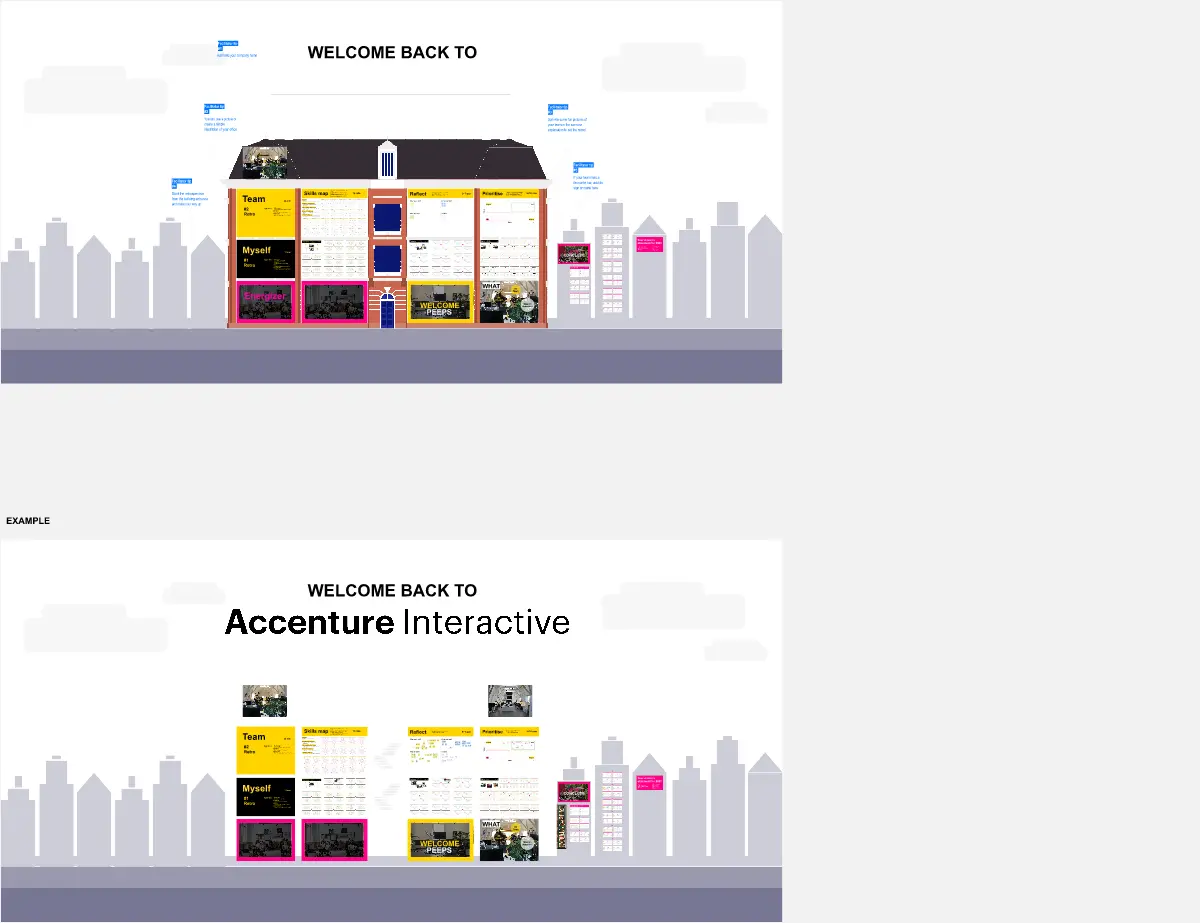
End of the Year Team Retro
The End of the Year Team Retro template offers a structured approach for teams to reflect on their achievements and challenges throughout the year. It provides elements for celebrating successes, acknowledging setbacks, and setting goals for the upcoming year. This template enables teams to foster a sense of closure and renewal, promoting a positive outlook and alignment towards common objectives. By facilitating reflection and goal-setting, the End of the Year Team Retro empowers teams to strengthen their cohesion, enhance performance, and approach the new year with enthusiasm and focus effectively.
End of the Year Team Retro
The End of the Year Team Retro template offers a structured approach for teams to reflect on their achievements and challenges throughout the year. It provides elements for celebrating successes, acknowledging setbacks, and setting goals for the upcoming year. This template enables teams to foster a sense of closure and renewal, promoting a positive outlook and alignment towards common objectives. By facilitating reflection and goal-setting, the End of the Year Team Retro empowers teams to strengthen their cohesion, enhance performance, and approach the new year with enthusiasm and focus effectively.