Discover which buyers your startup should prioritize. This collaborative workshop helps founders and product teams evaluate customer segments, compare buyer personas, challenge assumptions, and identify their most promising target audience using a structured scoring and prioritization framework.
About This Template
Is your startup trying to serve too many different buyers without knowing which customers offer the strongest opportunity?
The Buyer Persona Priority Matrix template helps startup founders and product software teams make informed decisions about which buyer segments deserve their attention.
When teams try to build products for everyone, they risk spreading resources across competing customer needs, creating inconsistent messaging, and pursuing sales opportunities that don't align with their product's strengths.
This workshop takes a comparative approach to buyer persona development. Rather than creating another traditional persona profile, participants evaluate multiple buyer segments using shared criteria, challenge competing recommendations, and visualize their results on a prioritization matrix.
Through individual scoring, the Persona Showdown, and collaborative decision-making, teams identify the buyers most closely aligned with their product, customer needs, market accessibility, and commercial opportunities.
The outcome is a prioritized buyer persona, a clear targeting rationale, and a practical experiment to validate the team's decision.
Designed for small teams, this template works for both virtual and in-person workshops.
Who Is This Template For?
Startup founders defining their initial or next target market
Product managers prioritizing customer segments and product opportunities
UX/UI designers aligning product experiences with priority buyer needs
Marketing teams identifying audiences for positioning and campaigns
Sales teams focusing on promising customer opportunities
Customer success teams contributing insights about customer fit and retention
Workshop duration: 90 minutes
Recommended participants: 3–8
Facilitator: Product strategist, startup founder, product manager, or workshop facilitator
Before You Begin
Identify three to five potential buyer segments to compare.
Prepare a short profile for each segment containing:
Buyer role and purchasing responsibilities
Organization type or purchasing context
Primary customer problem
Desired outcome
Purchase triggers and evaluation criteria
Relevant customer research
Available sales, conversion, retention, or revenue data
Prepare a scoring matrix, buyer segment cards, and an assumption log.
For virtual sessions, use Miro sticky notes, editable cards, and voting tools. For in-person workshops, use printed segment cards, markers, sticky notes, and a large scoring matrix.
How to Use This Template
Step 1: Introduce the Competing Buyer Segments (15 minutes)
Start by presenting three to five potential buyer segments.
Ask each participant to independently review the segment cards and identify one promising opportunity and one potential challenge for each.
Discuss the findings and agree on the buyer segments being evaluated.
Keep the descriptions consistent so the team can make meaningful comparisons.
Example segments:
Operations managers at growing SaaS companies
Agency owners managing multiple client projects
Enterprise project directors
Freelance consultants managing independent projects
Output: A defined set of buyer segments with comparable profiles and documented research gaps.
Step 2: Score Each Buyer Segment (20 minutes)
Evaluate every segment against four criteria:
Customer Need: How significant and urgent is the problem this buyer needs to solve?
Product Fit: How effectively can your current product address the buyer's needs?
Reachability: How realistically can your team identify, contact, and acquire these buyers?
Commercial Potential: How promising are the segment's willingness and ability to pay relative to acquisition and service costs?
Ask participants to score each criterion independently from 1 to 5.
Compare ratings, discuss disagreements, and agree on provisional scores supported by available evidence.
Add the four scores to calculate a total out of 20.
Output: Completed buyer segment scorecards with supporting rationale.
Step 3: Run the Persona Showdown (20 minutes)
Identify the two highest-scoring buyer segments.
Ask participants to prepare a case for why each segment should become the primary target.
Each case should address:
The buyer's most significant problem
Why the product is a strong fit
How the company can reach these buyers
The potential commercial opportunity
The biggest risk or unsupported assumption
Give each segment an opportunity to make its case.
Challenge the recommendations by discussing product limitations, acquisition difficulty, competing needs, and potential implementation costs.
Example: SaaS operations managers may show strong product fit and commercial opportunity but require integrations that are not yet available.
Output: A documented comparison of the leading segments, including strategic trade-offs and risks.
Step 4: Build the Buyer Persona Priority Matrix (20 minutes)
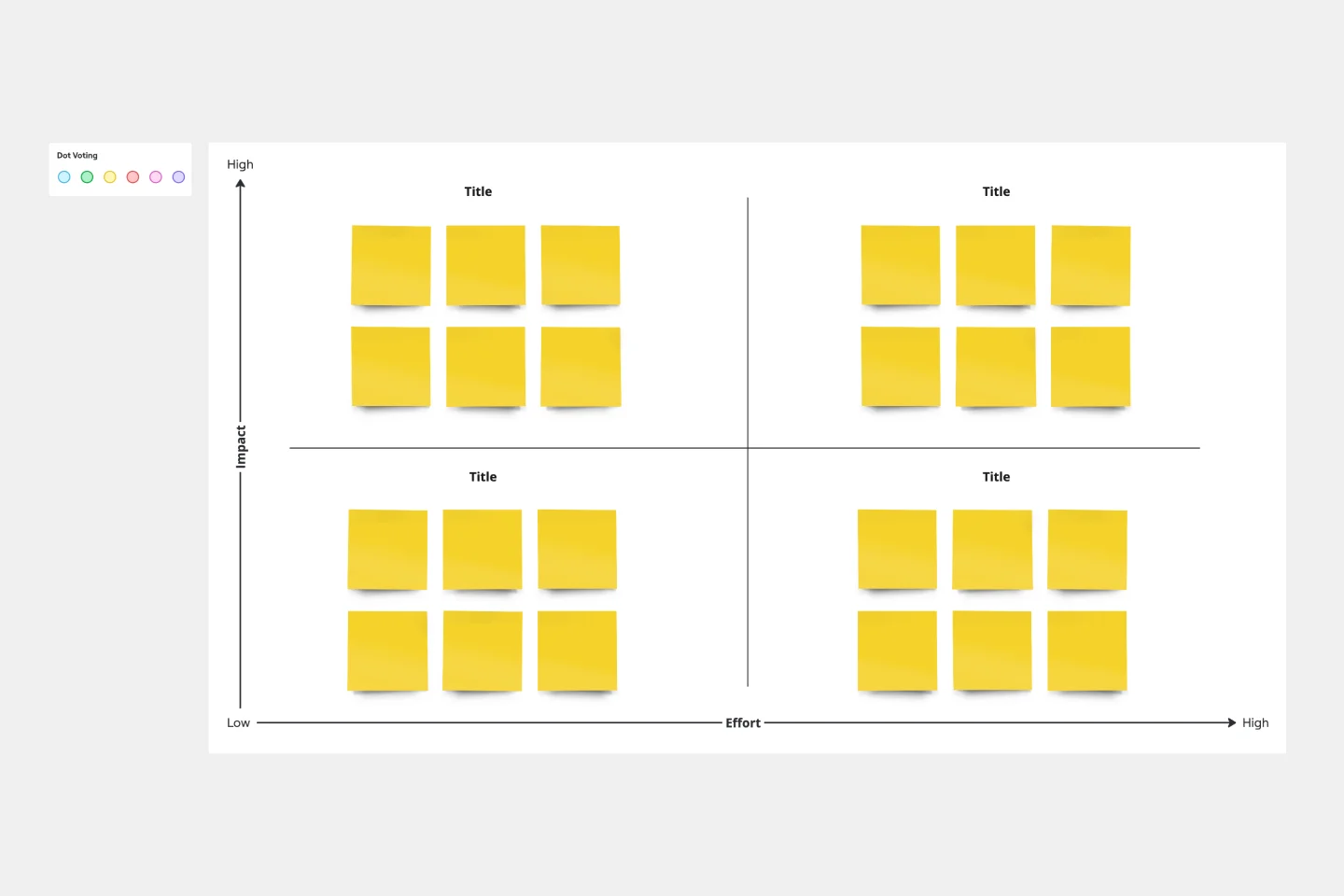
Transfer the agreed segment scores onto the two-axis Priority Matrix.
Calculate each axis:
Vertical Axis: Customer Need + Product Fit
Horizontal Axis: Reachability + Commercial Potential
Each axis ranges from 2 to 10.
Position every segment according to its combined scores.
Review where the segments appear and discuss their relative strengths and limitations.
Use the four quadrants to guide discussion:
High Need + Fit / High Commercial Access
Strong priority candidates. These segments combine meaningful customer problems with promising product alignment and commercial access.
High Need + Fit / Low Commercial Access
Promising customer needs with potential distribution or commercial challenges. Investigate how to reach these buyers effectively.
Low Need + Fit / High Commercial Access
Accessible segments with weaker current alignment. Investigate whether the product can address their needs before committing more resources.
Low Need + Fit / Low Commercial Access
Lower-priority candidates for the current strategy. Document them for future reassessment.
Agree on a provisional primary buyer persona, a secondary segment, and segments the team will defer.
Output: A completed Buyer Persona Priority Matrix and a documented targeting decision.
Step 5: Create a Targeting Validation Plan (15 minutes)
Review the selected primary buyer persona and identify the biggest assumption behind the decision.
Define a focused customer experiment that will help determine whether the segment deserves continued investment.
Document:
Target buyer segment
Targeting hypothesis
Research or experiment approach
Participant recruitment method
Success criteria
Responsible team member
Target completion date
Decision rule for the next step
Example: "Interview eight operations managers at growing SaaS companies to evaluate the urgency of their project coordination challenges and their interest in testing our solution."
Agree on what evidence would support, challenge, or change the targeting decision.
Output: A buyer segment validation experiment with clear ownership and measurable next steps.
Buyer Persona Scoring Guide
Use the following scale for each evaluation criterion.
ScoreInterpretationGuidance1Very WeakLittle evidence of alignment2WeakLimited alignment with important concerns3ModerateSome promising indicators with meaningful gaps4StrongClear alignment supported by relevant evidence5Very StrongCompelling alignment supported by substantial relevant evidence
Maximum score: 20 points per buyer segment.
Interpreting Total Scores
4–8: Low Priority
The segment currently shows limited alignment with the evaluation criteria.
Recommended action: Investigate whether the segment should be deferred or whether missing information is affecting its score.
9–13: Potential Opportunity
The segment shows some promising characteristics but has meaningful limitations.
Recommended action: Identify the weakest criteria and determine whether additional research or product changes could improve its suitability.
14–17: Strong Candidate
The segment demonstrates good alignment across several criteria.
Recommended action: Compare it with other leading segments and investigate the assumptions that could affect its commercial potential.
18–20: Leading Candidate
The segment scores highly across the framework and may represent a strong initial target.
Recommended action: Prioritize customer validation before committing significant product development or acquisition resources.
Facilitator note: These ranges are workshop guidelines rather than scientifically validated market predictions. Review individual criteria, evidence quality, and strategic constraints before making a targeting decision. When evidence is missing, mark the rating as provisional.
What You'll Achieve
By completing this template, your team will have:
Comparable profiles for three to five potential buyer segments
Completed scorecards evaluating customer need, product fit, reachability, and commercial potential
A shared understanding of strengths, limitations, and strategic trade-offs
A completed Buyer Persona Priority Matrix
A provisional primary buyer persona
Identified secondary and deferred customer segments
An assumption log explaining unresolved questions
A customer targeting experiment with clear responsibilities and success measures
Tips for Facilitators
Compare similar levels of customer detail. Avoid evaluating a highly researched persona against a vaguely defined audience without acknowledging the evidence gap.
Start with independent scoring. Ask participants to evaluate segments individually before discussing results. This limits the influence of strong personalities and early group consensus.
Challenge high scores. When a segment receives a strong rating, ask what evidence supports it and what information could change that assessment.
Look beyond market size. A large market may be difficult to reach, costly to serve, or poorly aligned with the current product.
Keep the Persona Showdown constructive. The objective is to challenge targeting assumptions, not defend personal preferences.
Distinguish buyer personas from ideal customer profiles. A buyer persona describes an individual involved in purchasing. An ideal customer profile describes the organization or account most suitable for your product. B2B targeting decisions can benefit from using both.
Document strategic trade-offs. A lower-scoring segment may deserve attention when it supports a meaningful strategic advantage. Record the reasoning rather than silently changing scores.
Validate before committing. Use real customer research and commercial data to test whether the selected audience represents a sustainable opportunity.
The goal isn't to find every buyer who could use your product. It's to identify which buyers your team should focus on first.
Frequently Asked Questions (Q&A)
1. What's the difference between a buyer persona and a customer segment?
A customer segment is a group of potential customers sharing meaningful characteristics, needs, or purchasing circumstances.
A buyer persona describes the motivations, challenges, decision criteria, and purchasing behavior of a representative buyer within that segment.
This workshop compares potential segments and identifies a priority buyer persona to guide targeting decisions.
2. How many buyer personas should we compare?
I recommend starting with three to five distinct buyer segments.
This gives your team enough variety to evaluate meaningful alternatives without making the session difficult to manage.
If you have more than five potential segments, narrow the list before the workshop using existing customer and business research.
3. What if we don't have enough customer research?
Use your available interviews, sales conversations, product data, and market observations.
Mark unsupported scores and assumptions as provisional.
The workshop can help identify your most important research gaps, but it should not turn limited evidence into confident conclusions.
4. Do all four scoring criteria need equal weight?
Not necessarily.
The standard template assigns equal weight to keep comparisons straightforward.
Your team can introduce different weights when strategic priorities justify them. Agree on the weighting approach before scoring segments so the results aren't adjusted to favor a preferred audience.
5. What if two buyer segments receive the same score?
Review the individual criterion scores rather than relying on the totals.
Two segments may have identical totals but very different opportunities and risks.
Use the Persona Showdown to compare product requirements, acquisition challenges, research confidence, and strategic fit.
If the decision remains unclear, design a small experiment to compare both segments.
6. Should we always choose the highest-scoring buyer persona?
No.
Scores are structured inputs to a strategic discussion, not automatic decisions.
A lower-scoring segment may offer a meaningful strategic advantage or have stronger research evidence.
Document the reasons for selecting a segment that does not have the highest score.
7. What if our product serves multiple buyer personas?
You can evaluate several personas within the same customer segment or compare different segments separately.
For B2B software, distinguish the individuals making purchasing decisions from the organizations they represent.
Select a primary audience for the next targeting experiment without assuming that other buyers cannot be served.
8. How often should we revisit the Priority Matrix?
Revisit the matrix when meaningful new evidence becomes available.
Changes in conversion rates, customer feedback, sales cycles, retention, product capabilities, or acquisition costs may affect segment priorities.
For early-stage startups, reviewing targeting assumptions after a focused customer discovery or acquisition experiment is a practical approach.
9. Can we use AI to help evaluate buyer segments?
Yes. AI can help organize research, summarize persona profiles, identify missing evidence, and challenge scoring assumptions.
Use AI-generated recommendations as inputs to discussion rather than verified customer facts.
Avoid sharing sensitive customer information without appropriate safeguards.
10. How do we know our selected buyer persona is the right one?
Treat your selection as a hypothesis that needs validation.
Interview representative buyers, test your value proposition, examine buying behavior, and measure relevant commercial signals.
The strongest confirmation comes from evidence that the segment experiences the problem, values your proposed solution, can be reached, and demonstrates a credible path toward adoption and payment.
Final Recommendation
Use the Buyer Persona Priority Matrix whenever your team needs to make a focused customer targeting decision.
The completed template should provide more than a ranking. It should explain why one buyer segment deserves priority, which assumptions remain uncertain, and what your team will do next to validate the opportunity.
Choose your focus. Challenge your assumptions. Build for the buyers who matter most.