What is the Program Action Development Logic Model Template?
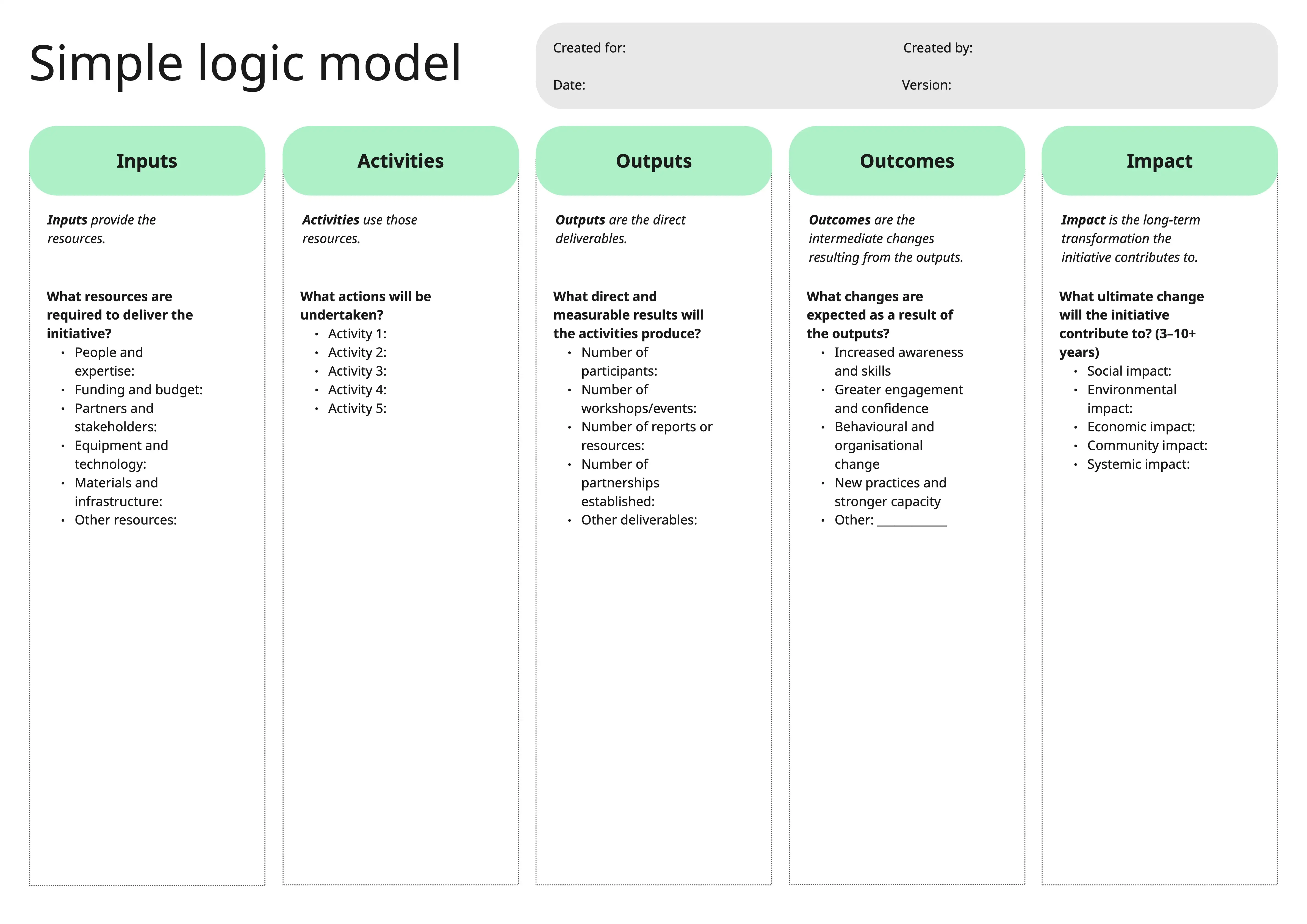
A planning template that helps teams connect program needs, priorities, inputs, activities, participation, outcomes, impact, assumptions, external factors, and evaluation. Teams can use it to show how program actions are expected to create measurable change.
What problem does the Program Action Development Logic Model Template solve?
Unclear program direction
Disconnected activities and outcomes
Missing participant definition
Weak evaluation planning
Unclear assumptions
Limited visibility into outside risks
How to use the Program Action Development Logic Model Template
Define the situation and program priorities.
List the available inputs.
Add the activities the program will deliver.
Identify who the program will reach.
Map short-term outcomes.
Add medium-term outcomes.
Define long-term impact.
Document assumptions and external factors.
Add evaluation measures and data sources.
Review the model from left to right.
Common pitfalls
Confusing activities with outcomes
Using broad impact statements
Skipping participant groups
Leaving assumptions undocumented
Adding outcomes that cannot be measured
Treating the model as fixed
Ways to avoid mistakes
Write activities as actions.
Write outcomes as changes.
Use one clear audience for each participation item.
Add measurable indicators.
Review assumptions with partners.
Update the model when the program changes.
Miro Features You Can Use
Columns for logic model stages
Sticky notes for inputs, activities, and outcomes
Connectors for the program flow
Tags for owners and measures
Comments for assumptions and risks
Color coding for each stage
Frames for presentation mode
FAQs
Q: Who can benefit from this template?
A: Program teams, nonprofits, community organizations, public agencies, funders, researchers, and evaluators.
Q: What is the difference between activities and participation?
A: Activities describe what the program does. Participation describes who takes part or receives support.
Q: What belongs in short-term outcomes?
A: Changes in awareness, learning, skills, attitudes, or confidence.
Q: What belongs in medium-term outcomes?
A: Changes in behavior, practice, participation, decision-making, or policy.
Q: What belongs in long-term impact?
A: Broader changes in social, economic, health, environmental, or community conditions.
Q: What will participants leave with?
A: A completed program logic model with resources, activities, audiences, outcomes, impact, assumptions, external factors, and an evaluation flow.