The Circular Futures Roadmap
Imagine a zero-waste future through the everyday experience of your community.
What could life look like if sharing, repairing, reusing, and caring for local resources were easy and accessible? The Circular Futures Roadmap invites people to explore that question together, connecting big ambitions with familiar places, services, relationships, and routines.
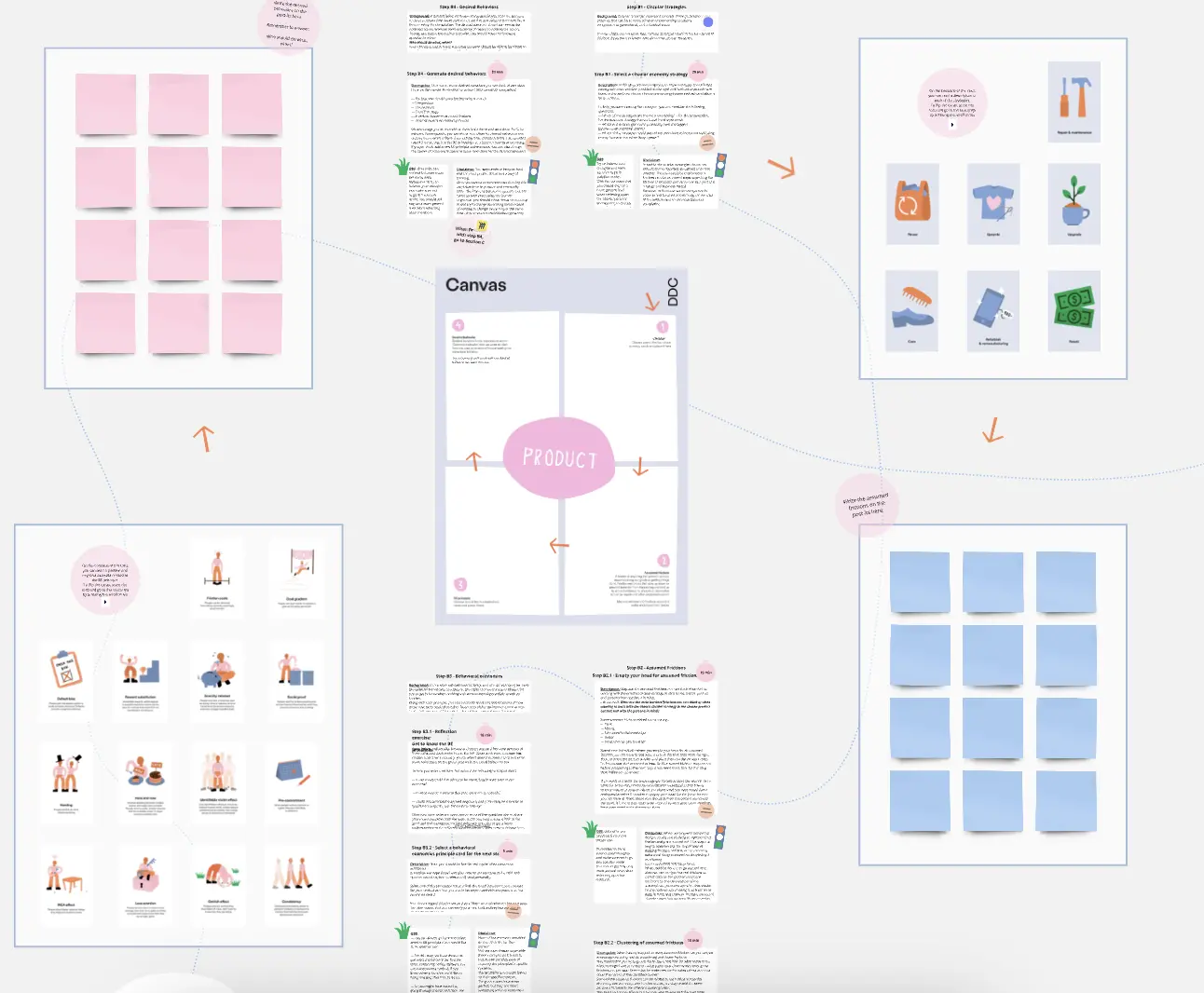
This community-led visioning template uses five themes to explore how a circular future could feel and function. Guided prompts and dedicated brainstorming spaces help participants imagine possibilities, discuss different needs, and identify changes they could begin today.
Who is this template for?
Community groups, residents, local authorities, urban planners, sustainability practitioners, educators, local businesses, and facilitators exploring circular futures.
Use it for a neighbourhood workshop, community visioning event, participatory planning session, or an early conversation about a local circular-economy initiative. It works best when people with different experiences of the place can contribute.
Before you begin
Choose a place to focus on: a street, neighbourhood, town, city, or community. Agree on a future horizon, such as “our neighbourhood in 2035,” and explain how participants’ ideas will be used.
For an initial workshop, allow approximately two to three hours with six to twenty participants, working in smaller groups where helpful. These are suggested starting points; adapt the format to local needs.
Invite a mix of residents, community organisations, service providers, and businesses. Consider whose voices are missing and what would support participation, including accessible venues, language support, suitable timing, or an alternative to contributing digitally.
How to use The Circular Futures Roadmap
1. Commons and shared resources
Imagine what people could share rather than own individually, from tools and growing spaces to energy and mobility.
Explore who could access these resources, how they would be maintained, and how decisions about them would be made. Capture a vision for commons that people can benefit from and care for together.
2. Everyday places, homes, and neighbourhoods
Describe a day in the life of your future community. How do people live, travel, meet, eat, and care for their surroundings?
Explore buildings, streets, green spaces, and everyday habits. Identify what would make low-waste living convenient, enjoyable, and affordable.
3. Public services and circular infrastructure
Imagine the services and facilities that would make circular living reliable. Connect waste prevention with borrowing, repair, refill, reuse, composting, and material recovery.
Identify the physical spaces, information, investment, and support needed to make these services useful for different people.
4. Local businesses, products, and consumption
Explore how shops, cafes, markets, and other businesses could support durable products, repair, refill, rental, resale, and take-back.
Consider how these offers could meet everyday needs while keeping skills, jobs, materials, and value in the community.
5. Community power, culture, and care
Discuss the values and relationships that would sustain this future. How could residents shape decisions, share knowledge, and participate in local change?
Explore fairness, belonging, good work, and opportunities to care for what already exists. Finish by identifying one change that could make the vision feel more real today.
Facilitation tips
Begin with quiet reflection or individual sticky notes before sharing ideas. Invite concrete stories: “How would you borrow a drill?” or “What happens when your washing machine breaks?”
Group related ideas and connect themes across the board. A repair hub, for example, may need premises, skilled workers, business partnerships, and community involvement.
Record differences as well as shared hopes. Ask who would benefit, who might face barriers, and whose perspective still needs to be heard. Keep ambitious ideas visible alongside practical starting points.
What will you leave with?
A collective picture of circular community life, with ideas for shared resources, neighbourhoods, public services, local businesses, and participation.
You’ll also have a clearer view of common priorities, different needs, and opportunities to explore further. Use the vision to guide follow-up conversations, select a community experiment, or inform a more detailed action plan.