Responsible Supply-Chain Development Plan
Build the capability, relationships, and accountability needed for more responsible sourcing.
Explore how your organisation can improve traceability, address human-rights and environmental impacts, and work with suppliers to prevent harm and support meaningful improvement.
This template connects responsible-sourcing commitments with everyday purchasing decisions and supplier relationships. Five guided brainstorming sections help teams examine their approach, identify gaps, and plan next steps. A supply-chain action snapshot brings priorities, support needs, owners, and review dates into one view.
Who is this template for?
Procurement and sourcing teams, supply-chain managers, sustainability and human-rights practitioners, compliance professionals, operations teams, and supplier-development leads.
It also supports consultants and facilitators bringing these functions together. Use it to develop a responsible-sourcing approach, review an existing programme, explore a priority product or sourcing region, or plan supplier engagement.
Before you begin
Choose a manageable scope, such as a product category, material, supplier group, or sourcing location. Clarify the decisions you want the planning process to support.
Gather available supplier lists, sourcing policies, contracts, traceability information, assessments, grievance insights, and previous improvement plans. Identify missing information without treating a lack of reported concerns as evidence that no problems exist.
For an initial workshop, allow approximately two to three hours with five to ten participants. These are suggested starting points; detailed assessment, stakeholder engagement, and specialist review will require further work.
Include people who understand purchasing practices and supplier relationships. Plan how supplier, worker, and affected-community perspectives will inform the work safely, and keep sensitive or identifiable information out of the shared board.
How to use the Responsible Supply-Chain Development Plan
1. Set the scope, standards, and responsibilities
Clarify the products, suppliers, countries, and supply-chain tiers you are considering. Identify relevant requirements and the human-rights, labour, environmental, governance, and anti-corruption expectations that guide sourcing.
Record policy gaps, review needs, decision-makers, and escalation responsibilities. Use this section to establish a shared starting point rather than assume every requirement is already understood.
2. Map the supply chain and improve traceability
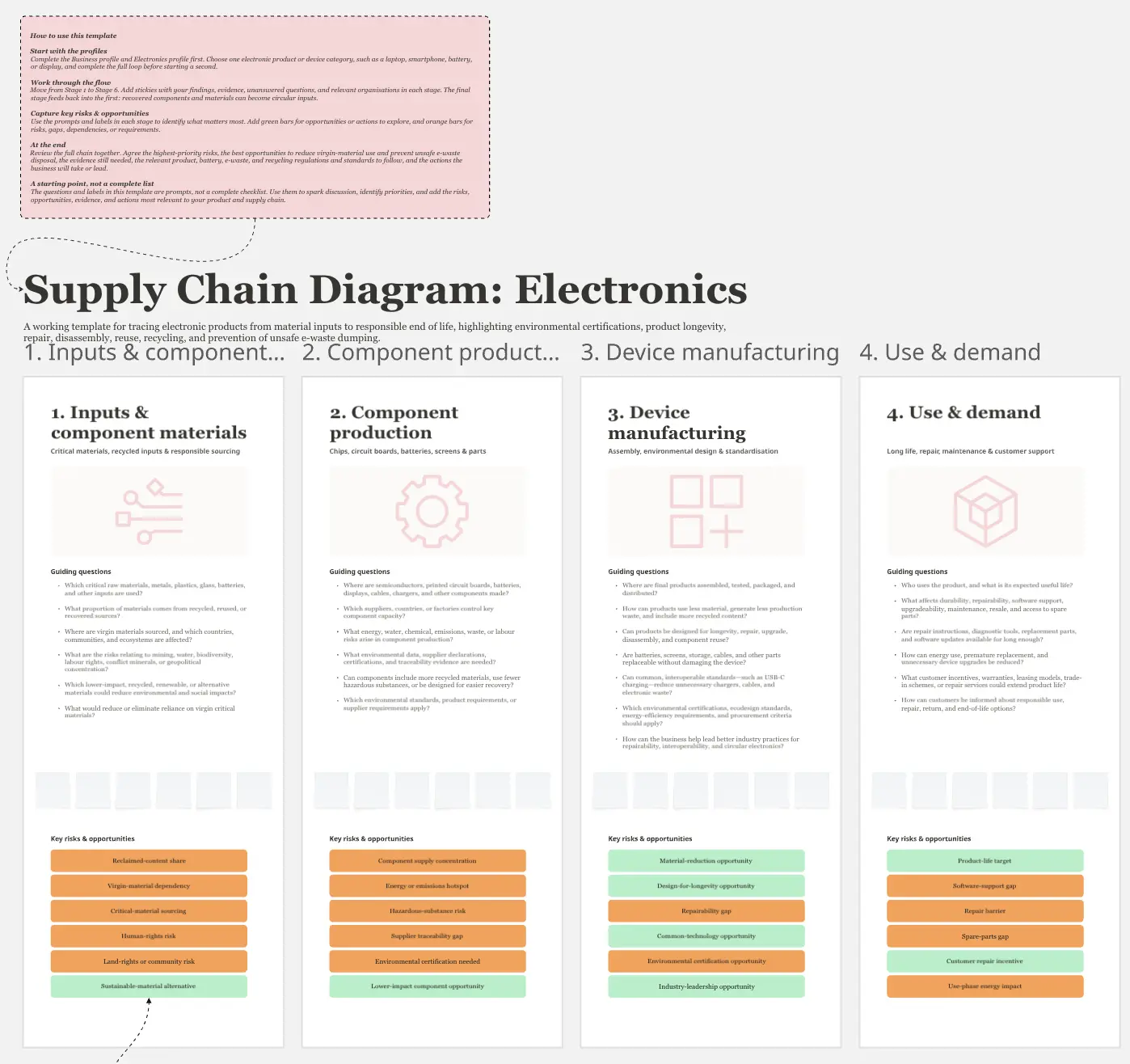
Explore where materials and products are sourced, processed, manufactured, transported, and disposed of.
Identify direct suppliers, important sub-suppliers, and gaps in visibility. Capture who holds relevant information and what relationships, systems, or support could help improve traceability.
3. Identify and prioritise impacts and risks
Look beyond disruption, cost, and reputation to potential harm affecting people and the environment.
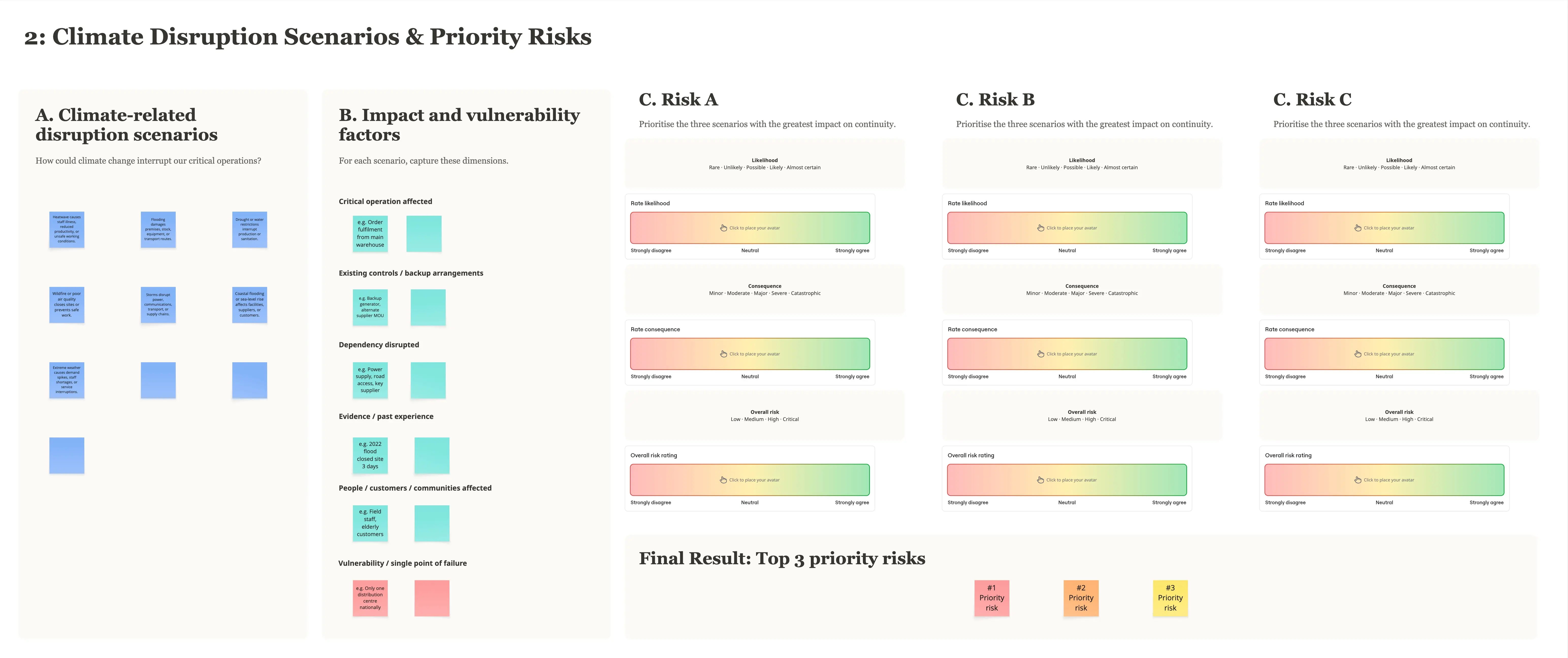
Explore the evidence available, whose perspectives are missing, and which impacts need deeper assessment. Record priorities and uncertainties clearly, including issues that may be severe or difficult to remedy.
4. Partner with suppliers to prevent and improve
Examine how supplier selection, contracts, pricing, lead times, forecasting, and purchasing behaviour influence outcomes.
Identify practical improvements alongside the training, investment, or shared problem-solving suppliers may need. Consider how workers and affected groups can contribute safely, and assign responsibilities within your own organisation as well as across supplier relationships.
5. Enable remedy, monitor progress, and communicate
Review how people can raise concerns, how those concerns are investigated, and how appropriate remedy will be supported when harm occurs.
Choose indicators that help assess whether actions are working. Agree how results, unresolved issues, and lessons will be reviewed and communicated.
Facilitation tips
Start with individual sticky notes, then share and group findings. Distinguish documented evidence, assumptions, unanswered questions, and proposed actions.
Make dependencies visible: a supplier improvement request may require changes to your own deadlines, prices, or purchasing decisions.
Use the supply-chain action snapshot to capture each priority area, supplier or location, main impact or risk, action and support needed, responsible owner, and review date.
What will you leave with?
A shared view of your responsible-sourcing priorities, traceability gaps, and supplier-engagement needs.
You’ll also have an initial action plan with owners and review dates, plus questions for further assessment, stakeholder engagement, or specialist input. The completed board supports ongoing due diligence and improvement; it does not itself verify supplier performance or establish compliance.