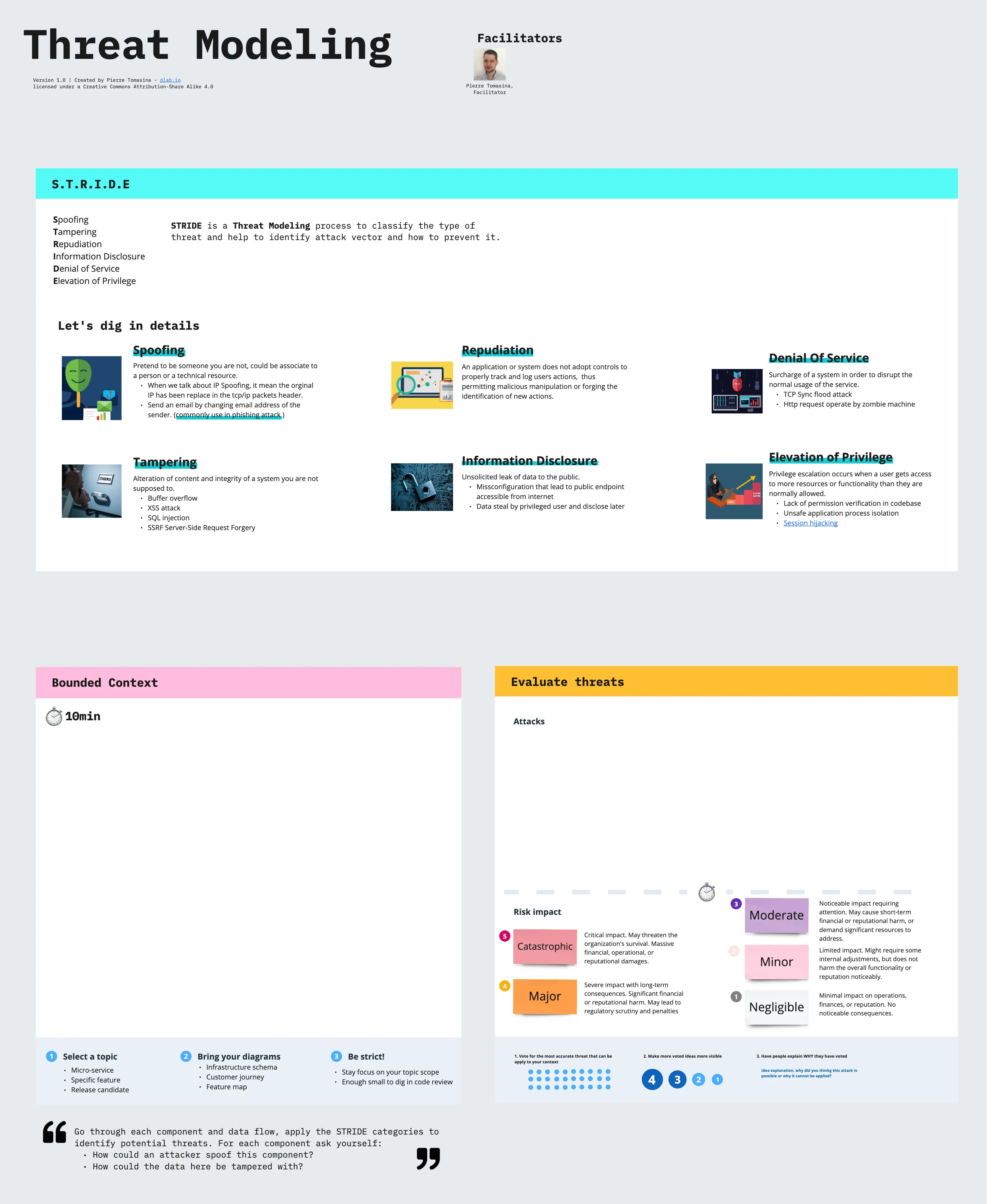
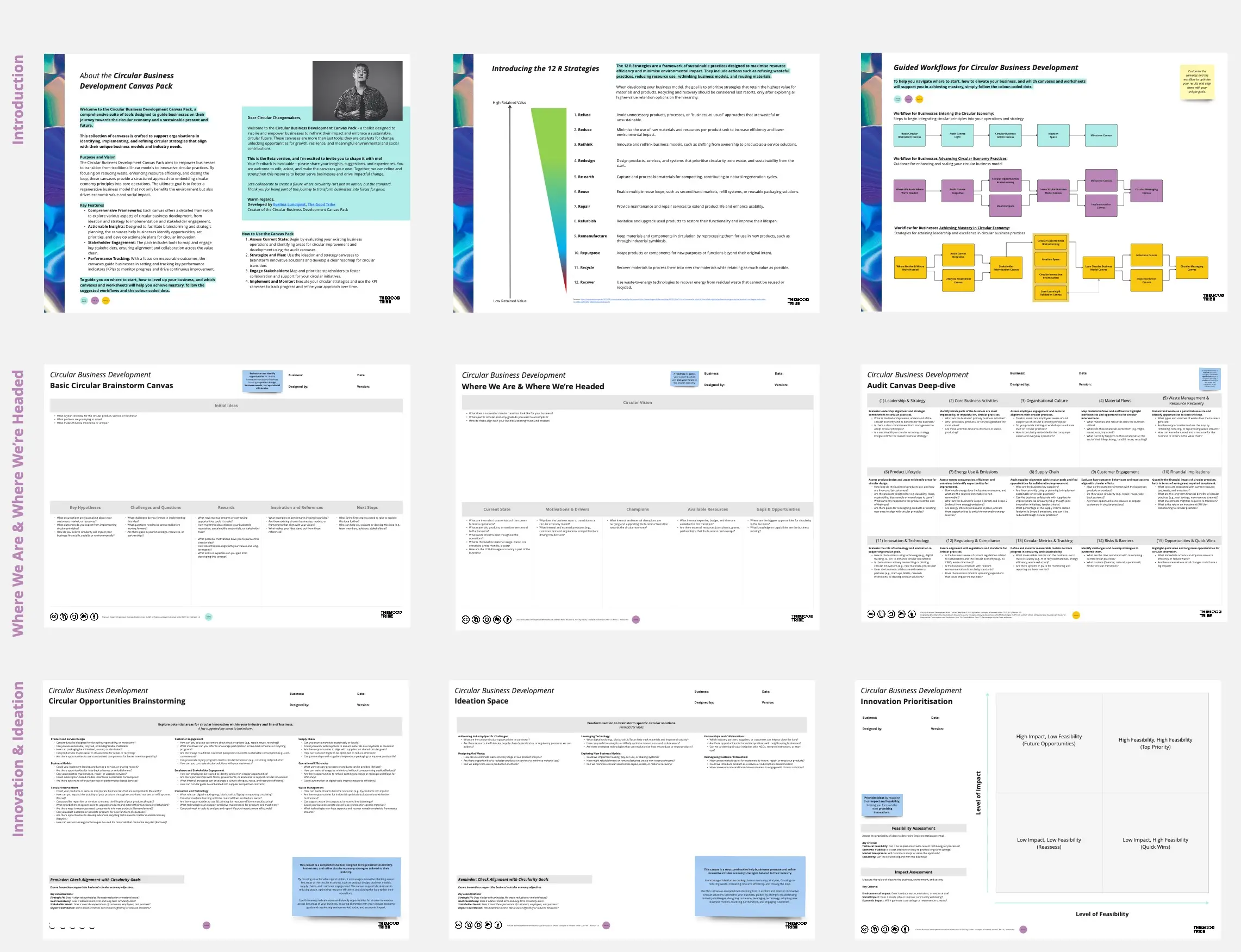
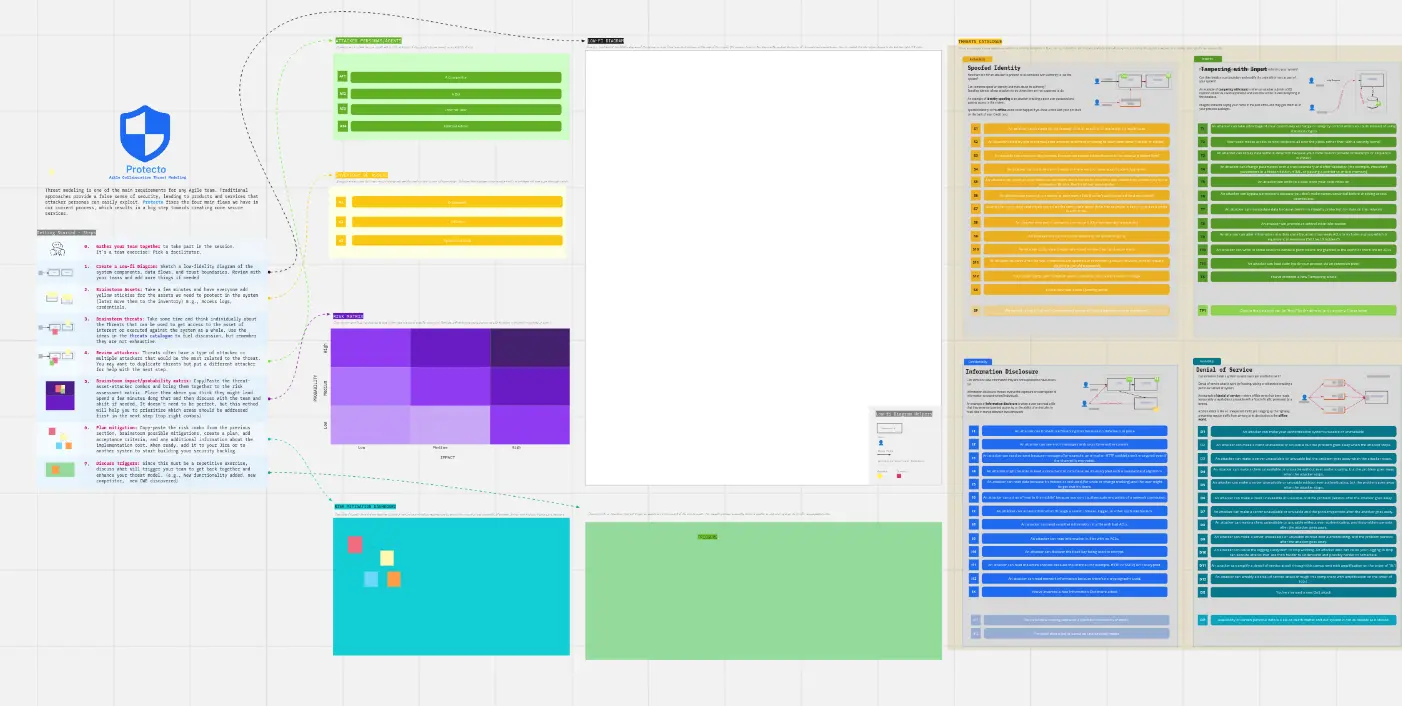
Threat Modelling: Climate Business Continuity
Prepare your organisation for climate-related disruption before it becomes a crisis.
What it is
This template helps teams identify how climate change could disrupt critical business operations, assess the most serious continuity risks, and agree practical actions to prevent, respond to, and recover from disruption.
It covers threats such as heatwaves, flooding, storms, drought, wildfire, poor air quality, power outages, transport disruption, and supplier failure.
Suggested process
Before the session, identify the business area or service to assess, gather available evidence, and invite people with relevant operational knowledge.
In the session, work through the three boards from left to right:
Scope, Critical Operations & Dependencies
Define what is in scope, what must continue or be restored quickly, the maximum acceptable downtime, and the people, sites, systems, suppliers, and infrastructure needed to keep operations running.
Climate Disruption Scenarios & Priority Risks
Create realistic climate-disruption scenarios, assess their likelihood and consequence, identify vulnerabilities and existing controls, then select the three highest-priority continuity risks.
Continuity Actions, Response & Review
Agree actions to prevent or prepare for disruption, continue critical operations during an event, and recover afterwards. Record owners, triggers, deadlines, escalation routes, and evidence of completion.
After the session, share the agreed plan with accountable teams and suppliers. Add actions to relevant continuity plans, risk registers, emergency procedures, procurement requirements, and investment plans. Review it before high-risk seasons, after significant disruption, and at least annually.
Who should be involved
Include people who understand critical operations and can make or approve decisions:
Business continuity and risk leads
Operations and site managers
Facilities, health and safety, and workforce representatives
IT, data, security, and communications teams
Procurement, supply-chain, logistics, and key supplier contacts
Finance, insurance, legal, and compliance colleagues
Senior decision-makers and, where relevant, customer or community representatives
Benefits of using this template
Creates a shared view of what the business must protect.
Reveals hidden dependencies and single points of failure.
Turns climate risks into practical, owned continuity actions.
Improves readiness for disruption and supports faster response.
Strengthens communication with suppliers, customers, employees, insurers, and regulators.
Supports investment decisions by making resilience needs visible.
What you’ll leave with
A shared view of critical operations and dependencies, three prioritised climate-related continuity risks, and an owned action plan covering prevention, response, recovery, escalation, and review.