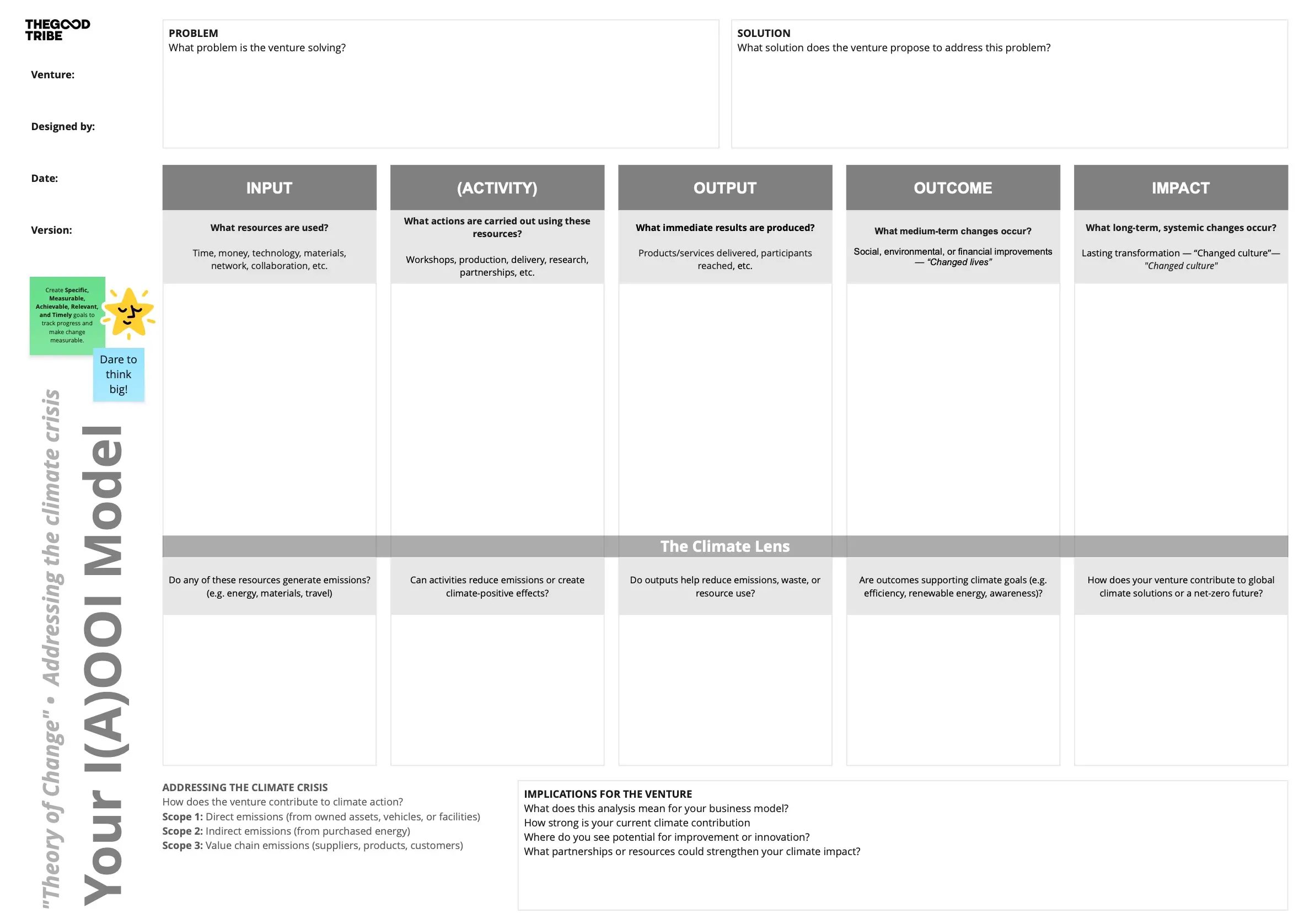
Align the project team and stakeholders on what needs to be delivered before work begins.
Purpose of the template
Projects lose time and momentum when teams begin delivery without a shared understanding of the problem, priorities, requirements, risks, decisions, and scope boundaries. This board set helps teams capture, evaluate, prioritise, and agree requirements before starting a new piece of work.
It creates a single place to align the people who sponsor, deliver, use, influence, or are affected by the project.
What is included
The board set covers eleven connected areas:
Project details
Objective & context
Success metrics
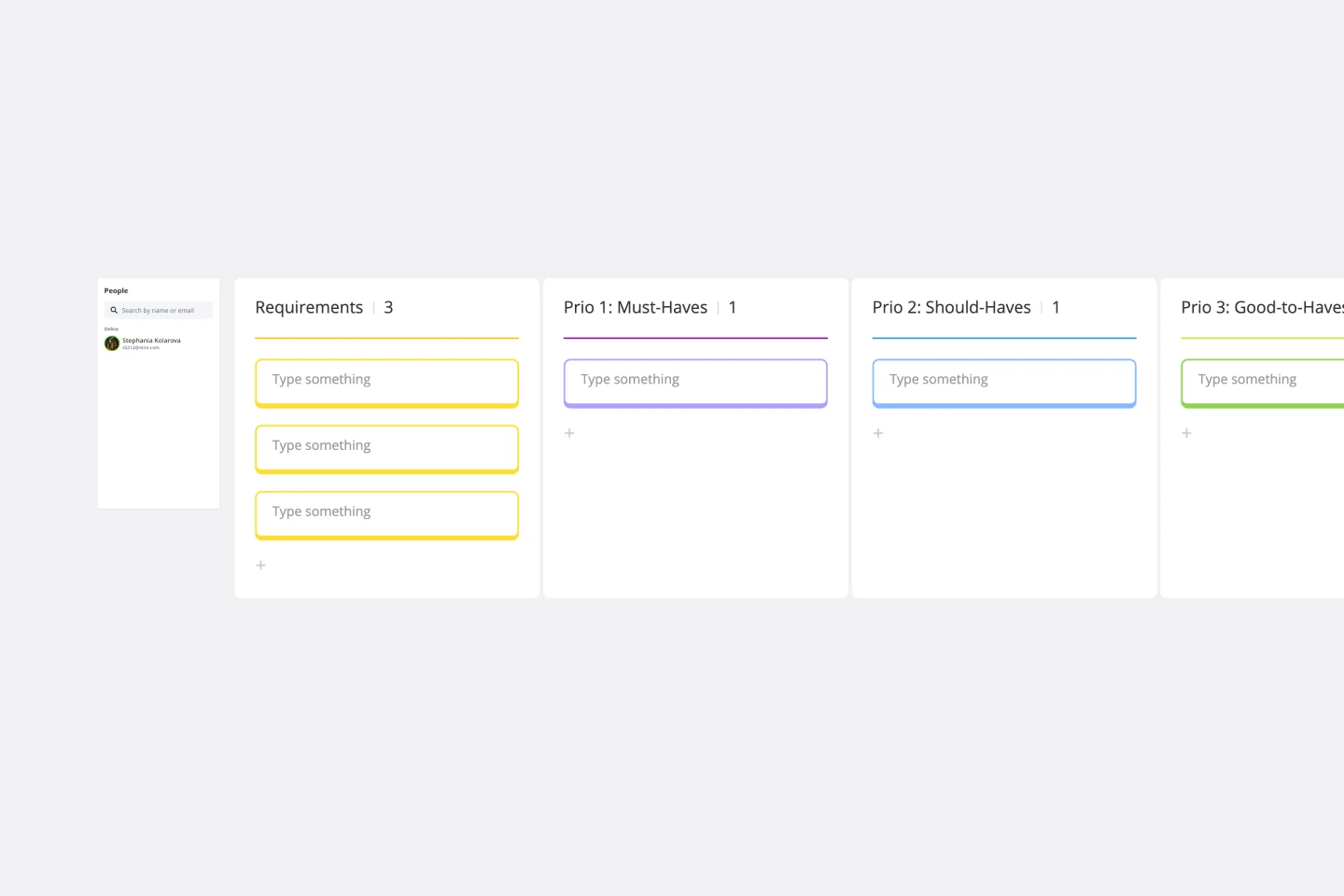
Requirements
Assumptions
Constraints & risks
Stakeholders
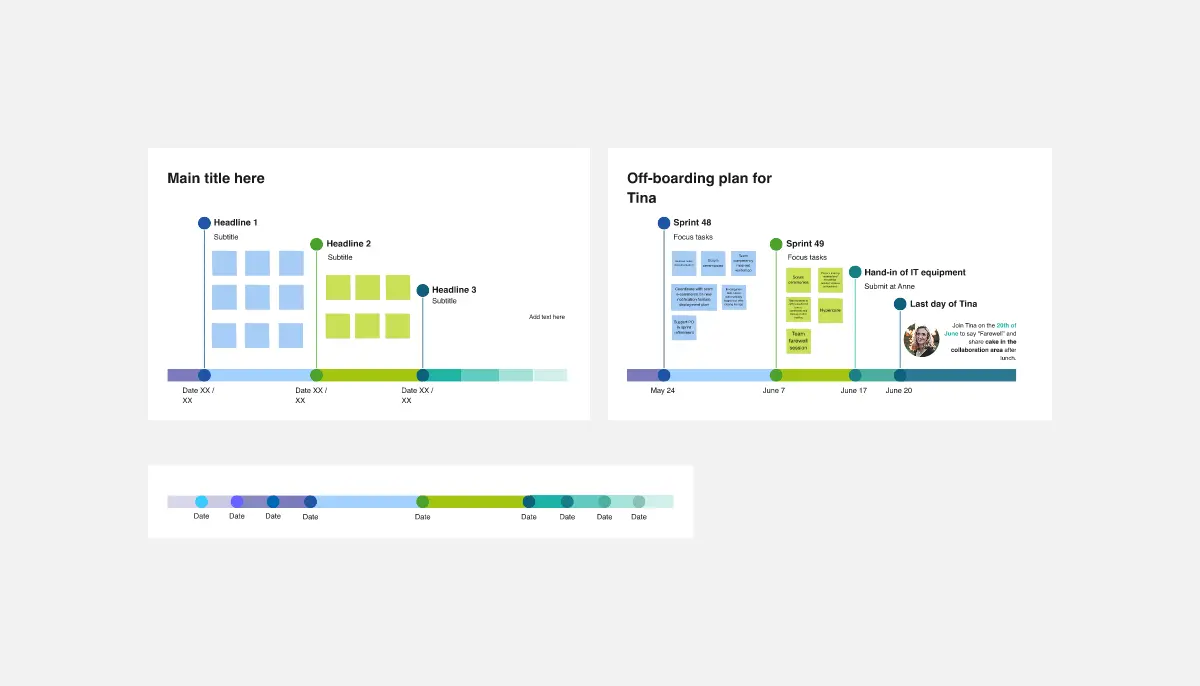
Key decisions & milestones
Open questions
Out of scope
Next steps
Every brainstorm board includes areas for Inputs, Decisions, Risks, and Agreed actions, making it easy to separate discussion from commitments.
How to use it
Use this board set at project kick-off, during discovery, before approving a business case, or when a project needs renewed alignment.
Work through the boards in order. Add one idea, requirement, assumption, risk, or question per sticky note. Capture different stakeholder perspectives, then turn the discussion into explicit decisions and agreed actions.
For requirements, write needs and outcomes—not pre-decided solutions. Use the provided formats and prioritise each item with MoSCoW: Must-have, Should-have, Could-have, or Won’t-have for now.
Finish by reviewing the agreed requirements, open questions, risks, scope boundaries, decisions, owners, and deadlines. Share the outputs with all relevant stakeholders.
Suggested workshop
Run this as a 90–120 minute facilitated project kick-off workshop.
Invite the project sponsor, project owner, delivery team, subject experts, key users or customer representatives, and anyone with approval authority or an important dependency. Assign a facilitator to guide the discussion and someone to capture decisions and actions.
Begin with the project details, objective, and desired outcome. Then define success measures and work together through the requirements, assumptions, constraints, and stakeholder boards. Use the later boards to agree major decisions, milestones, open questions, and out-of-scope items.
Reserve the final 15–20 minutes to confirm priorities, resolve immediate disagreements, assign owners, and agree the next steps. For complex projects, use the workshop as the first session, then schedule focused follow-ups for requirements, risks, stakeholders, or technical decisions.
Who it is for
Use this template with project managers, sponsors, delivery teams, product teams, operations, finance, legal, IT, procurement, sustainability, subject experts, customers, and other relevant stakeholders.
It is useful for new projects, service or product development, process improvement, transformation work, sustainability initiatives, digital projects, and cross-functional programmes.
A starting point, not a fixed project plan
The boards include suggested prompts, requirement-writing guidance, and prioritisation tools to make it easier to begin. They are prompts—not a complete checklist or a substitute for formal governance, technical specification, or project planning. Adapt, remove, or add to them to suit the project, organisation, stakeholders, and delivery approach.
What you will leave with
A shared project brief: clear objectives, prioritised requirements, success measures, known assumptions and risks, stakeholder needs, key decisions and milestones, agreed scope boundaries, and a practical plan for moving forward.