Making with waste is not straightforward. You work with what you have: materials that arrive unpredictably, in different conditions, from different places. You develop ways of sorting, preparing, and using them. You figure out what your craft needs and what your waste supply can actually offer. Over time, you build a system that works for you, even if you have never sat down and described it out loud.
This toolkit is an invitation to do exactly that.
It is not here to tell you what to do differently, or to measure how sustainable your practice is. It is here to help you see what you are already doing, clearly, honestly, and in your own words. Because before anything can change, you need to know where you actually are.
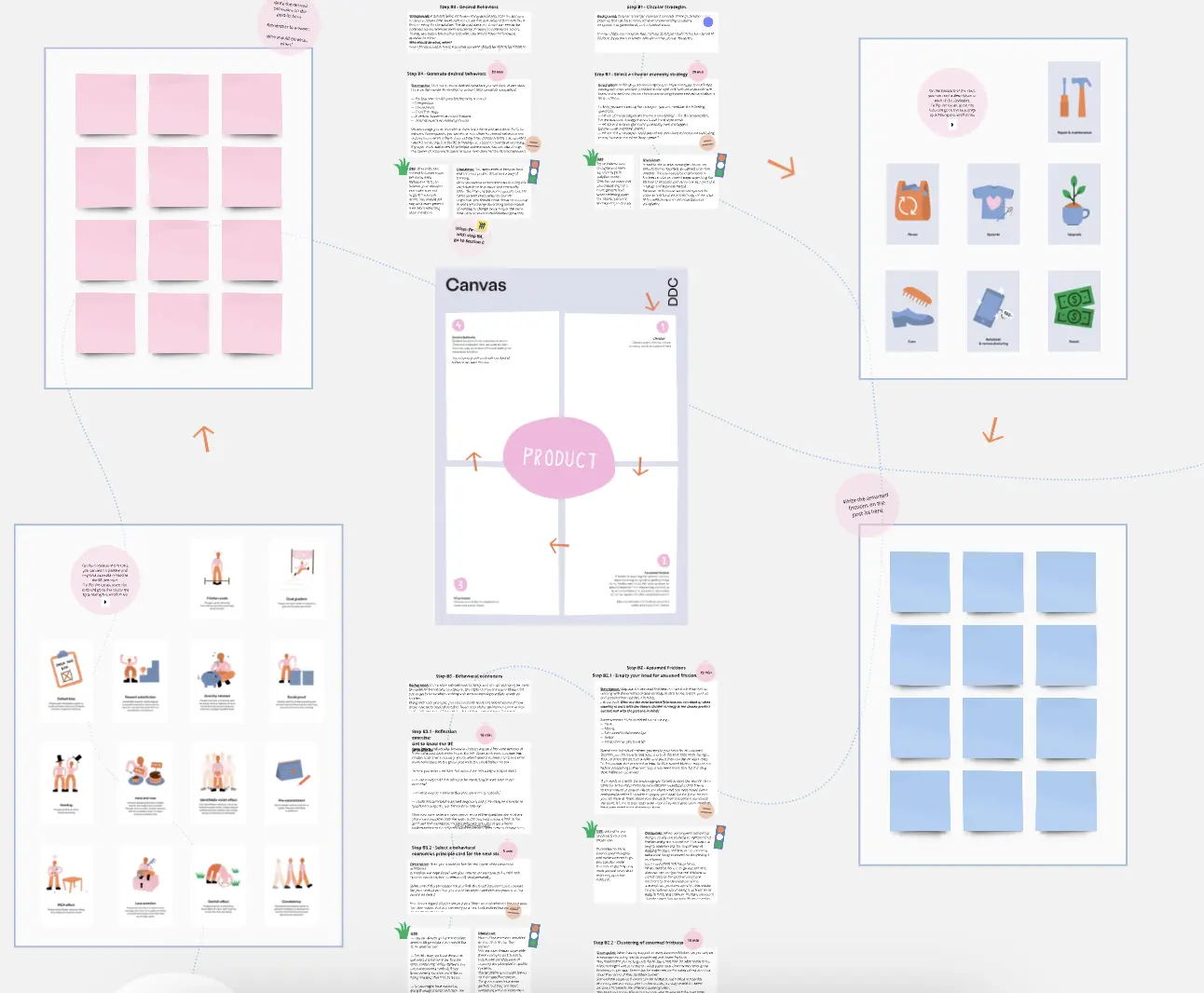
The toolkit works in three steps.
The first step asks you to reflect on your current practice. Where does your waste come from? What do you do to get it ready? What happens during making? Where does the finished work go, and what about the scraps your process leaves behind? Most makers have never described all of this in one place. Doing so often reveals things that were always there but never quite visible: a source you depend on more than you realised, a preparation step that takes more effort than it should, a question about where your materials end up that you have been quietly avoiding.
The second step asks you to look at what you described and evaluate it through the lens of circularity. Not in an abstract way, but practically: does your material have somewhere useful to go at the end of its life? Does your making process keep future options open, or does it close them off? Does what you produce add genuine value, and could it find its way back into a material system when it is no longer needed? You will mark the places where you are confident, the places where you are uncertain, and the places where you simply have not thought about it yet. All three are useful. The marks where you have never thought about something are often the most interesting ones.
The third step is about choosing one thing to move. Not everything, just one thing. The most useful change is rarely the biggest one. It is usually the one that is most within your reach right now, where the gap between where you are and where you want to be is small enough to cross. You will write it down, think about what you need to make it happen, and set a checkpoint for the next time you return to this toolkit.
This toolkit is designed to be used more than once. Each time you work through it, you get a snapshot of your practice at that moment. Over time, you can lay those snapshots side by side and see how things are shifting, what has changed, what has stayed the same, and where the next most useful move might be.
There are no right or wrong answers here. The toolkit works best when you respond to it honestly, including the parts that are uncomfortable or unresolved. Your practice does not need to be perfect to use this. It just needs to be real.