What is the Logic Model Template?
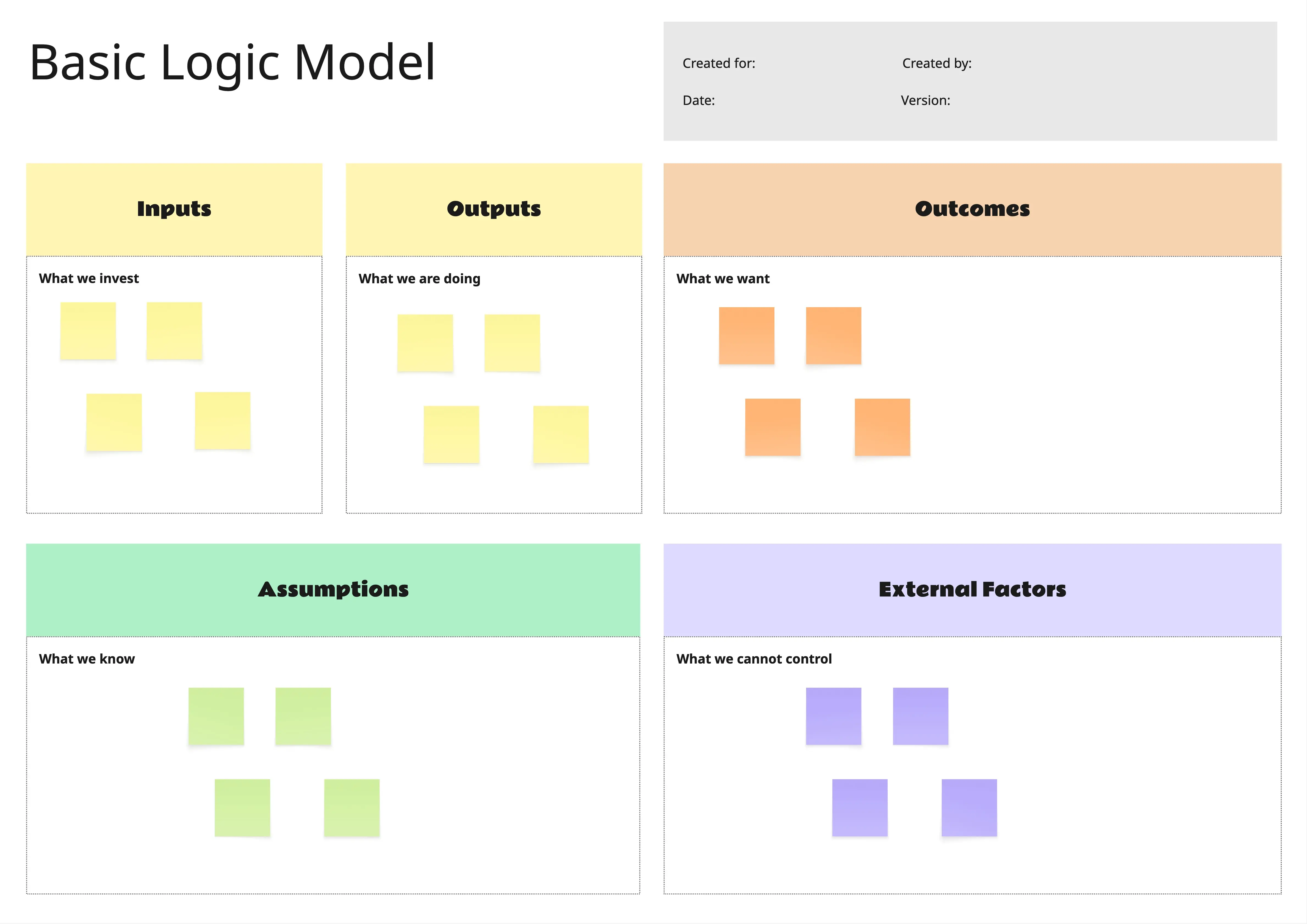
A visual planning template that helps teams connect project inputs, activities, outputs, outcomes, and impact. It shows how resources and actions are expected to lead to measurable results and long-term change.
What problem does the Logic Model Template solve?
Unclear project logic
Disconnected activities
Missing success measures
Weak stakeholder alignment
Difficulty explaining project value
Unclear long-term outcomes
How to use the Logic Model Template
List the resources needed.
Define the main project activities.
Add measurable outputs.
Describe short- and medium-term outcomes.
Define the long-term impact.
Review each connection from left to right.
Remove gaps or unsupported assumptions.
Common Pitfalls
Confusing outputs with outcomes
Listing activities that do not support the goal
Using vague impact statements
Adding too many items
Skipping measurable results
Treating every activity as equally meaningful
Ways to Avoid Mistakes
Keep each column focused.
Use measurable output language.
Separate immediate results from long-term change.
Review the logic between every stage.
Limit each section to the strongest items.
Use project data where available.
Miro Features You Can Use
Columns for the five model stages
Cards for individual items
Connectors between stages
Color coding for each section
Comments for assumptions and evidence
Tags for owners or measures
Frames for presentation mode
FAQs
Q: Who can benefit from this template?
A: Project teams, program managers, nonprofits, community organizations, product teams, funders, and evaluators.
Q: What are the five parts of a logic model?
A: Inputs, activities, outputs, outcomes, and impact.
Q: What is the difference between an output and an outcome?
A: An output is what the project produces. An outcome is the change that happens after those outputs.
Q: How detailed should the model be?
A: Keep it concise enough to fit on one page.
Q: What will participants leave with?
A: A one-page logic model showing how project resources and activities connect to outputs, outcomes, and long-term impact.