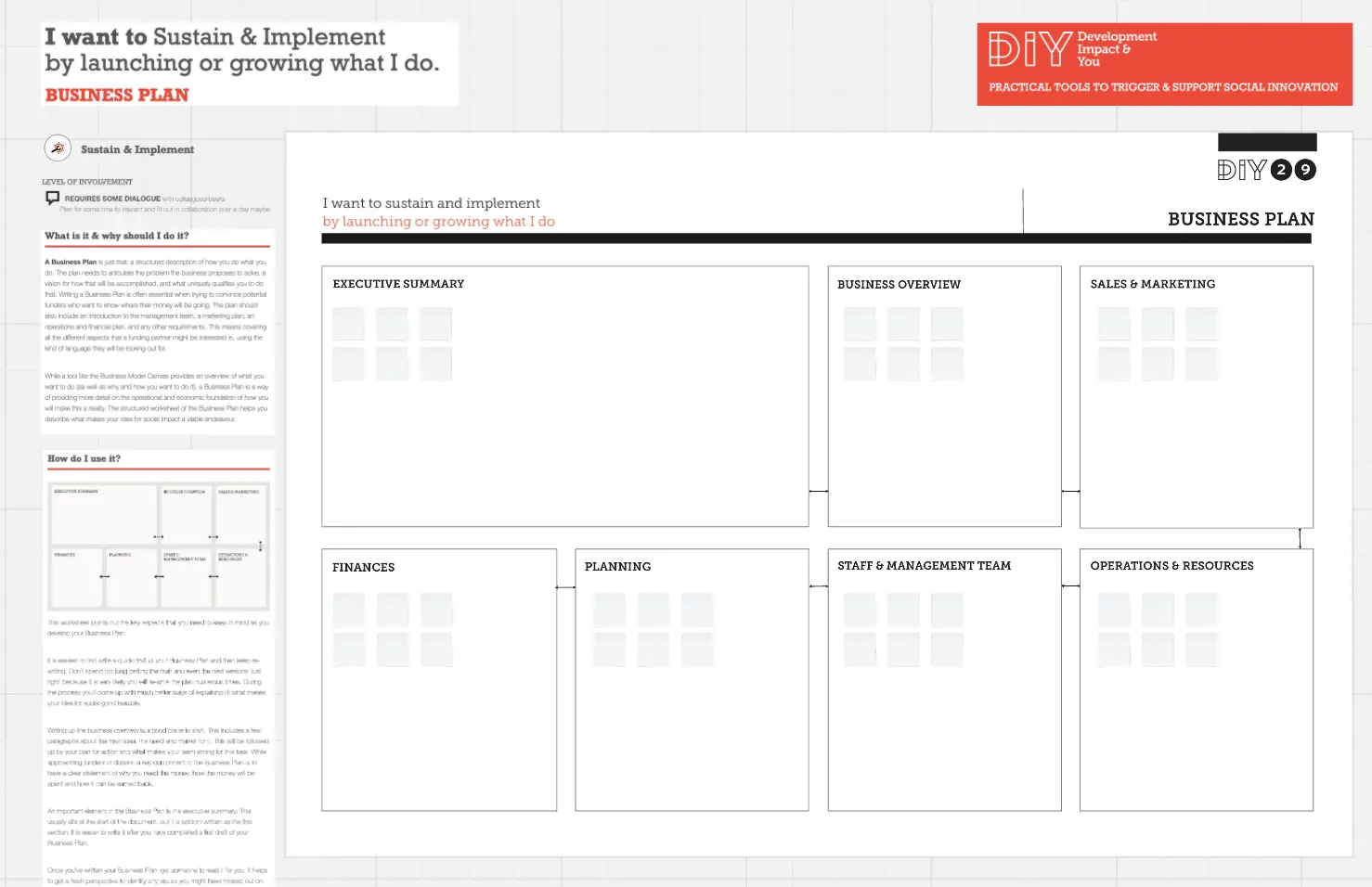
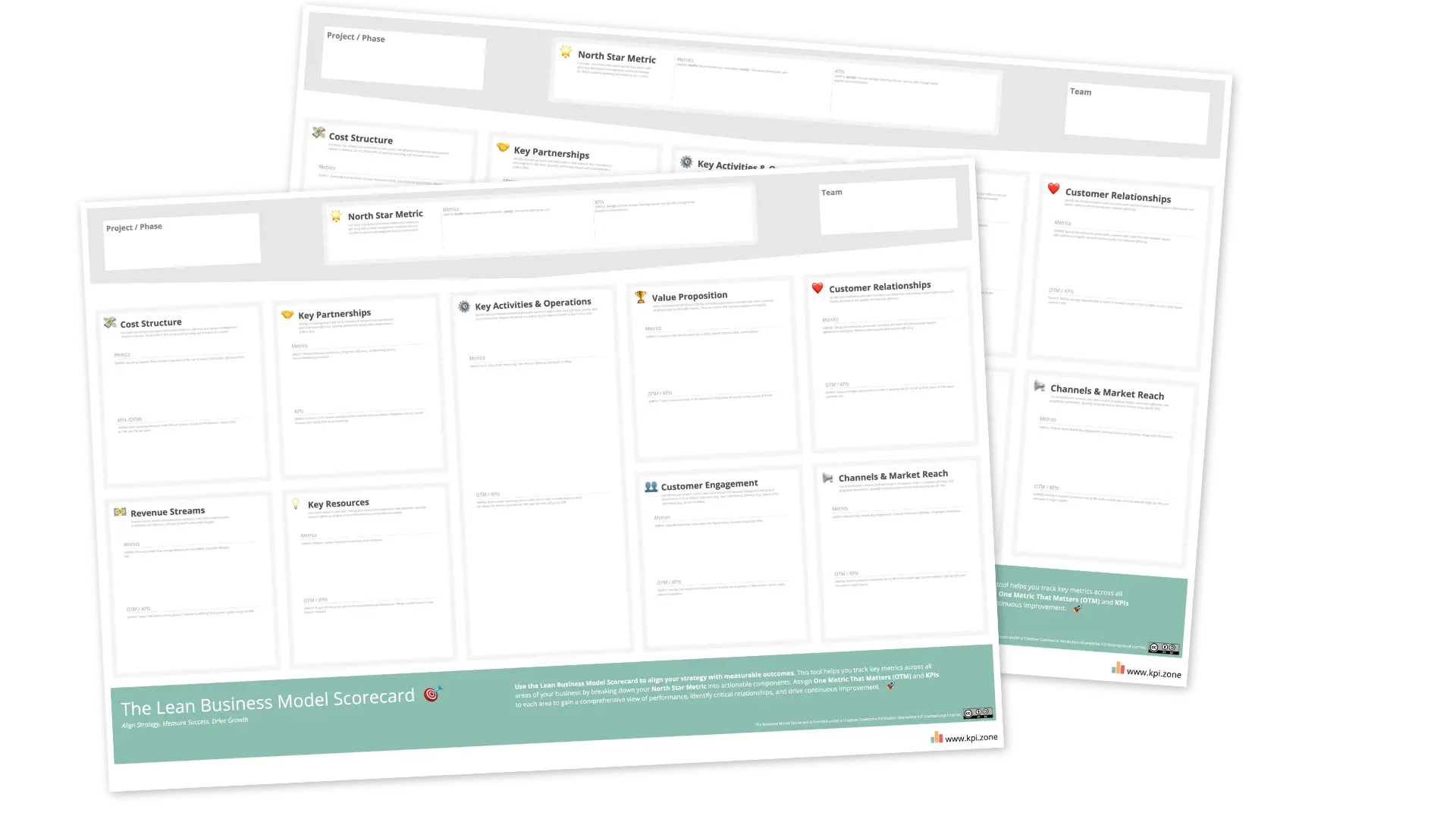
What is the Lean Business Plan Template?
A one-page business planning template that helps teams define customers, problems, value, solutions, revenue, costs, channels, key activities, measures, and assumptions.
What problem does the Lean Business Plan Template solve?
Overcomplicated business planning
Unclear customer focus
Ideas without a business model
Weak revenue thinking
Too many untested assumptions
Slow early-stage decision-making
How to use the Lean Business Plan Template
Define the customer.
Describe the problem.
Write the value proposition.
Outline the solution.
Add revenue and cost ideas.
Choose the main customer channels.
List key business activities.
Add success measures.
Identify risky assumptions.
Select one assumption to test first.
Common Pitfalls
Trying to describe every customer
Writing broad value statements
Adding too many revenue models
Ignoring cost drivers
Tracking too many metrics
Treating assumptions as facts
Ways to Avoid Mistakes
Start with one customer segment.
Keep the value proposition short.
Choose one primary revenue model.
List only the largest cost areas.
Use a few meaningful measures.
Test the riskiest assumption first.
Miro Features You Can Use
Cards for each business plan section
Sticky notes for assumptions
Voting for priority tests
Tags for evidence and risk
Comments for team feedback
Color coding for business model areas
FAQs
Q: Who can use this template?
A: Founders, startup teams, product teams, consultants, and small business owners.
Q: When is this template most useful?
A: Early planning, business validation, founder alignment, new product ideas, and business model reviews.
Q: How detailed should the plan be?
A: Keep each section brief enough to fit on one page.
Q: What makes this different from a traditional business plan?
A: It focuses on the core business model and the assumptions that still need testing.
Q: What will participants leave with?
A: A compact business plan and one clear experiment to run next.