Garden Growth Wheel Logic Model
Brief
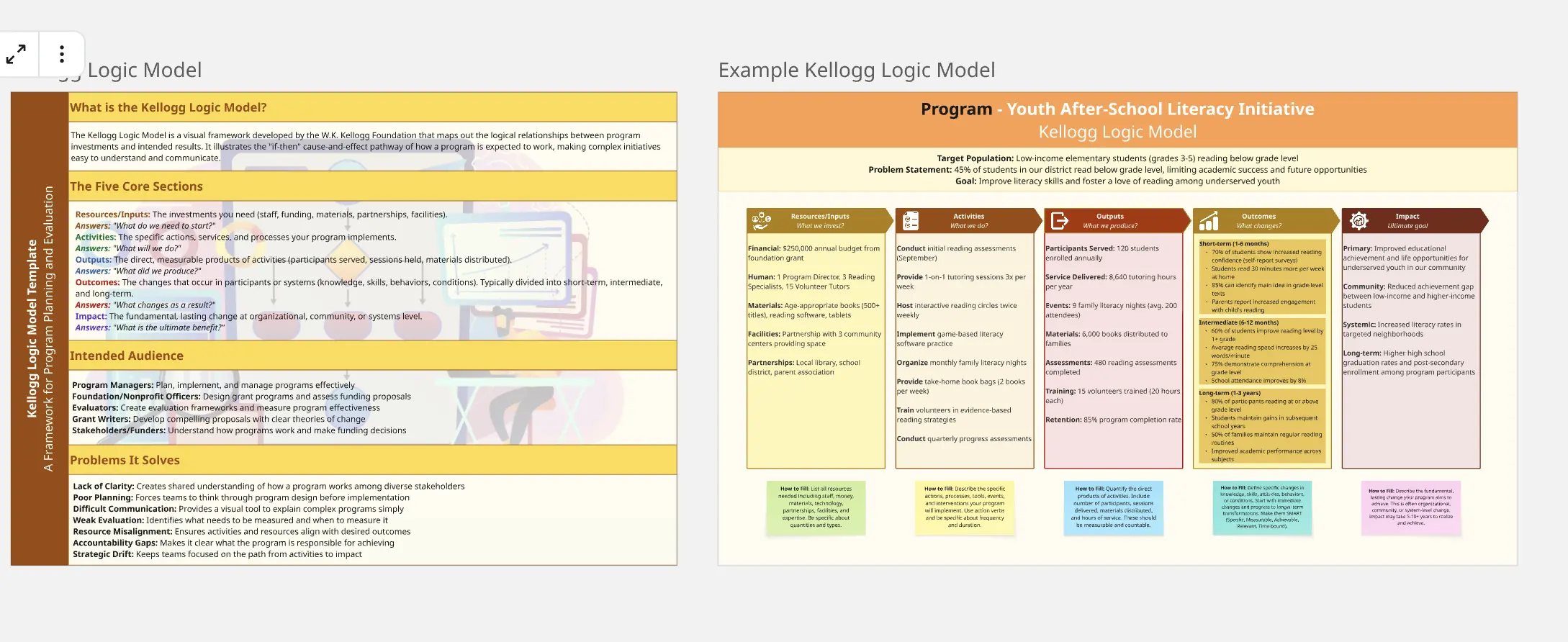
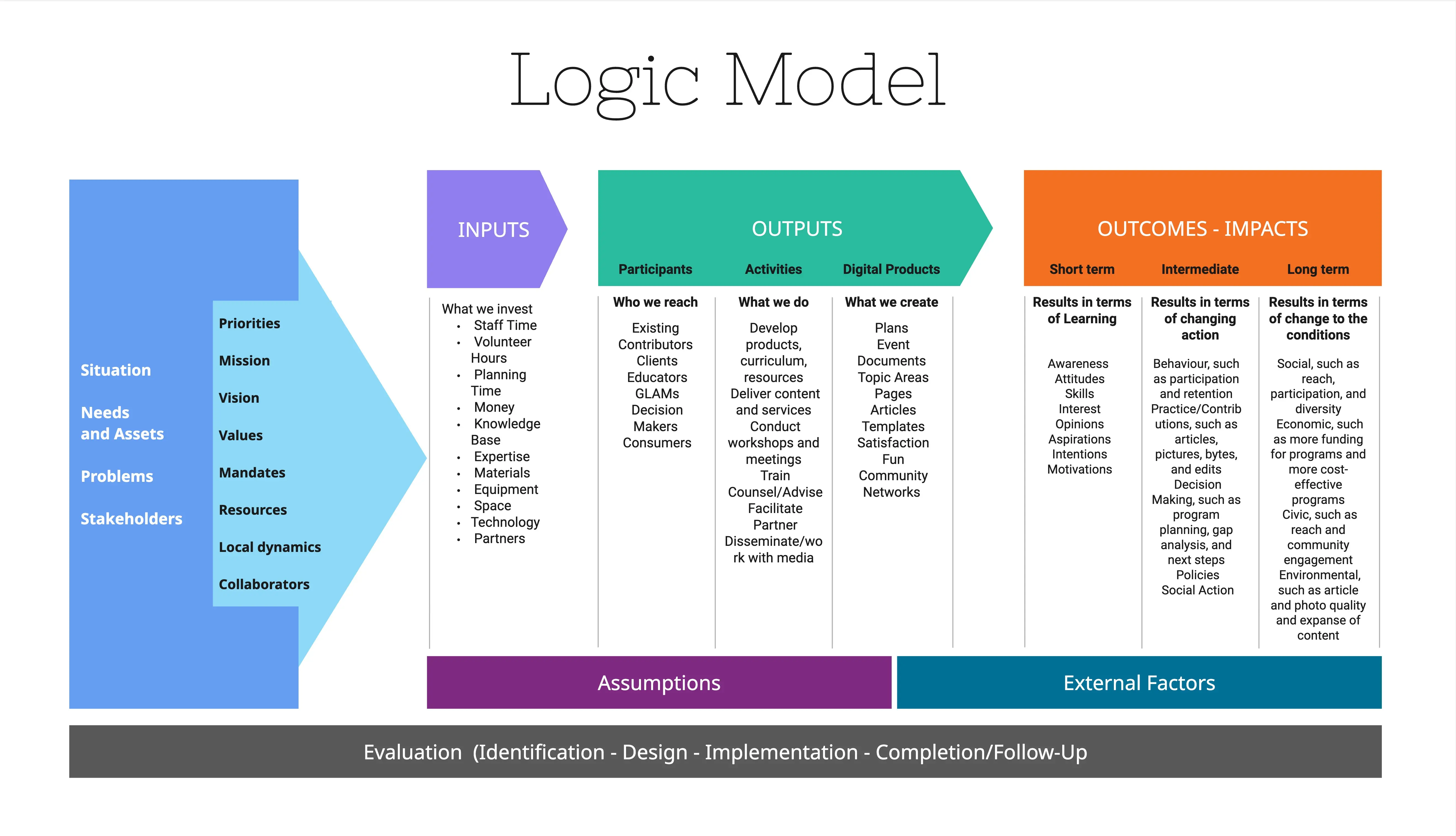
The Garden Growth Wheel Logic Model is a visual framework that maps an organization's theory of change as a clockwise growth cycle, moving through five organic stages: Seed (Inputs), Sprout (Activities), Bud (Outputs), Flower (Outcomes), and Harvest (Impact). Each stage sits in a petal radiating from a central "Impact Goal" hub, making the progressive cultivation of value immediately visible. Below the wheel, space is provided for Assumptions and External Factors.
Who can use it
Community program managers, nonprofit directors, sustainability coordinators, education leaders, social enterprise founders, grant writers, and anyone designing initiatives where growth is iterative and organic. It suits food-security programs, environmental initiatives, community engagement projects, and any effort where nurturing resources leads to measurable harvest.
How to use it
Begin at the Seed petal (Inputs) and list the resources you are planting—volunteers, budget, tools, partnerships. Move clockwise to Sprout (Activities) and describe what you actively do with those resources. Bud (Outputs) captures the direct, countable products that result. Flower (Outcomes) records the short/medium-term changes you observe blooming. Harvest (Impact) at the top captures the long-term transformation. State your central Impact Goal in the hub. Fill in the Assumptions and External Factors boxes to document conditions your logic depends on and forces outside your control. Revisit the wheel as seasons change.
About the example
The included example illustrates the "GreenPlate Community Garden Program." Inputs include 3 donated garden plots, 15 master-gardener volunteers, an $8,000 seed and tool budget, and an NGO nutrition partner. Activities cover weekly gardening workshops, school field trips, cooking demonstrations, and a produce-share program. Outputs show 450 lbs produce harvested, 60 families in produce-share, 20 workshops held, and 300 students on field trips. Outcomes report 65% of families eating more vegetables, 40 new home gardens started, and community cohesion up 25%. Impact: reduced neighborhood food insecurity, sustainable local food culture, and curriculum adopted district-wide. Assumptions note volunteers stay committed season to season. External factors include weather, growing season length, and unforeseen events like tornados, earthquakes, and floods.
Cheers!
Khawaja Rizwan