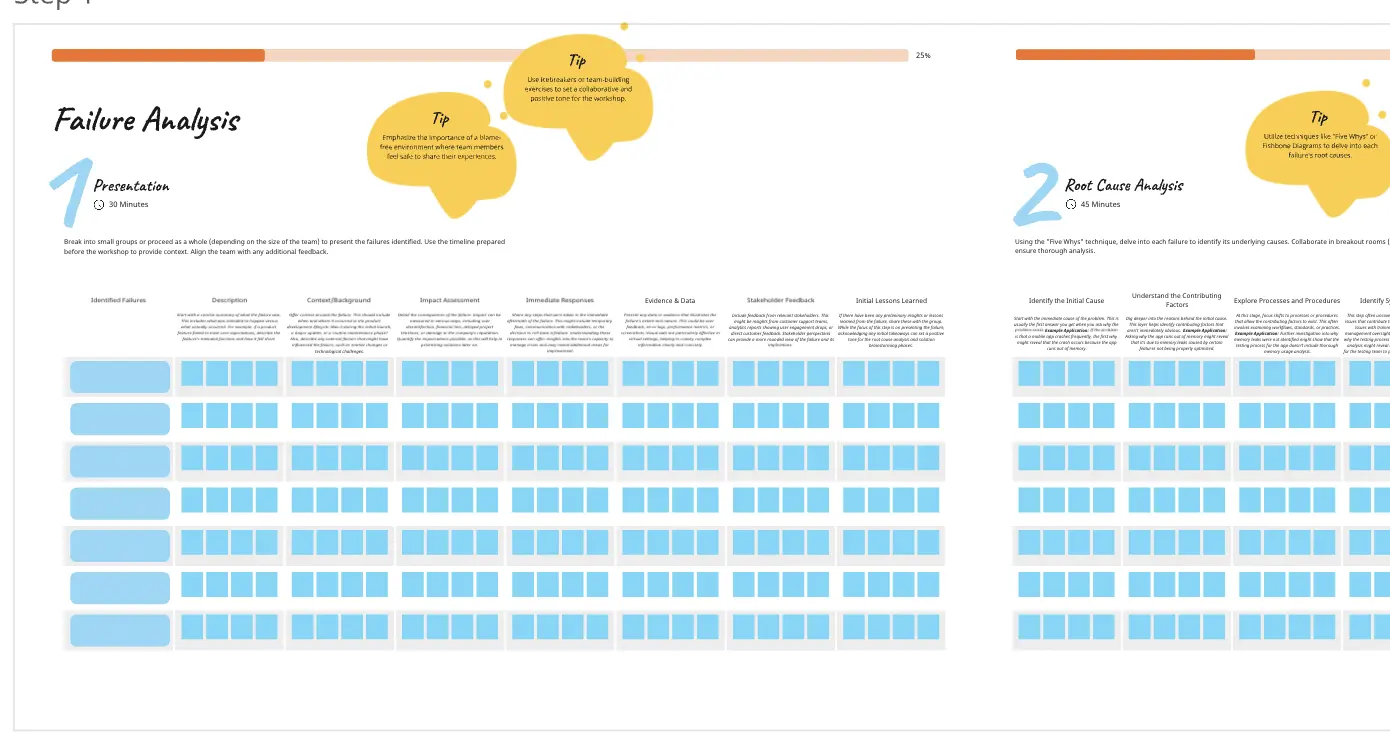
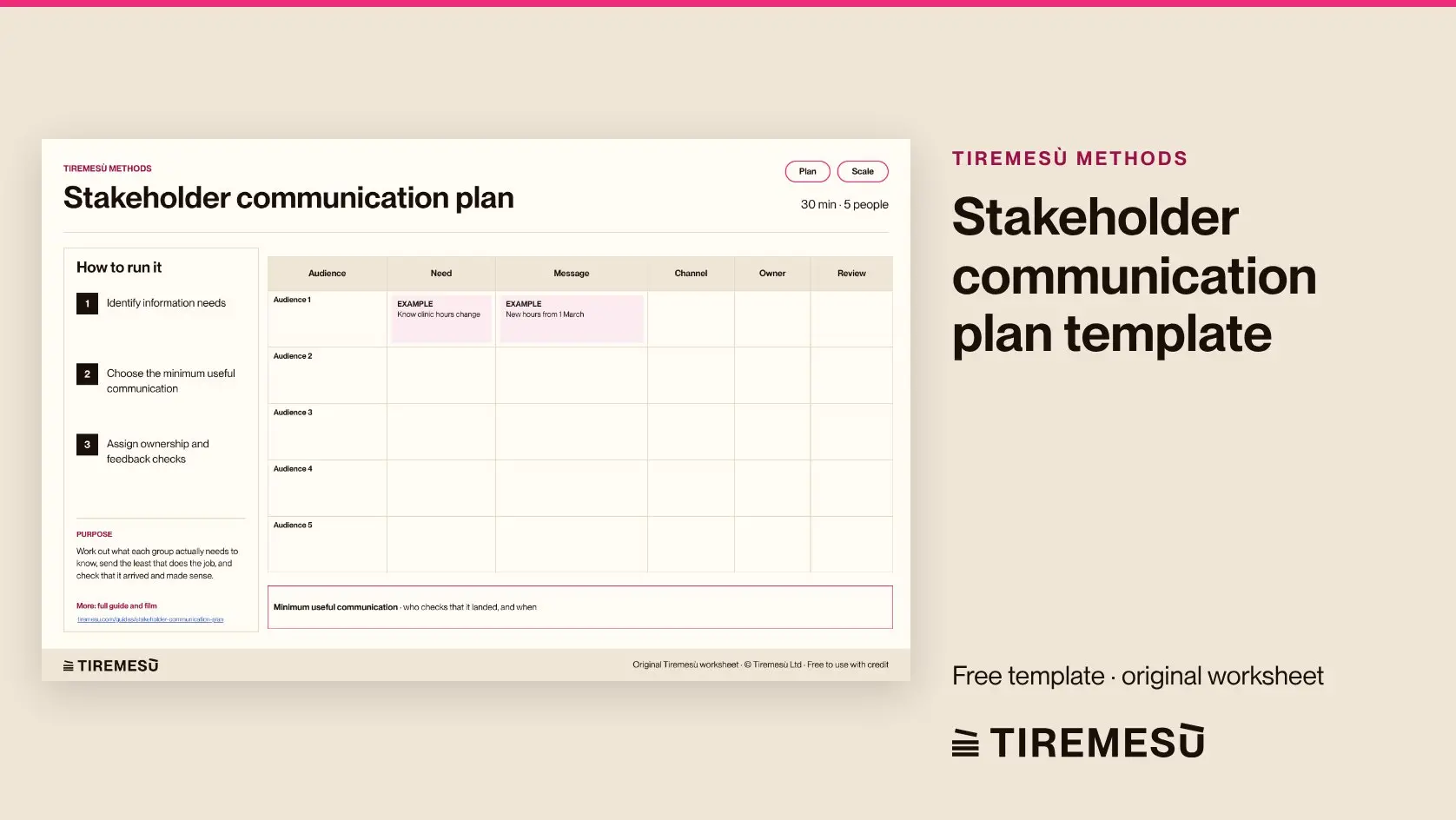
What it is for: Failure modes analysis goes through a process or service step by step, asks how each step could fail, rates what that would mean, and plans prevention before it happens. You leave with a worksheet of failure modes, their effects, severity, likelihood and detection ratings, and owned actions.
Who it helps: Service, operations, risk and quality teams launching or changing a process where a failure would hurt customers, staff or compliance.
When to use it
Before launching a new service, system or process.
When an existing process changes in a way that could introduce new failures.
After an incident, to look for the failures that have not happened yet.
How to use it
Choose the process and list its steps.
Agree the rating scales for severity, likelihood and detection before you start.
For each step, list the ways it could fail and the effect on the person served.
Rate each failure mode on the three scales.
Act first where severity is high, or where all three are high, give each action an owner, and re-rate after acting.
Tip: Rate severity from the point of view of the person affected, not the team. A failure that is minor for you can be serious for them.
Credits and sources: Original Tiremesù worksheet and wording. Method credit: failure mode and effects analysis (FMEA), developed in reliability engineering in the mid-twentieth century. Further reading: ASQ: Failure mode and effects analysis
Full guide and film:https://www.tiremesu.com/guides/failure-modes-analysis