Start your sustainability work with clarity
A clean, spacious template for companies that want a practical, low-threshold way to understand and act on their environmental impacts. It helps teams move from a broad sustainability conversation to a focused set of priorities and the first steps of an environmental action plan.
What’s included
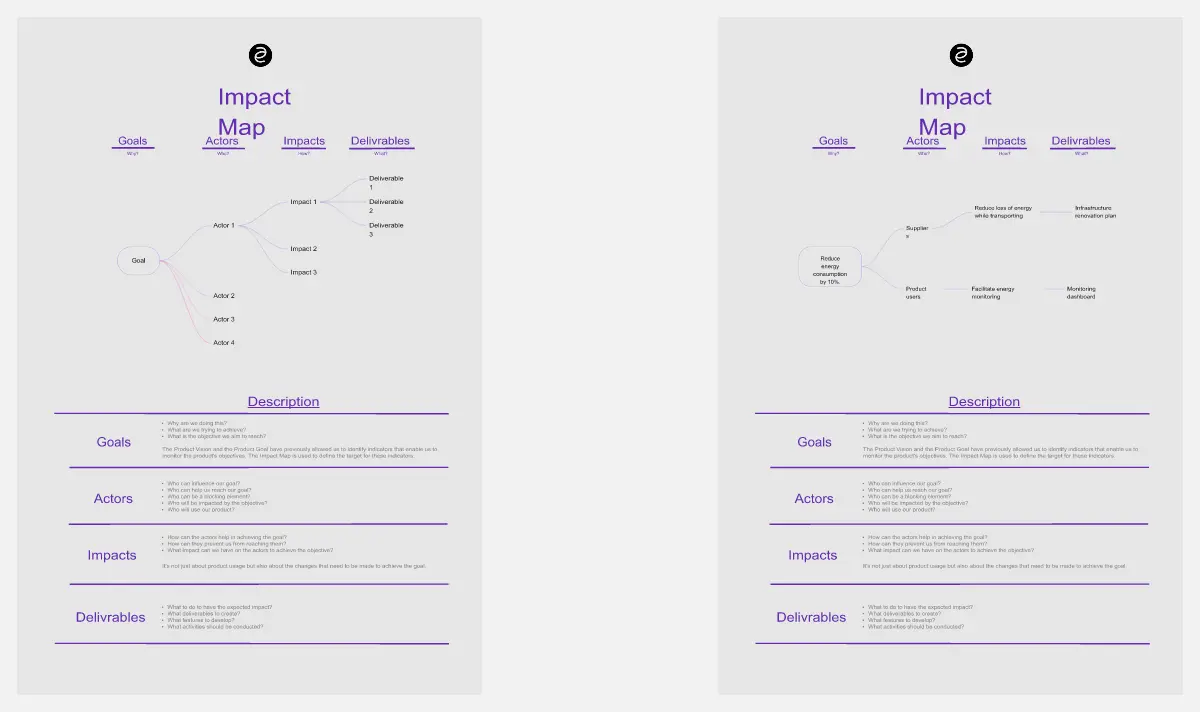
Begin by defining what you are assessing and why action is needed now. Then explore a flexible concept map covering areas such as energy, climate, materials, waste, water, pollution, nature, communities, regulation, reporting, and customer expectations.
The template also includes simple prioritisation labels—High impact, High urgency, and Quick win—plus a worksheet for investigating priority impacts and an action-plan table for turning findings into practical initiatives.
How to use it
Add the activity, product, service, project, or site you want to assess.
Adapt the concept-map branches to your context: remove what does not apply and add what is missing.
Add impacts, risks, opportunities, and relevant requirements as sticky notes.
Label the branches that are high impact, urgent, or achievable as quick wins.
Use the impact-to-action worksheet to understand who or what is affected, what applies, and what can change now.
Turn your top priorities into goals, initiatives, owners, measures, and review dates.
Suggested 75-minute workshop
10 min — Set the focus: Agree what you are assessing and why it matters now.
20 min — Map impacts: Participants add sticky notes to the most relevant branches. Encourage practical examples rather than abstract statements.
15 min — Cluster and clarify: Group similar notes, remove duplicates, and identify missing impacts or information.
10 min — Prioritise: Label the most significant notes as High impact, High urgency, or Quick win.
15 min — Plan actions: Choose two or three priority impacts and add a desired outcome, first initiative, owner, measure, and review date.
5 min — Close: Confirm next steps, evidence still needed, and when the team will review progress.
Who it’s for
Ideal for companies at the beginning of their sustainability journey, as well as teams that need a shared starting point for environmental planning. Use it in a sustainability workshop, strategy session, project kick-off, product review, or supplier discussion.