The Cost Benefit Analysis: Break-Even Stress Test template helps product managers, finance teams, and business leaders evaluate investment risks, challenge financial assumptions, and determine when an investment becomes profitable. Use this collaborative Miro workshop to calculate break-even points, compare financial scenarios, and understand how changes in demand, costs, and margins affect expected returns.
How to Use Cost Benefit Analysis: Break-Even Stress Test
Establish the forecast: Document initial investment costs, recurring expenses, expected revenue, contribution margins, and financial assumptions.
Calculate break-even: Determine the sales, transactions, or savings required to cover operating expenses and recover the initial investment.
Compare scenarios: Develop downside, expected, and upside forecasts to evaluate potential financial outcomes.
Challenge assumptions: Use the Assumption Shock exercise to test unexpected changes in demand, operating costs, margins, or launch timing.
Make an investment decision: Identify financial risks, establish acceptable thresholds, and determine whether to invest, pilot, or redesign the proposal.
Why Use Cost Benefit Analysis: Break-Even Stress Test?
Financial projections often rely on assumptions that may not reflect actual business conditions. This template helps teams:
Identify the financial thresholds required for investment success.
Understand how changing assumptions affect profitability.
Evaluate downside risks before committing resources.
Compare potential returns across realistic financial scenarios.
Develop investment safeguards supported by measurable evidence.
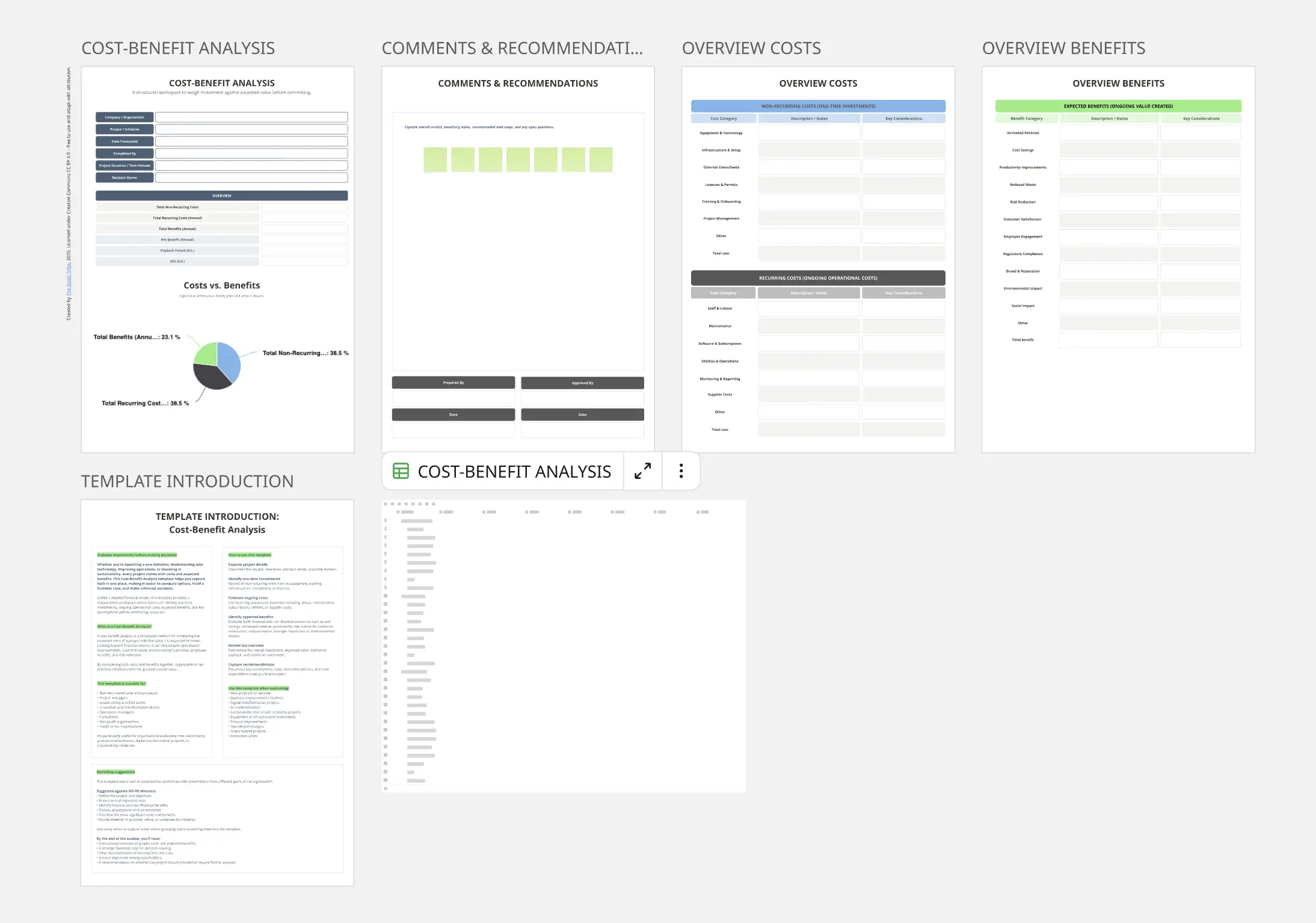
Miro Features: Editable tables organize financial scenarios, sticky notes capture assumptions and risks, visual break-even indicators highlight financial thresholds, and challenge cards support collaborative stress testing.
FAQs
Who benefits from this template? Product managers, finance professionals, startup founders, business strategists, project managers, and leadership teams evaluating investment opportunities.
What is the difference between break-even analysis and sensitivity analysis? Break-even analysis identifies the point where financial benefits cover costs. Sensitivity analysis examines how changing individual assumptions affects the expected financial outcome.
Can I use this template before launching a new product or feature? Yes. Evaluate pricing, customer adoption, operating expenses, and expected contribution margins to identify financial risks and determine what must happen for the investment to succeed.