What is the Current State vs Future State Gap Analysis Template?
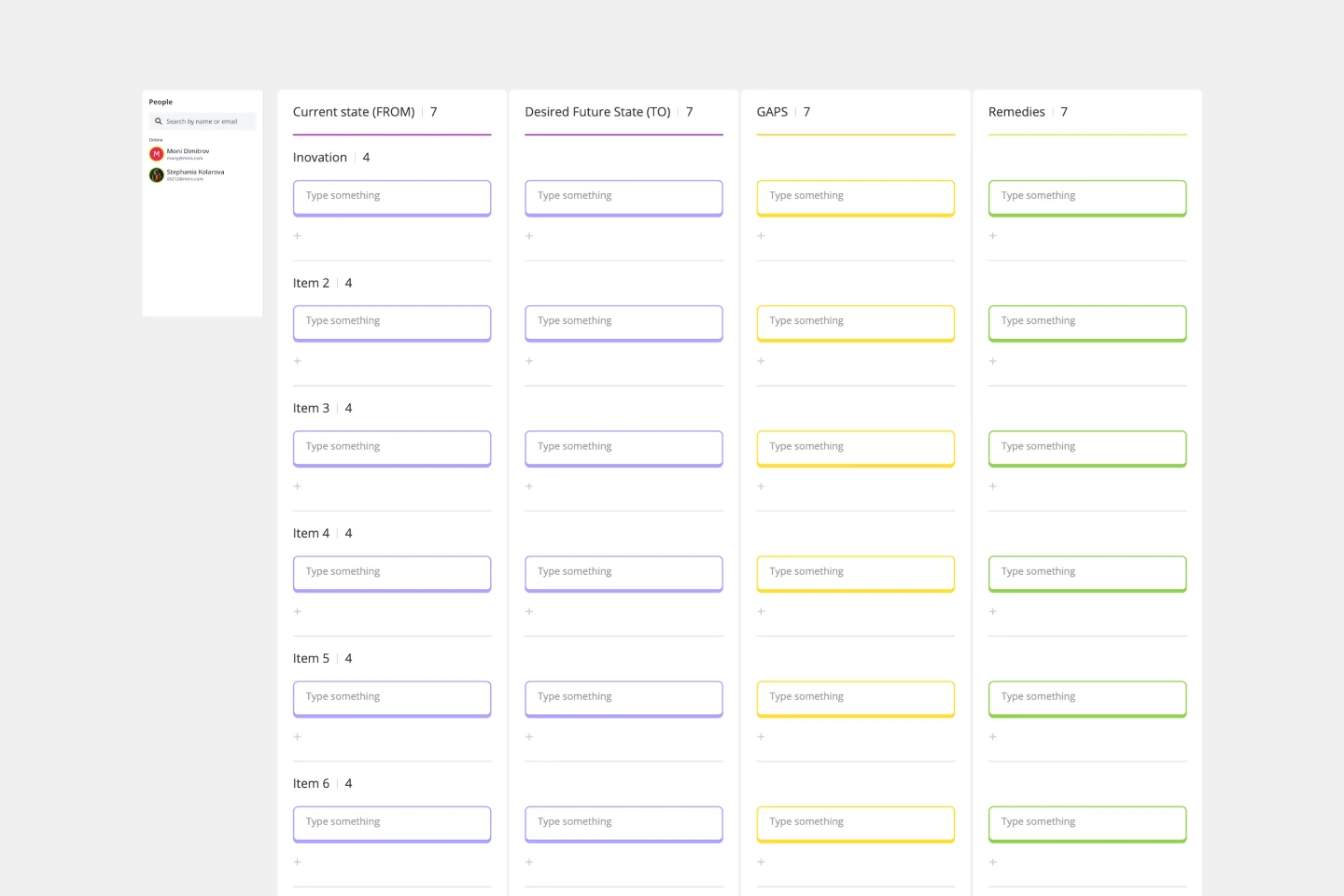
A strategic planning template that helps teams identify the differences between their current capabilities and desired future outcomes. Participants evaluate existing conditions, define target goals, uncover gaps, and create actionable plans to close them.
What problem does the Current State vs Future State Gap Analysis Template solve?
Unclear improvement priorities
Misalignment on future goals
Difficulty identifying missing capabilities
Lack of visibility into organizational challenges
Unstructured planning discussions
How to use the Current State vs Future State Gap Analysis Template
Define the business areas you want to analyze.
Document the current state for each area.
Describe the desired future state.
Identify the gaps preventing progress.
Capture actions required to close those gaps.
Prioritize initiatives and assign ownership.
Common pitfalls
Defining future states that are too broad
Jumping directly to solutions
Missing stakeholder perspectives
Focusing on symptoms rather than root causes
Creating action items without prioritization
Ways to avoid mistakes
Use specific and measurable future outcomes
Involve cross-functional stakeholders
Validate assumptions with data
Focus on the most impactful gaps
Prioritize actions before execution begins
Miro Features You Can Use
Color-coded sticky notes for each column
Voting for prioritization
Tags for ownership and themes
Comments for stakeholder feedback
Frames for organizing analysis categories
FAQs
Q: Who can benefit from this template?
A: Product teams, business leaders, startup founders, operations teams, transformation teams, and project managers.
Q: When should this template be used?
A: Strategic planning sessions, roadmap planning, business transformation initiatives, process improvement efforts, and product discovery workshops.
Q: What will participants leave with?
A: A clear understanding of current challenges, future objectives, identified gaps, and prioritized actions required to achieve desired outcomes.
Q: Can this be used outside of product development?
A: Yes. The framework works for business operations, marketing, customer experience, organizational development, and strategic planning.
Q: How long does the workshop take?
A: Most teams complete the workshop in 45–60 minutes depending on the number of categories being analyzed.